REVIEW · TOKYO
Tokyo Night Bike Tour: From Shibuya to Tokyo Tower via Roppongi
Book on Viator →Operated by COG EXPLORER JAPAN · Bookable on Viator
Tokyo at night on a bike is the quickest way to change your whole trip mood. This Shibuya to Tokyo Tower night route takes you through neon streets and quieter side roads, with stops like Tokyo Tower and Roppongi set up for great photo angles after dark. You’re riding with a guide, so you get the city flow without the stress of map-and-missed-turns.
I like that it includes bicycles and helmets, so you can focus on the ride instead of logistics. I also like the small-group feel (max 6), plus the fact the pace is set for a smooth 2-hour loop, around 15 km/h. One drawback to plan for: you need to be comfortable cycling on pavements, managing cross traffic lights, and handling crowded or tight streets.
In This Review
- Key things I’d circle before you go
- Two Hours on Wheels: Why This Tokyo Night Ride Works
- Price and Value: What $56.01 Gets You (and Why It’s Fair)
- Before You Go: Ride Fit, Pace, and What You Need to Be Comfortable With
- Where to Meet: Umayamichi Park and a Fast Start
- Stop-by-Stop: What You’ll See on the Shibuya–Roppongi–Tokyo Tower Route
- 1) Tokyo Tower: The Night-Light Moment
- 2) Meijijingu Gaien: A Different Side of Tokyo’s Beauty
- 3) Omotesando: Street Style, But Moving
- 4) Roppongi Keyakizaka Dori: Neon Streets and Big-City Feel
- 5) Azabujuban: A Breather in the Middle of the Night
- 6) Aoyama Cemetery: Quiet Contrast Under the Lights
- 7) Roppongi: The Main Finish Area
- 8) Nishiazabu: A Sense of Where the Night Lives
- Why This After-Dark Bike Tour Beats a Daytime Plan
- Safety, Pacing, and the Guide Factor (Taichi and More)
- Who Should Book This Night Bike Tour—and Who Might Skip It
- Weather Plan: Light Rain, But Sudden Changes Can Cancel
- Should You Book It? My Decision Shortcut
- FAQ
- What time does the Tokyo Night Bike Tour start?
- Where do I meet the guide?
- Where does the tour end?
- What’s included in the price?
- Is dinner included?
- What speed and riding level should I expect?
- What bike size range is available?
- How many people are in the group?
- What happens if it rains?
- What’s the cancellation window?
Key things I’d circle before you go
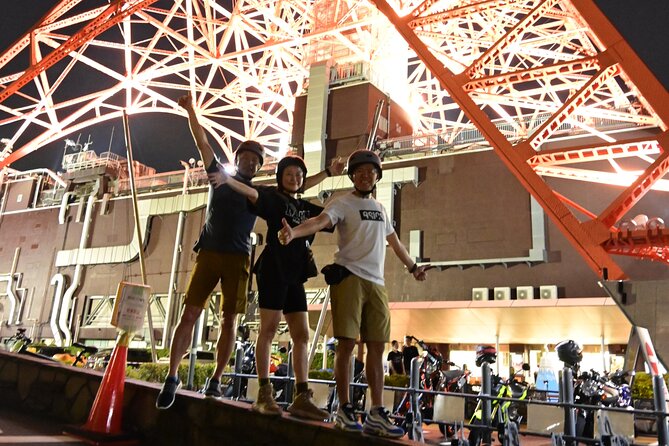
- Small group size (max 6): more attention, less chaos, easier to follow at night
- After-dark route: cooler air and fewer daytime crowds while you still hit top sights
- Photo-ready stops: Tokyo Tower lighting and Roppongi streets with memorable views
- Route variety: major landmarks plus areas like Jingu Gaien and Aoyama Cemetery
- Real ride requirements: helmets provided, but you must ride confidently at ~15 km/h
Two Hours on Wheels: Why This Tokyo Night Ride Works
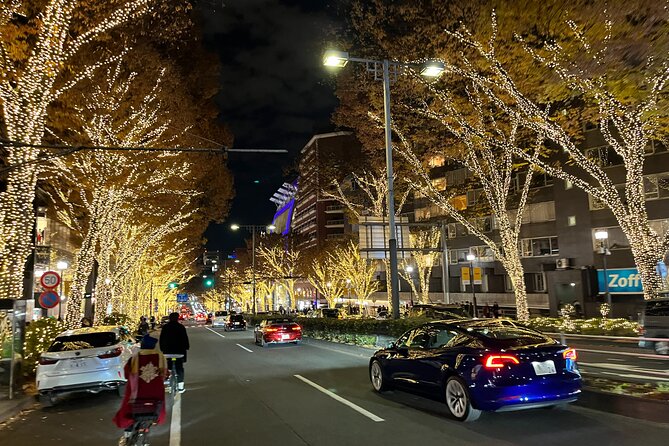
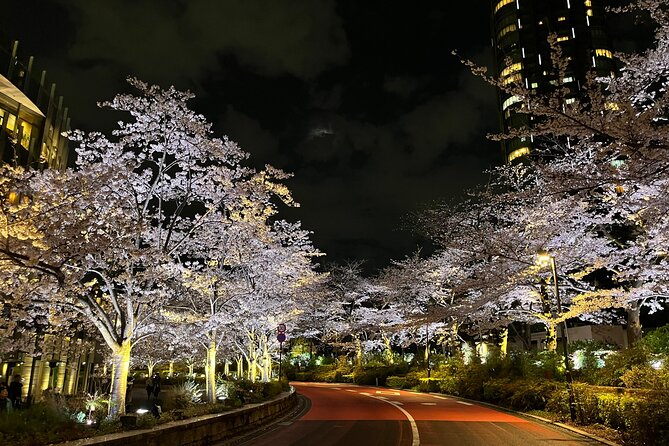
Tokyo at night has a different rhythm. Streets can feel calmer, and the air is often cooler than the middle of the day. This tour takes advantage of that with a 2-hour ride starting at 8:00 pm, when you can see illuminated skylines without feeling like you’re sprinting through heat.
The route is built around an easy win for first-time planning: Shibuya energy, Roppongi sparkle, and a Tokyo Tower payoff. And because it’s a guided bike tour, you’re not stuck doing the “where do we go next” dance while everyone else is heading to the same two overlooks.
It also covers ground better than a walking-only plan. The tour is designed to hit areas that can be harder to reach efficiently by public transport, so you spend more time moving through neighborhoods and less time transferring.
You can also read our reviews of more tours and experiences in Tokyo.
Price and Value: What $56.01 Gets You (and Why It’s Fair)
At $56.01 per person for about 2 hours, this is not a “cheap” activity. But it’s also not in the premium, private-driver category. The value comes from what’s included and how much Tokyo you get in one block of time.
Here’s the value logic I’d use:
- Bike + helmet are included, so you’re not paying extra for basic gear.
- You get a guide, which matters in Tokyo. Routes between neighborhoods can be easy to misunderstand if you’re relying only on transit directions and walking.
- You get more coverage than a daytime wander, especially at night when some areas feel better on wheels.
- The group is limited (max 6), which usually means less waiting and a tighter experience.
One practical note: the tour does not include dinner or a long food stop. If you arrive hungry, you’ll feel it once you’re committed to riding.
Before You Go: Ride Fit, Pace, and What You Need to Be Comfortable With
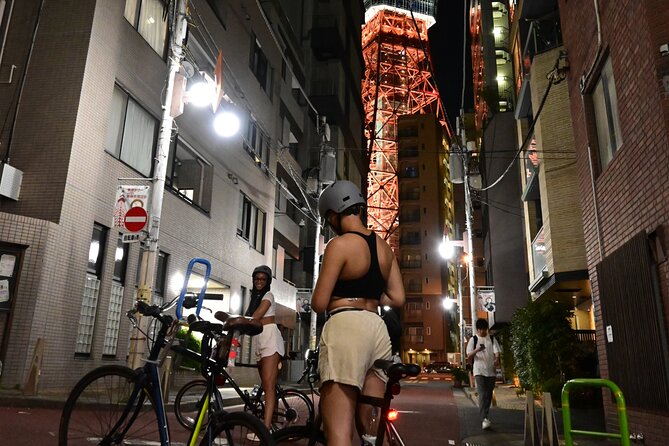
This tour is for active travelers, but it’s not extreme. Still, it asks you to meet a few clear requirements.
You’ll do best if you:
- can ride confidently on pavements
- feel comfortable going through cross traffic lights
- can handle crowded or tight spaces
- can keep up with the ride at about 15 km/h
Bike fit matters here. The bikes are suitable for heights between 155 cm and 185 cm. If you’re outside that range, you might have trouble with comfort and control, especially at night when the streets can feel busier and less predictable.
Also, plan your timing and energy. Since the tour is in the evening and doesn’t stop for dinner, eat before you go—or bring a snack to tide you over. This is one of those small details that makes the whole experience feel smooth instead of rushed.
Where to Meet: Umayamichi Park and a Fast Start
The meeting point is Umayamichi Park, 5-chōme-24-11, Sendagaya, Shibuya, Tokyo 151-0051. The tour starts at 8:00 pm, and it ends back at the meeting point.
If you’re coming from major hubs, this is convenient. It’s described as about 10 minutes from Shinjuku Station and about 1 minute from Yoyogi Station. That means you can build a simple plan: dinner nearby, then a quick hop to the start before the lights come up even more.
Because it’s a central meeting point near public transportation, you’re less likely to lose time just getting set.
Stop-by-Stop: What You’ll See on the Shibuya–Roppongi–Tokyo Tower Route
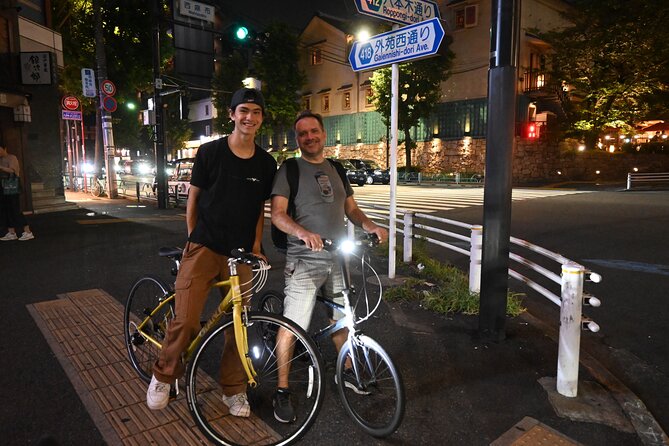
The itinerary is built like a night photo walk that happens at bike speed. You’ll have a sequence of key areas, with stops where the scenery and street character change.
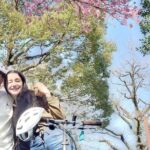
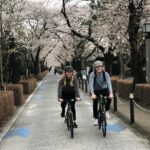
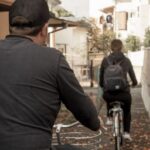
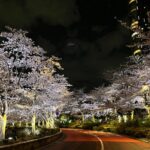
1) Tokyo Tower: The Night-Light Moment
You start with Tokyo Tower, which is the obvious crowd-pleaser for a reason. At night, the lighting gives you that classic silhouette vibe without needing to fight for daytime viewpoints. It’s a strong “orientation stop,” too—after this, you know what skyline you’re orbiting for the rest of the ride.
Potential consideration: if you’re hoping for long, lingering photos, remember it’s still a 2-hour tour. You’ll want to be ready to move on.
2) Meijijingu Gaien: A Different Side of Tokyo’s Beauty
Next is Meijijingu Gaien. This is a nice tonal shift from Tokyo Tower energy. It’s the kind of place where the mood can feel more open and calm once you leave the busiest shopping streets.
On a bike, you also get a sense of scale—Tokyo’s big-city lines can look surprisingly clean after dark.
3) Omotesando: Street Style, But Moving
Then you hit Omotesando. This area is known for its look and feel, and at night it becomes more about modern street atmosphere than daytime shopping pace. Cycling through here means you see the “shape” of the area without getting stuck in slow foot traffic.
Drawback to consider: if you’re sensitive to tighter roads or busy intersections, Omotesando’s street character can feel more active than the quieter stretches between neighborhoods.
4) Roppongi Keyakizaka Dori: Neon Streets and Big-City Feel
You’ll ride toward Roppongi Keyakizaka Dori, which is exactly the kind of corridor where night visuals do their job. This is where neon energy and classic Tokyo night scenes blend together.
It’s also the kind of stretch that works well for bike touring: you get movement, you get perspective, and you’re not just staring at the same block.
5) Azabujuban: A Breather in the Middle of the Night
Azabujuban is a useful transition stop. It helps break up the most “big-name” skyline scenes with a more neighborhood-feeling area. This kind of mix is one reason a guided bike tour can feel more satisfying than a straight list of landmarks.
Potential consideration: like many Tokyo areas, the ride can include intersections and tight turns, so keep your focus.
6) Aoyama Cemetery: Quiet Contrast Under the Lights
Then comes Aoyama Cemetery. Yes, a cemetery on a night bike tour—this is one of those choices that gives the tour its personality. Instead of only chasing neon, you get a calmer, quieter atmosphere.
Why it’s valuable: it changes the pace and mood, so you don’t end the tour feeling like you were just sightseeing in one lighting style.
7) Roppongi: The Main Finish Area
You then cycle through Roppongi again. That repetition isn’t a mistake. It helps you feel how the district works, after you’ve already seen it from different angles and segments earlier in the ride.
It also gives another set of photo chances without requiring you to plan your own routes afterward.
8) Nishiazabu: A Sense of Where the Night Lives
Finally, you head into Nishiazabu. This is a strong way to close, because it can feel like a more residential-feeling edge to the night you’ve been riding through.
The best part is how it turns the tour from “landmark hopping” into “neighborhood experiencing.” You finish with a better mental map of Tokyo’s west-side night geography.
Why This After-Dark Bike Tour Beats a Daytime Plan
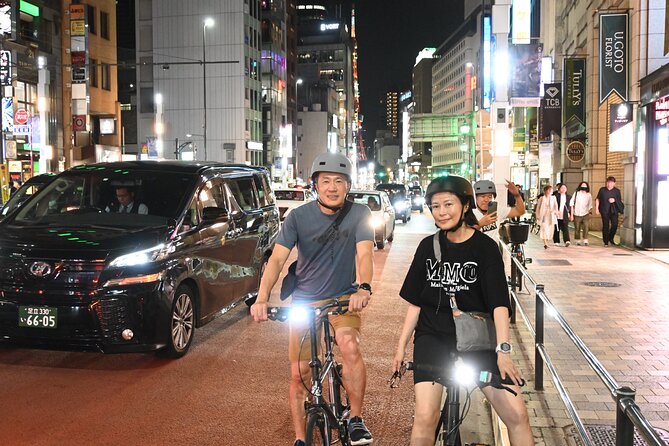
Day tours are great, but they come with two common problems in Tokyo: heat and crowd density. This night timing helps with both. You’re told the ride can be especially refreshing in summer, and that’s consistent with the basic logic of evening sightseeing.
More importantly, this tour is designed for efficient exploring:
- It helps you avoid the risk of getting lost, because the guide sets the route.
- It lets you cover more ground than a walking tour.
- It gives access to areas that you might not reach easily by public transport.
I also like the “streets quieter and air cooler” idea because it changes how Tokyo feels. On bikes, you notice street layout, lighting, and transitions between districts in a way you can’t replicate from a train window.
Safety, Pacing, and the Guide Factor (Taichi and More)
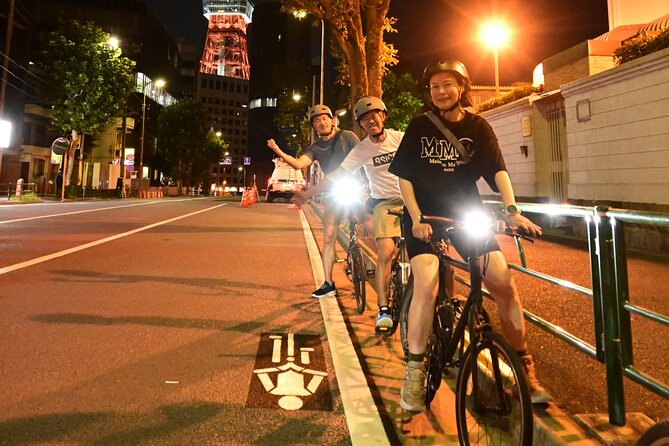
A bike tour lives or dies on the guide. This one is set up for a small-group format with personalized attention. That matters at night, when intersections can feel fast and visual cues are different than in daylight.
The ride speed is about 15 km/h, and you’re expected to keep that pace confidently. Helmets are included, and the tour’s focus is organized movement with a lead rider, so you’re not improvising in the middle of a Tokyo street grid.
From past guests’ comments, guides like Taichi (and others such as Ikeda noted in the feedback) are friendly, professional, and able to explain what you’re seeing in a way that makes Tokyo feel less like random scenery. English support has come up too, which helps a lot if you want to ask questions instead of just nodding at street names.
There’s also a practical upside: some people liked that the guide helped with photos at the best spots. That turns the tour from viewing into keeping memories without you worrying about your camera timing.
Who Should Book This Night Bike Tour—and Who Might Skip It
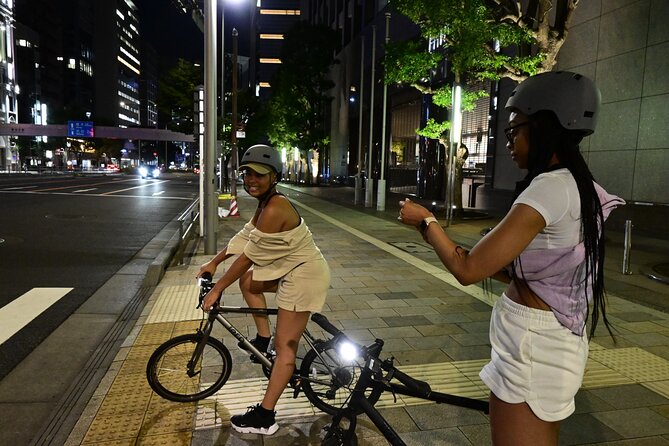
This works best for you if:
- you want an active Tokyo activity that still feels sightseeing-focused
- you’re on a limited schedule and want big highlights plus quieter areas in one go
- you like neighborhoods and street-level atmosphere, not just museum stops
- you’d rather ride through Tokyo with a plan than self-navigate in the dark
You might choose a different option if:
- you’re not comfortable cycling in traffic-like conditions (cross lights, busy intersections)
- your height is outside 155–185 cm, since the bike fit range is defined
- you expect a relaxed walking-tour pace
It’s also a good fit for first-time visitors who want Tokyo Tower + Roppongi without building a complex itinerary.
Weather Plan: Light Rain, But Sudden Changes Can Cancel
This tour runs with the expectation that conditions are manageable. It’s described as proceeding in light rain, but it may be canceled due to sudden weather changes. If it gets canceled due to poor weather, you’ll be offered a different date or a full refund.
Practical take: check the forecast the same day, and wear something you can ride in comfortably.
Should You Book It? My Decision Shortcut
Book this Tokyo night bike tour if you want:
- a small-group, guided way to see Tokyo Tower, Roppongi, Omotesando, and more
- night visuals without the daytime heat
- more coverage than a walking-only plan, with less chance of getting lost
- an activity that also teaches you what you’re looking at, not just where to stand
Skip it if your cycling confidence is low or you need a tour with long stops and no ride pace pressure.
If you’re willing to pedal steadily and enjoy the street view from the saddle, this is one of the more fun ways to get your bearings fast in Tokyo. You’ll come away with a stronger mental map than you’d get from trains and sidewalks alone.
FAQ
What time does the Tokyo Night Bike Tour start?
It starts at 8:00 pm and runs for about 2 hours.
Where do I meet the guide?
You meet at Umayamichi Park, 5-chōme-24-11 Sendagaya, Shibuya, Tokyo 151-0051, Japan.
Where does the tour end?
The tour ends back at the same meeting point.
What’s included in the price?
The tour includes a bicycle and a helmet.
Is dinner included?
No. There is no dinner stop, so eat before the tour or bring a snack.
What speed and riding level should I expect?
The group rides at about 15 km/h, and you’re expected to ride confidently at that speed, including through cross traffic lights and crowded or tight spaces.
What bike size range is available?
Bikes are suitable for heights between 155 cm and 185 cm.
How many people are in the group?
The tour has a maximum of 6 travelers.
What happens if it rains?
The tour can proceed in light rain, but it may be canceled due to sudden weather changes. If it’s canceled due to poor weather, you’ll be offered a different date or a full refund.
What’s the cancellation window?
You can cancel for a full refund up to 24 hours before the experience starts.