REVIEW · TOKYO
3-Hour Tokyo Private E-Bike Tour Starting from Your Hotel
Book on Viator →Operated by Tokyo Bike Bliss · Bookable on Viator
Tokyo looks bigger from a bike.
This private e-bike tour takes the stress out of getting around and turns it into a smooth, paced city walk-through, with hotel pickup and drop-off plus an English guide who handles Tokyo’s street maze. One guide name you’ll see a lot in the feedback is Kazuma, and the big plus is how safety-focused the ride feels. The one catch: you’ll be moving the whole time, so it’s not ideal if you want a slow, sit-down sightseeing day.
What I like most is the way the route is tailored to your pace, not a rigid checklist—so if you’d rather linger at Tokyo Tower or swap a park stop, your guide can work with you. Another win is the mix of big-ticket icons and local-feeling streets, including Shibuya Crossing by bicycle and the chance to stop for food-story moments near Tsukishima Monja Street. The main consideration is that some listed stops can change depending on where you start and end, so it helps to request must-sees when you book.
In This Review
- Quick Takeaways
- Private E-Bikes Starting at Your Hotel (and Why That Matters)
- 3 Hours, Many Neighborhoods: How the Route Keeps You Moving
- Tokyo Tower Photo Breaks and Less-Obvious Angles
- Imperial Palace Perimeter and the Moat-Side View of History
- Parks and Shrines: Yoyogi, Ueno, Kanda, and Tokyo’s Breathing Spaces
- Shibuya Crossing by Bicycle and City Views From Tokyo Met Government Buildings
- Tsukishima Monja Street and Asakusa’s Kaminarimon Gate for Food-and-Photo Tokyo
- Comfort, Safety, and Rules You’ll Follow on a Bike in Japan
- Price: What You’re Paying for at $145.35 (and When It’s Worth It)
- Who This Tour Fits Best (and Who Might Prefer Something Else)
- Should You Book Tokyo Bike Bliss’s Private 3-Hour E-Bike Tour?
- FAQ
- How long is the e-bike tour?
- What does the tour cost?
- Is the tour private?
- Does the tour include hotel pickup and drop-off?
- What’s included in the price?
- Are tickets or admission costs included?
- What isn’t included?
- Are there any restrictions on clothing or footwear?
- What are the rider requirements?
- What happens if the weather is bad?
- Can I change the start/end time or request specific stops?
Quick Takeaways
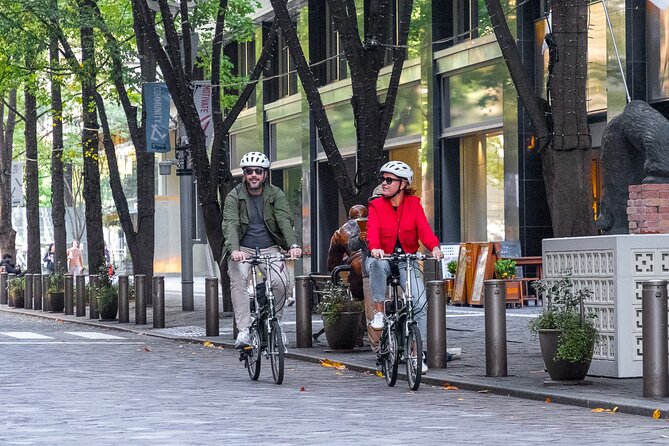
- Hotel pickup and drop-off: you skip train/taxi wrangling and start riding faster
- Private, pace-controlled route: your guide steers the timing and the order of stops
- Tokyo Tower + Shibuya Crossing: major landmarks, but seen from a rider’s angle
- Parks and shrines between icons: Yoyogi, Ueno, and Kanda help break up the city
- E-bikes do the heavy lifting: pedal-assist makes hills and long stretches easier
Private E-Bikes Starting at Your Hotel (and Why That Matters)
Tokyo can be oddly tiring even when you’re not doing much. That’s why I like tours that start at your lodging. With this 3-hour private setup, you’re not spending your limited energy figuring out stations, crossings, and which line goes where. You meet up, get on the bike, and the guide handles the routing through busy areas.
The e-bike part is also a big deal for comfort. This is not a sit-and-glide scooter experience. It’s pedal-assist, meaning you still pedal, but the motor helps when you’re accelerating or climbing. That helps most riders feel confident even if you’re not a regular cyclist.
Since it’s private, you’re not stuck with a one-size-fits-all group pace. You can ask for a slower moment, a shorter stop, or an alternate photo angle, and your guide can adjust on the fly.
You can also read our reviews of more tours and experiences in Tokyo.
3 Hours, Many Neighborhoods: How the Route Keeps You Moving
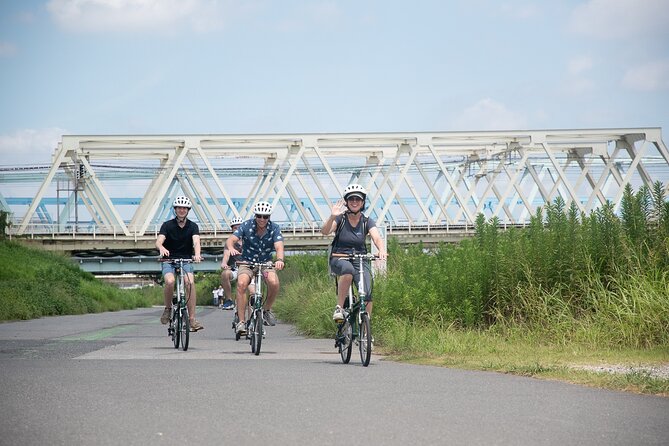
Even though the tour is only about 3 hours, it’s designed to feel like a quick “Tokyo orientation.” The ride links landmark clusters in a way that’s hard to replicate on your own without planning a lot.
Here’s how it tends to work in practice:
- you’ll spend short, focused chunks at key photo and viewing spots (often around 10 minutes each)
- you’ll move between them with enough cycling time to see the streets change character—modern towers, park edges, shrine approaches, then back into the rush-zone streets
One useful detail: your route depends on your starting and ending point. That’s why you might see certain stops swapped in or out. If there’s one place that matters most to you, ask for it when you book, because the order and inclusion can change based on logistics.
Also, your guide typically offers options for quick breaks. In the feedback, that’s included choices like a convenience store stop (7-Eleven) or a coffee shop-type pause, which is practical when the city heat or humidity kicks in.
Tokyo Tower Photo Breaks and Less-Obvious Angles
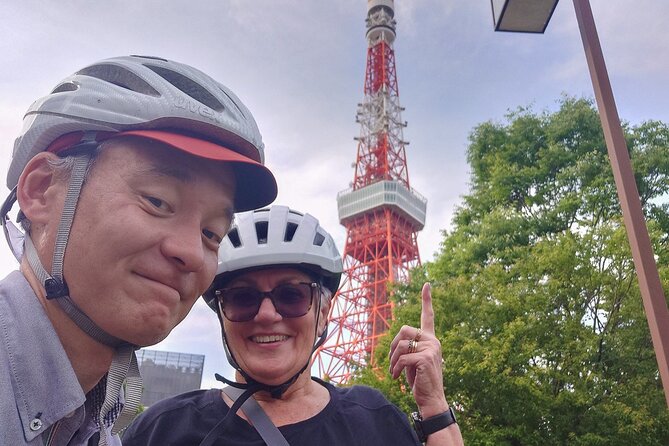
Tokyo Tower is the kind of landmark you think you already know—until you see it from a bike route with guidance. The tour builds in a dedicated stop for Tokyo Tower, with time for both famous photo points and other angles that aren’t the usual postcard view.
What’s valuable here isn’t just the tower itself. It’s the way you’re introduced to the area around it. Your guide can point out visual cues that help you understand Tokyo’s layout—how neighborhoods stack, where the best sight lines tend to be, and where to stand for cleaner photos.
One note: Tokyo Tower may or may not be included depending on the route version. That’s not a “bait and switch” thing—it’s simply route-dependent. If Tokyo Tower is on your top-three list, make sure it’s requested.
Imperial Palace Perimeter and the Moat-Side View of History
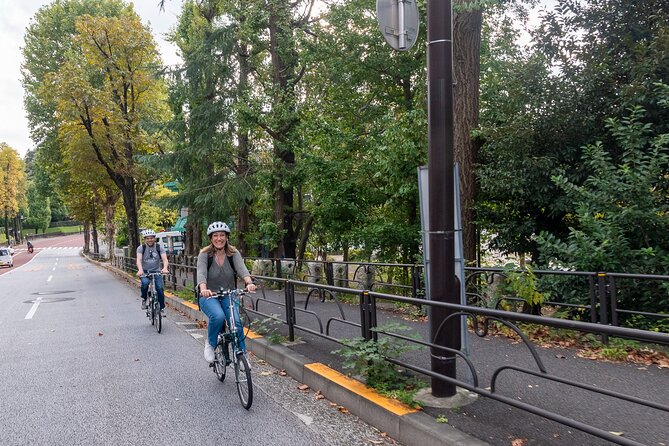
Next up is the Imperial Palace area, focused on the perimeter where you can trace the former moats. Even if you don’t plan to do deep museum-style studying, this stop gives you a sense of how power and space worked historically in Japan—using the geography you can actually see.
This is the kind of stop that works well in a short time window because it’s visual. Instead of only hearing facts, you’re also looking at the shape of the grounds and the edges of what used to be protective boundaries. That makes the stories stick better.
Another plus: the tour design keeps these stops brief and purposeful. You get a quick context lesson, photo time, and then you’re back on the bike moving again.
As with other sites, inclusion can vary by route, but the Imperial Palace stop is listed as a standard option.
Parks and Shrines: Yoyogi, Ueno, Kanda, and Tokyo’s Breathing Spaces
Tokyo is famous for being intense, but it also has these pockets where the city slows down. This tour uses that idea on purpose by threading in parks and spiritual stops between major sights.
Yoyogi Park is one of the listed park breaks—time to breathe, stretch your legs, and reset. Park time matters on a cycling tour because it prevents the day from turning into nonstop “look, look, photo, move.” You’ll feel the difference when you ride from streets back into greenery.
Ueno Park is another big one, and the value here is scale plus meaning. You cycle through one of Tokyo’s largest park zones, and the guide explains why it’s important in local terms, not just as a name you’ve heard.
Then there’s Kanda Shrine, where the stop is about understanding a spiritual side of Japanese life that you might miss if you only focus on temples as photo locations. The approach is usually more about atmosphere and what people consider meaningful than about long walking.
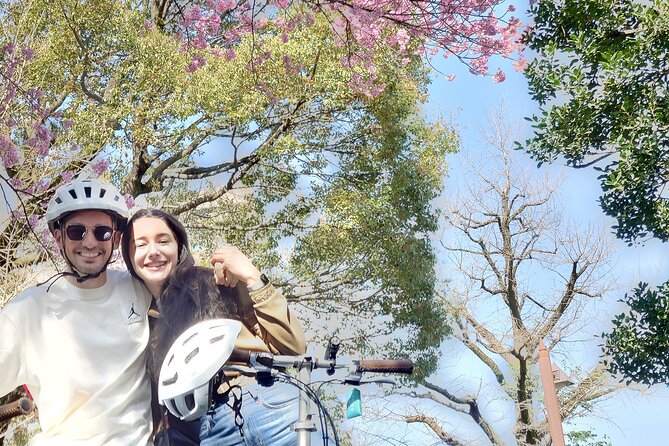
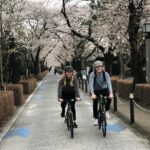
One more planning point: park/shrine stops like Yoyogi, Shioiri Park, and Kanda may vary depending on route. If parks are your thing, tell your guide what time of day you prefer—morning, late afternoon, and cherry-blossom season changes what makes sense to prioritize.

Shibuya Crossing by Bicycle and City Views From Tokyo Met Government Buildings
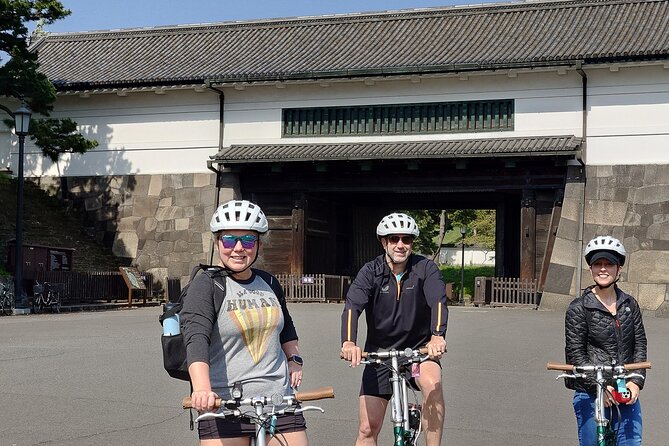
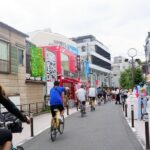
Shibuya Crossing is the moment you recognize immediately, even if you don’t know the address. The tour’s version is by bicycle, so you’re not just standing still in the crowd. You’re experiencing it as movement—watching lanes, signal rhythms, and the sheer flow of people from a rider’s perspective.
That said, this is also the busiest kind of stop. The guide’s job is critical here: keeping the group safe, guiding where to stop, and making sure you’re not trying to negotiate crossing chaos on your own. In the feedback, safety focus comes up repeatedly, and that’s exactly what you want at a place like Shibuya.
Depending on the route, you may also get time at the Tokyo Metropolitan Government Buildings viewing area, described as a twin-tower look from a good viewpoint. This kind of stop works when you want a broader skyline snapshot after the intensity of Shibuya.
If these are your must-sees, it’s smart to put them front-and-center when you book. The route is adjustable, but the guide still needs to balance time and traffic patterns.
Tsukishima Monja Street and Asakusa’s Kaminarimon Gate for Food-and-Photo Tokyo
The tour doesn’t treat food culture as an optional add-on. It’s built into the flow via Tsukishima Monjya Street, known for monja-yaki (Tokyo-style savory griddle cooking). The point of this stop isn’t that you’ll eat a full meal on the tour—lunch isn’t included. It’s that you’ll see the street character and hear the local context that’s hard to catch just by reading a sign or walking by.
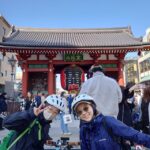
Then the ride can continue toward Asakusa’s Kaminarimon Gate, the big lantern entrance you’ll recognize from photos almost instantly. The stop is meant for photos and orientation to the Senso-ji area feel—without turning your half-day into a long temple circuit.
Both of these stops are listed as around 10 minutes each in the standard plan, so think of them as “taste the vibe” moments. If you want to go deeper after the tour, you’ll have a much easier time navigating because you’ve already gotten your bearings on foot-and-bike friendly streets.
Comfort, Safety, and Rules You’ll Follow on a Bike in Japan
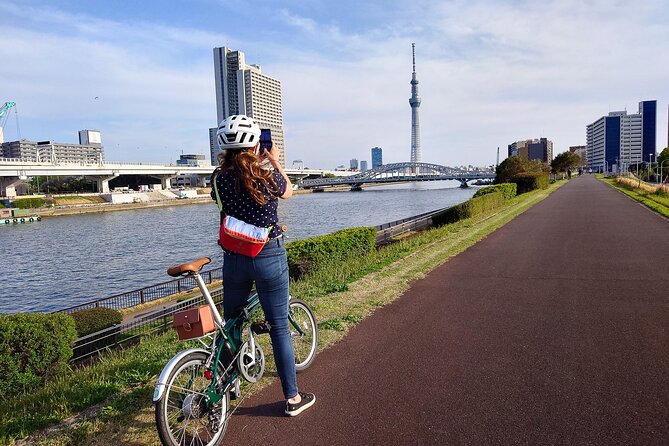
A private e-bike tour is only fun if it feels safe and understandable. This one includes:
- helmet use
- insurance
- a brief road-rules introduction in Japan
- an in-person English guide
It also comes with clear ride rules that matter for comfort. You should expect no wireless earphones and no smartphone use while cycling. If you’re the kind of person who takes constant videos while biking, you’ll need to adjust. The tour is designed so you keep your attention on the road and your guide.
Dress matters too. You’ll want closed-toe shoes and avoid sandals, flip-flops, skirts, high-heeled shoes, and pants with wide or flared bottoms. That’s not just etiquette—it’s practical because loose fabric can snag or make pedaling awkward.
There are also rider guidelines: it’s ideally for people around 145 cm to 185 cm and under 100 kg. The tour is listed as suitable for most travelers and ideally for age 10 and older. If you’re outside those ranges, double-check before booking.
Price: What You’re Paying for at $145.35 (and When It’s Worth It)
At $145.35 per person for about three hours, this isn’t a “cheap and cheerful” activity. What you’re buying is convenience plus guidance plus equipment.
You get:
- hotel pickup and drop-off
- an e-bike and helmet
- insurance
- an English-speaking guide to navigate Tokyo streets
- a private experience for only your group
If you’re comparing this to doing the same day on public transport, the math often favors this tour because you’re not paying for repeated transit, and you’re not losing hours to route planning. It’s also a better deal when you’re tired at the end of day one and just want to see multiple neighborhoods efficiently.
One practical cost note: lunch, bottled water, coffee/tea, and snacks aren’t included. Your guide may suggest or offer break options during the ride, but you’ll still want to bring a budget for refreshments.
If you’re traveling as a small group, ask about group discounts. The listing states they’re available, and that’s often the easiest way to make the price feel more comfortable.
Who This Tour Fits Best (and Who Might Prefer Something Else)
This tour fits best if you want:
- an efficient first day that helps you understand Tokyo’s geography
- a low-stress way to hit big sights like Tokyo Tower and Shibuya Crossing
- local context at stops that are hard to interpret on your own
It’s also a nice fit for families with older kids or teens, since the ride is private and the guide can manage the pace. In the feedback, family groups and people doing a first Tokyo intro day both sound especially happy with how safe and flexible it feels.
You might choose something else if:
- you want long, slow museum-style stops
- you strongly prefer staying fully hands-free with earbuds and frequent phone use
- you’re planning a day where the weather is uncertain, since the tour requires good weather
Should You Book Tokyo Bike Bliss’s Private 3-Hour E-Bike Tour?
I’d book it if you want a smart “Tokyo starter pack” and you like moving through neighborhoods rather than collecting landmarks from sidewalks. The combination of hotel pickup, a private English guide, and the chance to ride through both icon zones and more local-feeling streets is exactly what makes this type of tour good value.
Do book with intention: send your must-sees when you reserve, and be realistic about the 3-hour timebox. If Tokyo Tower and Shibuya Crossing are your top priorities, you’ll get the most satisfaction when you treat the other stops as bonuses you may swap in and out.
If you’re okay with cycling rules like no phone use while riding, this will feel like one of the most efficient ways to understand Tokyo quickly.
FAQ
How long is the e-bike tour?
The tour lasts about 3 hours.
What does the tour cost?
The price is $145.35 per person.
Is the tour private?
Yes. It’s a private tour/activity, and only your group participates.
Does the tour include hotel pickup and drop-off?
Yes, hotel pickup and drop-off are included.
What’s included in the price?
Included are the use of the bicycle, helmet, insurance, brief instructions about road regulations in Japan, and an in-person English guide.
Are tickets or admission costs included?
Admission tickets are listed as free for the stops where that detail is shown.
What isn’t included?
Lunch, bottled water, coffee and/or tea, and snacks aren’t included.
Are there any restrictions on clothing or footwear?
Yes. No smoking or alcohol before/during the tour. You should also avoid sandals, flip flops, skirts, high-heeled shoes, and pants with wide or flared bottoms.
What are the rider requirements?
It’s ideally for people 145 cm to 185 cm tall and under 100 kg. It’s ideally for ages 10 and older, and it’s listed as suitable for most travelers.
What happens if the weather is bad?
The experience requires good weather. If it’s canceled due to poor weather, you’ll be offered a different date or a full refund.
Can I change the start/end time or request specific stops?
You can change the starting/ending time and spot, and you can request stops, but changes may be subject to additional charges.