REVIEW · TOKYO
Tokyo Great Cycling Tour
Book on Viator →Operated by 東京グレートサイクリングツアー · Bookable on Viator
Tokyo clicks into a different gear on a bike. I like the small-group pace and the way you can move with locals instead of squeezing into slow tourist routes. You’ll also get to see places bigger vehicles miss, which makes the day feel longer and more complete than a typical walking loop.
I love how the guides keep things smooth and safe, and names like Toshi, Naoko, and Nick come up again and again in the group’s experiences. The main thing to consider is simple: this is a 6-hour ride and it calls for moderate physical fitness, so you’ll want to be comfortable pedaling through city streets and stops.
In This Review
- Key things to know before you pedal
- Tokyo on Two Wheels: Why This 6-Hour Plan Feels Efficient
- Bikes Over Cars: How the Route Gets You Past Usual Travel Bottlenecks
- Tsukiji Jogai Market: Market Energy Without the Inner-Market Maze
- Zojo-ji Temple and Tokyo Tower Contrast: Old Faith, Big City
- The City in Transit: High-Rise Views and a Fashionable Cemetery
- Meiji Jingu Shrine: A Shinto Pause in the Middle of the Day
- Imperial Palace: Where the Emperors Live (and the Area’s Meaning)
- Price and Value: What $99.49 Buys You in Real Terms
- Who This Bike Tour Suits Best (and Who Might Feel Strained)
- What to Expect From Your Guide and Day Rhythm
- Practical Tips for Enjoying the Ride Without Stress
- Should You Book This Tokyo Great Cycling Tour?
- FAQ
- How long is the Tokyo Great Cycling Tour?
- What’s the tour price per person?
- Where does the tour start and end?
- What time does the tour begin?
- How large is the group?
- Is the tour ticket digital?
- What physical fitness level do I need?
- What are the main stops on the route?
- What happens if weather is poor?
Key things to know before you pedal
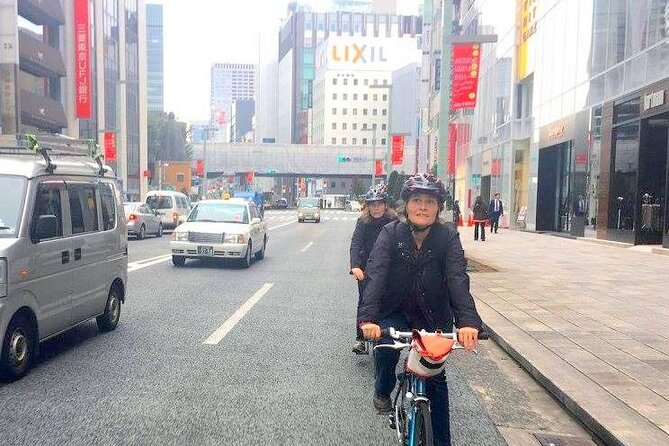
- Small group (max 12) means you get more attention and easier conversation while you ride
- Bike access beats buses for reaching spots that are hard to get to quickly on foot
- Guides focus on history and culture as you move between major landmarks
- All the big hits are spaced out so you’re not just circling one neighborhood all day
- Expect a weather-smart plan since the tour depends on good conditions
Tokyo on Two Wheels: Why This 6-Hour Plan Feels Efficient
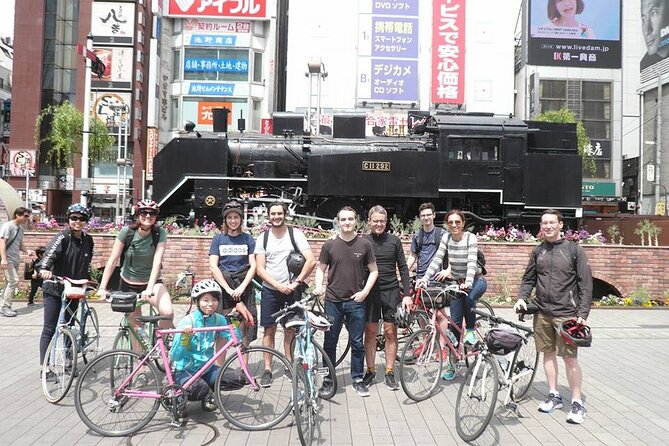
Tokyo is a city of layers—markets, temples, office towers, and quiet ritual spaces all within a short ride. A bike tour gives you the “I saw a lot” feeling without the exhaustion of constant walking. With a start time of 9:00am and about 6 hours on the move, you get a structured day that still leaves time to absorb what you see.
The small-group size (up to 12) matters more than it sounds. Fewer people means less waiting around at intersections and a better rhythm at each stop. It also helps your guide keep the pace steady so you’re not constantly playing catch-up.
You can also read our reviews of more tours and experiences in Tokyo.

Bikes Over Cars: How the Route Gets You Past Usual Travel Bottlenecks
One of the best values in this tour is its core idea: bikes can access places buses can’t reach. That turns “location” from a vague word into a real advantage. If you’ve ever spent time stalled near big roads or stuck far from a landmark, you’ll feel the difference when you’re actually positioned for photos and sightlines without a long scramble.
The day also avoids the common walking-tour problem—big gaps between “must-see” points. Riding keeps momentum, so you can go from one kind of Tokyo to another in a way that feels natural, not rushed. Even when the stops are short, the travel between them is part of the experience.
Tsukiji Jogai Market: Market Energy Without the Inner-Market Maze
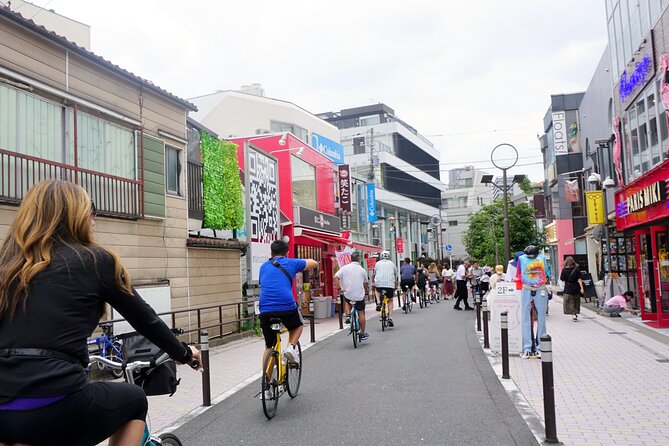
You start at the Tsukiji Jogai Market, which still has a steady flow of local shoppers and visitors even after the Inner market moved to Toyosu. This is a great opening stop because it sets the tone: busy, practical, and very Tokyo. You’ll get a close look at the kind of everyday commerce that makes the city feel alive.
The stop is scheduled for about 15 minutes and admission is free. For most people, that’s the sweet spot. It gives you enough time to take in the atmosphere and notice details, but it doesn’t trap you in a long “shopping first, sightseeing later” pattern.
A note for your comfort: markets can be crowded and sunny. If you’re sensitive to heat or glare, plan to wear sun protection and keep water handy before you start pedaling.
Zojo-ji Temple and Tokyo Tower Contrast: Old Faith, Big City
Next up is Zojo-ji Temple, described as an old Buddhism temple, with the striking contrast between traditional buildings and Tokyo Tower behind it. That “two worlds at once” view is a big reason this stop works. You’re not just visiting a landmark—you’re seeing how Tokyo layers the old onto the modern skyline.
This is also a free admission stop with about 15 minutes. Short visits are common in a bike tour, and that’s okay here. Zojo-ji is the kind of place where you can understand the scene quickly: the architecture, the setting, and that famous back-of-frame skyline effect.
If you’re the type who likes to linger, just remember you’ll have other major stops later. Use your time at Zojo-ji to get the overall look first, then snap photos second, then do any quick questions with your guide.
The City in Transit: High-Rise Views and a Fashionable Cemetery
After Zojo-ji, the route shifts through an area filled with high-story apartments, expensive shopping, and office buildings. This segment is useful because it changes your pace mentally. You go from temple grounds to the stacked realities of Tokyo’s everyday life—where people live, work, and shop in vertical layers.
Then there’s another contrast stop: a cemetery located in the middle of fashionable areas. That kind of placement can feel surprising at first, and it’s exactly why it’s worth pausing. Tokyo doesn’t separate sacred and everyday space the way many travelers expect, and a bike tour gives you room to notice that without rushing.
You won’t get long stays here, so aim for a quick “orient and observe” approach. Ask yourself what feels different about the neighborhood around you—street width, crowd flow, and how the buildings frame the view.

Meiji Jingu Shrine: A Shinto Pause in the Middle of the Day
Meiji Jingu Shrine is next, and it’s called Tokyo’s most popular Shinto shrine. Expect this to feel like a reset from the urban edges you’ve been cycling through. Even with a short stop time of about 20 minutes and free admission, it’s enough to take in the scale and the shift in atmosphere.
Because this is a major destination, it’s also the kind of place where order matters: follow your guide’s cues and avoid blocking others while you take photos. The goal isn’t to “win the perfect shot.” It’s to use the visit as a mental break while your legs keep rolling.
If you’re interested in culture, this is a good time to listen closely to what your guide explains. The tour is designed for Japanese history and culture as you pedal, and shrine stops are often where that context clicks.
Imperial Palace: Where the Emperors Live (and the Area’s Meaning)
Your final landmark stop is the Imperial Palace, described as where the Emperor and Empress live. Even if you’re not seeking ceremonies or formal events, this is still a powerful Tokyo moment. It’s a reminder that modern Tokyo sits beside places tied to national identity.
This stop is about 15 minutes and free admission. In a bike tour, shorter visits help keep the day energetic. You get a strong “capstone” experience without turning the last part of the tour into a long waiting-and-standing stretch.
Use this time to think back on your earlier contrast stops—market energy, temple tradition, high-rise city life, and then the palace area. Together, they show a Tokyo that’s not stuck in one theme.
Price and Value: What $99.49 Buys You in Real Terms
At $99.49 per person, this tour is priced for people who want structure without paying for a private guide. The value comes from the combination of small-group attention, multiple major sights, and bike mobility that cuts down on the friction of getting around.
The tour runs about 6 hours, and you start at 9:00am. That length is long enough to feel like you earned your day, but it’s also manageable if you plan your energy. It’s also a good price point for a day that hits several free admission highlights, which reduces the feeling of “paying to enter the same museum type of stops.”
One more detail I think matters: the tour is typically booked about 46 days in advance on average. That tells you demand is real. If your schedule is fixed, lock it in early rather than waiting for last-minute availability.
Who This Bike Tour Suits Best (and Who Might Feel Strained)
This is a great fit if you want to see a lot of Tokyo landmarks in one go and you prefer riding over constant walking. You don’t need to be an athlete, but you should be comfortable with a moderate fitness level since you’re cycling for hours.
It also suits couples and families who want a guided day with calmer group dynamics. Reviews highlight how guides actively look after safety and comfort, which is exactly what you want when you’re sharing streets with Tokyo traffic.
If you dislike being on a bike for extended stretches, or if you know you get uncomfortable with steady physical activity, you may find this style tiring. In that case, you’d probably be happier with a shorter, more stop-and-snack focused tour.
What to Expect From Your Guide and Day Rhythm
Guides are a core part of the experience. Names like Toshi, Naoko, and Nick show up in feedback, and the tone is consistent: they keep an eye on safety and welfare while guiding you through neighborhoods.
You should also expect the schedule to flex for comfort. One experience notes that on a hot day, what was planned as a picnic was changed to lunch at an izakaya. That kind of adjustment is more than kindness—it can be the difference between a great day and a miserable one.
Ride rhythm typically means a series of short landmark stops, then movement between them. You’ll get enough time to look, listen, and take photos without turning the trip into a series of long queues.
Practical Tips for Enjoying the Ride Without Stress
Start with the obvious: wear comfortable shoes and dress for the weather. Tokyo heat and sun can hit hard, especially in the middle of the day, and you’ll be moving outdoors for much of the tour.
Bring a small day bag if you can, but keep it simple. You don’t want to wrestle with bulky items while you’re stopping, getting oriented, and hopping back on.
Also, take the tour’s mobile ticket at face value: have your phone charged and ready. If your battery is shaky, bring a portable charger so you’re not dealing with last-minute tech anxiety.
Should You Book This Tokyo Great Cycling Tour?
If you want a classic Tokyo sampler—market area, a temple with skyline contrast, a shrine, and the Imperial Palace—this tour is an efficient way to do it. I’d book it if you like guided context, prefer a small group, and want bikes to get you places that feel hard or slow on foot.
I would think twice if you’re expecting a leisurely, mostly-rest day. This is a 6-hour cycling experience, and it’s built for movement as much as for sightseeing.
If your goal is to see far more than a normal day of walking can manage, and you want the added comfort of an attentive guide team, this one is a strong choice.
FAQ
How long is the Tokyo Great Cycling Tour?
The tour runs for approximately 6 hours.
What’s the tour price per person?
The price is $99.49 per person.
Where does the tour start and end?
It starts at Tokyo Great Tours, 1-chōme-3-2 Shinkawa, Chuo City, Tokyo 104-0033, Japan, and it ends back at the meeting point.
What time does the tour begin?
The start time is 9:00am.
How large is the group?
This experience has a maximum of 12 travelers.
Is the tour ticket digital?
Yes, it uses a mobile ticket.
What physical fitness level do I need?
The tour is for people with a moderate physical fitness level.
What are the main stops on the route?
You’ll visit Tsukiji Jogai Market, Zojo-ji Temple, Meiji Jingu Shrine, and the Imperial Palace, plus additional short stops along the way.
What happens if weather is poor?
This tour requires good weather. If it’s canceled due to poor weather, you’ll be offered a different date or a full refund.