REVIEW · HIROSHIMA
Hiroshima Scenic Cycling Guided Tour
Book on Viator →Operated by Sunset Tour in Hiroshima's Peace Park · Bookable on Viator
Electric bikes make Hiroshima feel easy. This small-group ride covers key sights with local stories and a route that goes beyond the usual tourist loop. You’ll glide past the Peace Memorial Park areas, then swing out toward Hiroshima Castle and the lesser-seen Mitaki Temple.
I love two things about this tour: the relaxed pacing of a max-8 group, and the way your guide turns stops into real context, not just photo stops. The electric assist also helps you move faster between areas without feeling like you just survived a workout.
One thing to plan for: you still need moderate fitness and knee mobility (bending at the knee to about 90°). Even with the pedal assist, there can be hills and you’ll be riding for a few hours, plus summer heat is a real concern.
In This Review
- Key things to know before you pedal Hiroshima
- Electric-assisted cycling that actually fits real schedules
- Your route: Peace Memorial Park first, then castle views, then Mitaki’s calm
- Stop 1: Hiroshima Peace Memorial Park and the surviving pieces
- Stop 2: Hiroshima Castle grounds and the moat-photo rhythm
- Stop 3: Mitaki Temple for a slower, different kind of Hiroshima
- What the guide adds (and why it matters for value)
- E-bike comfort and fitness reality check
- The best part: you keep the bike after the tour
- Price, timing, and whether it’s a smart use of your day
- Where this tour fits best in your Hiroshima plan
- FAQ
- FAQ
- How long is the Hiroshima scenic cycling guided tour?
- What stops are included on the tour?
- Is admission included for the stops?
- What’s included in the price?
- What should I know about fitness and riding ability?
- Where does the tour end, and what can I do afterward?
- Should you book this e-bike tour?
Key things to know before you pedal Hiroshima
- Small group of up to 8 means you’re not stuck waiting at every corner
- Electric-assisted bike helps you keep an easy cruising pace, even with hills
- Peace Memorial Park route includes the atomic bomb dome and monuments, plus surviving bridges
- Mitaki Temple stop is a rare add-on that most visitors miss
- Bike stays with you all day so you can keep exploring after the guided portion
- Ends at JR Yokogawa Station right after lunch time, convenient for tram and JR/bus onward travel
Electric-assisted cycling that actually fits real schedules
Hiroshima is the kind of city where you want to see a lot, but you don’t want to spend your whole day in lines or zig-zagging on foot. This guided e-bike tour hits that sweet spot: you get structure for the important sites, and you don’t feel rushed because the ride is designed to be comfortable.
The electric assist is a big deal here. It doesn’t mean you sit back and do nothing. You’ll still pedal, but the bike gives you help when the route rises or when you just need a steady effort. I like how that changes the day from strenuous to manageable—especially when you’re dealing with Hiroshima’s summer heat risk (the tour specifically warns heat-prone guests to avoid summer).
And because the group is capped at 8, the tour feels like a day out with a guide, not like an assembly line. That matters when you want to ask questions or when you’re trying to understand what you’re looking at instead of rushing through.
You can also read our reviews of more tours and experiences in Hiroshima.

Your route: Peace Memorial Park first, then castle views, then Mitaki’s calm
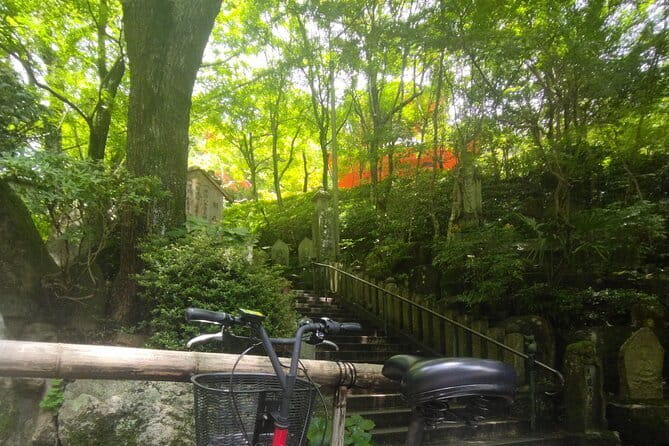
The ride is about 3 hours 30 minutes total, starting at 10:00 am. The stops are timed well: you get a meaningful block at Peace Memorial Park, enough time to enjoy Hiroshima Castle grounds, and then a full hour at Mitaki Temple—long enough to slow down.
What makes this route work is the mix. Peace Memorial Park brings the history and the official memory of the city into focus. Hiroshima Castle gives you a visual contrast with moats and fortress-like interiors. Mitaki Temple shifts the mood again, toward quiet and spirituality—something that’s hard to find on a standard sightseeing loop.
Below is what to expect at each stop and what to watch for.
Stop 1: Hiroshima Peace Memorial Park and the surviving pieces
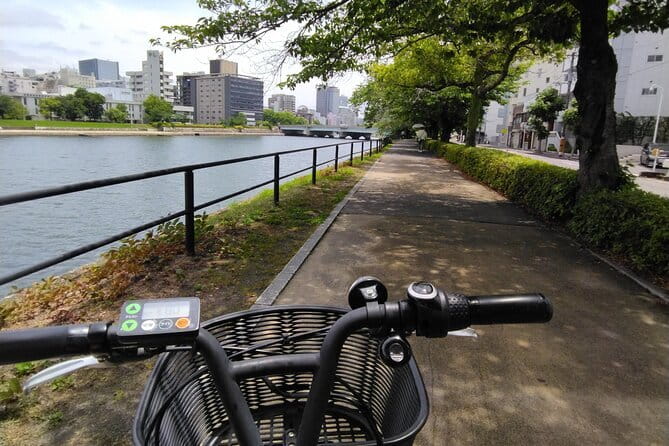
You start at Hiroshima Peace Memorial Park, with about 45 minutes on-site. The guide helps you see the park as a whole rather than getting stuck only at the highlights. You’ll cover major monuments, including the atomic bomb dome, and you’ll also see bridges that survived. That detail is important because it changes how you understand the place—you notice what remained, not only what was rebuilt.
The guide’s role here is more than narration. You’re learning how the memorial areas connect to the city’s story, and you’re getting facts and small details that can be easy to miss if you’re only reading plaques on your own.
A practical note: Peace Memorial Park is meaningful, and it can feel emotionally heavy. The e-bike format helps because you’re not cramming a lot of walking into a short time. You can take a breather between viewpoints without losing your place in the tour.
Stop 2: Hiroshima Castle grounds and the moat-photo rhythm
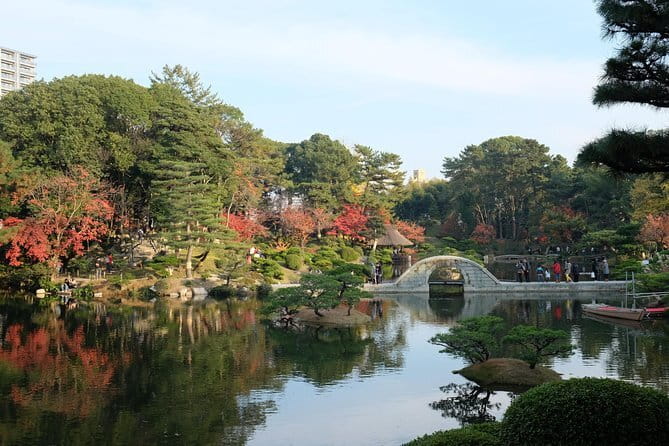
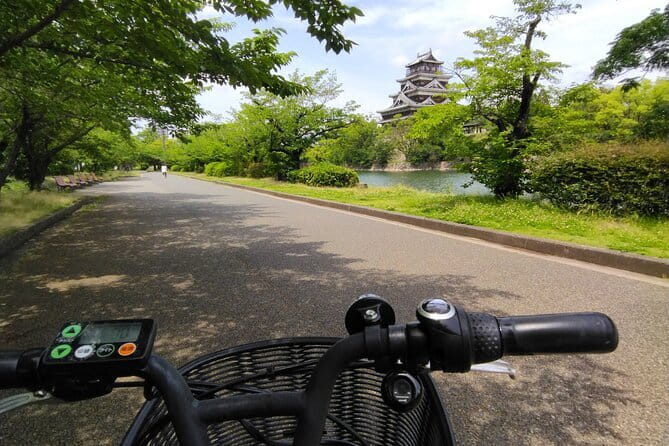
Next is Hiroshima Castle, scheduled for about 30 minutes. Even in a short time block, it’s set up for quick wins: the moat area offers strong photo angles, and the grounds include a temple presence within the castle space—your guide points out that Hiroshima’s largest temple is located here.
What I like about this stop is the pacing. You get enough time to walk the key areas, look around the fortress-like feel of the inner grounds (it’s described as looking like a 1600s Japanese fortress), and still move on without the tour bogging down.
If you’re the type who hates feeling “done” too quickly, this may feel brief—but it’s also one reason the rest of the route works. Castle is a stop, not the entire plan.
Stop 3: Mitaki Temple for a slower, different kind of Hiroshima
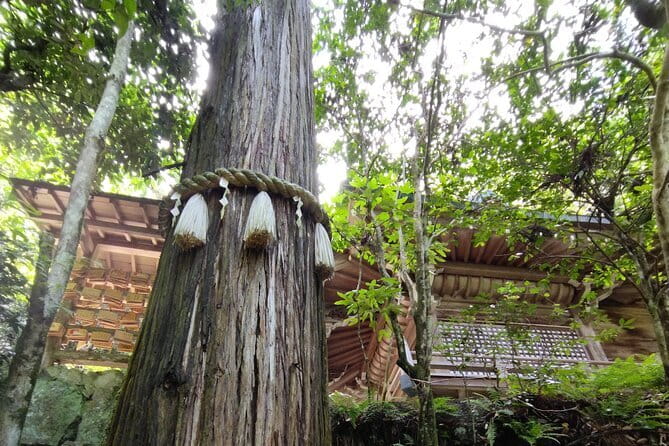
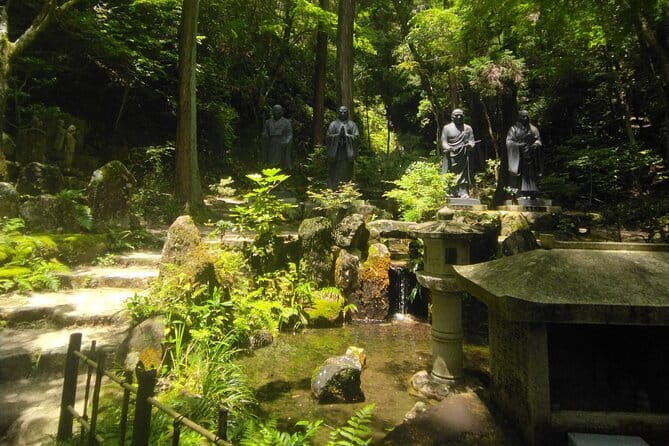
Then you ride to Mitaki Temple, with about 1 hour there. This is the part that changes the character of the whole tour. Mitaki Temple is presented as the only tour in Hiroshima that visits it, and that alone makes it worth paying attention to if you want variety beyond the big-name sights.
Here’s what you can expect from the guide’s framing: Mitaki is considered among the most beautiful temples in the Chugoku region, and some comparisons even place it above top Kyoto picks. The important takeaway for you isn’t the argument—it’s that the stop is respected and different enough to feel like you escaped the usual pattern.
Entrance is free, and there’s a suggested contribution. That’s typical at many religious sites, but it’s still worth keeping in mind so you’re not surprised.
This is also where the e-bike tour pays off again. By the time you reach Mitaki, you’ve already seen the major memorial context. The temple stop gives you a calmer rhythm, more time to take photos, and a chance to notice details you might otherwise overlook.
What the guide adds (and why it matters for value)

The tour’s biggest strength is the human layer: your guide connects the dots between what you see and what it means. In the experience feedback, guides are praised for being friendly, answering questions, and telling interesting stories that make the route click faster.
One guide name that shows up is Joshua. People noted that he made the day in Hiroshima better and was informative. That type of guidance is exactly what transforms a cycling tour from transportation into learning.
Also, since the group is small, you’re more likely to hear answers that apply to what you care about, not just a scripted talk for the whole group.
E-bike comfort and fitness reality check

This tour is often described as effortless, and the electric assist really helps. But you still need to meet the ride basics.
The tour lists a few clear considerations:
- Moderate physical fitness is required
- You must be able to bend at the knee to about 90°
- There’s a caution for people prone to heat stroke, especially in summer
- If you’re prone to vertigo, or you’re taking medication not safe for driving, the tour asks you to be careful
So yes, the bike helps with hills and effort. But you’re still doing a real activity, not a casual stroll.
My advice: if you’re comfortable riding a bicycle at all, you’ll likely be fine. If your mobility or balance is limited, or if summer conditions hit you hard, skip it or choose a different time of year.
The best part: you keep the bike after the tour
One smart feature here is that you can keep the bike for the full day. The guided segment gives you the route and context, and then you’re free to keep exploring at your own pace afterward.
That turns the e-bike into more than a 3.5-hour activity. For value, it matters. You’re paying for a guided start, then using the bike as transport across your day.
And since the tour ends around lunch time at JR Yokogawa Station, you have an easy transition. The area is described as having English-menu options at many restaurants, and it’s a convenient spot to grab okonomiyaki without waiting in a long line.
Price, timing, and whether it’s a smart use of your day
The cost is $73.57 per person, which is not a budget bargain, but it’s also not out of reach for what you’re getting: a guided e-bike ride, a small group, and bike use beyond the tour’s official hours.
The timing helps, too. At 10:00 am and around 3 hours 30 minutes, you’re not burning your entire day. You finish shortly after lunch time, and that’s a big deal in cities where afternoons can be harder to plan.
Also, this is something people book ahead for a reason. On average, it’s booked about 22 days in advance, suggesting it fills up when schedules match the ride windows.
In short: if you want history and you also want an efficient, fun way to move around, the price can make sense. If you mainly want to wander at a slow pace and don’t care about structured stops, you might do better with self-guided walking.
Where this tour fits best in your Hiroshima plan
This guided e-bike tour is best if you:
- Want to cover Hiroshima’s major story points without standing in lines
- Prefer a small-group guide who can answer questions
- Like mixing heavy history with a quieter temple stop
- Feel unsure about timing and stamina for lots of walking
It may not be ideal if:
- You don’t feel comfortable with hills or sustained cycling effort, even with assist
- Heat makes you feel unwell quickly
- You have vertigo concerns or medication issues related to safe riding
If you’re traveling with kids, it might work in some cases, but the tour data only says moderate fitness and knee bending ability—so you’d need to judge fit carefully for your group.
FAQ
FAQ
How long is the Hiroshima scenic cycling guided tour?
It’s about 3 hours 30 minutes total.
What stops are included on the tour?
The tour visits Hiroshima Peace Memorial Park, Hiroshima Castle, and Mitaki Temple.
Is admission included for the stops?
Admission is free at each listed stop, and entrance to Mitaki Temple is also free (with a suggested contribution).
What’s included in the price?
You get use of the bicycle and a guide.
What should I know about fitness and riding ability?
You should have moderate physical fitness, be able to bend your knee to about 90 degrees, and take care if you’re heat-prone in summer. There are also cautions for people prone to vertigo or taking medication not safe for driving.
Where does the tour end, and what can I do afterward?
It ends at JR Yokogawa Station just after lunch time, which is convenient for tram and JR/bus connections. The area is also described as having English menus and good chances to find okonomiyaki.
Should you book this e-bike tour?
I’d book it if you want Hiroshima to feel efficient and human at the same time. You get the memorial area with clear guidance, a classic photo-and-walk stop at Hiroshima Castle, and then a temple visit (Mitaki) that gives your day a different tone.
Skip it only if the ride time and cycling demands don’t match your body right now, or if summer heat and balance concerns are likely to be an issue. If you’re a confident rider and you appreciate structure with room to breathe, this is a smart way to see more of Hiroshima without draining the day.