REVIEW · HIROSHIMA
Okunoshima Rabbit Island Cycling Tour with Local Guide
Book on Viator →Operated by 竹原DMO · Bookable on Viator
Rabbits on a wartime island sounds unreal. This Okunoshima Rabbit Island cycling tour pairs a bike ride in the Seto Inland Sea with a local expert who brings the island’s quieter, darker past into focus—not just the photo stops. I love the way you get both wild rabbits and context that explains why Okunoshima was once removed from maps. The other big plus is practical value: the route is short, the stops are mostly free, and the guide keeps it moving without rushing. The main catch is that several key sites are view-only from nearby points because entry is currently prohibited.
You’ll ride a shared group format (up to 5 people) for about 2 hours, and you should be comfortable with moderate effort on a bicycle. One extra cost to plan for: the ferry to reach Okunoshima is not included (360 yen one way, Tadanoumi to Okunoshima).
In This Review
- Quick take: what makes this tour work
- Okunoshima Rabbit Island cycling tour: the setting that flips the mood
- Getting to the starting point and riding for about 2 hours
- Stop-by-stop: lighthouse views, a rabbit shrine, and forbidden ruins
- Stop 1: Okunoshima Lighthouse (view from a distance, ticket free)
- Stop 2: Okunoshima Island (1 hour on the island)
- Stop 3: Okuno Shrine (rabbits + a calmer pause)
- Stop 4: Nagaura Poison Gas Storage Ruins (view-only, ticket free)
- Stop 5: Power Plant Ruins (view-only, used for secret production)
- Stop 6: Northern Cannon Battery Remnants (the one you can see more closely)
- The guide experience: what you’re really paying for
- Price and value: what’s included, what’s not, and how to budget
- What to expect from the rabbits (and how to get the most out of it)
- Weather: why rain can cancel and what that means for planning
- Who should book this cycling tour (and who might prefer something else)
- Should you book the Okunoshima Rabbit Island Cycling Tour?
- FAQ
- Is this a shared group tour or private?
- How long is the Okunoshima cycling tour?
- Where does the tour start and end?
- What is included in the price?
- Do I need to pay for admission at the stops?
- Is the ferry fee included?
- What happens if it rains?
- Do I need good physical fitness?
- How will I receive my ticket?
- Can I cancel for a full refund?
Quick take: what makes this tour work
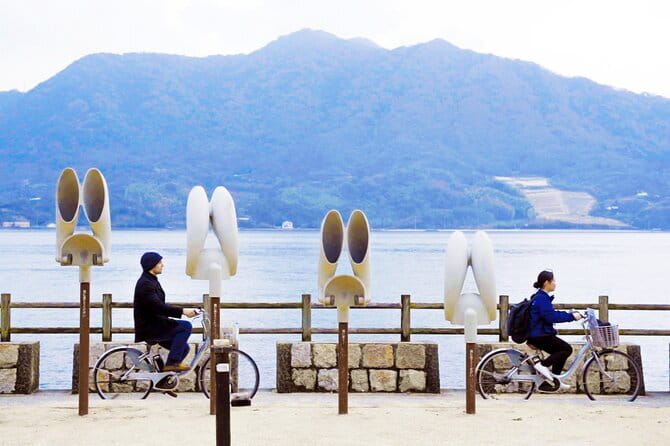
- Guided story, not just rabbits: you’ll hear how the island’s wartime purpose shaped what visitors see today.
- Bike + short route: the tour runs about 2 hours and packs in multiple viewpoints without a full-day commitment.
- View-only stops are still worth it: the lighthouse and several ruins can’t be entered, but the guide helps you look intelligently.
- Rabbits show up at unexpected places: the shrine area is part of the fun, not just the main “rabbit zones.”
- Small group pace: maximum 5 travelers means you’re not stuck listening over a crowd.
- Free admissions at stops: most stops have no ticket cost once you’re there.
Okunoshima Rabbit Island cycling tour: the setting that flips the mood

Okunoshima sits in the warm Seto Inland Sea, a region known for its chain of islands. The island itself is small—about a 4 km circumference—so a bicycle tour makes sense. You’re not trying to cross a huge island. You’re trying to move between meaningfully different corners.
What makes this experience stand out is the emotional contrast. First, you’re surrounded by rabbits—hundreds of them, wild enough that you may see them hopping near paths, gathering in quiet pockets, and acting like they own the place. Then the tour gently but firmly turns to what the island used for during wartime and how that history was hidden for a long time. That shift matters. It keeps you from treating Okunoshima like a pure animal park.
I like that the ride doesn’t pretend the island is only cute. It’s cute, yes. But it’s also a place where education is part of the visit. In a small group setting, that tone feels easier to hold: you can actually listen, not just look.
And since the island is in the Seto Inland Sea, you also get that slow, coastal pacing. Even if you’re not riding fast, the route keeps you outdoors the whole time, with frequent spots to pause and take in views.
You can also read our reviews of more tours and experiences in Hiroshima.



Getting to the starting point and riding for about 2 hours
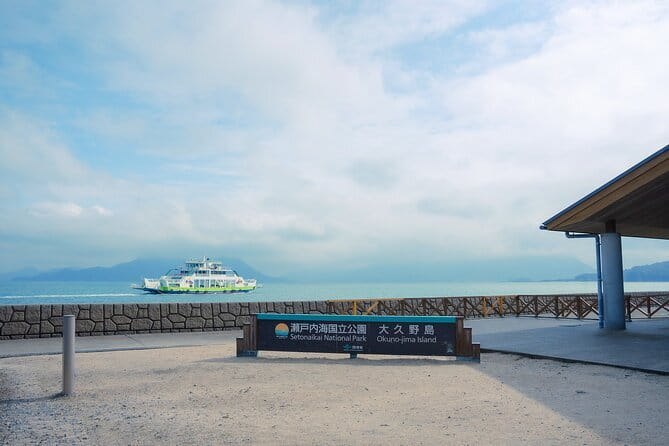
The tour meets at KYUKAMURA OHKUNOSHIMA (休暇村大久野島), address 5476-4 Tadanoumichō, Takehara, Hiroshima 729-2311. The tour ends back in front of the hotel. That matters because it simplifies your day. You don’t need to plan a separate endpoint or guess how you’ll get home after the ride.
You’ll also want to remember one basic logistics reality: the ferry fee is not included. The typical one you’ll see listed is 360 yen for the route between Tadanoumi and Okunoshima. If you’re budgeting, add that before you compare prices.
Once you’re on the island, the cycling part is straightforward. You get use of a bicycle as part of the tour. The ride is designed for moderate physical fitness rather than athletic fitness. Still, you’re moving for close to 2 hours total (including stop time), so it’s not the kind of outing where you can show up expecting to barely pedal.
This is also a shared group tour with a maximum of 5 travelers. That small ceiling helps a lot. It usually means your guide can answer questions without the whole group turning into a blur of different needs and languages.
Stop-by-stop: lighthouse views, a rabbit shrine, and forbidden ruins
The itinerary is built around short “arrive, pause, learn, ride again” segments. That’s a good format for Okunoshima because you’re balancing two attractions at once: rabbit moments and historical interpretation.
Stop 1: Okunoshima Lighthouse (view from a distance, ticket free)
You start at the Okunoshima Lighthouse area. You can view it from a short distance, but you can’t enter the lighthouse area right now. Admission is free.
Why this stop works anyway: the lighthouse is tied to the island’s geography and sense of isolation. Even from nearby, you get a strong visual anchor—one of those “this place is remote” reminders that makes the rest of the story land harder.
Practical tip: treat this as a framing stop. Snap a couple photos, then keep your eyes open for what you’ll learn later about how the island’s isolation played into its wartime secrecy.
Stop 2: Okunoshima Island (1 hour on the island)
Next is the main island segment, with about 1 hour allotted. This isn’t a single building tour—it’s the time you can connect the dots between scenery, rabbit life, and the historical route you’ll follow next.
You’ll also get a sense of scale. With only about 4 km around the island, it doesn’t feel endless. That’s good. It prevents the day from turning into a long slog where you stop paying attention.
This is also a great stretch for rabbit sightings—because in between the more formal stops, you’re simply wandering at a human pace with your guide’s context ready in your head.
Stop 3: Okuno Shrine (rabbits + a calmer pause)
At Okuno Shrine, you get about 10 minutes. It’s described as the island’s only shrine, and it’s also now home to rabbits.
This stop is shorter, but it does something useful: it slows the pace and shifts the mood slightly. It’s not only a cutaway for photos. The shrine gives you a pause where the rabbits feel more integrated into daily life on the island, rather than like the island is a staged attraction.
You’ll also likely appreciate the rhythm of the day here. After wartime-related ruins are discussed later, it helps to have at least one lighter, quieter setting early on.
Stop 4: Nagaura Poison Gas Storage Ruins (view-only, ticket free)
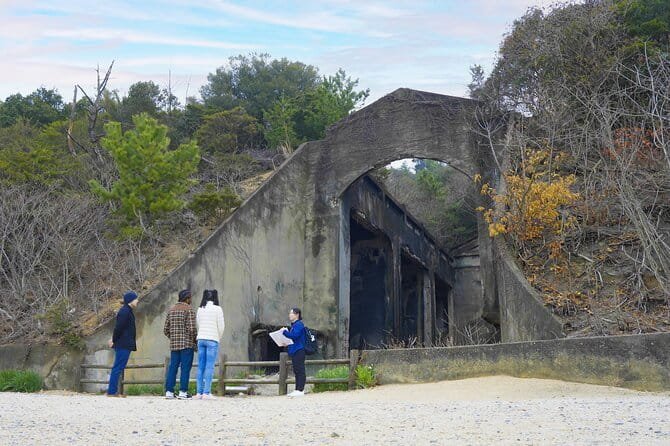
The Nagaura Poison Gas Storage Ruins stop is also about 10 minutes, and admission is free. Entry is currently prohibited for safety reasons, so you’ll be viewing the site from a short distance.
This is one of the most important stops, but it’s also one you should approach with the right expectations. You’re not walking through a facility. You’re looking at a place that once mattered to wartime production and storage, and you’re learning why it’s treated with caution today.
Why it’s still worth it: even without access, the guide can help you connect structure, location, and purpose. Seeing the ruins from nearby gives your brain a physical reference point. You don’t just hear about history in the abstract.
Stop 5: Power Plant Ruins (view-only, used for secret production)
Next is the Power Plant Ruins area, again around 10 minutes with no admission fee. Like the poison gas storage ruins, you can view the area from a short distance because entry is currently prohibited.
The key detail here is what the power plant was used for—supporting secret poison gas production on the island. That explanation is exactly why this stop fits into the tour rather than being a random ruin stop.
One consideration: if you’re sensitive to wartime topics, you may find this section heavy. On the other hand, this is also where the tour does the most good. The guide’s tone can keep the focus on understanding rather than shock.
Stop 6: Northern Cannon Battery Remnants (the one you can see more closely)
Finally, you reach the Northern Cannon Battery Remnants with about 15 minutes. This is the stop where you can see the remnants more closely than the earlier view-only ruins.
This last segment is a nice ending because it gives your eyes something more tactile. You’re not just seeing distant outlines; you’re able to take in more of what remains.
If you’ve been wondering whether the whole tour will feel like a string of locked gates, this stop helps balance it. You still learn, but the visuals feel more “in your face” at the end.
The guide experience: what you’re really paying for
The official price is $59.12 per person, and that can feel like a lot until you compare it to the value of guided interpretation.
The practical part: you’re paying for a bicycle, all the tour fees and taxes, and travel insurance included. You’re also paying for someone who can connect rabbit sightings to the island’s story in a way that makes sense.
From the reviews I’ve seen, guides like Junko are a major reason people rate this tour so highly. The standout theme is her passion for educating visitors about the island’s terrible past. That’s not a dry lecture style. It’s a guide who helps you see how the island’s beauty and cuteness are inseparable from what happened here.
In other words, you’re not just buying a ride. You’re buying a guided lens. And on a place like Okunoshima, a lens matters.
Also, because the group is small (maximum 5), the guide’s explanation can stay tailored to the route and the questions that come up. In a rabbit setting, questions tend to happen: where rabbits gather, why certain places feel quiet, and how those different parts of the island connect.
Price and value: what’s included, what’s not, and how to budget

Here’s how the cost breaks down in real-life terms.
Included:
- Bicycle use
- All fees and taxes
- Travel insurance
- Mobile ticket
Not included:
- Food and beverages
- Ferry fee (Tadanoumi to Okunoshima: 360 yen)
So the decision isn’t just whether $59.12 sounds fair. It’s whether you think guided interpretation is worth it versus doing the island on your own. If you go alone without a guide, you may still see rabbits and ruins—but you may not easily connect the history to the specific locations you’re standing at.
This tour is best value if you:
- want the wartime context explained clearly,
- prefer a short structured route,
- like learning in small group settings.
It’s less value if you already have deep background knowledge and you just want maximum free time with rabbits. This ride is focused and time-bounded for a reason.
What to expect from the rabbits (and how to get the most out of it)
Okunoshima is famous for wild rabbits. That can lead to unrealistic expectations. Some people show up hoping for constant action: rabbits everywhere, every second. The reality is usually more subtle.
You’ll get great chances to see rabbits because they live around the island and show up in different settings, including near the shrine. But you also need to let them be rabbits. That means they may not always sit still for photos. And sometimes the most satisfying sightings happen when you slow down and look while the guide is explaining something nearby.
My advice: treat the rabbits as part of the environment, not the entire point. If you can do that, the day feels balanced instead of chaotic.
Also, don’t rush the rabbit moments. The tour is about the full story. When you’re already stopping at shrines and ruins, rabbit encounters become more meaningful—not just distractions.
Weather: why rain can cancel and what that means for planning
This tour is weather-dependent. If the Japan Meteorological Agency forecasts a 60% or higher chance of rain by 12:00 PM the day before, the tour will be cancelled with no cancellation fees.
That policy tells you something important about the experience: the route depends on outdoor cycling between stops. Rain affects comfort and safety, so the provider plans around that.
If you’re building an itinerary around Okunoshima, keep a flexible slot nearby. That way, if you get a cancellation due to rain, you’re not left with a dead day.
Who should book this cycling tour (and who might prefer something else)
This is a strong fit if you:
- want a short, structured Okunoshima outing rather than a full-day free-roam,
- like small group experiences (maximum 5),
- want both cuteness and seriousness handled together,
- enjoy guided explanations that make ruins understandable.
It might be less ideal if you:
- strongly dislike wartime topics, even when explained in a respectful guided way,
- expect to enter lighthouse or certain ruin sites (multiple areas are view-only because entry is prohibited),
- want total freedom to wander for long periods without a set route.
It’s also smart for first-timers. Okunoshima can feel confusing at a glance, but a clear route helps you know what you’re looking at.
Should you book the Okunoshima Rabbit Island Cycling Tour?
Yes, you should book it if you want the island’s rabbits plus the reasons the island’s past was hidden. The combination is what makes the tour meaningful. With a local guide such as Junko, you’re not just collecting rabbit photos; you’re learning how the island’s physical corners connect to the wartime story.
I’d skip it only if you’re looking for a purely casual rabbit outing with maximum time for wandering. This tour is built as a tight, guided route—bicycle, stops, and explanations—so it works best when you’re okay with a planned pace and some view-only historical areas.
FAQ
Is this a shared group tour or private?
This is a shared group tour. Other participants may join the same departure, and the tour can include a maximum of 5 travelers.
How long is the Okunoshima cycling tour?
The tour lasts about 2 hours.
Where does the tour start and end?
It starts at KYUKAMURA OHKUNOSHIMA (休暇村大久野島) and ends in front of the same hotel.
What is included in the price?
The price includes bicycle use, all fees and taxes, and travel insurance.
Do I need to pay for admission at the stops?
Admission tickets at the listed stops are free.
Is the ferry fee included?
No. The ferry fee from Tadanoumi to Okunoshima is listed as 360 yen.
What happens if it rains?
If the Japan Meteorological Agency forecasts a 60% or higher chance of rain by 12:00 PM the day before, the tour will be cancelled with no cancellation fees.
Do I need good physical fitness?
You should have a moderate physical fitness level. You’ll be cycling and spending time outdoors between stops.
How will I receive my ticket?
The tour uses a mobile ticket.
Can I cancel for a full refund?
Yes. You can cancel up to 24 hours in advance for a full refund. If you cancel less than 24 hours before, the amount paid is not refunded.