REVIEW · HIROSHIMA
Hiroshima: Peace Cycling Tour with Local Guide
Book on GetYourGuide →Operated by Attractive JAPAN · Bookable on GetYourGuide
Hiroshima hits differently when you bike it. This Peace Cycling Tour mixes electric bicycles with a local guide’s real connection to the story, so the city’s past feels close and human. I like that you’re not stuck staring at one monument; you move through the places where memory still lives.
What I love most is the ride itself: easy e-bikes help you cover key sites without turning this into a workout you didn’t plan for.
I also love the way the tour brings the message down to everyday feelings. With guides like Shin and Kana (among others you might meet on different days), you’ll hear how Hiroshima people think about the Peace Park today, plus family stories passed along for generations. You’ll also spend time out in the neighborhoods, not just the most obvious sights.
One drawback to consider: the subject matter is heavy. Even when the guides steer toward hope and healing, you should be ready for emotion—and you’ll need to be comfortable riding, since there are height rules for the adult e-bikes and space for child seats is limited.
In This Review
- Key things that make this tour worth your time
- Why an electric bike tour works so well in Hiroshima
- Getting started at the Peace Park without wasting time
- Peace Memorial Park: monuments, the Dome, and what 70 years feels like
- How the tour uses nearby suburb sites to show scale
- A-Bombed Streetcars: seeing a surviving thread in daily life
- Two route lengths: picking 2 hours or 3 hours
- The shorter route (about 2 hours)
- The longer route (about 3 hours)
- Stop-by-stop: what each major site adds to the story
- The real secret sauce: local storytelling with names you might hear
- Bike comfort, safety, and what to watch for
- Value for $52: what you’re buying besides “a bike ride”
- Should you book the Hiroshima Peace Cycling Tour?
- FAQ
- How long is the Hiroshima Peace Cycling Tour?
- Is there an English-speaking guide?
- How big is the group?
- What is included in the price?
- Is food or drinks included?
- Where do I meet the guide?
- What should I bring and wear?
- What if I’m late for the meeting?
Key things that make this tour worth your time
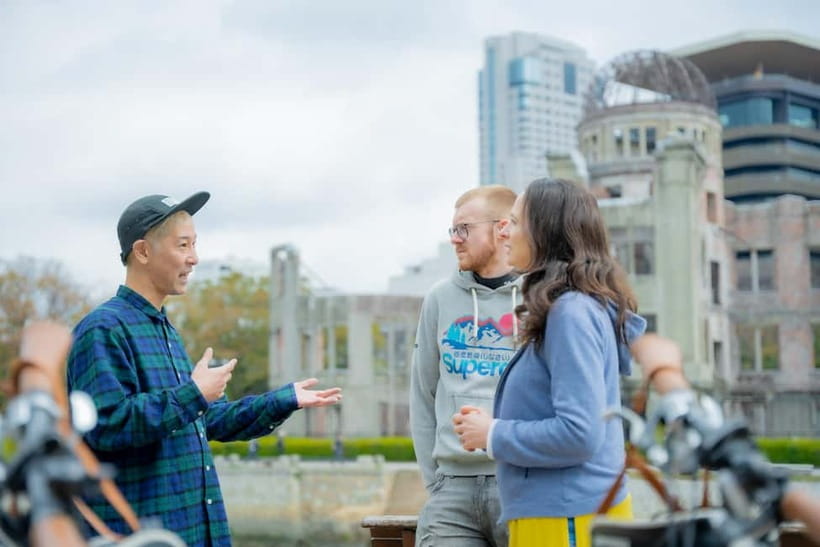
- Electric bikes keep the focus on the story (not your legs), while still letting you see more ground than walking.
- Local guides share personal Hiroshima connections—often family memories tied to 1945.
- You’ll visit memorial sites plus everyday town corners that show how the city rebuilt.
- You learn about the 2.5 km damage radius from the hypocenter and what that meant for real lives.
- There are two routes (about 2 hours or about 3 hours), so you can match your schedule.
Why an electric bike tour works so well in Hiroshima
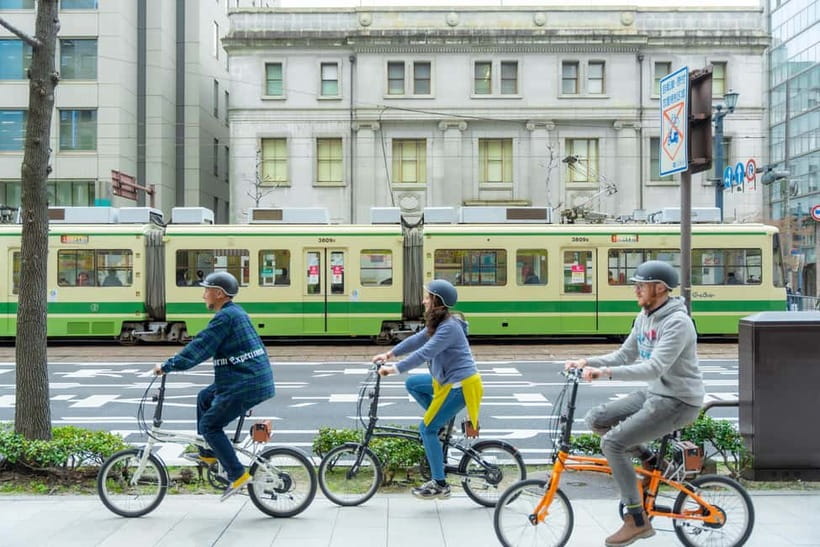
Hiroshima is not a city you want to rush on foot. The sights are meaningful, yes—but the real value here is the way movement changes your understanding. When you cycle, you’re forced to slow down at intersections, glance into streets, and notice how people live right next to memory.
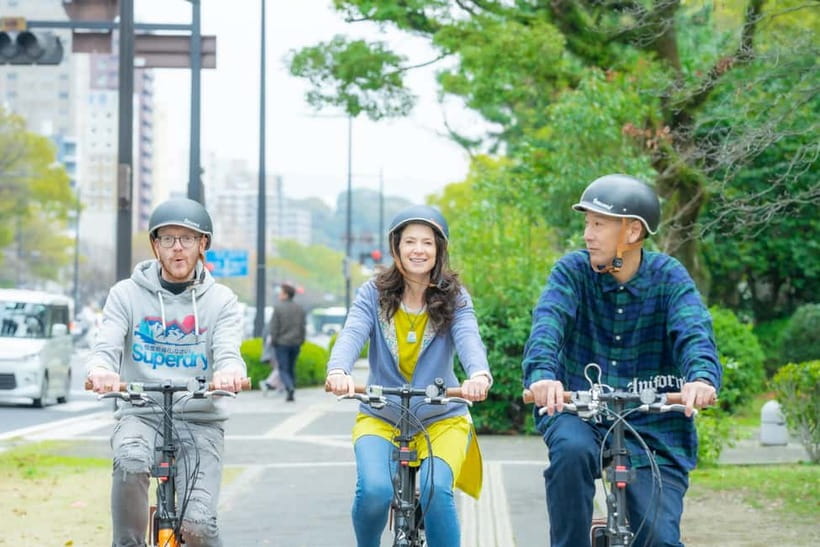
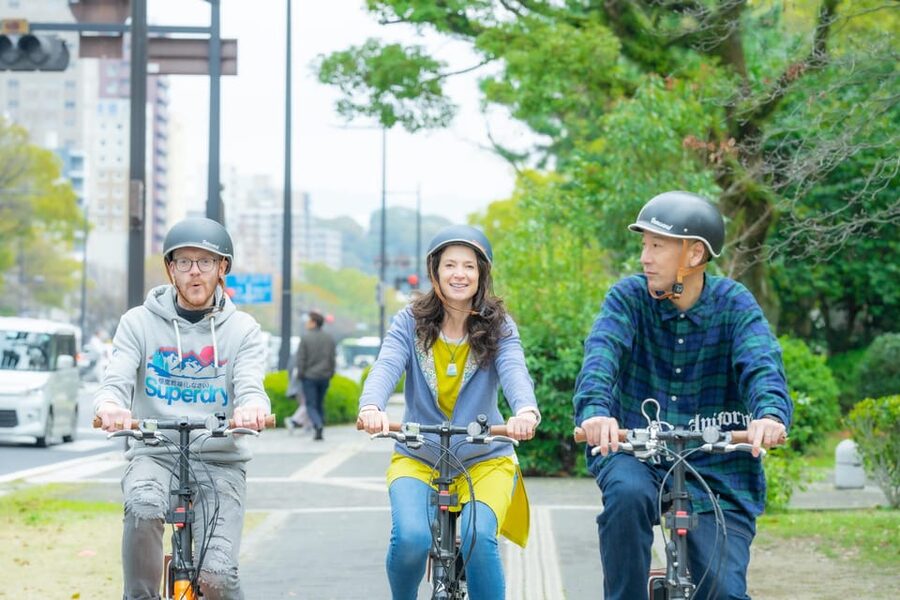
This tour uses comfortable electric bicycles, which matters more than it sounds. You’re not asked to “train.” You pedal when you want, and the assist helps you keep going when you’d rather just listen. In the reviews, people consistently praise how easy the bikes are to operate, and how the pace stays manageable even when the group includes kids or riders who aren’t used to cycling.
And it’s also practical. You’re covering a compact area around the Peace Memorial Park, plus additional stops farther out where the city’s story expands beyond the main tourist strip. It’s the kind of experience where you can say yes to the important stops without turning your day into a strain-fest.
You can also read our reviews of more tours and experiences in Hiroshima.

Getting started at the Peace Park without wasting time
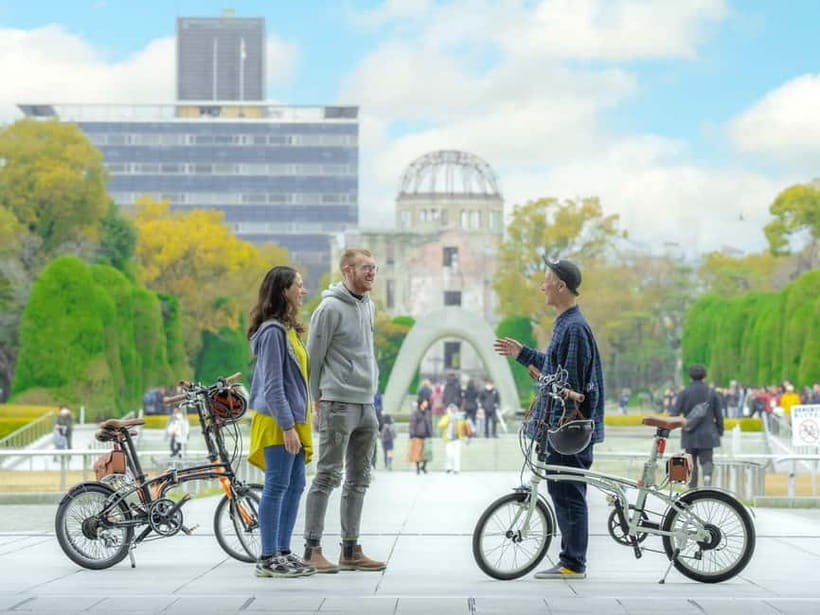
Your starting point is the Rest House at Hiroshima Peace Park. The simple way to get there is by train from Hiroshima Station on the Hiroshima Electric Railway, getting off at Atomic Bomb Dome Station, then walking about five minutes.
This matters because the tour begins with context. You’re not dropped into a list of monuments and left to interpret on your own. Instead, the guide sets the scene—why the Peace Memorial Park exists, what the monuments preserve, and how Hiroshima people talk about that day even decades later.
If you’re thinking about what to wear, plan for comfort first: comfortable shoes and clothes you can move in. Bring a towel and drinks, since you’ll be outside for the full time. Also note the guidance on what not to wear: high-heeled shoes aren’t allowed.
Peace Memorial Park: monuments, the Dome, and what 70 years feels like
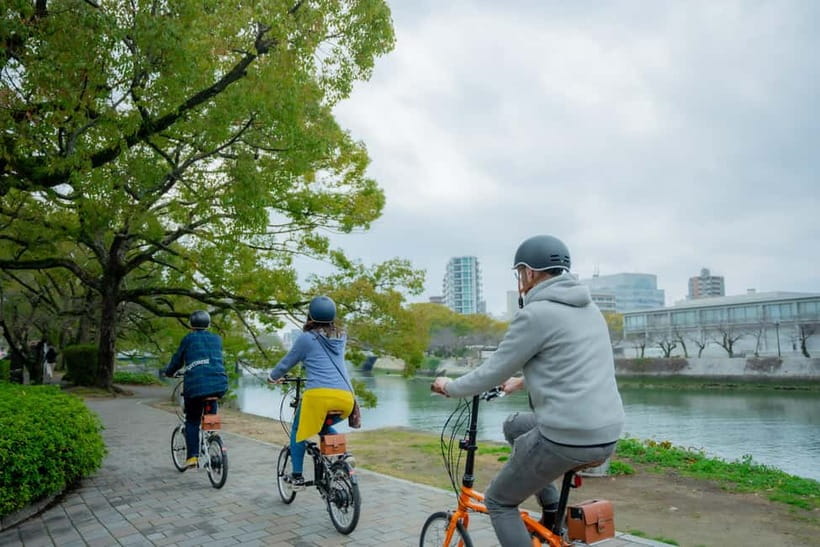
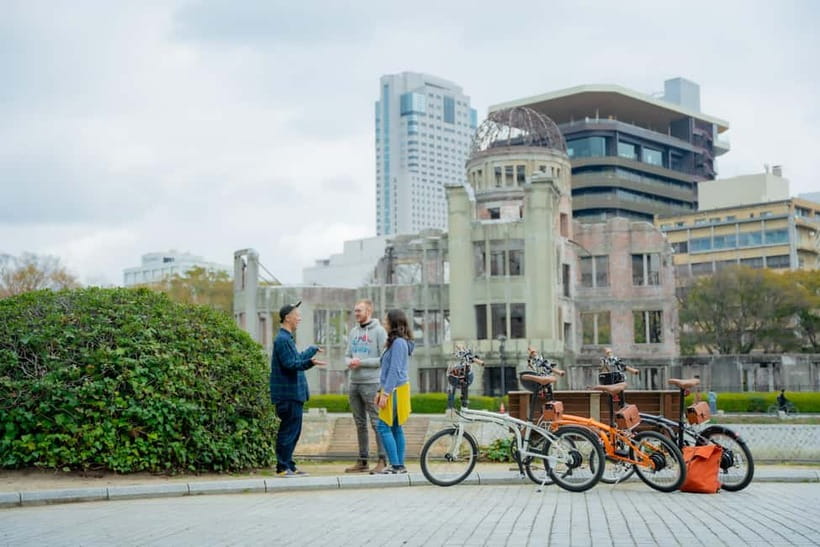
The Peace Memorial Park is the emotional anchor of the route. Even if you’ve seen photos of the Atomic Bomb Dome, you’ll experience it differently with a guide pointing out what people chose to remember—and why.
The tour focuses on how the Peace Memorial Park communicates memory through physical landmarks. You’ll learn about what happened about 70 years ago, and how the area around the hypocenter was devastated. The tour also keeps a strong emphasis on the human impact, not just the technical fact of the bombing.
Then comes the shift that makes this tour more than a sightseeing add-on: after you stand in the memorial space, you ride into places where the city shows what survival and rebuilding look like. That contrast is one of the tour’s best teaching tools. It turns “history” into a living city you can see with your own eyes.
Expect questions too. In the reviews, people liked that there’s time to ask things after key explanations. It’s not just a one-way lecture.
How the tour uses nearby suburb sites to show scale
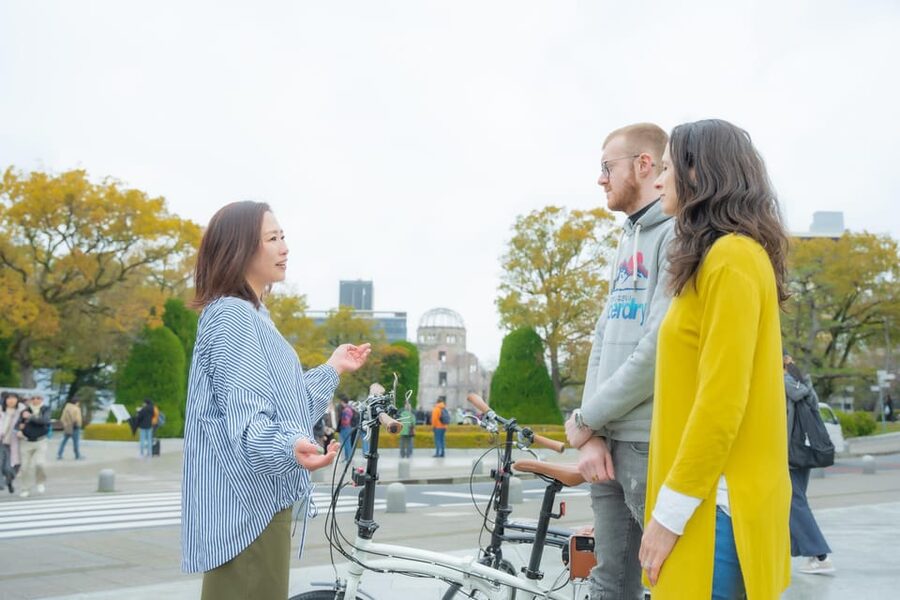
One of the most powerful ideas in this tour is geography. You’re not only visiting the headline sites; you’re also moving through areas connected to the bombing’s aftermath.
A major theme is scale. You’ll learn that the zone within about a 2.5 km radius from the hypocenter was severely damaged. The guide’s storytelling helps you connect that radius to what you see outside the park gates—streets, structures, and the way neighborhoods have changed over time.
This is where the bike format shines again. Walking would limit you, and driving would remove you from the street-level view. Cycling gives you the in-between: you can feel the neighborhood texture without getting stuck far away from explanations.
You’ll also visit locations Hiroshima people regard as important A-bomb heritage sites. The route is designed so you can “read” the city—like noticing where memorials sit in ordinary streets—rather than treating each stop as a standalone photo moment.
A-Bombed Streetcars: seeing a surviving thread in daily life
A distinctive stop in the tour concept is the story of the A-Bombed Streetcars. You’ll hear about the fact that a train route still exists today, tied to the streetcars that survived.
This is the kind of detail that changes your mental picture. Instead of thinking only in terms of destruction and memorials, you’re reminded that some parts of the city’s infrastructure carried forward. You’ll also hear how these surviving elements fit into Hiroshima’s long recovery.
And if you’re a transit nerd, you’ll likely enjoy how the guide talks about the rail and townscape elements. One review mentioned seeing the original 653 tram, which shows the tour sometimes adds extra depth when the schedule and timing align.
Two route lengths: picking 2 hours or 3 hours
This tour runs in two formats, both designed for a small group capped at up to 10 participants.
The shorter route (about 2 hours)
This one works if you want a tight hit: Peace Memorial Park, then a second phase that brings you into the suburbs and additional A-bomb heritage spots. You’ll still get the key themes—what happened, what was lost, and what’s rebuilt—just without the longer list of extra locations.
It’s a good option if:
- Hiroshima is a one-day stop,
- you want to connect the Peace Park to nearby context fast,
- or you prefer a lighter time commitment.
The longer route (about 3 hours)
This route adds more stops that form a fuller loop of the central area and connected sites. Based on the stop sequence, you may see places like Hiroshima Castle, Hiroshima Gokoku Shrine and the shrine gate, Hiroshima Central Park, Aioi Bridge, Motoyasu River and the Peace Bridge, and more along Peace Boulevard.
You’ll also visit notable points such as Higashisenda Park, Hiroshima Red Cross Hospital, Hiroshima Railway, Miyuki Bridge and Kobayashi River, and the Surviving Weeping Willow Tree.
One practical note: because it’s shared, the pace can adjust if someone in the group isn’t as comfortable cycling—especially children. That makes the longer route easier to handle than it might sound on paper.
Stop-by-stop: what each major site adds to the story
Here’s how the main set of stops tends to build meaning as you ride:
Peace Memorial Park sets the emotional context. You learn what the monuments preserve and how Hiroshima chose to communicate the event.
Atomic Bomb Dome becomes more than a landmark. With a guide explaining what it represents, it turns into a visual shorthand for memory itself.
A-Bombed Streetcars add a surprising “still here” thread. You see how recovery and daily life continue in the very systems that once faced catastrophe.
Hiroshima Castle and Hiroshima Central Park are reminders that Hiroshima is also a city with other layers: civic identity, gathering spaces, and places people use now.
Aioi Bridge, Motoyasu River and the Peace Bridge, and the bridges and rivers along the route add a sense of scale. Even without turning every stop into a lecture, the guide helps you notice how the bombing’s story sits inside the city’s real layout.
Higashisenda Park, Hiroshima Red Cross Hospital, and the Surviving Weeping Willow Tree lean into the theme of what endured and what changed. The guide ties each stop back to the day’s impact and what Hiroshima people decided to remember afterward.
Peace Boulevard is where the tour often feels like it’s bringing everything together. You get a sense of continuity: remembrance with movement, and a message built for the future.
The big takeaway: you’re not just ticking sights. You’re learning how Hiroshima connects them.
The real secret sauce: local storytelling with names you might hear
The strongest praise in the reviews centers on the guides’ delivery—especially the personal stories. You might ride with Shin, Kana, Moe, Bella (also known as Kana in some comments), or others. Different guides, same overall goal: make sure the message lands in a way that feels real.
In particular, several people specifically mention family connection—guides who share stories passed from grandparents to parents, and sometimes what that connection means for them personally today. That doesn’t make the tour “less factual.” It makes it harder to treat the event like distant trivia.
You’ll also notice how guides balance emotion with hope. Even when you’re hearing difficult accounts, the tone often returns to resilience and healing, which is a big part of why the tour avoids becoming only dark.
One practical plus: in hot weather, some guides prepare with small comfort tools—like cold towels, salt candies, and wet wipes. One review also praised the guide for thinking ahead about shade during stops. That kind of care matters when you’re cycling outside.
Bike comfort, safety, and what to watch for
You’ll be riding an electric bike, and the ease of use is a major selling point. Still, check the basics before you show up.
- The adult electric bike is for riders 145 cm or taller.
- For children, there are different bike options depending on weight and height, including child seats and child cross bikes.
- If you’re under about 145 cm, you’ll need the correct bike setup. Contact the operator ahead if you’re unsure about sizing.
One review pointed out that some bikes have smaller frames, so tall riders should think ahead about fit. Comfort is not a minor detail here; you’re going to be on the bike for most of the tour.
Safety-wise, the reviews repeatedly mention that people felt safe and that the pace is comfortable. The group is small, too, which makes it easier for the guide to manage the flow. And since routes include crossings and traffic signals, the guide’s role is about control and attention—not just speaking.
What to bring:
- comfortable shoes
- towel
- drinks
- comfortable clothes
Value for $52: what you’re buying besides “a bike ride”
At $52 per person for roughly 2–3 hours, this isn’t just a rental-bike deal. You’re paying for:
- a local English-speaking guide,
- insurance for bicycle accidents,
- and a structured route that connects memorial sites to the city’s recovery and everyday spaces.
If you’re the kind of visitor who likes reading plaques and also asks questions, the guide time is the core value. The stops are meaningful, but the guide helps you understand what they mean in Hiroshima’s own terms—memory, responsibility, and rebuilding.
Also, you get added extras that make the experience feel more finished: you’ll be provided photo data taken during the day. It’s a small thing, but it helps you stop juggling your phone while you’re trying to listen.
And because the group is capped at 10, you typically get a more human feel than big-bus tours. That matters when the subject is emotionally intense.
Should you book the Hiroshima Peace Cycling Tour?
If you want to see Hiroshima’s Peace Park area and understand the bombing’s impact through the city’s real geography, I think this is a strong pick. The electric bike format makes it doable for more people, and the local guide storytelling is what turns the ride from sightseeing into understanding.
I’d especially recommend it if:
- you have limited time and want a high-quality route,
- you prefer learning with context, not just markers,
- you want the city’s contrast—ruins to greenery, memory to daily life.
Skip it (or at least think hard first) if you’re not comfortable riding, if height limits don’t match your situation, or if you know you need a lighter emotional experience. This tour carries weight, even when it steers toward hope.
If you want Hiroshima to feel real—street by street, bridge by bridge—this bike tour is one of the best ways to do it.
FAQ
How long is the Hiroshima Peace Cycling Tour?
The tour duration is about 2 to 3 hours, depending on the route you choose.
Is there an English-speaking guide?
Yes. The tour includes an English guided tour with an English-speaking guide.
How big is the group?
It’s a small group shared tour limited to up to 10 participants.
What is included in the price?
Rental bicycles, an English-speaking guide, and insurance for bicycle accidents are included.
Is food or drinks included?
No. Food and drinks are not included, so bring what you need.
Where do I meet the guide?
Meet at the Rest House of Hiroshima Peace Park. From Hiroshima Station, take the Hiroshima Electric Railway to Atomic Bomb Dome Station, then walk about five minutes.
What should I bring and wear?
Bring comfortable shoes, a towel, drinks, and comfortable clothes. High-heeled shoes aren’t allowed.
What if I’m late for the meeting?
If you’re late without prior notice, the tour will be cancelled. In that case, a 100% cancellation fee is incurred on the day of the tour and is non-refundable.