REVIEW · KUALA LUMPUR
Kuala Lumpur Sunset Evening Cycling Tour
Book on Viator →Operated by BIKE WITH ELENA · Bookable on Viator
KL looks different when the sun drops. This sunset cycling route turns KL’s rush-hour energy into night-street charm, with photo stops and real local scenes. I especially love the way the ride strings together Petaling Street lights and the riverfront drama of the Blue Fountain, and I like that the pace gives you time to actually look up. One thing to consider: you’re on a bike for about three hours after dark, so you’ll want to feel comfortable riding attentively and staying aware of traffic.
Meet at DBKL Tower 1 at 6:30 pm, and you’re back there at the end—easy to plan, no mystery logistics. The group max is 30, so it’s not a huge crowd swarm, and the tour uses a mobile ticket, which is handy when you’re moving around KL.
This is also a history-and-culture tour in night mode: you’ll pass major landmarks, but you’ll also get the small backstreet details—like stilt-house neighborhoods and a mosque that’s been actively used for generations. With Elena, the ride style is question-friendly and safety-focused, and you’ll get lots of context as the city changes color.
In This Review
- Key Highlights You’ll Feel on This Sunset Ride
- Why This 6:30 PM Tour Works in Kuala Lumpur
- Getting Started at DBKL Tower 1 (and What to Expect)
- Petaling Street Market: Night Market Energy, Up Close
- The River of Life: Kuala Lumpur’s Name and Rush-Hour Contrast
- Saloma Link Bridge: The LED Flag-Light Moment
- Blue Fountain by the River Confluence (Opened in 2017)
- Jalan Salleh Stilt Houses: Malay Life in a British-Era Enclave
- Dataran Merdeka and Sultan Abdul Samad Building: Cricket Field to Colonial Reminder
- Kwai Chai Hong Alleyways: From Shady Past to Night-Friendly Lanes
- Passing the 1863 Mosque Renovated in 1963 (Still Active)
- Jalan Raja Abdullah: The Last Surviving Malay Village Feeling
- The Arch (Neo-Classical Colonial Icons and Photo Angles)
- Safety, Pace, and Why Elena’s Style Matters
- Price and Value: Is $77.99 Worth It?
- Who Should Book This Sunset Cycling Tour
- Should You Book This Kuala Lumpur Sunset Evening Cycling Tour?
- FAQ
- How long is the Kuala Lumpur sunset evening cycling tour?
- What time does the tour start, and where do I meet?
- How much does the tour cost?
- Is the tour a small group?
- Are there entrance fees included for stops?
- What kind of weather is needed for the tour?
Key Highlights You’ll Feel on This Sunset Ride
- A short 3-hour window that covers big KL sights without eating your whole evening
- Petaling Street at night with alley lights and murals that feel more local than a typical checklist
- Riverfront photography centered on the River of Life and the Blue Fountain, launched in August 2017
- Saloma Link Bridge evening lighting where the LED display shifts with the national flag
- Malay neighborhood stops (Jalan Salleh and Jalan Raja Abdullah) that shift you away from just skyscrapers
- Pass-by cultural details, including an 1863 mosque renovated in 1963 and used for prayer five times daily
Why This 6:30 PM Tour Works in Kuala Lumpur
Timing is everything in KL. This tour starts at 6:30 pm, when office crowds begin to loosen their grip and the city starts to re-light itself for the night. Instead of showing you a single viewpoint, it strings together multiple scenes so you see how neighborhoods feel when the light goes soft.
It also helps that the tour is about 3 hours. You get enough time to ride, stop, and take photos without ending up with a late-night fatigue spiral. If you’re on a short trip—business visit, quick weekend, or you just want something after work—this is a smart block of time.
The group size matters too. With a maximum of 30 travelers, you’re usually moving with a manageable group, not getting swallowed in a giant pack. That usually means easier communication with your guide at stops and less time waiting around to re-group.
You can also read our reviews of more tours and experiences in Kuala Lumpur.
Getting Started at DBKL Tower 1 (and What to Expect)
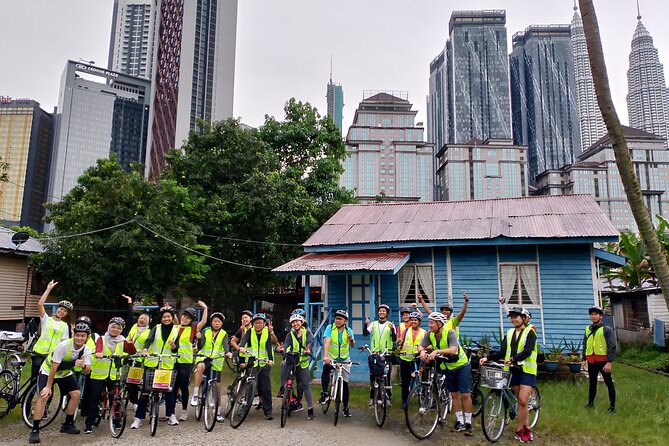
You’ll meet at Menara DBKL (DBKL Tower 1) on Jln Raja Laut, Kuala Lumpur City Centre, starting at 6:30 pm. Since it returns to the meeting point, you don’t have to figure out a separate drop-off, which makes planning dinner afterward much easier.
The ride itself is designed for most people who can participate comfortably on a bike. That said, you’re still cycling in the real world—night streets, turns, and stop-and-go moments—so keep your expectations practical. I’d bring your most comfortable riding clothes and be ready for short bursts of dismounting and walking into tighter lanes.
The mobile ticket part is simple but useful. When you’re bouncing between hotspots, it cuts down on paper fuss and keeps you from juggling a folder of vouchers. Plus, the tour is near public transportation, which is helpful if you don’t want to rely only on rideshare.
Petaling Street Market: Night Market Energy, Up Close
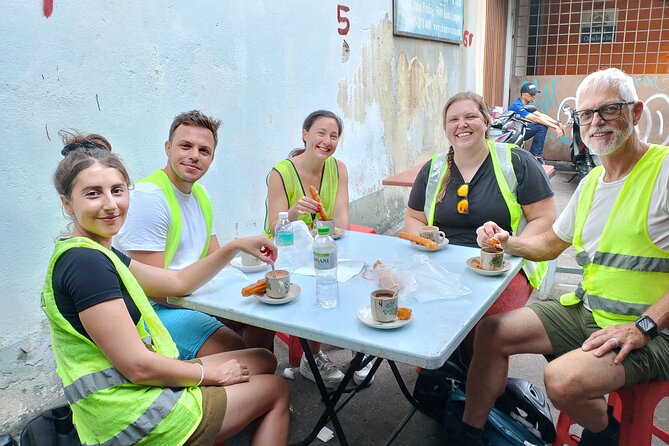
Petaling Street at night can feel like you turned the city’s volume up. You ride through the area’s alleyways and see lights and murals that don’t register as strongly in daytime photos. This is the moment where you start to understand KL’s street life: vendors moving, people crossing paths, and the constant flow of small storefront energy.
A good part of this stop is how it’s framed. Instead of treating Petaling Street like a stage, your guide points out details you’d likely miss if you were just walking through. You get a sense of how the lanes connect, and you learn how the streets evolved into places people actually enjoy at night.
Timing here is short—about 15 minutes—so you won’t be stuck waiting. If you’re the type who likes to scan your surroundings for photo angles, this is a nice warm-up stop before the ride pushes you toward river and bridge icons.
The River of Life: Kuala Lumpur’s Name and Rush-Hour Contrast
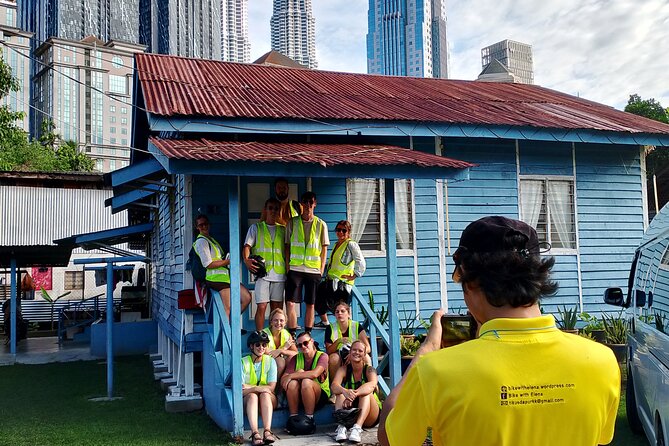
Then you switch from market lanes to the river side—still in the same evening rhythm. The River of Life stop is about two things: learning what Kuala Lumpur’s name means, and getting a calm platform for watching people move.
This is a great photography pause because it’s built around observation. You watch the city’s rush-hour pattern begin to fade, with people heading home and street activity shifting into evening mode. You don’t need to be a professional photographer either—just stand where your guide suggests and let the light do the work.
It’s also useful context-wise. When you understand the name and the river’s role, you’ll start connecting landmarks into a single story instead of seeing random big sights.
Saloma Link Bridge: The LED Flag-Light Moment
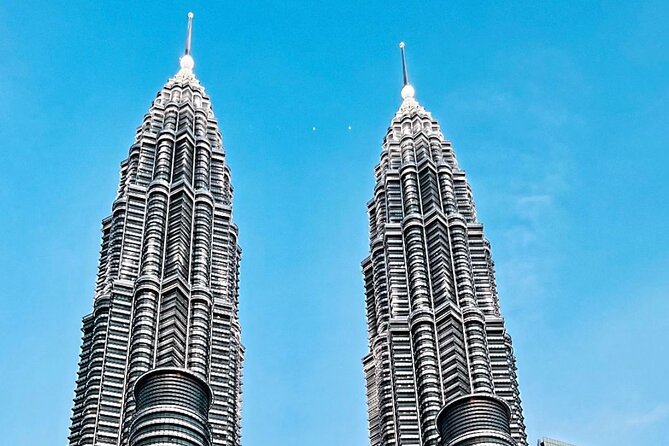
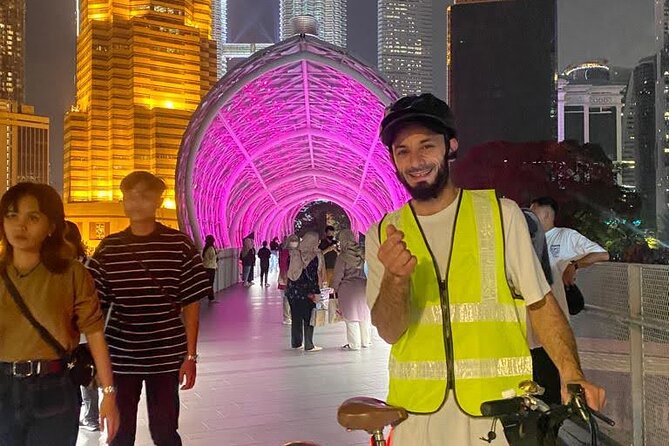
Saloma Link Bridge is one of those KL landmarks you’ve probably seen in photos—then you see it in person and it hits differently. At night, the bridge lights up, and the LED lighting changes according to Malaysia’s national flag. That moving color pattern is a real “watch it for a minute” experience, not just a quick snapshot.
The best part is that it links old and new. You’re not just stopping at a pretty object; you’re seeing a junction between architectural eras, with the city framing the bridge like a backdrop. If you like skyline shots, this one delivers.
It’s also a short stop—about 15 minutes—so it doesn’t stall the ride. You’ll get enough time to stop, frame a shot, and then roll on before you start getting cold or impatient.
Blue Fountain by the River Confluence (Opened in 2017)
This tour is built around the river’s evening payoff, and the Blue Fountain is the headline. The Blue Fountain lights up in the heart of the river confluence, and the project was opened in August 2017, described as a point of national pride.
Even if you’ve never heard of it before, you’ll get the why behind it. Your guide places it in the larger Kuala Lumpur picture—how the city uses water, space, and lighting to create a public nighttime moment.
Practical tip: treat this as a “watch first, shoot second” stop. Light changes can happen quickly at night, and it’s easier to get a better photo once you’ve seen the flow of how it looks when it’s fully on.
Jalan Salleh Stilt Houses: Malay Life in a British-Era Enclave
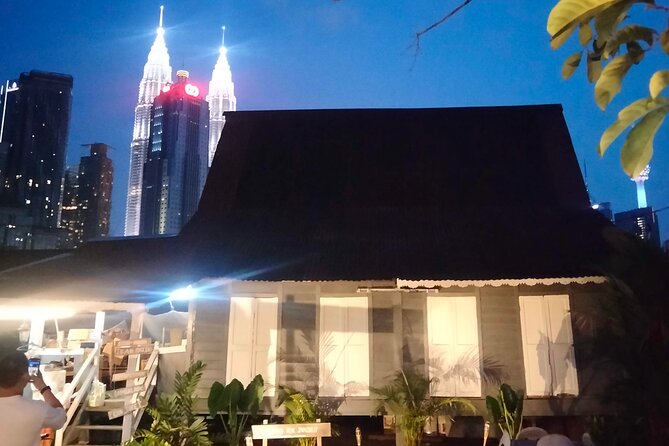
After the river and bridges, the tour turns toward everyday living spaces. At Jalan Salleh, you’ll visit traditional Malay stilt houses and learn about a Malay agriculture settlement established by the British since 1900.
This is one of the most interesting shifts in the whole ride. You go from big-city nighttime icons to smaller-scale homes and a street-level view of how people live and organize daily life. It’s not just pretty architecture; it’s tied to how the neighborhood formed and how an economy developed.
The stop is about 30 minutes, which gives you time to look without rushing. A drawback to keep in mind: because these are local living spaces, you should expect a more respectful, slower pace and avoid turning it into a sightseeing free-for-all.
Dataran Merdeka and Sultan Abdul Samad Building: Cricket Field to Colonial Reminder
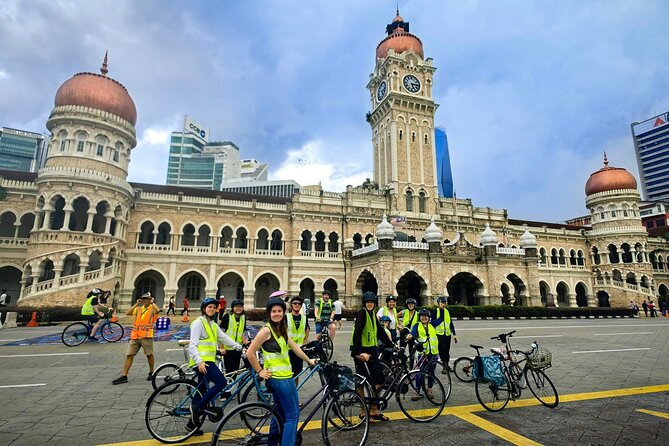
Next is Dataran Merdeka, including the cricket field and the Sultan Abdul Samad Building. Your guide explains the significance of this place and the functions of the buildings around it, tying the architecture to why it matters.
This is where the tour becomes more interpretive. You’ll be able to connect what you see—open square space, landmark buildings, and the historical symbolism—with the practical reality of how the city uses these spaces now.
One small heads-up: the tour data indicates that admission at this stop is not included. So if there’s something you want to enter, you may need to pay separately (or you may simply enjoy the area from outside, which is still worthwhile for the scale and views).
The stop runs around 30 minutes, so you get enough time to take in the square and absorb the guide’s explanations without turning it into a long museum-style stop.
Kwai Chai Hong Alleyways: From Shady Past to Night-Friendly Lanes
Then you head to Kwai Chai Hong, a place that’s famous for transforming backstreets into a night destination. You’ll discover alleyways around Petaling Street, learn where brothels were once part of the area’s story, and see how it became an attractive, lively hangout zone.
This stop is about 15 minutes and includes admission per the tour details. That means your time here is designed to go somewhere specific, not just pass by. It’s also one of the stops where nighttime aesthetics matter, because the lane layout makes light and signage feel like part of the walking experience.
If you like street photography, this is a stronger candidate than many landmark stops. Lines, textures, and the way people move create natural frames.
Passing the 1863 Mosque Renovated in 1963 (Still Active)
One of the most meaningful moments comes as a pass-by: you cycle past an 1863 mosque, renovated in 1963 with red bricks. It’s still actively used by congregants for prayers five times a day.
Even though you’re not going to treat this like a long visit stop, it adds weight to the evening route. A lot of KL night tours over-focus on entertainment and architecture. This one drops in a living religious landmark, so you get a reminder that nighttime streets are not just for tourists—they serve the city’s daily spiritual rhythm too.
Since it’s a pass-by, you won’t lose a lot of time, but you should still look and respect the space. Night cycling makes quick stops easy; good guides also make sure you notice the difference between a photo opportunity and a working place of worship.
Jalan Raja Abdullah: The Last Surviving Malay Village Feeling
The tour then moves to Jalan Raja Abdullah, which is described as a 1900 Malay enclave and the last surviving Malay village in the heart of Kuala Lumpur. You’ll see traditional Malay stilt houses again, learn about cultural heritage, and you may get a chance to sample local Malay food in the area.
This stop runs about 50 minutes, making it one of the longer segments on the route. That’s important, because it gives you time for both strolling and the food element without panic.
In my view, this is one of the stops that makes the whole ride feel like more than a highlight tour. You’re not just seeing buildings; you’re getting a sense of how a community stays itself while the city around it keeps changing.
The Arch (Neo-Classical Colonial Icons and Photo Angles)
Next is the Arch, where you learn about neo-classical colonial buildings and take pictures at one of KL’s most photographed icons. Your guide also shares inside details about these colonial-era buildings, which helps you understand what you’re looking at instead of just snapping and moving on.
This stop includes admission. So even if you’re mostly there for photos, it’s worth paying attention to what’s included because your time might be spent inside or at least with access that you wouldn’t have on your own walk-by.
The stop is only about 10 minutes, so don’t plan on lingering for long. But a short stop can still be great when you go in with a clear photo plan: pick your angle, take your shots, and then follow the guide’s explanation so you leave with more than a picture.
Safety, Pace, and Why Elena’s Style Matters
A lot of people book a bike tour for the route, but the guide can make or break the evening. With Elena, the ride stands out for how well she communicates and keeps things safe while still letting you enjoy the city.
From what I’ve seen described, Elena’s approach is patient with questions and focused on keeping the route fun rather than stressful. She also builds in time so you can stop, look, and not feel like you’re sprinting from one corner to the next.
This is the kind of tour where your attitude helps. If you’re relaxed and ready to ride, stop, and listen, you’ll get a lot out of it. If you’re determined to speed through and treat it like a selfie mission, you’ll probably miss the best parts—like the meaning behind the landmarks and the small street details.
Price and Value: Is $77.99 Worth It?
At $77.99 per person for about three hours, this isn’t a “cheap and cheerful” activity. But it also isn’t priced like a private driver with zero effort on your part. You’re paying for a guided route, evening timing, multiple distinct neighborhoods, and access points where entries are included at some stops (like Kwai Chai Hong and the Arch).
Where the value really shows up is in how much ground you can cover safely in an evening. KL is a big city, and doing this exact set of scenes on your own would mean constant re-navigation and lots of wasted time. A guided bike tour also gives you context—what places mean and why they look the way they do at night—so it’s not just motion.
If you want one evening activity that feels like seeing KL rather than ticking boxes, the price starts to make sense.
Who Should Book This Sunset Cycling Tour
This tour fits best if you want an evening activity with variety. It’s great for first-timers who want iconic sights without turning the night into a museum crawl. It’s also ideal if you’re short on time and want a quick getaway feeling after work.
I’d especially recommend it if you like:
- city lights and street scenes (not just viewpoints)
- neighborhoods with local character, including Malay stilt-house areas
- a guide who explains what you’re seeing as you go
Should You Book This Kuala Lumpur Sunset Evening Cycling Tour?
I’d book it if you want a structured evening ride that mixes night markets, river lighting, and community-level stops in just three hours. The route is built for photos, but the bigger win is the context—how the city’s landmarks connect to everyday life and local identity.
Skip it only if you need a low-effort, mostly stationary activity. This is cycling, and even with frequent photo pauses, you’ll still spend most of the evening on the move.
If your schedule allows and the weather cooperates, it’s one of those KL experiences that makes the city feel personal fast.
FAQ
How long is the Kuala Lumpur sunset evening cycling tour?
The tour is listed as about 3 hours.
What time does the tour start, and where do I meet?
It starts at 6:30 pm at DBKL Tower 1 (Menara DBKL) on Jln Raja Laut, Kuala Lumpur City Centre. It ends back at the meeting point.
How much does the tour cost?
The price is $77.99 per person.
Is the tour a small group?
Yes. The tour has a maximum of 30 travelers.
Are there entrance fees included for stops?
Some stops list admissions as free, while others specify admission included or not included. For example, Dataran Merdeka is marked as admission not included, while Kwai Chai Hong and the Arch are marked as admission included.
What kind of weather is needed for the tour?
The tour requires good weather. If it’s canceled due to poor weather, you’ll be offered a different date or a full refund.