REVIEW · HIROSHIMA
Hiroshima 2hr Peace Cycling Tour with Local Guide
Book on Viator →Operated by Attractive JAPAN · Bookable on Viator
Peace in Hiroshima hits harder on two wheels. This small-group 2-hour e-bike tour connects the UNESCO Peace Memorial Park sights with the city around them, guided by people raised there.
I love how the route mixes major monuments with off-the-beaten-track viewpoints, so you see more than the usual postcard angles. I also like that the best details come from real family context from guides like Shin and Kana.
One consideration: it’s still a short cycling session on shared streets, so you’ll want to feel comfortable riding an e-bike at a relaxed pace.
Key highlights you’ll actually feel
- Small group (up to 10) keeps the ride calm and lets the guide answer questions as you go
- E-bikes make it easy on Hiroshima’s mostly flat terrain, even if you’re not a diehard cyclist
- Peace Park + city viewpoints helps you understand how the memorial spaces fit into everyday Hiroshima
- Family-linked storytelling from guides such as Shin, Kana, Bella, Tomas, and others gives history a human shape
- Rain plan exists: you may switch to a walking peace route or a rainy-day limited itinerary
- Photo data provided so you can focus on the sites, not on charging your phone
In This Review
- How a 2-Hour Peace Cycling Tour Really Works in Hiroshima
- Starting at Hiroshima Peace Park’s Rest House: Getting Oriented Fast
- Peace Memorial Park in 55 Minutes: Monuments, Meanings, and the Dome From New Angles
- Hiroshima City Between Memorials: Reading the Present in a Living Urban Place
- E-Bikes, Flat Streets, and Keeping the Ride Calm
- Why the Guides Make the Difference (Shin, Kana, Bella, Tomas, and More)
- Rain, Cold, and the Backup Plan That Saves Your Day
- Price and Value: Is $59.69 Worth Two Hours?
- Timing, Pace, and What to Expect Day-Of
- Who Should Book This (and Who Might Prefer Something Else)
- Final Call: Should You Book This Peace Cycling Tour?
- FAQ
- How long is the Hiroshima Peace Cycling Tour?
- Where does the tour start and end?
- What stops are included?
- Are electric bikes provided?
- Is park admission included?
- What happens if it rains?
- Is there Wi-Fi on the tour?
- Can I store luggage at the meeting point?
How a 2-Hour Peace Cycling Tour Really Works in Hiroshima
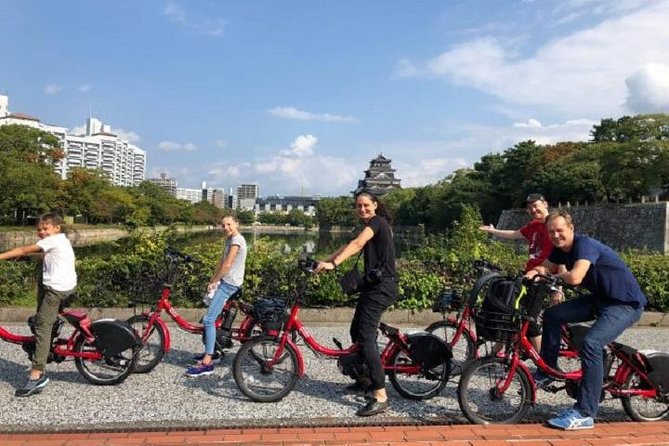
Hiroshima can feel overwhelming if you try to do everything in big chunks. This is different. It’s built around a short, focused ride with one local guide who sets the pace and turns the memorial area into something you can navigate and understand in real time.
The value here is not just that you see the big names—Atomic Bomb Dome, Cenotaph, Children’s Peace Monument, Peace Bell. It’s that you get context for why those places are placed where they are. A bike gives you scale fast. You notice the distance between monuments. You see where the memorial park ends and the city starts. And your guide points out details you’d likely miss if you only bounce between major indoor stops.
Also, the group size matters. You’re capped at 10 riders, so it’s not a chaotic stampede through solemn spaces. The e-bikes help, too, because the ride stays comfortable even on cooler days.
One more thing I appreciate: the guides are not doing generic script history. They bring family perspective, which changes the tone from facts-only to lived reality. On tours with guides like Shin or Kana, the stories tend to connect events then to Hiroshima’s everyday life now. That shift is why many people rate this tour 5 out of 5.
Starting at Hiroshima Peace Park’s Rest House: Getting Oriented Fast
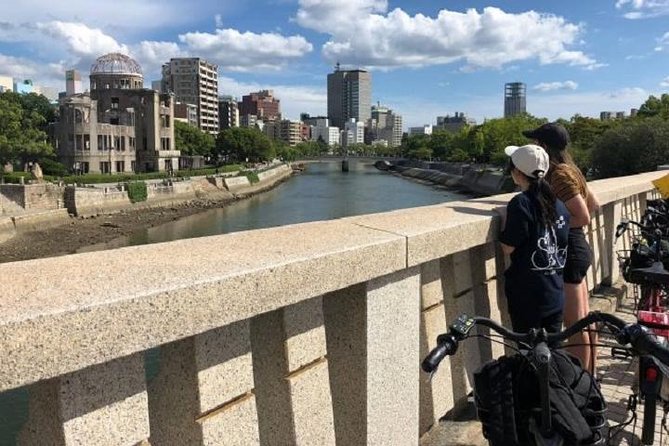
You meet at the Hiroshima Peace Memorial Park Rest House near the Peace Park area. This matters more than it sounds. When you start inside the Peace Park zone, you get oriented before you move outward. The guide can set expectations early—what you’re about to see, how long each stop takes, and what to pay attention to.
The tour runs about 2 hours, timed in either the 11:00 or 15:00 slot. You’ll gather first, then roll to the Peace Park monuments and viewpoint segments, and finally ride onward into Hiroshima for the city connections.
Bring this mindset: you’re not checking boxes. You’re learning how the city remembers. Your early minutes set that tone.
Practical note: there’s no luggage storage at the Rest House. If you’re carrying a backpack you can’t comfortably bike with, you’ll likely want coin lockers at the International Conference Center Hiroshima or at the Hiroshima Peace Memorial Museum (a short walk away).
You can also read our reviews of more tours and experiences in Hiroshima.

Peace Memorial Park in 55 Minutes: Monuments, Meanings, and the Dome From New Angles
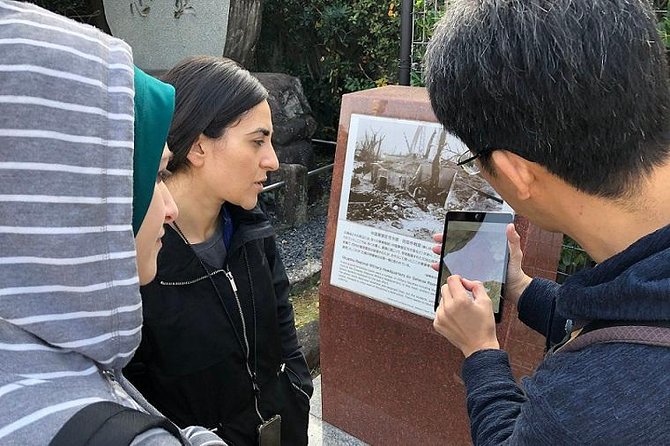
Most first-time visitors do the Peace Memorial Park and feel like they’re watching history from a distance. This tour helps you get closer—without rushing—and gives you a guided way to read what you’re seeing.
You spend about 55 minutes in Hiroshima Peace Memorial Park, a UNESCO-listed area. Your guide walks you through the main memory landscape: why the monuments exist, what the memorial spaces communicate, and how the Atomic Bomb Dome fits into that story.
The big headline for many people is the chance to see the A-Bomb Dome not only as a single famous object, but as something you can view from different city angles. The tour includes city viewpoints beyond the usual immediate foreground—so you can understand how the Dome sits in relation to streets and neighborhoods around it.
You’ll also cover major memorial stops within the park, including:
- The Cenotaph
- Children’s Peace Monument
- Peace Bell
- Plus the Atomic Bomb Dome viewpoints
How this feels on the ground: the monuments start to connect. Instead of isolated statues and plaques, you see a sequence of meaning—loss, remembrance, and Hiroshima’s forward-looking message.
Is there a drawback? If you want a lot of time inside the Hiroshima Peace Memorial Museum, this tour isn’t that. It’s not trying to replace museum time. It’s meant to connect the museum ideas to what you can see outside.
Hiroshima City Between Memorials: Reading the Present in a Living Urban Place
After the Peace Park segment, the ride shifts into Hiroshima beyond the immediate memorial grounds. You’ll cover about one hour riding through city areas where the past still echoes in real geography.
One highlight in the city portion is a point your guide is ready to explain: Hiroshima has a surviving tram line tied to the bombing era, often referenced as the A-Bombed Streetcars. Your guide shows you how that kind of survivorship fits into the broader picture of a city that rebuilt and kept moving.
This part is where the tour tends to become more personal. Guides like Shin and Kana often connect wartime experiences and reconstruction to what you can sense today—street layout, neighborhood scale, and the way Hiroshima’s daily life continues.
And since you’re on bikes, the pace lets you notice small transitions. You pass from the memorial concentration into normal city rhythms without the mental whiplash of getting in and out of buses.
If you’re coming right after walking around the Dome and then going back inside museums, this city segment is what prevents the day from feeling like a museum circuit. You start to see Hiroshima as a place, not just an event.
E-Bikes, Flat Streets, and Keeping the Ride Calm
Hiroshima is bikeable in a way that’s easy for visitors to enjoy. The big practical win is that electric bikes are part of the experience, so you’re not fighting hills or trying to keep your energy up.
The tour’s pacing is group-based and flexible. If you bring kids or if someone in the group isn’t used to cycling, the guide adjusts speed accordingly. That’s also why cycling feels manageable for many first-timers.
There are also clear participation requirements:
- Adult e-bikes require height 145 cm or more
- Child options include cross bikes for kids roughly 110 cm to 145 cm
- For children under age 15, the tour can use either children’s bicycles or adult bicycles at the child rate
- Child seats for e-bikes are for children under 22 kg and under 115 cm
If you’re traveling with family, this tour can work well because the ride is designed to be easy and the guide narration keeps everyone engaged even if you’re not cycling “like a local.”
What to wear and bring:
- Comfortable clothing for short riding time
- A light layer if it’s cool (you’re outdoors in the Peace Park zone)
- Helmet use isn’t specifically listed, so you’ll want to rely on what the tour provides and your own comfort level
And yes: you can still do this even if you’re not a confident cyclist. The e-bike helps, and the guide pace matters.
Why the Guides Make the Difference (Shin, Kana, Bella, Tomas, and More)
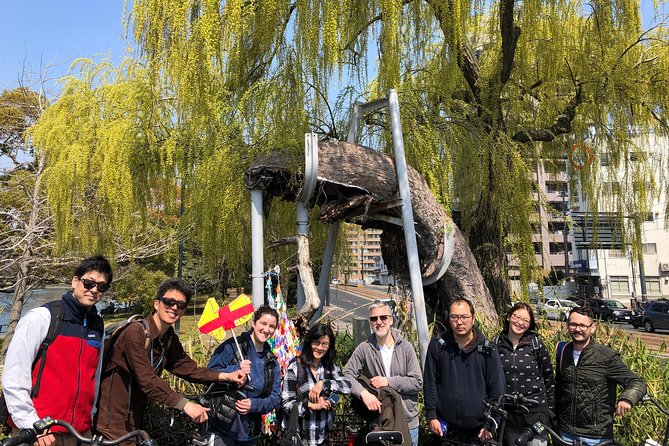
A lot of tours teach history. This one often makes you feel it.
Guides such as Shin and Kana are frequently praised for combining solid facts with family-linked stories. Shin is mentioned again and again by name in the context of personal connections to Hiroshima’s bombing events through his family history. Guides like Kana are described as very informative and personable, with energy that keeps the ride moving and the meaning clear.
Other guide names you may encounter include Bella and Tomas, with the common thread being strong English and storytelling that turns monuments into people’s memories. Some guides also pair their explanations with recommendations—like what to do next in Japan—because they’re thinking about your full trip, not just their segment.
What you should expect from a great guide on this route:
- Clear explanations at each major stop
- Direction on what to look at as you ride (especially around Dome viewpoints)
- A tone that stays respectful in the Peace Park area
- Space for questions—because small groups make that possible
If you’re an independent traveler who usually prefers to read signs quietly, this still works. You’ll get more out of the stops with a human guide translating what you’re seeing into why it matters.
Rain, Cold, and the Backup Plan That Saves Your Day
Hiroshima weather can change the tone of your day fast. This tour is designed with a weather contingency.
If it rains, you may switch to a walking tour that focuses on the hypocenter area reduced to scorched earth, plus a tight loop roughly 0.5 to 1 km in radius. If the rain is significant enough, the guide may shift you to a Rainy Day Limited Peace Route.
That rainy schedule is specifically laid out for the 11:00 and 15:00 departures:
- You still start from the Peace Memorial Park area
- The route includes: Atomic Bomb Dome → Hypocenter → Former Bank of Japan → Fukuromachi Elementary School → Main street
- The tour would end at about 13:00 / 17:00 depending on your slot
The bigger point: you’re not stuck doing nothing because it’s wet. The operator offers options (route change or refund), and safety drives the final decision.
This is one of the practical reasons I’d consider booking even if your Hiroshima forecast looks questionable. You’re not gambling blindly.
Price and Value: Is $59.69 Worth Two Hours?
At $59.69 per person for about 2 hours, you’re paying for several things at once:
- a local guide focused on Peace Park and Hiroshima city connections
- electric bike use (which is what makes this easy for most visitors)
- a small group size (max 10)
- bicycle accident insurance included in the price
- photo data collected on the day
Is it a budget option? Not exactly. But it’s not a premium-priced private tour either. You’re paying a middle price for an efficient format that covers both the memorial landscape and nearby city context without needing multiple tickets, multiple transfers, or a full-day commitment.
The Peace Memorial Park area itself has an admission note listed as not included for the park portion. So your real comparison is: museum time + walking + transit versus this guided bike route that stitches it together.
If you only have a short window in Hiroshima, I think the value is strong. Two hours is enough time to learn key meanings, get viewpoint variety on the Dome, and then see Hiroshima’s rebuilt present without exhausting yourself.
Timing, Pace, and What to Expect Day-Of
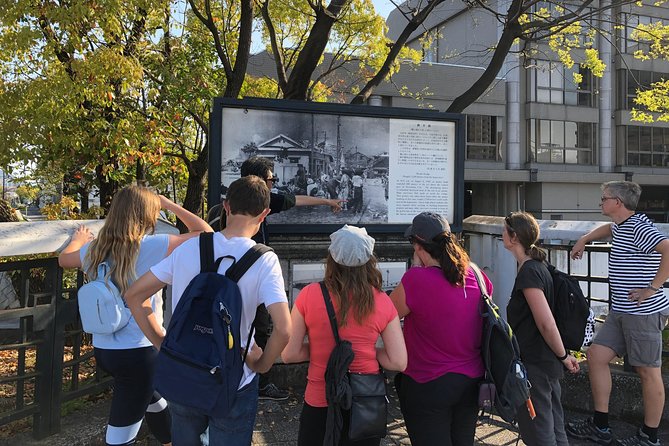
Because the tour is timed and group-paced, it tends to feel structured without feeling rushed.
A typical flow looks like this:
- Meet at the Rest House
- Roll into Peace Memorial Park for about 55 minutes
- Ride onward into Hiroshima for about an hour focused on city context
- Return back to the meeting point at the end of the session
The tour also provides photo data taken during the day, which is a small but real convenience for people who don’t want to think about camera work while focusing on solemn sites.
Also: if you’re late and don’t contact the team in advance, the tour may be canceled with a non-refundable fee. That’s one of those rules that’s harsh but common with timed small-group activities—so plan buffer time, especially around Peace Park streets.
Who Should Book This (and Who Might Prefer Something Else)
This tour suits you if:
- You want the Peace Park story without doing it all solo
- You enjoy short guided walks but also like movement and views
- You’re okay riding a bike for about two hours total, helped by an e-bike
- You want a guide who can connect the memorials to Hiroshima’s rebuilt everyday city
You might choose a different option if:
- You already planned lots of museum time and want purely indoor depth
- You strongly prefer a full walking experience where you stop for longer at each point
If you’re torn between a 2-hour and a longer ride, the difference is clear. The 2-hour option focuses on wartime and post-war recovery with emphasis on Peace Park and key bombing-related sites. A 3-hour version adds more time and extra stops such as Hiroshima Castle, which can be a good fit if you want more pre-war and post-war context.
Final Call: Should You Book This Peace Cycling Tour?
If your goal is a meaningful Hiroshima day that’s active but not exhausting, I think this is a very solid booking. You get the big memorial sites, plus viewpoint angles around the Atomic Bomb Dome that feel more like seeing a real city than watching an attraction line.
The deciding factor is the guide. When you land with someone like Shin or Kana, the combination of respectful pacing and family-linked storytelling can make the whole ride stick in your mind long after you leave Peace Park.
Book it if you want a guided, moving, small-group way to understand Hiroshima’s memory—and how the city carries that memory forward.
FAQ
How long is the Hiroshima Peace Cycling Tour?
The tour runs for about 2 hours.
Where does the tour start and end?
You meet at the Hiroshima Peace Memorial Park Rest House, and the tour ends back at the same meeting point.
What stops are included?
The route includes the Hiroshima Peace Memorial Park (with major memorials like the Cenotaph, Children’s Peace Monument, and the Peace Bell) and also continues into Hiroshima beyond the Peace Park area to city viewpoints and related sights.
Are electric bikes provided?
Yes. The tour uses adult bicycles (electric), and it can also provide children’s bicycles (cross bike type) depending on height.
Is park admission included?
Admission to Hiroshima Peace Memorial Park is listed as not included.
What happens if it rains?
If the plan can’t be held due to rain, you can choose a change to a Rainy Day Limited Peace Route or a refund. The tour can also change to a walking tour on rainy days.
Is there Wi-Fi on the tour?
No free Wi-Fi is available for this activity, though Hiroshima Free Wi-Fi is available throughout the city.
Can I store luggage at the meeting point?
There’s no place to leave luggage at the Rest House. Coin lockers are available at the International Conference Center Hiroshima and Hiroshima Peace Memorial Museum, about a 6-minute walk away.