REVIEW · SIEM REAP
Angkor Wat Cycling Tour
Book on Viator →Operated by Easy Angkor Trip · Bookable on Viator
If you want Angkor without the chaos, pedal. This Angkor Wat cycling tour turns the temple circuit into a calmer, more flexible day on two wheels, with pickup, an English guide, and a route that includes both famous spots and overlooked backroads through jungle. You’ll get a close look at the forest edge around the park, plus a way to move between temples that feels more personal than a van shuffle.
What I like most is how well-scheduled and organized the day is. Your guide (often identified as Mr. K) keeps things moving at a leisurely pace, and the biking routes are planned so you can choose how much distance you want to ride rather than being locked into one rigid track.
The other thing I really appreciate is the safety factor. The tour includes a mountain bike and helmet, and several people highlighted feeling secure on the route—especially helpful early in the morning when the heat is still building.
One possible drawback to think about: this is still a biking tour in warm, humid weather, and the time outdoors adds up. If you’re not comfortable riding for hours or you dislike dirt/jungle-adjacent paths, you’ll want to check in with the operator about how adventurous the route will be for your group.
In This Review
- Key highlights to look for on this Angkor Wat cycling day
- Why cycling Angkor Wat feels different from doing it by van
- Your morning flow: the 7:30 pickup and the 6–8 hour pacing
- Stop-by-stop guide: what you’ll see and what to watch for
- Angkor Wat: the big first impression and the main ticket cost
- Bayon Temple: 54 towers and a very different vibe
- Chau Say Tevoda: short stop, strong payoff
- Ta Prohm: the temple most people remember from photos
- Ta Nei: a quieter temple near the East Baray
- Bayon’s East (Death) Gate: a short final look
- Bikes, helmets, and comfort in hot Cambodia weather
- Value check: $45 plus the Angkor Temple Pass
- Who this tour fits best (and who should reconsider)
- My booking call: should you book this Angkor Wat cycling tour?
- FAQ
- What time does the Angkor Wat cycling tour start?
- How long is the Angkor Wat cycling tour?
- Is pickup and drop-off included?
- What’s included in the price?
- Do I need to buy the Angkor Temple Pass?
- Which temples are visited during the tour?
- Is this a private tour or a shared group?
- Is the temple entry included for all stops?
- Do I need a mobile ticket?
- Can I cancel for a full refund?
Key highlights to look for on this Angkor Wat cycling day
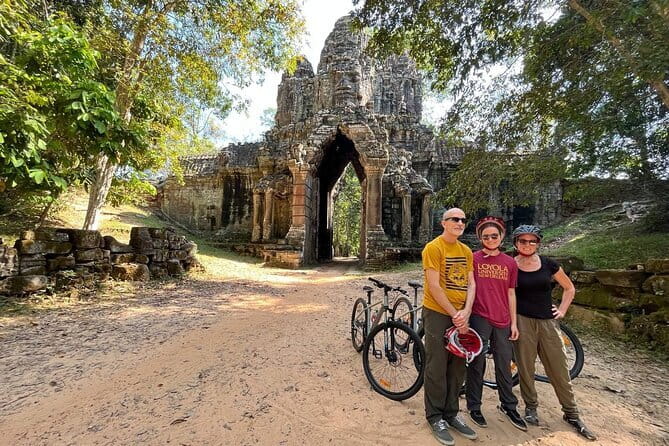
- 7:30 am start from your hotel: you beat some of the busiest daytime crowds and heat.
- Mr. K’s hands-on guiding: people call out his friendly, organized approach and strong on-the-ground knowledge.
- Bikes and helmets included: this removes a big hassle and helps you feel set up correctly.
- A stop list that mixes iconic and smaller temples: Angkor Wat, Bayon, Chau Say Tevoda, Ta Prohm, Ta Nei, plus Bayon’s East (Death) Gate.
- A route that can include backroads and jungle stretches: great for photos and for feeling like you’re seeing the park edge, not just the postcard angles.
- Angkor Temple Pass is not included: you’ll need to budget that extra cost for temple entry.
Why cycling Angkor Wat feels different from doing it by van
Angkor is famous for two things: monumental scale and crowds. A cycling tour helps with both. Instead of sitting in a vehicle while the driver finds parking and you squeeze in and out, you’re traveling under your own power along smaller roads and paths. That usually means you spend more time looking around and less time waiting.
Cycling also changes the tempo of the temples. You’re not just arriving, snapping a few photos, and moving on. When you ride to each stop, you get a natural rhythm: pedal, pause, explore, then roll to the next point. It’s a simple trick, but it makes the day feel less like a checklist.
And because this tour is built around dedicated cycling paths and safer movement through the area, it can feel more eco-friendly and more flexible. You can slow down for a scenic stretch, linger at a doorway, or push a little harder on the ride segments when you feel good.
You can also read our reviews of more tours and experiences in Siem Reap.
Your morning flow: the 7:30 pickup and the 6–8 hour pacing
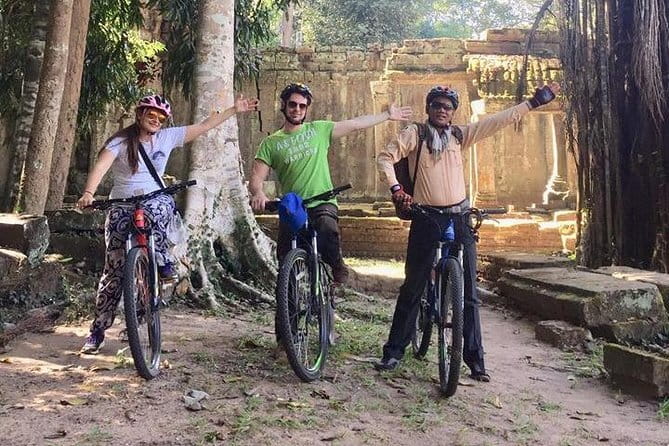
The day starts at 7:30 am, leaving from your hotel. This early start matters in Siem Reap. You’ll have more comfortable temperatures for temple walking, and the park can feel less packed before midday energy kicks in.
The tour runs about 6 to 8 hours, which is a sweet spot. It’s long enough to do multiple major sites—Angkor Wat, Bayon, Ta Prohm—without turning into an exhausting all-day grind. It’s also short enough that you still have time later in the day to eat well, cool off, and decide if you want to add something else.
One detail that’s easy to overlook: this is a private tour. That means it’s only your group, not a mixed crowd tour. In practice, that usually leads to a smoother pace and fewer delays. If your group wants a more relaxed rhythm or you want to take breaks more often, the guide can adjust more easily than on a large shared bus.
Stop-by-stop guide: what you’ll see and what to watch for
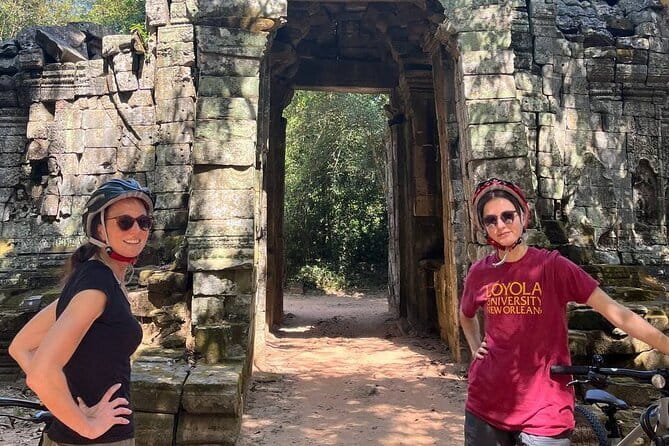
This tour is built as a sequence of temple highlights, with biking segments connecting the dots. Here’s what each stop offers, and the practical things to keep in mind.
Angkor Wat: the big first impression and the main ticket cost
You start at Angkor Wat, the largest and most famous Khmer temple. It was built in the 12th century between 1113 and 1150 during Suryavarman II’s reign. The temple rises about 65 meters high, and it’s surrounded by major outer features that make it feel like a whole world by itself.
The tour allocates about 2 hours here. That’s enough time to appreciate the scale, focus on the main viewpoints, and still move at a pace that doesn’t feel frantic.
Important practical note: Angkor Wat is listed as admission ticket not included on this tour, and the overall Angkor Temple Pass is also not included (listed at $37 per person). Plan for that cost so the day doesn’t turn into a scramble at the gate.
Bayon Temple: 54 towers and a very different vibe
Next up is Bayon Temple (Angkor Thom). Bayon is described as a Buddhist-style temple built in the late 12th / early 13th century by Jayavarman VII. One detail worth keeping in mind as you arrive: Bayon’s 54 towers represent the 54 provinces before and during the Khmer empire.
You’ll spend about 2 hours here. This stop is where Angkor shifts from grand frontal symmetry to a more intimate, face-focused experience. The towers draw your eyes in loops, and it’s easy to lose track of time if you’re enjoying the small angles and carvings.
Another practical detail: Bayon is marked as admission ticket free in the itinerary information for this tour. Still, because the tour also lists an Angkor Temple Pass that’s not included, I recommend you treat the pass as your baseline budget item and confirm what’s required for the specific entry points you’ll use.
Chau Say Tevoda: short stop, strong payoff
Chau Say Tevoda is a smaller stop, but it’s a good one. It sits just east of Angkor Thom, directly south of Thommanon across the Victory Way. Built in the mid-12th century, it’s described as a Hindu temple in the Angkor Wat period.
Time here is about 30 minutes. That’s perfect if you like variety without getting temple fatigue. You’ll get a break from the larger complexes while still staying in the Angkor atmosphere—stonework, doors, and that sense of being inside a layered historical site.
Ta Prohm: the temple most people remember from photos
Then comes Ta Prohm. Built in the late 12th century by Jayavarman VII and dedicated in 1186 to his mother, it has an interesting religious history: it originally had a Buddhist background, then later was converted to Hindu. The itinerary also notes that some Buddhist galleries remained.
You’ll have about 2 hours here. Ta Prohm is famous for a reason: the structure feels alive. Even if you’ve seen it in photos, the scale of the place plus the way the trees interact with the ruins makes it feel less like a picture and more like a scene you stepped into.
For this stop, I’d plan your energy carefully. The biking is active, but it’s the temple walking at Ta Prohm that can add up.
Ta Nei: a quieter temple near the East Baray
Ta Nei is a late 12th-century stone temple dedicated to the Buddha, and it’s positioned near the northwest corner of the East Baray, a large holy reservoir in the Angkor area.
Time here is about 1 hour. This is where the day gets calmer again. It’s a good stop if you like details more than crowds, because smaller temples often feel easier to explore thoughtfully.
Bayon’s East (Death) Gate: a short final look
To finish the circuit, you visit the East (Death) Gate of Bayon Temple. It’s one of the five gates guarding Angkor Thom, built in the late 12th century by King Jayavarman VII as part of the city reconstruction following the victory context described in the tour information.
You’ll spend about 30 minutes. This final stop works like a closing frame: you connect your earlier Bayon experience with the gate design and the sense of movement through the city plan.
Bikes, helmets, and comfort in hot Cambodia weather
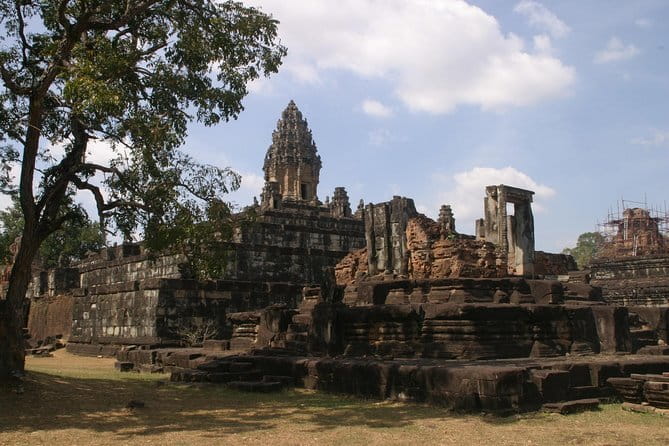
The tour includes a mountain bike and helmet, plus cold drinking water. That’s the practical stuff that matters most for a cycling day. When water is included, you’re less likely to waste time hunting a bottle, and you’re more likely to pace yourself correctly.
If you’re picky about comfort, check the basics before you ride: the helmet fit, the bike stability, and whether you can easily handle the gears. Quality bikes were specifically called out in feedback, along with the feeling of safety from the guide and the helmet setup.
Weather is the other factor. Even with a 7:30 am start, Siem Reap can warm quickly. Wear breathable clothes, plan on sun exposure during rides, and keep in mind that you’ll be outside for a 6–8 hour block. If you get cranky in heat, this isn’t the day to dress like you’re going to a museum opening.
Value check: $45 plus the Angkor Temple Pass
The price is $45 per person, and the tour typically runs about 6–8 hours. That’s a reasonable base rate for a private, guided, transportation-light experience. You’re also getting real inclusions: English-speaking tour guide, pickup and drop-off, cold water, and a mountain bike with helmet.
The catch is the temple entry budget. Angkor Temple Pass ($37 per person) is listed as not included. So your day’s baseline math becomes $45 + $37 = $82 per person, before any personal spending like snacks or optional extras.
Is it still good value? For me, yes—especially if you like being active and you want a route that’s not only built around the busiest photo lines. A pass plus a cycle tour often beats the stress of trying to do the circuit on your own, because the guide helps you move efficiently between stops.
One more note: group discounts exist, and this is booked on average about 42 days in advance. If you’re traveling during peak season, you’ll feel better locking in earlier rather than hoping the schedule magically works out.
Who this tour fits best (and who should reconsider)
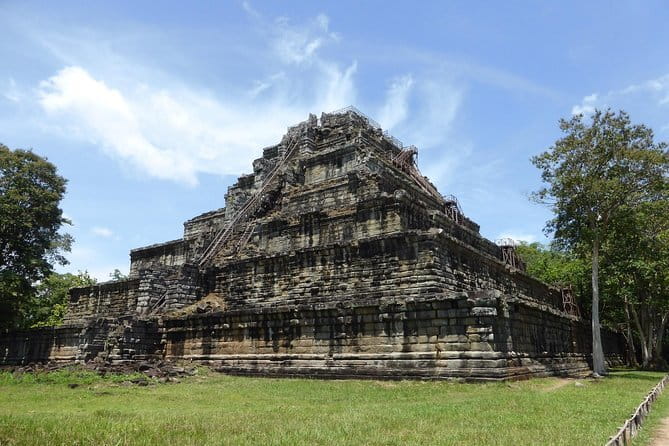
This is ideal if you want a more intimate way to see Angkor—especially if you enjoy being outdoors and moving at your own pace. The tour also seems like a great match if you like variety: famous temples like Angkor Wat and Ta Prohm plus stops like Chau Say Tevoda and Ta Nei, which can feel less packed.
It’s also a strong choice for couples and families who want the day to feel less like a conveyor belt. Because it’s private, the guide can often adapt to how much biking you want and how quickly your group walks.
Reconsider if: you have limited comfort with riding for hours, you hate any uneven paths, or you’re sensitive to heat and sun. Cycling is the main format here, so it can’t be treated like a light stroll with a bike standing by.
My booking call: should you book this Angkor Wat cycling tour?
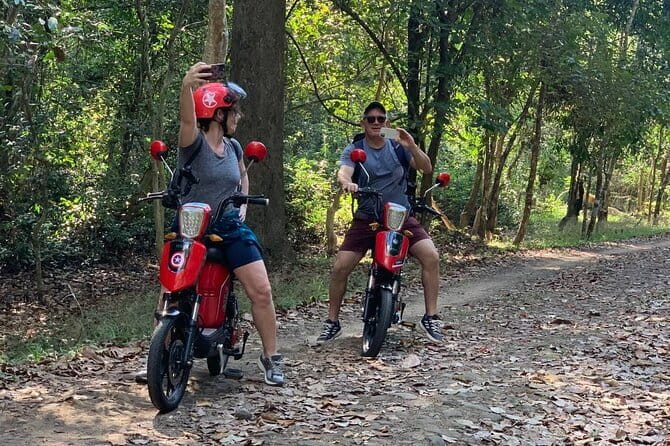
Book it if you want Angkor with less crowd pressure and more movement between sites. The combination of a private setup, included bike and helmet, and a guide like Mr. K—praised for friendliness, organization, and the ability to adjust the ride—makes this a good value way to experience the temple complex and its surrounding feel.
Skip or ask extra questions first if you’re unsure about your cycling comfort in warm weather. Also budget the Angkor Temple Pass, since it’s not included and it’s a big part of the day’s total cost.
If you want, tell me your travel dates and your group’s cycling comfort level (beginner, intermediate, very confident). I can suggest what to ask before you go, so the ride matches your expectations.
FAQ
What time does the Angkor Wat cycling tour start?
The tour leaves from your hotel at 7:30 am.
How long is the Angkor Wat cycling tour?
The duration is about 6 to 8 hours.
Is pickup and drop-off included?
Yes. Pick Up & Drop Off is included.
What’s included in the price?
Included are an English speaking tour guide, pickup and drop-off, cold drinking water, and a mountain bike & helmet.
Do I need to buy the Angkor Temple Pass?
Yes. The Angkor Temple Pass is not included and is listed at $37 per person.
Which temples are visited during the tour?
The itinerary includes Angkor Wat, Bayon Temple, Chau Say Tevoda, Ta Prohm Temple, Ta Nei Temple, and Bayon Temple East (Death) Gate.
Is this a private tour or a shared group?
It’s listed as a private tour/activity, meaning only your group participates.
Is the temple entry included for all stops?
The itinerary lists Angkor Wat as having admission ticket not included, while the other listed temple stops are marked admission ticket free within the itinerary details.
Do I need a mobile ticket?
The tour features mobile ticket.
Can I cancel for a full refund?
Yes. You can cancel up to 24 hours in advance for a full refund.