REVIEW · SIEM REAP
Angkor Cycling Tour
Book on GetYourGuide →Operated by BULFROG by CAMOUFLAGE ADVENTURES CAMBODIA · Bookable on GetYourGuide
Angkor by bike feels faster than it should. It mixes 70% off-road trails with major temple stops, then slows down for wildlife by Jayatataka Baray.
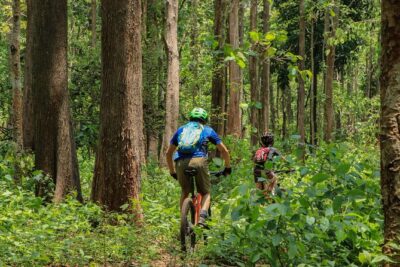
I like that you’re not trapped on straight roads. You’ll get a satisfying 35 km ride with a mix of paved paths and jungle/countryside tracks, plus guided temple time that explains what you’re seeing.
One thing to plan for: the temple pass is required but not included in the price, so you’ll need to budget that on top.
In This Review
- Key highlights you’ll feel right away
- Why cycling Angkor beats the usual tuk-tuk loop
- Bike fit, pace, and what 35 km feels like
- Angkor Wat by bike: moats, South Gate energy, and guided meaning
- Angkor Thom fortifications: Ghost Gate, wall riding, and Bayon’s face-game
- Elephant Terrace lunch: Khmer flavors with a temple view
- Ta Nie, Jayatataka Baray, and wildlife breaks that feel like a bonus
- Ta Prohm roots, Bakheng Hill off-road, and the ride back with stories
- Weather, clothing rules, and heat-smart cycling
- Price and logistics: what $65 buys you in Angkor time
- Who this tour suits best (and who should skip it)
- Booking call: should you choose this Angkor cycling day?
- FAQ
- FAQ
- How long is the Angkor Cycling Tour?
- How far do you ride during the tour?
- Is the Angkor temple pass included?
- What kind of roads and trails should I expect?
- Are bikes and helmets provided?
- What’s included for food and drinks?
- What time does pickup happen, and where?
- What should I bring for temple visits and comfort?
- What languages is the guide available in?
Key highlights you’ll feel right away
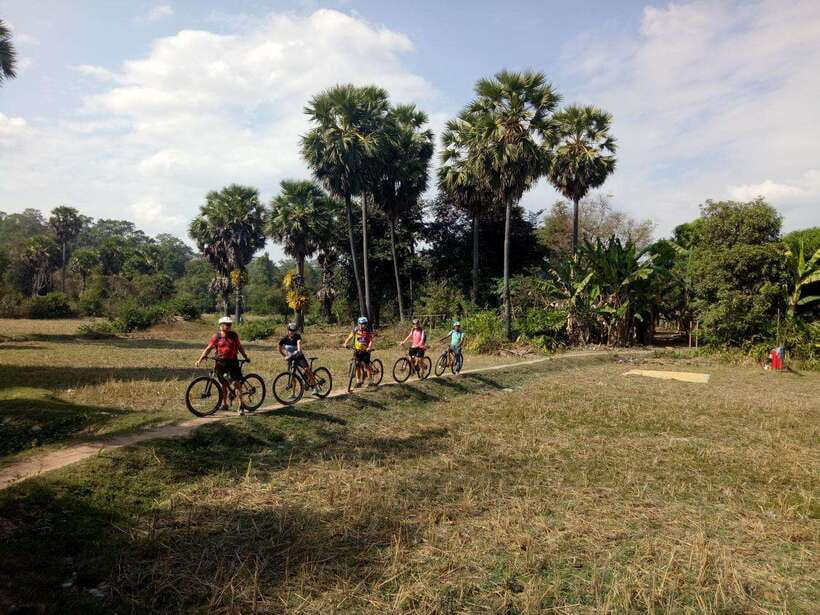
- 70% off-road cycling through jungle and countryside tracks, not just flat paved roads
- Angkor Wat and Angkor Thom highlights with guided stories at each stop
- Jayatataka Baray wildlife pause, including chances for cranes, egrets, monkeys, butterflies, and even freshwater otters
- Wall riding and Ghost Gate photos during the Angkor Thom circuit
- Lunch at Elephant Terrace area, with water/snacks and Khmer specialties at a local restaurant
- Practical support included: helmet, bike spare part, and an English-speaking guide
Why cycling Angkor beats the usual tuk-tuk loop
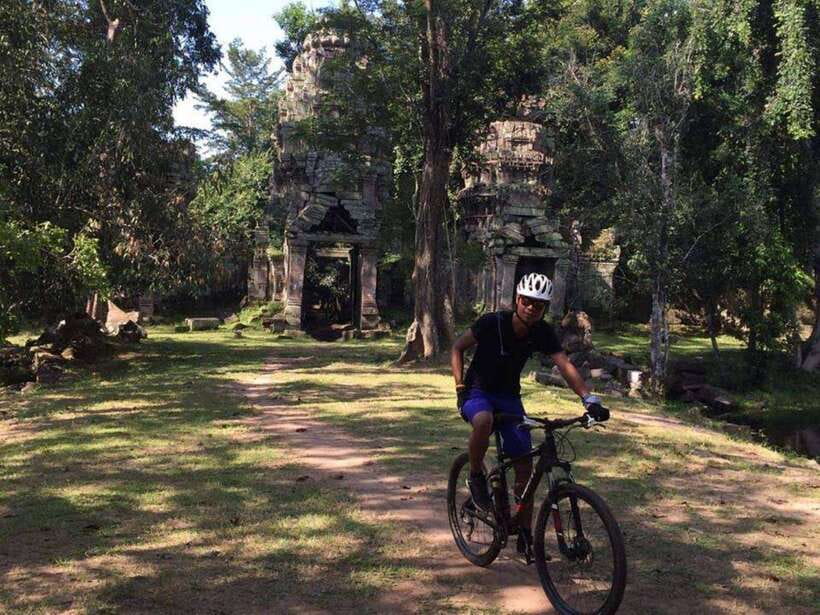
Angkor is famous for temples. But what makes this day special is how you move between them. On a bike, you feel the change from wide-open moat views to tight forest single tracks.
I especially like the way the route balances big icons with quiet moments. You spend real time at the temples, then you escape the crowds by rolling onto off-road paths near places like Bakheng Hill and through the forest edges around the complex.
You also get a more personal pace. Instead of being herded nonstop, you cycle, stop for explanations, and keep your own rhythm. It’s a slower, more grounded way to see Angkor—without turning the day into hard labor.
You can also read our reviews of more tours and experiences in Siem Reap.
Bike fit, pace, and what 35 km feels like
The tour runs about 7 hours and clocks in around 35 km. Expect a ride that’s described as medium level: most of it is manageable, with a few parts that feel more challenging.
A big practical point: about 30% is paved road and 70% is off-road. That means the day isn’t just sightseeing from a comfortable seat. You’ll be steering over dirt tracks and uneven surfaces, so you’ll want sturdy closed-toe shoes and a helmet that actually fits right.
The schedule matters, too. You start in the morning—pickup is in Siem Reap city with a 7:45 AM start, and the team picks up roughly 15 minutes before from hotel/apartment/airbnb lobbies within the city area. In this heat, starting early helps you avoid the worst sun while you still have energy for the temple walks.
Angkor Wat by bike: moats, South Gate energy, and guided meaning
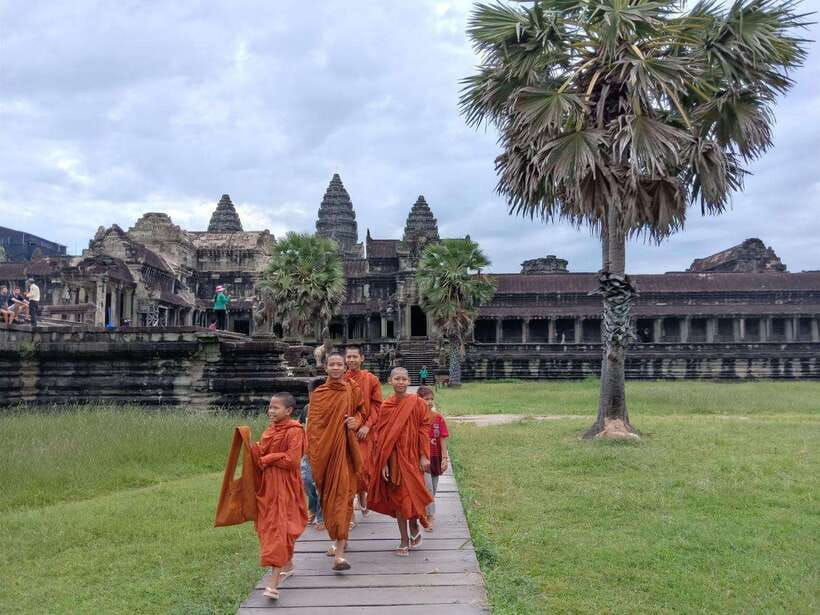
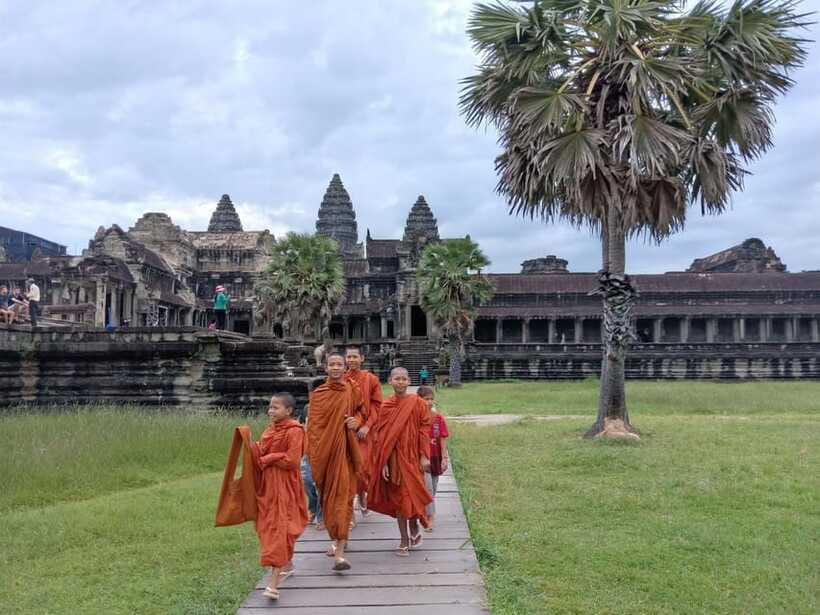
Angkor Wat is the obvious highlight. But biking up to it changes the feeling. You start cycling through the Siem Reap River area and then roll into rainforest trails that lead into the Angkor complex.
At Angkor Wat, you get about two hours with your guide. This is the part that makes the temples click. You’re not just looking at stone carvings—you’re hearing the stories and context in a way that helps you read the architecture.
There’s also a practical benefit to having a guide-led approach. The experience includes a way to skip the line via a separate entrance, so you spend less time waiting around and more time inside the temple grounds.
After you finish Angkor Wat, you don’t immediately jump into another long drive. You continue by bike along the area’s moats and into the next temple zone, which keeps the day flowing.
Angkor Thom fortifications: Ghost Gate, wall riding, and Bayon’s face-game
Angkor Thom is where the route gets more dramatic. You ride along ancient fortifications and get the classic Angkor feeling of “how did they build this?” long before you reach the major temple stops.
A standout moment is the ride on the wall area. You climb onto the ancient wall and cycle along the fortifications—one of those experiences that turns archaeology into something physical. You’re higher up, you can see more of the complex layout, and it’s a great place for photos if the light cooperates.
Then comes Ghost Gate. It’s mysterious by design, and with your guide’s stories, it feels like a real historical threshold rather than just another viewpoint.
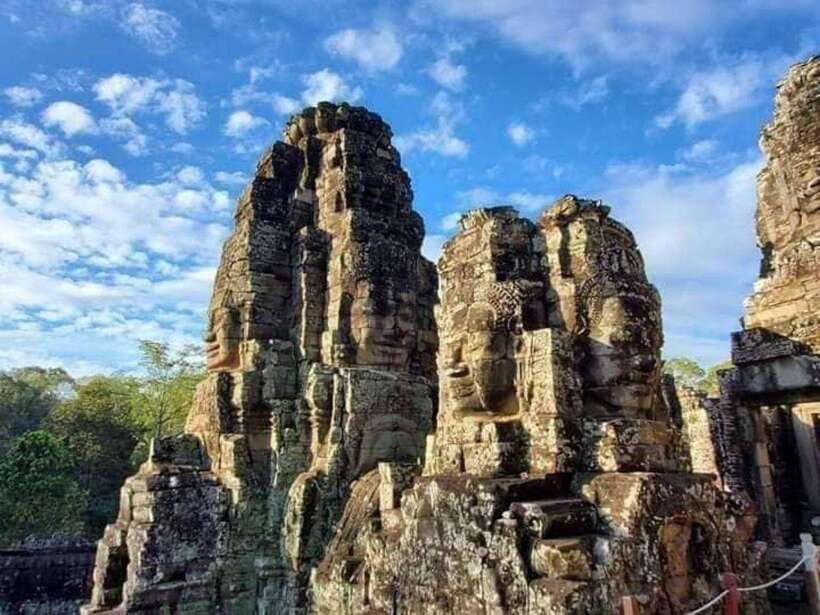
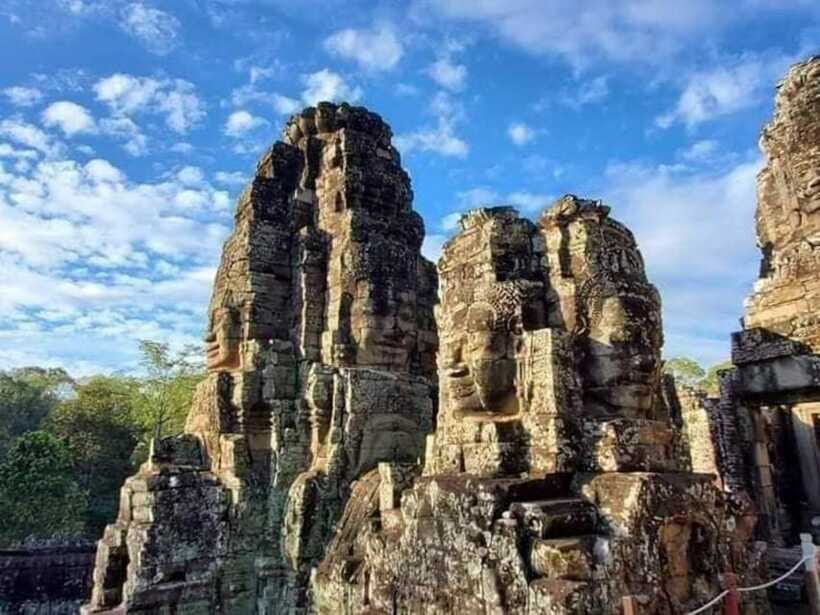
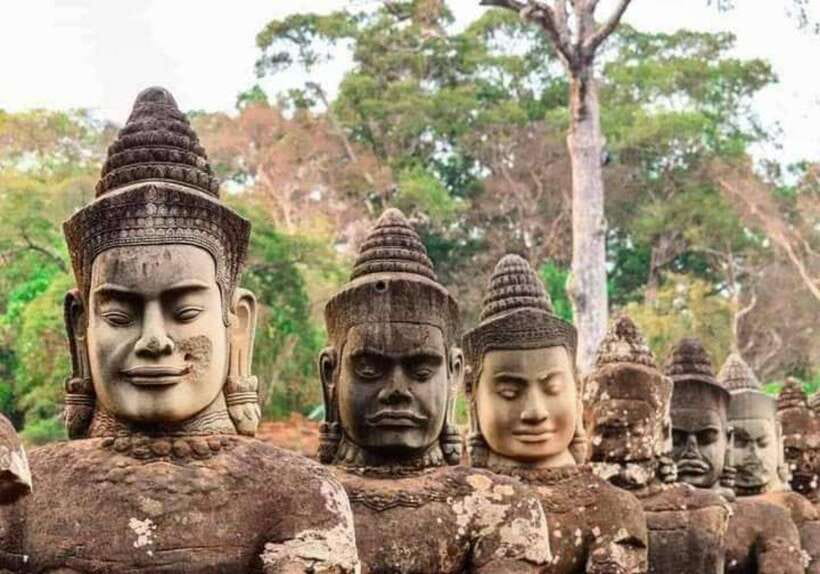
Right after, you reach Bayon Temple, famous for its stone faces. You’ll see them up close and from different angles during the visit, which helps you appreciate why they’re so iconic. The guide’s explanations also help you connect Bayon to the wider Angkor Thom layout, not just treat it like a stop on a checklist.
Elephant Terrace lunch: Khmer flavors with a temple view
After Bayon, you cycle a short distance to lunch. The plan is lunch at a local restaurant in front of Elephant Terrace, and it’s not just a quick bite.
You’ll be served water, snacks, and seasonal fruits, and you also get a taste of Khmer specialties at the restaurant. That’s a good setup for cycling again afterward—food is part of the adventure here.
Elephant Terrace itself is a big scene. Even if you only see it briefly, it adds weight to the meal because you’re eating with a sense of where royal processions and ceremonies would have taken place.
One small but important comfort detail: you get cold water and snacks served with warm hospitality at stops. In Cambodia’s sun, those little pauses keep the day enjoyable instead of draining.
Ta Nie, Jayatataka Baray, and wildlife breaks that feel like a bonus
Once you leave the densest temple area, you start moving toward the forest side of the Angkor complex. Ta Nie is one of those temples that feels tucked away in nature, which changes the mood compared to the larger, busier sites.
Then comes Jayatataka Baray, and this is where the day earns its “nature” credit. You stop for birdwatching and slow down for the living scene around the water. The wildlife chances include cranes, egrets, lesser whistling ducks, kingfishers, plus butterflies and monkeys.
The tour also notes a possibility of freshwater otters at the river. You can’t count on spotting them every time, but the stop itself is worth it because you’re switching gears from stone and carvings to movement, sound, and small wildlife details.
There’s even a mention of a peaceful tree nursery garden, which adds to that restorative feel—like the cycling day has a breath break.
Ta Prohm roots, Bakheng Hill off-road, and the ride back with stories
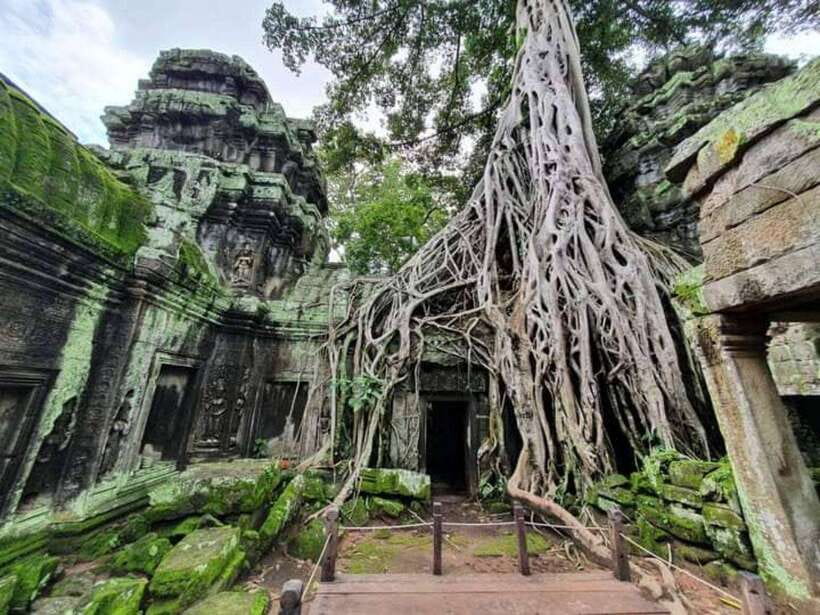
Ta Prohm is famous for the “jungle + ruins” look. It’s often compared to the Tomb Raider vibe because of how the massive tree roots grab onto the temple walls, blending nature and architecture in a way that looks almost staged.
You’ll reach Ta Prohm after the Jayatataka Baray stop, and then you’re back in that surreal zone where the temple looks like it’s growing out of the forest.
On the riding side, you also get off-road tracks around Bakheng Hill, including riding into the area via the South Gate. This section is where the “70% off-road” promise becomes real. You’re not just looking at nature—you’re passing through it, and you’ll feel the ride surfaces under you.
As the day wraps up, you head back toward town with about a 12 km stretch using a blend of single tracks and smooth bike lanes. It’s a satisfying landing after a day that alternates between temples and trail riding.
Weather, clothing rules, and heat-smart cycling
Cambodia’s sun is no joke, especially when you’re cycling. The tour advice is practical: light breathable clothing for biking, plus spare cloth to change into for temple visits.
You’ll want sunscreen and sunglasses, and definitely closed-toe shoes. Since the temple sites can require modest clothing, it’s smart to bring something that covers appropriately without turning your day into sweaty misery.
One rule to respect: loose clothing isn’t allowed. That matters on a bike. Loose fabric can catch on straps or handlebars, so pack something fitted enough to move safely.
Also note a rider consideration: this tour is not suitable for pregnant women, likely because of the cycling and off-road nature of the route. If you’re unsure about fitness or comfort, it’s worth checking with the operator before committing.
Price and logistics: what $65 buys you in Angkor time
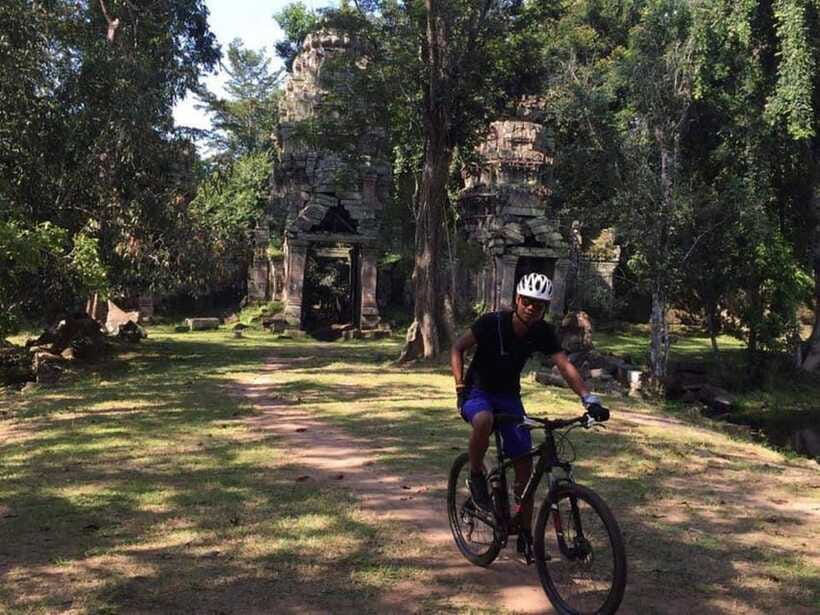
At $65 per person for around 7 hours, this is one of the better ways to combine cycling + temple guiding in the Angkor area. The key value is that you get more than transportation—you get the structure of guided temple time plus a route that includes off-road riding.
What’s included:
- Mountain bike (helmet included)
- English-speaking guide
- Lunch at a local restaurant plus water, snacks, and seasonal fruits
- Free tuk tuk transfers
- Support items like a bike spare part and an 1st aid kit
What’s not included:
- Temple pass (required)
- Personal expenses
- Travel insurance
There’s also a timing/efficiency advantage: you’ll get pickup in Siem Reap city and a separate entrance method to reduce waiting inside temple areas. That matters because Angkor days can feel long when you spend too much time in lines.
Who this tour suits best (and who should skip it)
I think this fits travelers who want a blend of adventure and structure. If you like the idea of moving on trails, then pausing for real temple context, you’ll get a lot out of this day.
It’s also a good match if you prefer a more peaceful rhythm. The ride includes quieter off-the-beaten-track sections near areas like Bakheng Hill, and that difference is noticeable when you compare how you feel stepping off a bike versus disembarking from a car.
You might want to skip or choose something gentler if:
- you’re not comfortable riding on off-road dirt tracks
- you need an extremely casual, low-heat day (early start helps, but it’s still outdoors)
- you have constraints that make temple clothing changes difficult
- you’re in the not suitable for pregnant women category
Booking call: should you choose this Angkor cycling day?
If you’re deciding between another day of temples by tuk tuk and a more active day, I’d lean toward this one—mainly because the 70% off-road portion changes how Angkor feels. You’re seeing the monuments, but you’re also seeing the surrounding landscape as a living place.
Book it if you want:
- guided temple time that explains what you’re looking at
- a cycling day that feels like exploration, not just transport
- wildlife and birdwatching pauses at Jayatataka Baray
Consider another option if you strongly dislike heat, uneven surfaces, or the idea of changing into temple-appropriate clothing. And don’t forget: plan for the temple pass, because it’s required and not included.
FAQ
FAQ
How long is the Angkor Cycling Tour?
It runs for 7 hours total.
How far do you ride during the tour?
The ride covers about 35 km for the full day.
Is the Angkor temple pass included?
No. The temple pass is required but it’s not included in the tour price.
What kind of roads and trails should I expect?
Expect a split of about 30% paved cycling and 70% off-road trails.
Are bikes and helmets provided?
Yes. You get a mountain bike (all sizes) and a helmet.
What’s included for food and drinks?
You’ll have lunch at a local restaurant, plus water, snacks, and seasonal fruits. Cold water and snacks are also served at stops.
What time does pickup happen, and where?
Pickup is in Siem Reap city with a 7:45 AM start. The team picks you up about 15 minutes before from hotel/apartment/airbnb lobbies.
What should I bring for temple visits and comfort?
Bring closed-toe shoes, wear light breathable clothing for biking, and pack spare cloth for temple modesty. Sunscreen and sunglasses are recommended.
What languages is the guide available in?
The guide provides tours in English and Spanish.