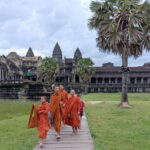
Cycle Angkor like a local, not like a crowd. This private cycling tour gets you off main roads and onto shaded paths, linking major temples with remote ruins and nature views, all while you’re moving under your own power. I especially like the mix of 25–40 km of ride time through jungle and temple-area roads, and the way the stops are paced so you can actually look closely instead of rushing past. One thing to plan around: you’ll still need the Angkor ticket (the tour helps you buy it), and the ride needs moderate fitness.
Angkor is hot, and this day is active—so the practical perks matter. You get hotel pickup and drop-off, a mountain bike with a helmet, plus bottled water and snacks, and an English-speaking guide (guides you might hear about include Leap and Sok). If you’re hoping for a fully food-included day, note that lunch is on your own, with local restaurant options during the tour.
In This Review
- Key things to love about this Angkor jungle bike day
- Why this ride is different from the usual Angkor day
- The 7–8 hours: what the day feels like on the bike
- From Angkor Park entry to Angkor Wat’s perfect geometry
- Angkor Wat (about 2 hours)
- Ta Nei Temple (about 30 minutes)
- The French Dam break: water sounds and a calmer view
- Bayon and Angkor Thom South Gate: faces meet the road
- Bayon Temple (about 1 hour)
- Angkor Thom South Gate (about 30 minutes)
- Ta Prohm: the tree-covered ruins where time slows
- Ta Prohm (about 1 hour)
- Guides and equipment: the small stuff that changes everything
- Price and value: $61.75 with admissions and lunch still to budget
- Who should book this bike tour (and who should think twice)
- Practical tips to make your day smoother
- Should you book this Angkor Jungle Biking Adventure?
- FAQ
- What’s the duration of the Angkor Jungle Biking Adventure?
- Is pickup and drop-off included?
- Is this tour private?
- How much cycling will I do?
- What’s included in the price?
- Are Angkor temple tickets included?
- Is lunch included?
- What should my fitness level be?
- Do I need to tip the guide?
- What’s the cancellation policy?
Key things to love about this Angkor jungle bike day
- Quiet roads between famous sights instead of sticking to the busiest routes
- 25–40 km of jungle riding with shaded trails and old causeways/temple roads
- Major temples plus smaller stops like Ta Nei and the French Dam viewpoint
- A real storyteller guide who explains Khmer history and temple architecture
- Comfort supports: helmet, mountain bike, bottled water, snacks, and pickup
Why this ride is different from the usual Angkor day
Most Angkor tours are built around time in lines and time walking the same corridors. This one flips the formula: you spend hours riding between sites, often along less-traveled roads and trails, so the day feels more like exploring than checking boxes.
You’re also choosing a better rhythm for the temples. Cycling lets you cover distance quickly, then slow down at the places that deserve your attention—like the sculpted details at Angkor Wat or the face towers at Bayon—without feeling like you’re sprinting on foot the whole time.
The “jungle” part is real here, not just marketing language. You pedal through shaded areas and get views that feel more natural than queue-heavy. That matters at Angkor, where the heat and crowds can drain the energy from even the best ruins.
You can also read our reviews of more tours and experiences in Siem Reap.
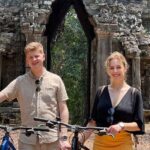
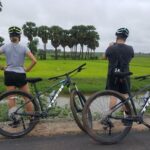
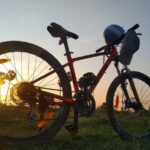
The 7–8 hours: what the day feels like on the bike
The tour runs about 7 to 8 hours, which is long enough to feel like a full day, but not so long that you’re exhausted before you even reach the major temples. Your day starts with a pickup from your hotel lobby, then a transfer to the starting point. From there, you bike into the Angkor Park area.
You’ll hit a ticket counter stop near Angkor Wat as part of the flow, then spend real time at the first big monument. After that, the schedule keeps switching between riding time and shorter temple/nature stops. That pattern is what helps the day stay lively: you’re not stuck in one long stretch of walking, and you get chances to rest, drink, and regroup.
Fitness matters, because the ride distance lands around 25–40 km. You don’t need to be a racer, but you should be comfortable cycling for sustained periods in warm conditions. If you’re the type who hates being sweaty and stuck in the sun, this might feel challenging—though the shaded segments do help.
Also, remember: admission to Angkor sites is not included in the tour price. Your guide assists with purchasing your ticket, so you’re not on your own, but you should still budget for it.
From Angkor Park entry to Angkor Wat’s perfect geometry
You begin with an organized entry setup near Angkor Wat—an efficient ticket counter moment that keeps the day from turning into a scramble. From there, you settle into the star stop.
Angkor Wat (about 2 hours)
Angkor Wat is the largest monument in the Angkor group and also one of the best-preserved. When you arrive by bike, it feels like you’re approaching a real destination, not just a photo spot on a checklist.
Take your time with the design. The temple is famous for its balance and proportions—composition and reliefs that reward slower looking. If you like architecture, this is where you’ll feel the most payoff. You’ll see why it’s considered a masterpiece of Khmer stonework and why people obsess over the carvings.
One practical note: the tour time gives you room to look around, but it still runs on a schedule. If you’re the kind of person who could spend three hours alone with one doorway, ask your guide how to set your pace during the stop.
Ta Nei Temple (about 30 minutes)
Next is Ta Nei, a late 12th-century stone temple associated with King Jayavarman VII. It sits near the northwest corner of the East Baray and was dedicated to the Buddha.
This is the kind of stop that makes a biking tour worth it. Ta Nei isn’t always the headline on a bus itinerary, but it works well in a day like this—short enough to keep energy high, detailed enough that it doesn’t feel like a filler.
The French Dam break: water sounds and a calmer view
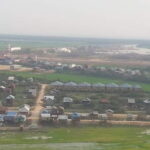
After more riding, you pause at the French Dam (ទំនប់ទឹកបារាំង). This stop is about sightlines and atmosphere, not big-ticket monument status.
You’ll get a nice view over the dam area, and the experience is described as especially good for the soundscape: water mixing with bird calls. That kind of break is smart in the middle of an active day. It also gives you a moment away from heavy stone and crowds, so when you return to temples, they feel fresher.
It’s also a short stop—around 19 minutes—so you won’t lose the momentum of the day.
Bayon and Angkor Thom South Gate: faces meet the road
Bayon Temple (about 1 hour)
Bayon comes nearly 100 years after Angkor Wat, and it’s tied to the city layout of the time. The basic structure and early phases aren’t fully known, but the temple’s central-city setting is key: it was positioned at the center of a royal city.
This is where the scale shifts. Bayon feels less like a single symmetrical statement and more like a dense visual world. The time block here is a good length—enough to walk through and observe details without turning into a long slog.
Angkor Thom South Gate (about 30 minutes)
Then you roll into Angkor Thom’s South Gate, one of the best-known entrances because it’s been fully restored, and many of the carved heads remain in place. It sits on the main road into Angkor Thom from Angkor Wat.
This is a great place to be on a bike. You can transition quickly from “temple time” to “city time.” You also get a clear sense of the gate’s function: it’s not only dramatic; it’s a threshold into the bigger urban layout of Angkor Thom.
If you’re picky about photos, aim to use this stop for framing and orientation. The gate helps you understand how the temple complex is organized before you hit Ta Prohm.
Ta Prohm: the tree-covered ruins where time slows
Ta Prohm (about 1 hour)
Ta Prohm is famous as the kingdom of trees. It’s known for being left largely untouched by archaeologists, except for the work done to clear paths for visitors and strengthen structures to help slow further deterioration.
When you arrive here in the middle of the day, it often feels like the most cinematic stop. The ruins and roots create a different mood than the more perfectly composed spaces elsewhere. It’s also a relief after other temples, because the visual focus is wider—trees, stones, and the way the structure is exposed.
This stop is about pacing. With 1 hour, you can walk the main areas, look up at the big frames, and still have time to circle back for details. If you push too fast, you’ll miss how the trees interact with carvings and columns, so aim for steady, not frantic.
Guides and equipment: the small stuff that changes everything
The biggest praise for this tour centers on the guide. In multiple examples, guides like Leap are described as energetic, friendly, and able to explain Khmer history and temple architecture in a way that clicks. Another guide named Sok appears in a family-day context, with credit given for knowing interesting details and finding beautiful jungle trails.
Even without the storytelling angle, a good guide matters at Angkor because the meanings aren’t obvious from stone alone. The temples can look similar if you’re rushing. With the right explanation, you start noticing the differences in era, style, and purpose.
On the practical side, you’re not waiting around with borrowed gear. You get a mountain bike and helmet, plus bottled water and snacks during the ride. That reduces decision fatigue—especially if you’re traveling with limited time or energy.
Transport support is also part of the comfort equation. Your ride isn’t totally solo; the day includes a driver in an accompanying vehicle, which helps with the logistics if you need a break or have issues.
Price and value: $61.75 with admissions and lunch still to budget
At $61.75 per person, this tour lands in a reasonable category for a private half-to-full-day activity in Siem Reap, especially because you’re getting mountain bikes, helmet, guide, snacks, water, and hotel pickup/drop-off.
But the math needs one correction: temple admissions are not included, and lunch isn’t included either. The guide assists with buying your Angkor ticket, which is helpful, but it’s still an extra cost. Lunch is available at local restaurants during the tour, with dishes roughly $3 to $10 each.
So the value depends on your style:
- If you want a day that mixes biking, multiple temple stops, and narration, the base price makes sense.
- If you’re trying to minimize extra spending and you prefer a fully packaged ticket/lunch deal, you’ll need to compare other options.
One more value point: riding between sites often means you’re spending less time stuck on the slow-moving parts of a typical itinerary. You’re paying for that freedom.
Who should book this bike tour (and who should think twice)
This is best for you if:
- You’re comfortable riding for long stretches and can handle a moderate fitness level on a day that’s about 7–8 hours.
- You like active sightseeing and want shorter walking bursts linked by cycling.
- You want a private setup with your own guide and group, rather than feeling lost in a bigger crowd stream.
It might not be ideal if:
- You want a mostly relaxed, low-effort sightseeing day.
- You’re hoping for a single-price package that includes everything like admission and lunch (those aren’t included here).
- Heat and physical activity are a hard no for you.
That said, one review explicitly mentions biking with family, which suggests this can work when the group is prepared for the ride. If you’re traveling with kids or older adults, you’ll want to be realistic about the cycling distance and check that everyone can handle it comfortably.
Practical tips to make your day smoother
A few common-sense moves can make the difference on a jungle-temple bike day:
- Bring sunscreen and wear something you’re okay getting dusty.
- Use the helmet and adjust it before you start riding.
- Drink early and often; bottled water is provided, but don’t wait until you feel thirsty.
- Don’t ignore the ticket timing. Even though the guide helps, your day runs on schedule once you enter Angkor Park.
- If you’re sensitive to heat, ask your guide about where you’ll get shade and plan your pace accordingly.
Also, consider saving money and time at lunch by going in hungry but not starving. You’ll have access to local restaurants with vegetarian and non-vegetarian options, but you’ll be choosing from menus at your own expense.
Should you book this Angkor Jungle Biking Adventure?
I think you should book it if you want an Angkor day with motion, variety, and fewer crowd-heavy routes—and you’re happy to cycle a meaningful distance. The combo of major temples (Angkor Wat, Bayon, Ta Prohm, Angkor Thom South Gate) plus smaller stops like Ta Nei and the French Dam view makes the day feel bigger than just the headline monuments.
Skip it if you want a very easy sightseeing pace or a tour where admission and lunch are fully packaged into one price. And if you’re unsure about fitness, remember the ride distance is often described as 25–40 km, so you’ll want to match the experience to your comfort level.
If you do book, you’re likely to get the best results by leaning into the guide’s explanations. Angkor isn’t only about what you see—it’s about what those stones meant. This tour is built for that kind of attention.
FAQ
What’s the duration of the Angkor Jungle Biking Adventure?
It runs about 7 to 8 hours.
Is pickup and drop-off included?
Yes. Pickup and drop-off are offered from your hotel (you provide your hotel name for pickup).
Is this tour private?
Yes. It’s a private tour/activity, meaning only your group participates.
How much cycling will I do?
The ride is described as about 25–40 km through jungle paths and temple roads.
What’s included in the price?
The tour includes an English-speaking cycling guide, a mountain bike and helmet, bottled water, and snacks, plus pickup/drop-off.
Are Angkor temple tickets included?
No. Admission tickets are not included, and the guide assists you with purchasing your ticket at the entrance of Angkor Park.
Is lunch included?
Lunch is not included. You can buy lunch at local restaurants during the tour, with vegetarian and non-vegetarian options.
What should my fitness level be?
The tour notes a moderate physical fitness level is recommended.
Do I need to tip the guide?
Tips for the guide are not included.
What’s the cancellation policy?
Free cancellation is offered. You can cancel up to 24 hours in advance for a full refund.