REVIEW · SIEM REAP
Angkor Sunrise Expedition Cycling Through Serene Backroads
Book on Viator →Operated by Journey Cambodia · Bookable on Viator
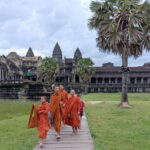
A 4:30 a.m. start pays off. You’ll catch Angkor Wat at sunrise and then swap the crowd shuffle for easy cycling on calmer paths around the Angkor complex.
Two big reasons I like this ride: the chance to see the temple glowing before most people arrive, and the fact you’re actually moving—about 15 to 25 km—past spots most folks only rush past on foot. One thing to plan for: the temple pass/entrance fees aren’t included, so you’ll need to budget that extra cost and pay on-site.
In This Review
- Key highlights before you go
- Why the 4:30 a.m. sunrise plan works so well
- How pickup, bikes, and support keep the ride easy
- Angkor Wat sunrise: the quiet moment you came for
- Srah Srang: breakfast, breathing room, and a different view of the ruins
- Ta Prohm: roots, mood, and local backroads by bike
- Angkor Thom: feeling the moat-and-jungle vibe from the bike seat
- Bayon faces and the end-of-day momentum
- Price and value: what $69 covers (and what to budget for)
- What the ride is like in real life
- Who should book this and who should skip it
- Should you book the Angkor Sunrise Expedition?
- FAQ
- What time does the Angkor sunrise cycling tour start?
- How far do we cycle during the tour?
- Are temple entrance fees included in the $69 price?
- What’s included for comfort and safety?
- What happens if weather is poor?
- Can I cancel and get a full refund?
Key highlights before you go
- Angkor Wat sunrise timing: pickup in the dark, then you’re in place as the sky wakes up
- Small group feel (max 9): you can ride at a human pace and hear your guide clearly
- Easy backroad cycling (15–25 km): less walking crowd pressure, more time in motion
- Ta Prohm’s roots + Ta Prohm backroads: atmospheric temple views plus local lanes
- Angkor Thom wall ride: moat one side, jungle feel on the other
- Comfort touches: bottled water and a cool towel, plus a helmet and support vehicle
Why the 4:30 a.m. sunrise plan works so well
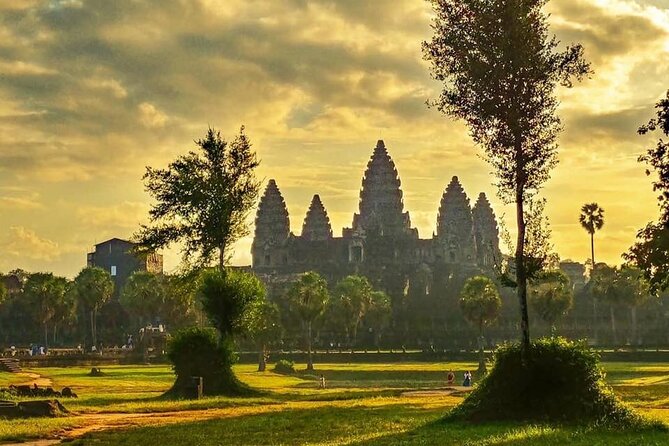
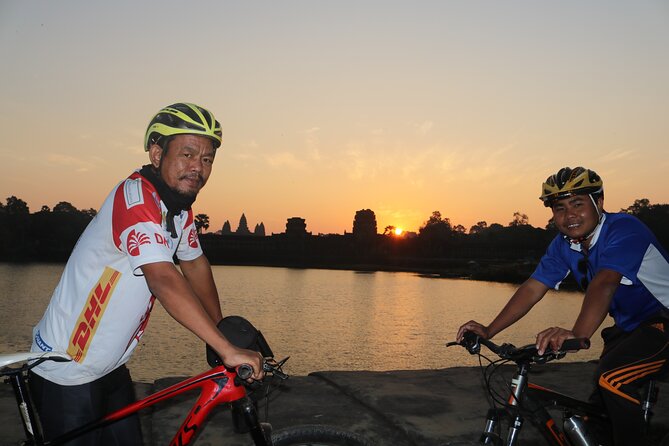
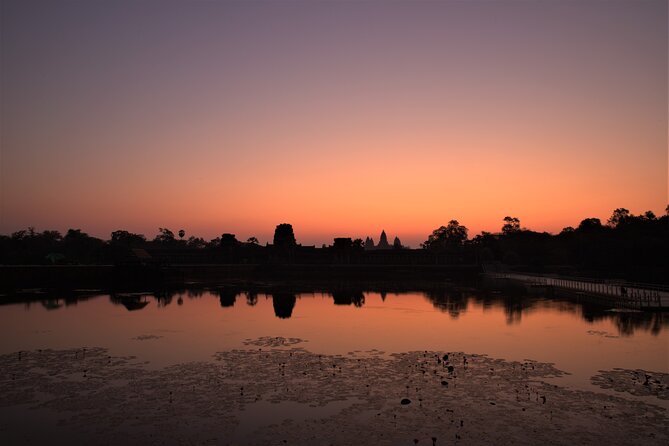
Siem Reap mornings can feel like a different planet. This tour starts at 4:30 am (pickup typically between 4:30–4:40 am), so you’re not fighting the big rush with everyone else. The payoff is that first light on Angkor Wat, when the scene looks softer and calmer than what you’ll see later in the day.
What makes the schedule smart is the two-part flow. You go for sunrise first, then you eat, rest a bit, and only then you set up the mountain bikes and ride. That means you’re not trying to pedal hard while you’re still half-asleep and sticky from the early morning.
You can also read our reviews of more tours and experiences in Siem Reap.
How pickup, bikes, and support keep the ride easy
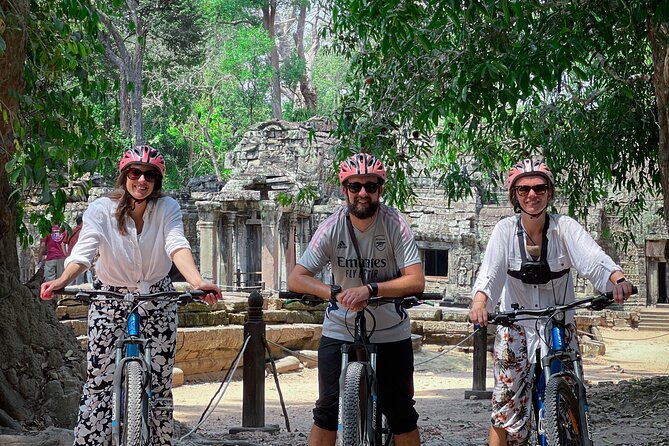
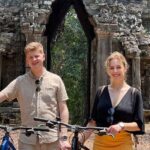
Your group gets picked up by tuk tuk or a mini-van, depending on group size. From there, you’re set up for comfort from the start: you’ve got an air-conditioned vehicle, bottled water, a cool towel, and an onboard first aid kit for peace of mind.
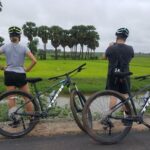
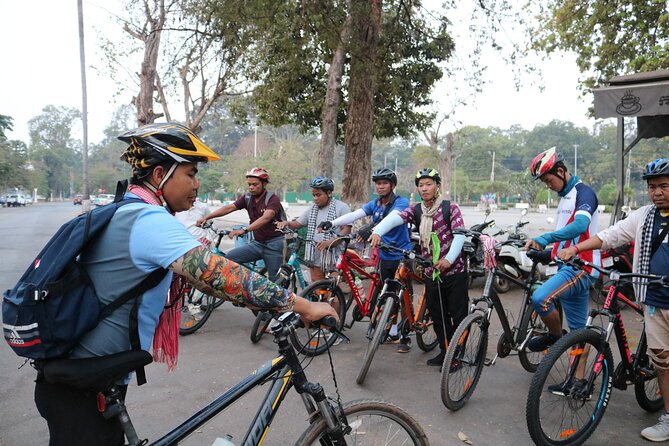
The cycling itself is described as an easy ride, around 15–25 km total. That’s a good distance for people who want movement without needing to train for a mountain bike race. You’ll also have a bicycle and helmet included, which matters more than people think—good fit and safety make the ride smoother.
One practical detail that I really value on a tour like this: support is built in. There’s a support van or tuk tuk with the group, so if your legs get tired or you need a short reset, you’re not stranded.
Angkor Wat sunrise: the quiet moment you came for
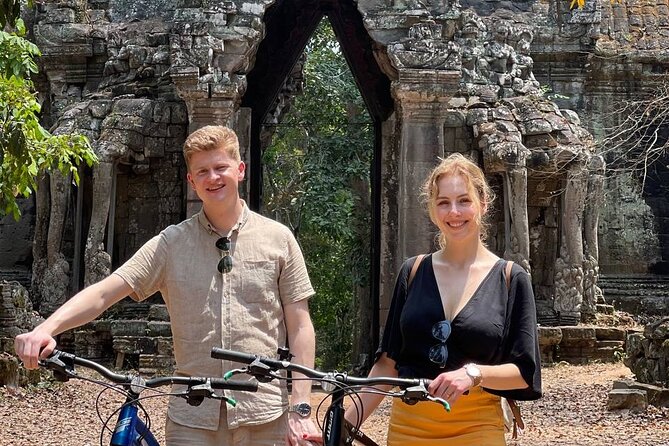
The first stop is Angkor Wat, with a three-hour window. Admission isn’t included, so you’ll need the temple pass/entrance payment paid directly at the site. Still, the timing here is the main attraction. When you’re there early, you get a better sense of scale and symmetry, not just a checklist of photo angles.
After sunrise, you’re not done with your morning—you’ll transition into breakfast and rest at the next stop before cycling begins. That pacing makes a difference: you get a full “see it” morning first, then a “move through it” morning second.
In one group experience I heard about, the ride leader Chayy kept things upbeat and asked about route preferences after the sunrise. That’s exactly the kind of flexible energy you want early in the day—someone who’s reading the group and adjusting the plan when it makes sense.
Srah Srang: breakfast, breathing room, and a different view of the ruins
Stop two is Srah Srang. It’s scheduled for about one hour, and the rhythm is clear: breakfast first, then some rest, then you set up the bikes for the ride.
Why Srah Srang works here is simple. It’s a chance to fuel up before you start moving around temples and lanes that can feel busy later. Also, changing the environment from the sunrise moment into a calmer ruin area helps your brain reset from early wake-up mode.
Also watch the small practical side of this stop. You’ll be preparing your bike after breakfast, so this is where you want to check your helmet fit and get used to the bike before you start riding in earnest.
Ta Prohm: roots, mood, and local backroads by bike
Ta Prohm is famous for the atmosphere—big trees and roots intertwining with temple stone. You get about an hour here, and it’s not just about standing still and craning your neck. The plan also includes cycling through back roads and into the Angkor complex.
This is where biking changes the whole feel of the day. Instead of being pushed along with slow lines, you’re riding between sights. That can mean fewer crowds around you at key moments and a more lived-in sense of how the temples sit in the wider area.
A drawback to consider: one hour goes quickly at Ta Prohm. If you’re the type who likes to linger for details, plan on moving at a steady pace during the allotted time.
Angkor Thom: feeling the moat-and-jungle vibe from the bike seat
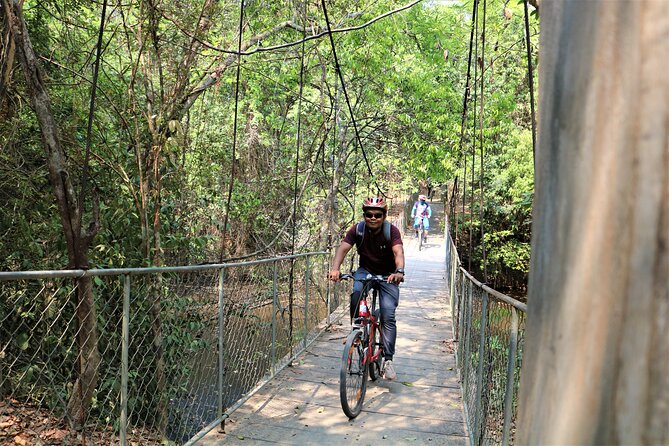
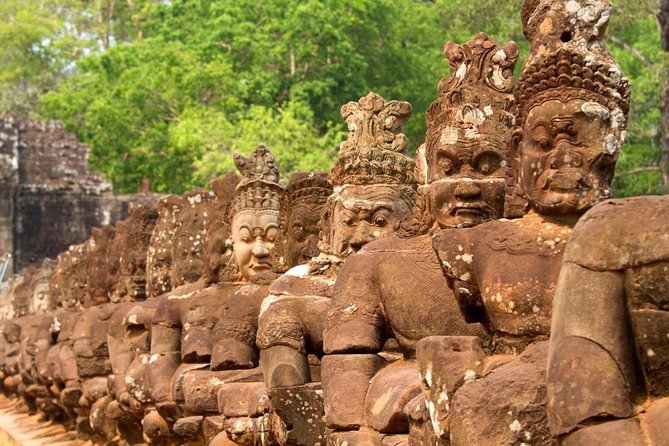
Stop four is Angkor Thom, and it’s the “ride the wall” moment. The route is along the ancient city wall, with the moat on one side and thick jungle feel on the other. This is one of those stretches where you can actually feel travel time turning into scenery.
The schedule marks this stop as free for the admission ticket for that segment, but you’ll still want your temple pass/entrance situation straight for the rest of the day. The safest approach is to expect you’ll be paying at least some entrance fees on-site, since the overall tour lists entrance tickets as not included and notes a temple pass cost.
Riding the wall also creates a natural “flow.” You’re not constantly starting and stopping like a walking tour. That keeps the day from feeling like a long string of check-in points.
Bayon faces and the end-of-day momentum
Stop five is Bayon, about one hour. This is the 12th-century temple known for its central towers covered in more than 200 faces. The intensity hits fast—especially after a day of morning light and then a full ride through the complex.
The tour wraps by returning you to your hotel after a fun, fulfilling day. If you’re trying to maximize your Angkor experience without adding more walking than you can handle, this ending works. You’ve already done the legs earlier, so finishing with Bayon feels like a strong closing “payoff.”
Price and value: what $69 covers (and what to budget for)
The price is listed at $69 per person, and the duration is about 8 hours. For that, you get the essentials that often cost extra on other tours: an English-speaking biking guide, bicycle and helmet, bottled water and a cool towel, and support via tuk tuk or a support van plus an air-conditioned vehicle.
The big “gotcha,” and it’s an important one, is admissions. Entrance fees (temple pass) are not included. The note says the temple pass is $37 per person, paid directly to the site. Also, some stops are marked as ticket not included, while Angkor Thom shows free for that segment—so you’ll likely pay based on how your day fits the site requirements.
From a value standpoint, I think this price makes sense if:
- you want sunrise plus cycling in the same day
- you’d rather ride past parts of the complex than walk everything
- you like having a support vehicle in the background
If you’re bringing your own bike and don’t care about sunrise timing, you could do parts on your own. But if you want the sequence to be handled for you—pickup, bikes, guide, and the day’s structure—this is priced for convenience.
What the ride is like in real life
Even though it’s described as easy, it’s still cycling in Cambodia heat and temple-area conditions. Plan to go with the mindset of “steady, not stressful.” You’ll be in motion for long stretches, and early start mornings can trick you into underestimating how tired you’ll feel by late morning.
The good news: the tour includes comfort helpers that make the day smoother. Bottled water plus a cool towel are exactly what you want before the sun climbs. And with a support van or tuk tuk, you’ve got a safety net if you need a breather.
One more note from a guide’s approach I learned about: after sunrise, Chayy reportedly offered route options, including a choice between a road option and a single-track style ride for extra temple stops. That kind of choice can help match the experience to your comfort level—just know that any extra side-route time means you’ll still be within the overall day flow.
Who should book this and who should skip it
This tour is a strong match for:
- people who want sunrise at Angkor Wat without spending the whole day on foot
- anyone who likes cycling and wants an easy route around major temple areas
- visitors who appreciate a small group cap (max 9) so the day stays organized
You might want to skip or reconsider if:
- you’re not comfortable riding 15–25 km total, even if it’s “easy”
- you hate early mornings and don’t enjoy starting before sunrise
- you’re not willing to pay on-site entrance fees for the temple pass
Should you book the Angkor Sunrise Expedition?
If your dream Angkor day has two ingredients—sunrise and a break from crowded walking—this is a smart pick. The structure is clear, the ride distance is manageable, and the support setup reduces the stress that can come with temple days.
Book it if you like mornings, bike-based sightseeing, and a guided plan that gets you from Angkor Wat sunrise into cycling routes that feel quieter. Skip it if you only want to walk slowly, you can’t handle early pickup, or you’re trying to avoid on-site entrance payments.
FAQ
What time does the Angkor sunrise cycling tour start?
The start time is 4:30 am, with pickup from your hotel in Siem Reap between 4.30 and 4.40 am.
How far do we cycle during the tour?
You cycle approximately 15 to 25 kilometers on an easy route.
Are temple entrance fees included in the $69 price?
No. Entrance fees are not included, and a temple pass is listed as $37 per person, paid directly to the site.
What’s included for comfort and safety?
The tour includes an English-speaking biking guide, bottled water and a cool towel, a bicycle and helmet, a support van or tuk tuk, an air-conditioned vehicle, and a first aid kit.
What happens if weather is poor?
This experience requires good weather. If it’s canceled due to poor weather, you’ll be offered a different date or a full refund.
Can I cancel and get a full refund?
Yes, cancellation is free. You can cancel up to 24 hours in advance for a full refund. If you cancel less than 24 hours before the experience starts, the amount paid is not refunded.