REVIEW · NAHA
Zodiac Shrines and Naha Backstreets Cycling Tour
Book on Viator →Operated by Discovery Bicycle Tours Okinawa / e-CHARIty Naha · Bookable on Viator
A zodiac pilgrimage by e-bike sounds odd. Then you do it, and Naha starts to make sense. I love the mix of Okinawan shrine culture with a real ride through backstreets, and I really like that the route includes Shuri temples and viewpoints without feeling like a museum shuffle. The guides (I’ve seen named guides like Maria and Jojo) keep it practical, answer questions, and help you read what you’re seeing—so it’s not just sightseeing.
The one thing to keep in mind is that part of the cycling happens on busy streets, and while you’re on an e-bike, you’ll still want to feel comfortable riding in traffic for short stretches. Also, the whole plan is weather-sensitive, since they’ll adjust if conditions get rough.
In This Review
- Zodiac Shrines + Backstreets: Quick Hits
- Entering Naha’s Zodiac Pilgrimage by E-Bike
- Price and Value: What $108.72 Gets You (and Why It’s Fair)
- What’s Included (and What You’ll Want to Bring)
- Stop 1: Makishi Monorail Area Meet-Up and the Bike Setup
- Stop 2: Shuri Kannondo and the Vermilion Temple Look-See
- Stop 3: Ankoku-ji Temple and the Okinawan Buddhism Thread
- Stop 4: Shuri Castle Ceremonial Gate for Photos and Meaning
- Stop 5: Sairaiin (Daruma Temple) for Health and Pregnancy Prayers
- Stop 6: Seikoji and That “Wait, We’re Here” Temple Moment
- Stop 7: Shuritobarucho Sacred Spring and the Water Story
- Stop 8: Sogenji-dori Downhill to Royal Entombments
- Your Guide Makes It (Maria, Jojo, Sally, Reija as Examples)
- Pace, Cycling Reality, and Who This Fits Best
- Timing, Weather Changes, and How to Plan Around Them
- After the Ride: Where You Go Next in Naha
- Should You Book This Zodiac Shrines and Naha Backstreets Cycling Tour?
- FAQ
- How long is the Zodiac Shrines and Naha Backstreets Cycling Tour?
- Where do I meet the guide for the tour?
- Is the tour admission free at the shrine and temple stops?
- What’s included in the price?
- Do you provide bottled water?
- What’s the group size limit?
- What happens if the weather is bad?
- Can kids join this tour?
Zodiac Shrines + Backstreets: Quick Hits
- Electric bicycles make the hills and longer stretches feel manageable for most people
- Small groups (max 5) mean you can ask questions and actually hear the story behind each stop
- Goshuin-cho pilgrim book + snacks are included, so you’re prepared for a more devotional pace
- A route tied to the Ryukyu Kingdom world: Kannon Bodhisattva, royal entombments, and sacred springs show up in sequence
- Vermilion shrine moments: you’ll get photo-friendly temple gates and a Shuri city overlook
Entering Naha’s Zodiac Pilgrimage by E-Bike
This tour feels like two things at once: a gentle cycling outing and a guided pilgrimage through Naha and Shuri. You’re riding through everyday neighborhoods, then stepping into places where people still come to pray—religious practices that trace back to the Ryukyu Kingdom era. It’s a contrast that works well in real life, because the city doesn’t switch off just because you reach a shrine.
What makes the experience genuinely satisfying is the way it links symbols to place. You’re not just told that something is important. You get a short stop, a clear explanation, and just enough time to notice carvings, gates, and the atmosphere. The fact that the group is small helps a lot. You’re not racing to the front. You’re getting your bearings fast and moving on.
And yes, the zodiac theme is part of the overall route concept. Even if you don’t know the details beforehand, the order of the stops helps the whole thing click—religious figures and sacred sites you might otherwise miss tucked behind streets you’d walk past.
You can also read our reviews of more tours and experiences in Naha.
Price and Value: What $108.72 Gets You (and Why It’s Fair)

At $108.72 per person for about 4 hours, you’re paying for three things: guided access, transportation that removes the hardest part (cycling), and a more meaningful pace than a typical hop-on bus tour.
You’re also not paying extra for site access. The stops are listed as free admission, so your money goes toward the guide, the e-bike experience, and the included extras. Those included items matter more than they sound on paper:
- E-bike + helmet provided (so you’re not negotiating rentals)
- Snacks included, helpful for a ride-based morning or afternoon
- Goshuin-cho pilgrim’s book included, which signals this is meant to feel like a pilgrimage—not just a photo walk
If you’re short on time in Okinawa and want the backstreets plus shrine culture in one go, this pricing can feel like a good trade. If you already love cycling and know Naha well, you could DIY some shrines—but you’d lose the “what to look for” explanations that make stops land.
What’s Included (and What You’ll Want to Bring)
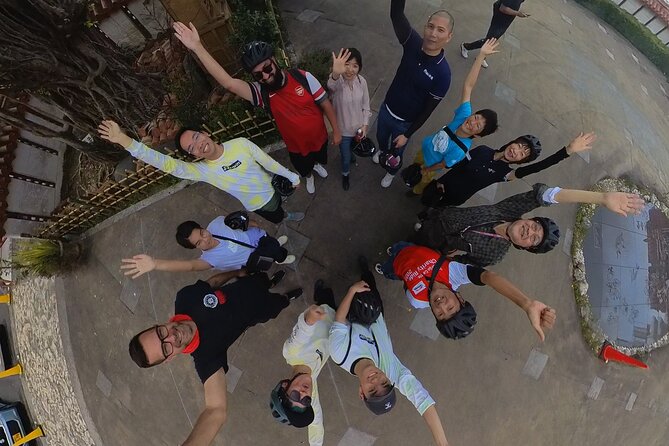
This is one of those tours where the basics are handled, and you can focus on enjoying the ride.
Included:
- Use of a bicycle (electric)
- Cycling helmet (provided)
- Pilgrim’s book: Goshuin-cho
- Snacks
Not included:
- Bottled water
- Camera mounts
- A mobile phone holder
So bring a water bottle if you think you’ll want it between stops. Also consider how you’ll take photos. Without a phone mount or camera mount, you’ll likely be holding your device during stops, then packing it away again for the ride.
And because you’re moving between shrines, comfortable shoes help. The tour includes downhill riding at one point, and while the e-bike does the heavy lifting, your body still has to cooperate.
Stop 1: Makishi Monorail Area Meet-Up and the Bike Setup

You start near Makishi Monorail Station, at 3-chōme-13-20 Makishi, Naha. The meet-up is a one-minute walk from the station area, which makes it easier to connect with the rest of your day.
Here’s what happens first: you get electric bikes, then a short safety and riding info session. This is one of those moments that can make or break a small cycling tour. If you’re a little nervous about handling an e-bike in an urban area, this setup time helps you get comfortable before you’re threaded into the route.
After that, you’re off to the first shrine/temple stop quickly enough that it doesn’t feel like you spent half the tour just getting ready.
Stop 2: Shuri Kannondo and the Vermilion Temple Look-See
At Shuri Kannondo, you’ll see Kannon Bodhisattva, the guardian deity connected with the Ryukyu Kingdom. This is the kind of stop where the details matter: carvings, ornaments, and the feeling that you’ve entered a carefully maintained sacred space.
You also get an extra treat here: a city view of Shuri. That mix—prayer space plus overlook—helps you understand why people settle around these places. Even if you only get a short time on site, the view gives your brain a “location anchor,” so the rest of the route feels connected rather than random.
Time on site is about 20 minutes, so it’s enough to look around, snap a couple of photos, and listen without feeling rushed.
Stop 3: Ankoku-ji Temple and the Okinawan Buddhism Thread
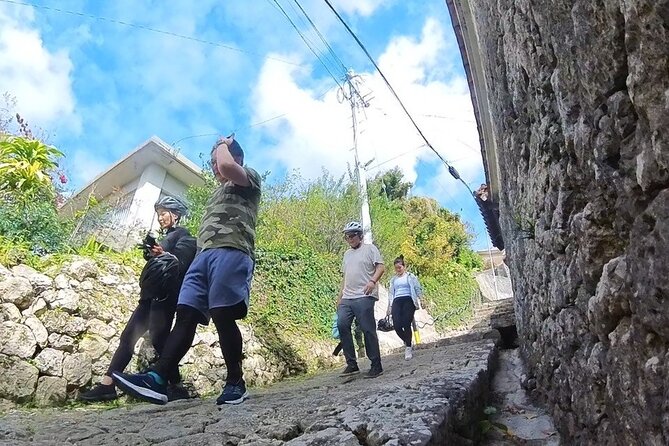
Ankoku-ji Temple is a chance to slow down a bit and shift your focus from scenery to tradition. The ride through this segment takes you past local areas where traditional houses remain, so the tour doesn’t only stop at religious sites. You also get context for what the city looks like around them.
At the temple itself, you’ll learn about Okinawan Buddhism practiced for over 500 years. That time depth helps explain why these shrines and temples still matter today. You’re not just looking at architecture; you’re witnessing a living continuity.
The stop is about 20 minutes, which is usually perfect for a temple like this: enough to absorb the tone, not so long that you lose the momentum of the ride.
Stop 4: Shuri Castle Ceremonial Gate for Photos and Meaning
Next is Shuri Castle, specifically the ceremonial gate that symbolizes Okinawa. It’s described in that crisp, visual way you want in a tour: an eye-catching vermilion color and a balanced design.
This is also one of your main “photo with your bike” moments. Getting the bicycle positioned in front of the gate is fun, and it’s a practical reminder that you’re traveling through Naha as part of the experience, not just arriving by foot.
It’s also an easy win for non-experts. If you’re not sure what to ask about Ryukyu-era symbolism, the gate and color scheme still communicate meaning on first glance.
Stop 5: Sairaiin (Daruma Temple) for Health and Pregnancy Prayers
At Sairaiin, known as the Daruma Temple, the focus shifts toward devotion for everyday hopes. Many visitors come for prayer about good health and pregnancy, along with thanks for their current life.
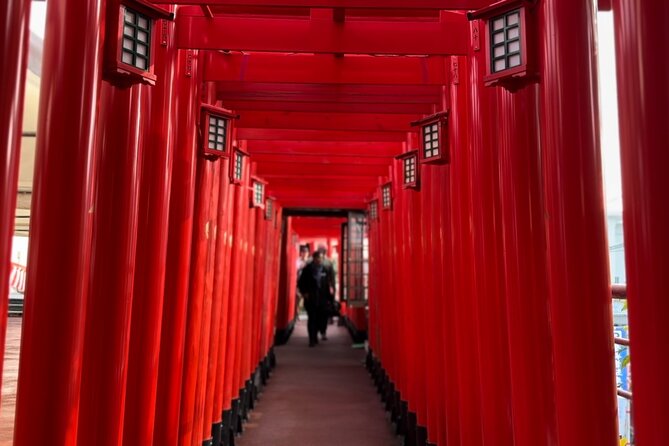
Visually, this stop is memorable because of the bright red daruma dolls. Even if you’re not steeped in the symbolism, the color and the dedicated pilgrim energy make it easy to understand why people return.
The visit time is around 20 minutes, and that’s about right. You want enough time to notice details and absorb the tone, but you also want to keep the cycling rhythm going.
Stop 6: Seikoji and That “Wait, We’re Here” Temple Moment
Then comes Seikoji, and the route sets you up for a cool surprise. The instructions mention crossing the main street and passing under/through the monorail that runs above you in mid-air. Then suddenly you arrive at a temple with a sacred atmosphere.
That contrast is exactly what makes backstreet travel worthwhile. Naha can feel modern and efficient from certain angles, but you turn a corner and there’s reverence—stone, space, and stillness.
Next to the rebuilt temple after the war, the description points to an older structure nearby (it starts with ancient Japanese, but the detail is cut off). Even without over-filling your head with speculative specifics, the point for you is simple: this is a place where layers of time show up, not just one snapshot.
Stop 7: Shuritobarucho Sacred Spring and the Water Story
At Shuritobarucho, you’ll encounter a miraculous spring with a story attached to it. The spring water was discovered deep in the forest after an Okinawan princess noticed waterfowl were nearby. You can feel that “connection that exists to this day” through the way people treat the water as meaningful.
This is the kind of stop that can be oddly powerful. It’s not flashy in the way a gate is. It’s quietly important. If you’re the type who likes stories that link nature to human observation, you’ll probably enjoy this one.
Time here is shorter—about 15 minutes—but the spring’s significance is the main event. It’s less about scanning and more about presence.
Stop 8: Sogenji-dori Downhill to Royal Entombments
Finally, the tour heads to Sogenji-dori, including a thrilling downhill ride to the sacred place where successive kings of the Ryukyu Kingdom were entombed. Today, it’s a park in the city, with refreshing air and a more open feel than many temple courtyards.
Still, you’ll see the remnants of importance: the stone gate and a banyan tree noted in the description. This stop is your closing “big context” moment. The earlier stops bring you into specific figures and devotional practices; this one places those practices in a larger story of royal lineage and place-based reverence.
Time on site is about 15 minutes, which keeps the pace lively while giving you a clear ending point to remember.
Your Guide Makes It (Maria, Jojo, Sally, Reija as Examples)
A lot of tours list sites. This tour also focuses on translating what those sites mean to the people who visit them.
In the feedback you can see a pattern: guides are friendly and open to questions, with strong cultural explanations. Names that come up include Maria, praised for getting around and explaining Okinawa culture; Jojo, noted for friendliness and willingness to help with questions and pictures; Sally, described as a knowledge guide; and Reija, who shared explanations of meanings and kept things organized even with a solo participant.
So if you’re the kind of traveler who asks why something is built a certain way, or what a figure like Kannon means locally, this is a good fit. If you prefer total silence and self-guided wandering, this may feel a bit chatty—but the explanations are designed to help you understand what you’re seeing fast.
Pace, Cycling Reality, and Who This Fits Best
The tour runs about 4 hours, and the stops are mostly 15 to 20 minutes each. That structure matters. It’s enough time to look and learn, but the bike ride keeps everything from getting heavy.
And yes, there is riding on busy streets for part of the route. The e-bike makes hills and starts easier, but it won’t remove the need to stay alert. If you’re comfortable in city traffic for short stretches and you follow your guide’s lead, you’ll likely be fine.
This experience tends to suit:
- Culture-minded travelers who want more than photos
- People curious about Okinawan devotion and how it relates to Ryukyu-era traditions
- Travelers who like small-group tours and hate being herded
It may not be ideal for you if you have serious mobility limits, dislike cycling altogether, or want to spend long hours at one location. The stops are intentionally timed.
Timing, Weather Changes, and How to Plan Around Them
This tour is built for good weather. If the precipitation probability exceeds 70% or severe weather shows up, they’ll contact you the day before to change plans.
So when you’re scheduling your Okinawa days, keep flexibility. If your vacation is already packed to the minute, this is the one booking I’d pair with a nearby backup activity so you’re not scrambling if the plan shifts.
After the Ride: Where You Go Next in Naha
The tour ends back at the shop where you return your bicycle. After that, you’re free to enjoy Naha on your own.
One practical advantage of the ending point: because you finish near the starting area, you’re not stuck way out in the suburbs with no easy way back. It’s a convenient launch pad for your next meal, temple walk, or street-market wander.
Should You Book This Zodiac Shrines and Naha Backstreets Cycling Tour?
Book it if you want a smarter way to see Naha and Shuri: short shrine stops with clear explanations, plus a real neighborhood ride on an e-bike. The small group size makes it feel personal, and the included Goshuin-cho book and snacks make it feel like a complete activity, not a rushed add-on.
Skip it or think twice if you:
- Don’t want to ride on busy streets, even briefly
- Need a fully weather-proof plan
- Prefer self-guided temple time with no set stop lengths
If you’re deciding between DIY and a guided cycling loop, this is the kind of tour where the guide’s interpretation saves time. You’ll spend less time trying to figure out what you’re looking at, and more time actually appreciating it.
FAQ
How long is the Zodiac Shrines and Naha Backstreets Cycling Tour?
It’s about 4 hours.
Where do I meet the guide for the tour?
Meet at 3-chōme-13-20 Makishi, Naha, Okinawa 900-0013, near Makishi Monorail Station (about a 1-minute walk).
Is the tour admission free at the shrine and temple stops?
The tour details list the stops as free admission.
What’s included in the price?
You get the e-bike, an installed cycling helmet, the pilgrim’s book Goshuin-cho, and snacks.
Do you provide bottled water?
No. Bottled water is not included.
What’s the group size limit?
The tour has a maximum of 5 travelers.
What happens if the weather is bad?
If precipitation probability is above 70% or severe weather occurs, plans may change. You’ll be contacted the day before.
Can kids join this tour?
Children aged 1 to 5 can have a child seat attached to the parent’s bicycle, but you’ll need to consult staff for details.