REVIEW · NAHA
Afternoon Adventure: Okinawa Local Cycling with Spectacular Views
Book on Viator →Operated by Discovery Bicycle Tours Okinawa / e-CHARIty Naha · Bookable on Viator
Naha unfolds faster when you pedal. This 3.5-hour e-bike loop pairs everyday neighborhoods with Ryukyu history, routed on streets most visitors miss. I love how the assist helps you handle the steep climbs toward Shuri without turning the trip into a workout.
I also like the small group feel (max 5 travelers) and the way the ride stitches together Makishi, Tsuboya’s pottery quarter, and Shuri Castle town into one smooth afternoon. One thing to consider: the tour depends on weather, and if conditions are severe they may change the plan and contact you the day before.
In This Review
- Key points worth knowing before you ride
- The real appeal: local streets plus Ryukyu landmarks, all by bike
- Finding e-CHARIty Naha near Makishi Monorail (and getting rolling fast)
- Stop 1: Makishi’s e-CHARIty base on Kokusai Street energy
- Tsuboya Yachimun Dori: pottery history you can actually picture
- The Asato Shotengai pass: a red-light district story, told through street life
- Riding through traditional neighborhoods: seeing Okinawa between the headline sights
- Stop 3: Shurikinjocho Stone-Path Road in Shuri Castle town
- Stop 4: Shurijo Castle Park and the photo moment near Shureimon
- Stop 5: Shurisakiyamacho viewpoint for a Naha City panorama
- Wrapping back at e-CHARIty Naha Kokusai Street: end where you started
- Price and value: $99.10 for 3.5 hours of story + access
- What to bring (so the afternoon stays fun)
- Who this tour suits best (and who might skip it)
- Should you book this Okinawa local cycling tour?
- FAQ
- How long is the Okinawa local cycling tour?
- Where do I meet the guide and start the ride?
- What’s included in the price?
- Are e-bikes provided?
- How many people are in a group?
- What should I bring for comfort?
- Is a phone holder or camera mount provided?
- Will the route change if the weather is bad?
- Can children join?
Key points worth knowing before you ride
- Start near Makishi Monorail: a 1-minute walk from the station makes meeting easy.
- Tsuboya Yachimun Dori pottery stories: learn how the Ryukyu Kingdom gathered kilns into this area about 300 years ago.
- Shuri Castle town on stone-path lanes: cobblestones, temples, and shrines come with a guided walk-and-ride rhythm.
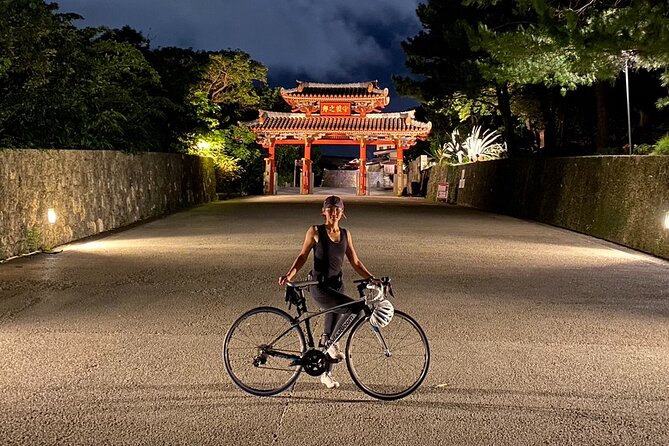
- Shurijo Castle Park photos at the gate: you’ll pass serene park areas and see photogenic spots like Shureimon and the illuminated stone walls.
- A viewpoint stop for Naha City: Shurisakiyamacho is designed for a panoramic photo break.
- Helmet mics make group riding easier: some helmets include microphones so communication stays simple while moving.
The real appeal: local streets plus Ryukyu landmarks, all by bike
This tour is built for people who want more than a list of big sights. You’ll spend your time on neighborhood streets in Naha, then climb into the Shuri area, where the old Ryukyu Kingdom world shows up in the stone roads, shrines, and castle-town feel.
What makes it work is the pacing. It’s long enough to feel like an adventure, but not so long that you’re exhausted at the end. The e-bike assist is the difference between seeing Shuri on your feet and actually enjoying the ride up.
For me, the value is in the combination: everyday Okinawa life on the way in, and big historical context once you arrive. Guides named in past groups—like Aki, Tony, Maki, Hiro, Jojo, and Sammi—show up in the same role: translating what you’re seeing into something you can remember.
You can also read our reviews of more tours and experiences in Naha.
Finding e-CHARIty Naha near Makishi Monorail (and getting rolling fast)
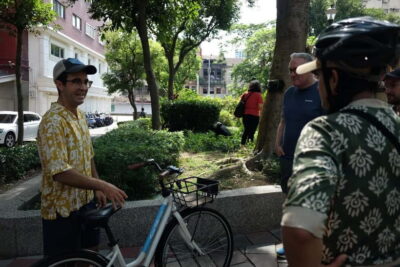
You’ll meet at the e-CHARIty Naha shop area in Makishi, just a short walk from Makishi Monorail station. The tour briefing is quick, and then you pick up your bicycle and helmet and get rolling.
This matters more than it sounds. In places like Naha, it’s not always obvious where the best side streets are. Starting from a shop right by transit helps you avoid wasting your first hour figuring things out.
Also, plan to ride with confidence and clarity. Even if you’re a casual cyclist, you’ll have a guide keeping the group moving and a route chosen for sightseeing rather than random navigation.
Stop 1: Makishi’s e-CHARIty base on Kokusai Street energy

Your ride begins right by Makishi’s Kokusai Street area. You’re not waiting around for museum time here—you’re getting bike-ready and then heading into the local flow.
Expect a “get oriented” moment: how to ride safely, how the group stays together, and what kind of streets you’ll be on next. It’s a small thing, but it boosts comfort right away, especially for first-timers on e-bikes.
If you’re thinking of using your phone for photos, note the tour doesn’t include a dedicated phone holder. Bring what works for you, or just keep your shots to moments when you can stop comfortably.
Tsuboya Yachimun Dori: pottery history you can actually picture

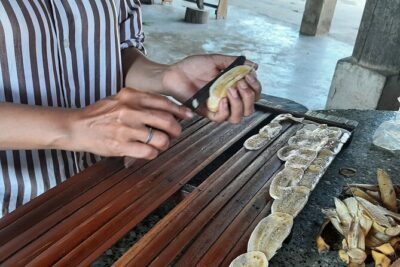
One of the first named stops is Tsuboya Yachimun Dori, with about 30 minutes there. Yachimun means pottery in Okinawan, and the backstory is one of the more specific and interesting parts of the ride.
About 300 years ago, the Ryukyu Kingdom gathered scattered pottery kilns and brought them together in this area. That’s why this street feels like more than a craft market—it connects to how the kingdom organized everyday production and culture.
What you’ll gain here is context you can use later. When you spot ceramic items in Okinawa after this tour, you’ll recognize that this region has been a “making place” for a long time, not just a modern souvenir stop.
The Asato Shotengai pass: a red-light district story, told through street life
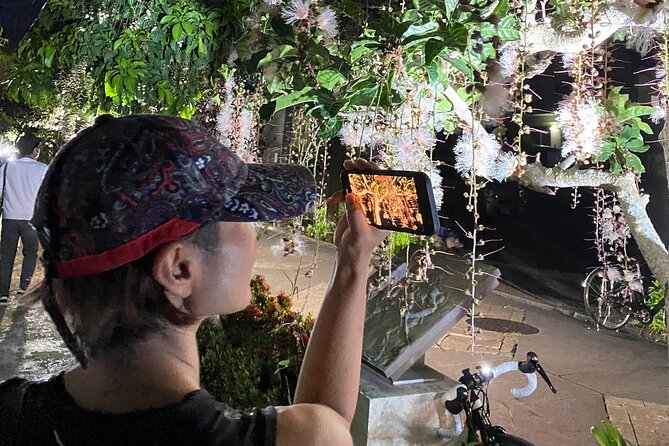
As you continue, you’ll pass near Asato Shotengai, which was once known as a red-light district. The tour doesn’t ask you to sit in judgment or treat it like gossip—it treats the street as history you can read by walking through it.
In the evening, the area becomes lively with izakayas and food. Even if you’re on an afternoon ride, you get a sense of how the neighborhood’s role changes through the day.
This kind of stop is a reminder that “local life” isn’t only quiet temples and old houses. It’s also the places that once had one reputation and later shifted into something social and casual.
Riding through traditional neighborhoods: seeing Okinawa between the headline sights
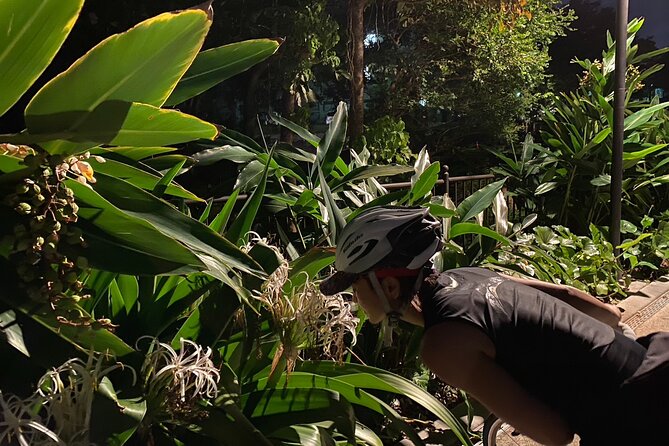
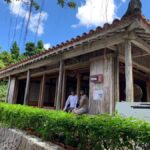
You’ll spend time rolling through Naha neighborhoods where a few traditional houses still remain. There’s no script here—just streets, everyday motion, and the small details that are hard to catch if you only go from one postcard point to the next.
This is where the bike format pays off. Walking can feel slow between sights, and driving can feel disconnected. Cycling keeps you moving at the pace of the street.
It’s also why the local guide matters. The best stories aren’t lectures. They’re quick explanations that make what you’re seeing click in your mind.
Stop 3: Shurikinjocho Stone-Path Road in Shuri Castle town

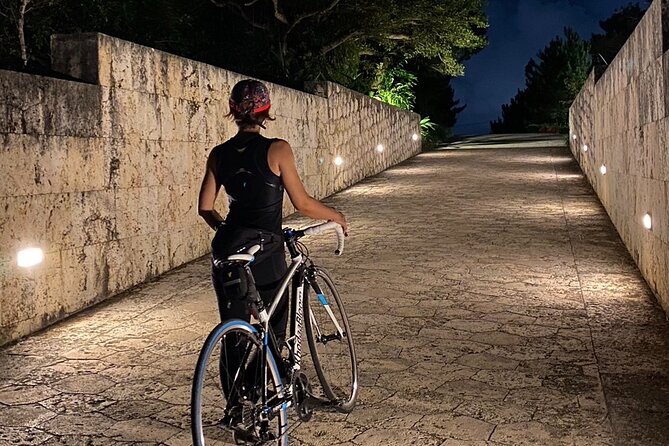
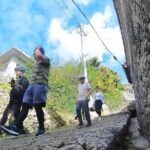
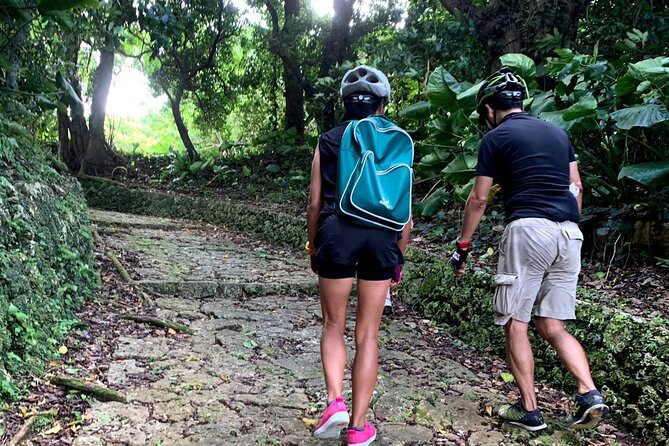
Next up is Shurikinjocho Stone-Path Road and the Shuri Castle town area. You’ll spend about an hour here, walking and riding through streets known for cobblestones, temples, and sacred shrines.
This part is special because it’s not simply “old buildings.” Shuri served as the capital of the Ryukyu Kingdom, so you’re moving through a space that helped shape regional history.
The cobblestones slow you down in a good way. You don’t rush past details because your feet and bike handle differently on stone paths. That natural pace makes the guided context easier to absorb.
Watch your footing. Even on e-bikes, stone roads can feel uneven. You’ll want to go steady and follow the guide’s rhythm.
Stop 4: Shurijo Castle Park and the photo moment near Shureimon
After Shuri Castle town, you’ll leisurely pass through Shurijo Castle Park. Expect about an hour here, with plant beauty that changes by season.
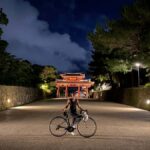
One highlight you’re aiming for is the photogenic setup around the castle grounds—especially the illuminated stone walls and the Shureimon gate. Even if you’re not there at night, the area is designed for strong visuals, and the guide times passes so you can get photos without sprinting.
This is also where e-bikes reduce stress. If you’ve ever tried to brute-force historical sites on foot, you know the trick: you start caring about steps more than sights. Here, the assist helps you keep your attention on what you’re seeing.
If you hate stopping for photos, you’ll still be fine—you’re not forced to pose repeatedly. The ride simply gives you the chance to stop when it counts.
Stop 5: Shurisakiyamacho viewpoint for a Naha City panorama
Then you’ll reach Shurisakiyamacho for a short, about 20-minute viewpoint break. This is a dedicated panoramic photo spot over Naha City.
Think of it as your “reset button.” After cobblestones, gates, and castle-town streets, this wide view gives your brain space to make sense of the geography: how the city spreads out, where the neighborhoods sit, and how close Shuri feels to the urban core.
If you’re into photography, this is your best structured moment. If you’re not, it’s still worth it. A viewpoint stop is often where the tour’s whole story clicks.
Wrapping back at e-CHARIty Naha Kokusai Street: end where you started
You’ll return bikes to the e-CHARIty Naha Kokusai Street location and the tour ends back around the meeting area. That design is practical: you don’t get stranded across town with no clear way to continue your day.
From there, you can explore Naha on your own. If you want to keep the “local” theme going, this is a good moment to hop into nearby izakayas or just wander Makishi’s street energy after the ride.
Also, since this is a mobile-ticket tour, you don’t have to fuss with printed vouchers once you’re there.
Price and value: $99.10 for 3.5 hours of story + access
At $99.10 per person for roughly 3 hours 30 minutes, this is not the cheapest sightseeing option. But it’s also not trying to be.
Here’s the value math that matters:
- You get bike rental plus a guide for the whole chunk of time.
- You’re covered across multiple neighborhood zones—Makishi to Tsuboya to Shuri—without burning half your day on transport.
- The e-bike assist helps make hills doable, which keeps the experience enjoyable rather than exhausting.
If you’re already comfortable biking and you can self-navigate, you could recreate parts of this yourself. Still, guided route choice is the point—someone else handles the “where to turn” decisions so you can focus on the sights and stories.
If you’re traveling solo or with one other person, the max group size (5 people) tends to make the trip feel more personal without ballooning the price.
What to bring (so the afternoon stays fun)
Bring something for temperature changes, especially since evenings can get cooler. Pack a light layer so you’re not miserable once you hit later hours.
For riding comfort:
- Wear footwear that works well on stone paths and uneven pavement.
- Bring sunglasses if it’s bright out (views and gate photos can be glare-heavy).
- Remember: camera mounts and a phone holder aren’t included, so plan your setup before you go.
And if you’re worried about “can I ride an e-bike comfortably?”—past riders appreciated the assist for steep sections toward Shuri Castle. It’s a big reason this tour works for more people than a normal cycling route.
Who this tour suits best (and who might skip it)
This is a strong choice for you if:
- You like history but don’t want it stuck behind museum walls.
- You want local neighborhoods, not only famous landmarks.
- You’d rather spend a few hours biking than doing repeated trains and transfers.
It’s also a good fit if you’re a solo traveler. Small groups plus a guide-led pace make it less awkward than wandering alone.
You might want to think twice if:
- You’re truly uncomfortable cycling or can’t handle cobblestones.
- You have no flexibility at all for weather changes, since severe weather can lead to a plan adjustment and a message the day before.
One more practical note from rider feedback: bike sizes for shorter riders may use smaller-frame “mama-chan” style bikes. If you’re quite short or very sensitive about fit, it’s smart to ask at the shop so you get the most comfortable setup.
Should you book this Okinawa local cycling tour?
Book it if you want an afternoon that feels like Okinawa, not just an itinerary. The route mixes Makishi’s everyday energy, Tsuboya’s pottery heritage, and the Shuri Castle area in a way that doesn’t feel rushed. Add e-bikes, a small group, and guides who explain what you’re seeing (with helpers like Hiro, Jojo, Aki, Tony, Maki, or Sammi depending on the day), and you’ve got a good recipe for a memorable ride.
Skip it only if you know you won’t enjoy cycling at all, or you can’t handle the weather-dependent nature of outdoor tours.
If you’re on the fence: aim for a day when the sky looks cooperative. Then show up near Makishi Monorail, grab your helmet, and let Shuri’s stone streets and Naha’s city views do the work.
FAQ
How long is the Okinawa local cycling tour?
It runs about 3 hours to 3 hours 30 minutes.
Where do I meet the guide and start the ride?
You meet at 3-chōme-13-20 Makishi, Naha, Okinawa 900-0013, Japan, near Makishi Monorail station. The walk from the station is about 1 minute.
What’s included in the price?
The tour includes bicycle use, a cycling helmet (installed), a cycling guide, and bike rental.
Are e-bikes provided?
Yes. The tour uses e-bikes, which help with routes that include steeper inclines toward Shuri Castle.
How many people are in a group?
The tour has a maximum of 5 travelers.
What should I bring for comfort?
Bring something to wear in case it gets colder in the evening. It’s also smart to wear footwear that works on stone paths.
Is a phone holder or camera mount provided?
No. Camera mounts and a mobile phone holder are not included.
Will the route change if the weather is bad?
If the precipitation probability exceeds 70% or severe weather happens, the plan may change. In that case, you’ll be contacted the day before.
Can children join?
Children aged 1 to 5 can have a child seat attached to the parent’s bicycle. You should consult the staff for details.