REVIEW · NAHA
Okinawa: Afternoon Cycling Tour with Local Guide
Book on GetYourGuide →Operated by イーチャリティ那覇国際通り本店 · Bookable on GetYourGuide
Naha by bike feels like cheating. This afternoon electric-bike tour threads together pottery workshops, Shuri Castle town, and hilltop views most visitors never route in.
I love how the tour uses bicycle access to get you onto smaller, quieter side roads and past the working pottery streets tied to Yachimun. I also love the electric-assisted riding, which makes the Shuri area feel doable without turning it into a sweat-fest.
The main drawback is simple: you have to be comfortable riding a bike, and bad weather can shift the route or timing.
In This Review
- Why This 3–3.5 Hour E-Bike Ride Works Better Than Walking
- Starting Near Makishi Monorail: Easy Jump-On, Less Stress Later
- Yachimun Pottery Streets and Tsuboya: More Than Just a Photo Stop
- Small Roads and Everyday Naha: Riding Through Real Neighborhood Texture
- Shuri Castle Town Streets: Cobblestones, Shrines, and the Ryukyu Capital Feeling
- The Shuri Castle Park and Shureimon View Moment
- Hilltop Viewpoint: Where Naha City Turns Into a Picture
- Asato Shotengai Area: Evening Energy for Izakayas and Dinner Plans
- What the Small Group, Intercom, and Guide Style Actually Give You
- Price and Value: $87 for a Guided Ride, Not Just a Bike Rental
- Things to Know Before You Go (So You Don’t Fight the Tour)
- Who This Tour Suits Best
- Should You Book This Okinawa Afternoon Cycling Tour?
- FAQ
- Where do I meet for the tour?
- How long is the cycling tour?
- Are electric-assisted bicycles included?
- What’s the group size and guide language?
- What should I bring?
- Is the tour suitable for everyone?
- What happens if the weather is bad?
Why This 3–3.5 Hour E-Bike Ride Works Better Than Walking
Naha looks best when you move like locals—slow enough to notice details, fast enough to cover ground. This tour is built around that sweet spot. You’re out for about 210 minutes, so you get time for real stops: photo breaks, a viewpoint pause, and a focused Shuri Castle town moment.
The small group matters too. With a cap of 5 participants, you’re not lost in a crowd. The guide can adjust pace, explain turns clearly, and keep the vibe relaxed. And because these are electric-assisted bicycles, you’re not spending your afternoon fighting steep terrain. You’re riding to see, not riding to suffer.
Also, the energy from the guides is repeatedly a highlight. Names like Jojo, Aki, Tony, Reiji, and Yuri come up often—each praised for clear guidance and a fun, patient tone. In practice, that means you’ll spend less time worrying about where you’re going and more time paying attention to what you’re seeing.
Starting Near Makishi Monorail: Easy Jump-On, Less Stress Later
Your meeting point is right by Makishi Monorail station—a quick 1-minute walk from the station. The shop sits next to Makishi Post Office, so it’s straightforward to find if you’re using the monorail as your base.
This matters because Naha can feel like a “start-stop” city. You’ll likely spend part of your day wandering around Kokusai-dori anyway. Starting near Makishi puts you close to that action, then the tour lifts you into neighborhoods and heritage areas that you’d struggle to reach efficiently on foot.
Also, this tour includes what you need to ride with confidence:
- Helmet
- Electric-assisted bicycle
- Intercom system so you can actually hear instructions
If you’ve ever been on a guided bike ride where everyone strains to hear over road noise, you’ll appreciate the intercom concept fast.
You can also read our reviews of more tours and experiences in Naha.
Yachimun Pottery Streets and Tsuboya: More Than Just a Photo Stop
One of the most interesting stretches is the area connected to Yachimun, the Okinawan word for pottery. The idea here isn’t just “visit a pottery shop.” It’s historical geography—300 years ago, the Ryukyu Kingdom gathered scattered pottery kilns from different places and consolidated them here. Since then, this area has continued as a ceramics hub.
On the ride, you’ll pass through the street of historic pottery workshops and move through nearby streets that typical sightseeing routes don’t reach. The bicycle access is the point: you can take those smaller lanes that feel like they were meant for residents, not buses.
A practical perk: you’ll see pottery culture in motion. Instead of only viewing finished ceramics behind glass, you get the atmosphere of a district built around making things—workshops, side streets, and that older neighborhood feel.
What to watch for:
- Keep your eyes on doorways, signs, and workshop fronts. The most memorable details are often at street level.
- If you’re the type who loves craftsmanship, this part will feel satisfying because it’s tied to the origin story, not just retail.
Small Roads and Everyday Naha: Riding Through Real Neighborhood Texture
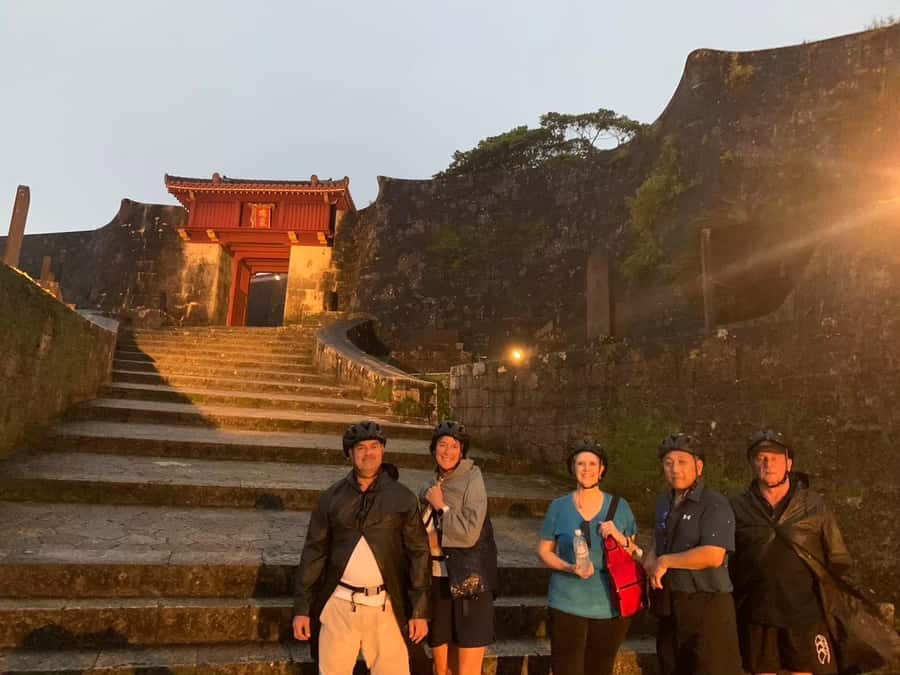
After the pottery area, the route shifts into places that still show everyday Okinawan life. You’ll pass through local sections where a few traditional houses remain. It’s not a “heritage theme park” feeling. It’s more like riding through a living city where people go about normal afternoons.
This is where electric assist helps again. You’ll have energy to look around rather than braking constantly because you’re exhausted. The intercom also helps keep you oriented while you ride through tighter streets.
If you’re used to Naha being all shopping and sea-breeze strolls, this segment adds a different flavor. You’ll get a better sense of what the city feels like when it’s not trying to impress tourists.
Shuri Castle Town Streets: Cobblestones, Shrines, and the Ryukyu Capital Feeling
Then you shift into Shuri Castle town, the former capital area of the Ryukyu Kingdom. Even if you know the general story of Okinawa’s Ryukyu era, the street-level experience is what makes it stick: cobblestones, temples, and sacred shrines all appear within a walkable rhythm, but you’re covering it by bike at a pace set by your guide.
Photo stops here are more than convenience. They help you “frame” the heritage properly. You get pauses where you can slow down mentally and notice how the street layout supports the feel of a capital neighborhood—routes that connect religious sites, homes, and key sightlines.
What you’re likely to enjoy most:
- The contrast between Shuri’s built environment and the more everyday local streets you rode earlier.
- How the guide’s explanations can turn “a gate” or “a stone wall” into something you can picture as part of a system of beliefs and old governance.
If you like learning without being trapped in a classroom, the guide-led storytelling style works well here. Multiple guides are praised for being energetic and patient—especially for first-timers on bicycles.
The Shuri Castle Park and Shureimon View Moment
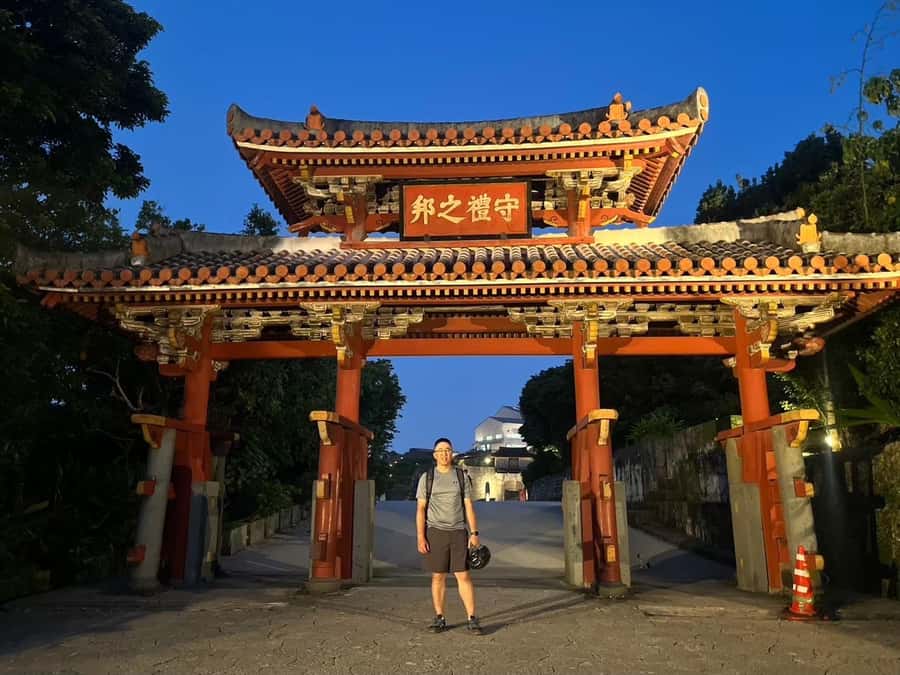
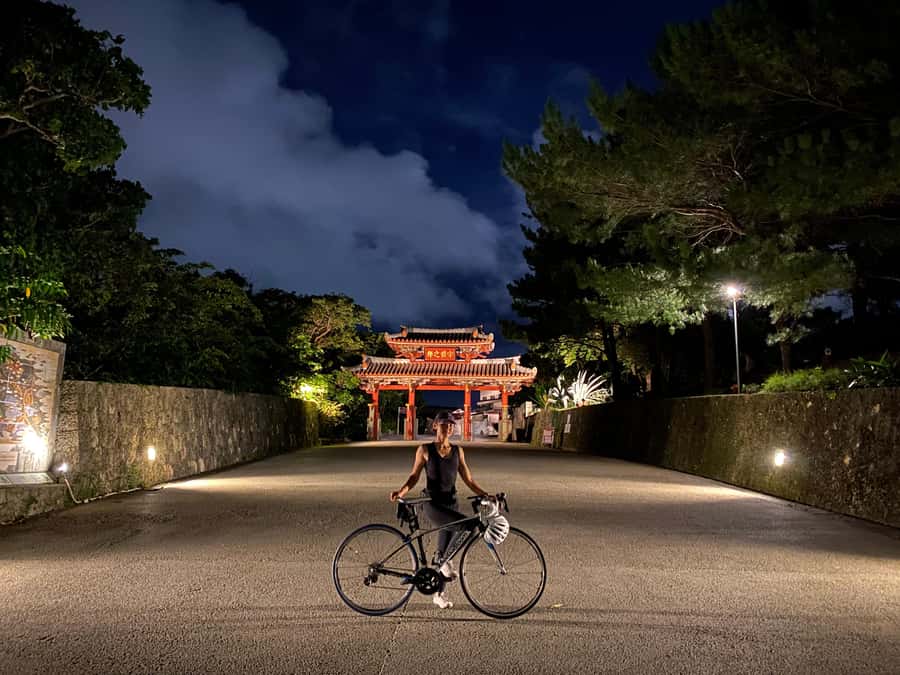
This tour builds toward the photogenic area around Shureimon gate and the illuminated stone walls in Shuri Castle Park. You’ll get scenic views, seasonal plant beauty (depending on timing), and an eye-catching photo landscape.
The word here is “afternoon.” That timing gives you a softer light than midday sun, and it often makes the stone and gate areas look more dramatic. You’ll also get a viewpoint break along the way where you can watch the city from above—an experience that makes the whole ride feel worth it.
A key detail: the tour includes breaks and a photo stop, with scenic views on the way. That’s not filler. It’s what keeps the tour from feeling like nonstop cycling with occasional scenery.
Hilltop Viewpoint: Where Naha City Turns Into a Picture
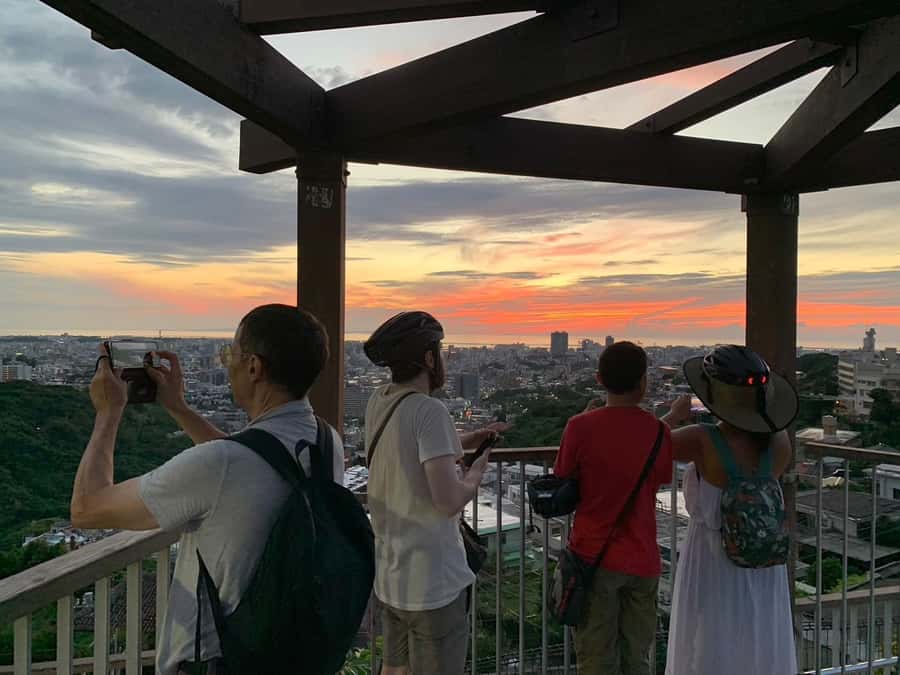
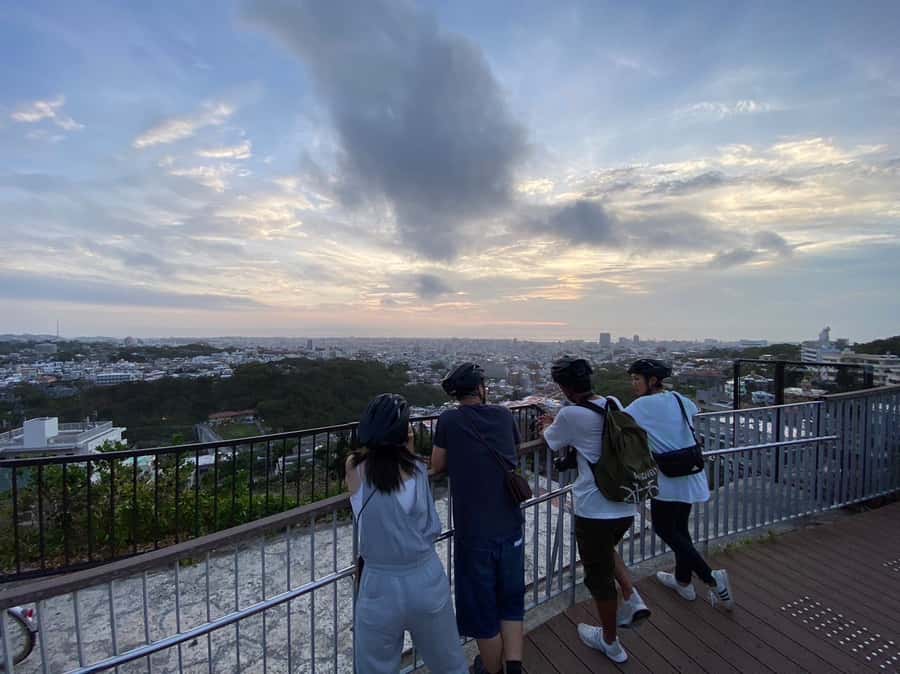
One of the biggest reasons people rate this tour so highly is the viewpoint pause. You’ll ride up and out to a hilltop where you can enjoy the afternoon view over Naha’s cityscape. It’s the kind of stop that changes the way you understand a place—suddenly you see how neighborhoods connect and where your earlier riding fits into the bigger map.
Because this is an electric-assisted tour, you’ll likely reach the viewpoint without the feeling of having “earned” it in a miserable way. That balance is ideal for most people: energetic enough to feel like an activity, gentle enough to stay pleasant.
If you’re wondering about timing, the itinerary notes a sunset/scenic-view component. Even if the sun doesn’t perfectly line up with your camera settings, this stop gives you that pay-off moment.
Asato Shotengai Area: Evening Energy for Izakayas and Dinner Plans

After Shuri, the ride continues toward the vicinity of Asato Shotengai, a street area that was once known as a red-light district. Today, it’s known for evening energy, especially with izakayas and casual eats.
You’re not locked into dinner with the tour, but this is a smart lead-in. The tour ends back at the shop, and you’ll be positioned close enough to return on your own after.
Practical tip: if you’re planning to eat nearby that night, consider heading back while you still remember which side streets the tour used. That makes it easier to find your way without hunting around.
What the Small Group, Intercom, and Guide Style Actually Give You
This is one of those tours where the “extras” are the experience.
- Small group (up to 5): Less chaos, more attention from the guide.
- Intercom system: Clear instructions even when you’re rolling through busier stretches.
- English and Japanese live guide: Your explanations can land properly, not as half-translated guesses.
- Helmet + e-bike: You’re equipped to focus on the ride.
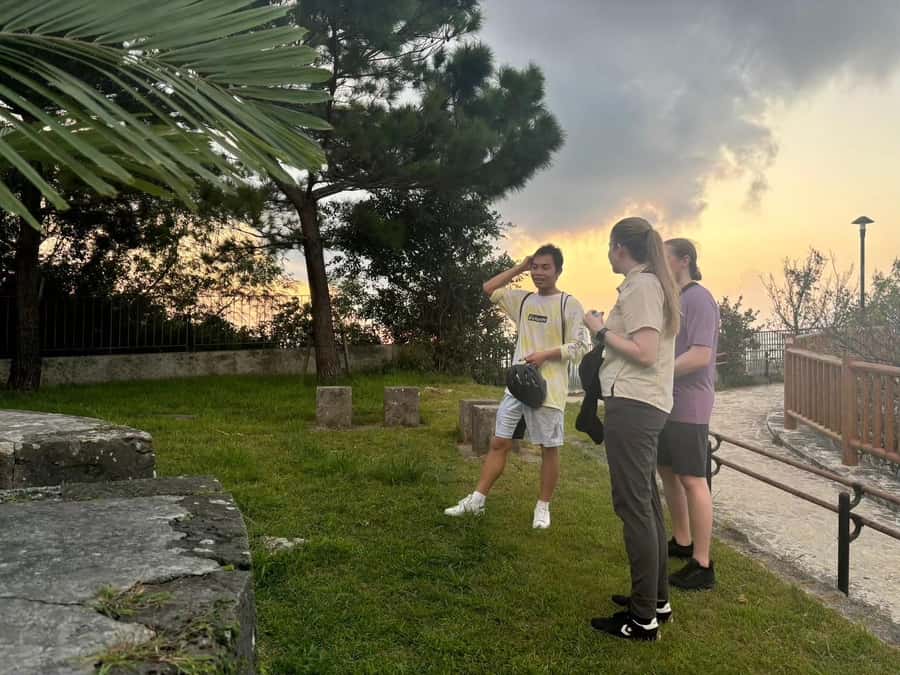
Guide personalities show up in the way the tour feels. Guides like Jojo and Aki are repeatedly described as energetic and enthusiastic, with patient instruction—especially for families and first-time cyclists. Tony, Reiji, and Yuri are praised for making history understandable and keeping the ride comfortable.
If you want an authentic city perspective without feeling like you’re “only” following a checklist, this guide-first setup is a big part of why the ratings are so strong.
Price and Value: $87 for a Guided Ride, Not Just a Bike Rental

At $87 per person for around 3 to 3.5 hours, you’re paying for more than transportation. You’re paying for:
- a trained local guide,
- an e-bike (with assist for hills),
- helmet use,
- and an intercom system.
When you add those together, it becomes closer to a guided experience than a standalone bike rental. You also get the structure of photo stops and scenic timing, which is hard to replicate if you’re self-guiding—especially if you want to understand what you’re looking at (Ryukyu pottery background, Shuri street context, and the meaning behind key sites).
In plain terms: if you want to see Shuri and older Naha districts without spending half your afternoon navigating and guessing, this price is often fair.
Things to Know Before You Go (So You Don’t Fight the Tour)
A few details can make or break your comfort:
- You must be able to ride a bike. The tour isn’t suitable for people who can’t ride.
- Wheelchair users aren’t suitable.
- Bring comfortable shoes and sports shoes if you have them. You’ll be stopping and getting on/off the bike.
- Bring warm clothing, especially for later afternoon/evening. Even if Okinawa feels mild, wind and shade can cool you down quickly.
- Camera mounts and mobile phone holders aren’t included, so plan how you’ll carry your phone/camera.
Also keep a weather reality check in mind. If rain chances exceed 70% or conditions are severe, the route may change and you’ll be contacted the day before. That’s normal for outdoor cycling tours, but it’s worth remembering if you’re trying to protect a tight schedule.
Who This Tour Suits Best
This is a great fit if you:
- want to see Shuri without it turning into a long walking day,
- like heritage context but prefer it delivered during movement,
- enjoy cycling and want a guided pace for safety and confidence,
- want a small-group experience rather than a large, slow-moving bus tour.
It’s less ideal if you:
- hate bikes or aren’t comfortable riding in traffic,
- rely on mobility devices like wheelchairs,
- need a totally weather-proof plan.
Should You Book This Okinawa Afternoon Cycling Tour?
If your goal is a practical, fun way to connect Naha’s pottery district with Shuri Castle town and that hilltop payoff view, this tour is a strong choice. The e-bike makes it accessible enough for most people who can ride, and the small group + intercom support keeps the experience calm.
Book it if:
- you want guided context (not just sightseeing photos),
- you’d rather ride quiet side streets than shuffle through crowds,
- you’re happy to plan around a typical afternoon cycling schedule.
Skip it if:
- you’re not confident on a bike,
- you need a fully flexible, no-weather-reaction plan,
- you dislike rides that include multiple stops and short waits for photo moments.
FAQ
Where do I meet for the tour?
Meet at イーチャリティ那覇国際通り本店 near Makishi monorail station. It’s a 1-minute walk from the station, next to Makishi Post Office.
How long is the cycling tour?
The duration is 210 minutes, scheduled for about 3 to 3.5 hours depending on timing.
Are electric-assisted bicycles included?
Yes. The tour includes use of an electric-assisted bicycle, along with a helmet.
What’s the group size and guide language?
It’s a small group limited to 5 participants, with a live guide in English or Japanese.
What should I bring?
Bring comfortable shoes and warm clothing. Sports shoes are recommended, and warm layers are helpful in the evening.
Is the tour suitable for everyone?
It’s not suitable for people who can’t ride a bike, and wheelchair users are not included. A child seat can be attached for children aged 1 to 5 if you consult the staff.
What happens if the weather is bad?
If precipitation probability exceeds 70% or there is severe weather, plans may change. You’ll be contacted the day before.