REVIEW · KYOTO
Kyoto: North Kyoto Guided Cycling Tour with Lunch
Book on GetYourGuide →Operated by Cycle Kyoto · Bookable on GetYourGuide
Kyoto looks different from the saddle. This guided bike route strings together major sights in Northern Kyoto while still giving you time for the calm backstreets that make the city feel like Kyoto, not a checklist.
I especially like the balance here: the Golden Pavilion experience comes with real time to look, then you shift gears to shrines, temples, and palace grounds with a guide filling in context as you ride and walk. The other big win for me is the included lunch stop in the middle of the day, when you actually want a break and a proper meal—not just a snack between photos.
One thing to consider: you’re on a bike and you’ll also walk at multiple stops, so it’s not the best fit if you’re short on mobility or stamina. The tour runs about 390 minutes, so plan your day around that full block.
In This Review
- Key points worth knowing before you pedal
- Why Northern Kyoto by bike works so well
- Starting near Kyoto Station: simple directions, smart first minutes
- Nishihongwan-ji: the morning temple stop that sets context
- Kitano Tenmangū Shrine: where the guide’s stories make the walk better
- Pedaling to lunch: the included meal that keeps the day on track
- Kinkaku-ji (Golden Pavilion): about 30 minutes to see the real thing
- Kyoto Imperial Palace: a guided walk through power, now at human scale
- Downhill momentum toward Gion
- Gion backstreets and the Kamo River: the calm ending you’ll appreciate
- Price and value: what $103 gets you in real terms
- Who this tour fits best (and who should skip it)
- Small-group pacing tips so you get more from every stop
- Should you book Kyoto: North Kyoto Guided Cycling Tour with Lunch?
- FAQ
- What does the tour price include?
- How long is the tour?
- Is there an English-speaking guide?
- Are e-bikes available?
- What are the main stops on the route?
- Where do I meet near Kyoto Station?
- What should I bring?
- Is this tour suitable for kids or people with mobility issues?
- What’s the cancellation policy?
Key points worth knowing before you pedal
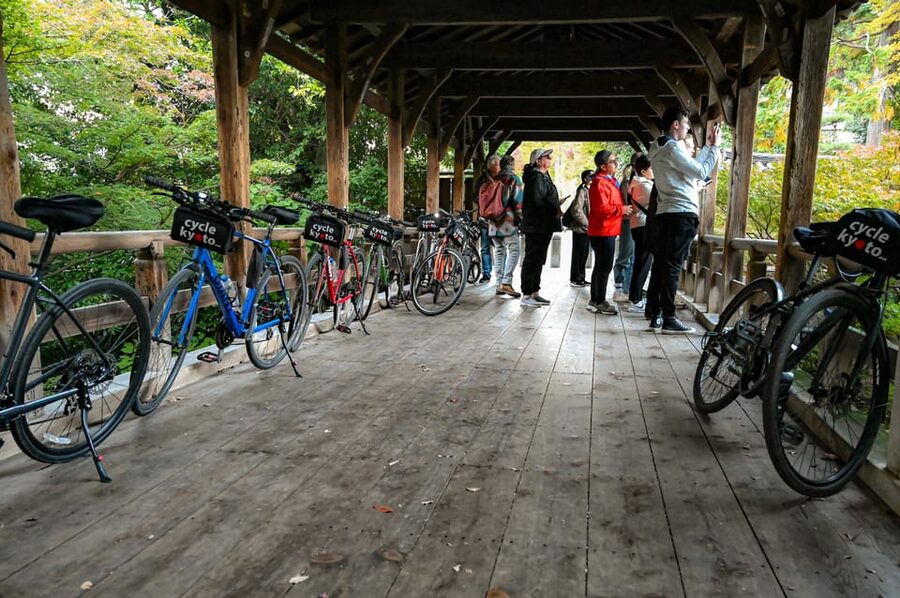
- Small group (up to 8) with an English guide keeps the ride personal and the explanations clear.
- Kinkaku-ji timing gives you about 30 minutes to explore the Golden Pavilion area.
- Lunch is included and the guide handles meal needs with care, especially on hot days.
- A gentle downhill push toward Gion helps the route feel fluid rather than brutally uphill all day.
- Nishi Hongan-ji + Kitano Tenmangū come early, when you’ll get the best feel for Northern Kyoto’s character.
- Kamo River finish gives you a relaxing bookend after the temple-heavy morning.
Why Northern Kyoto by bike works so well
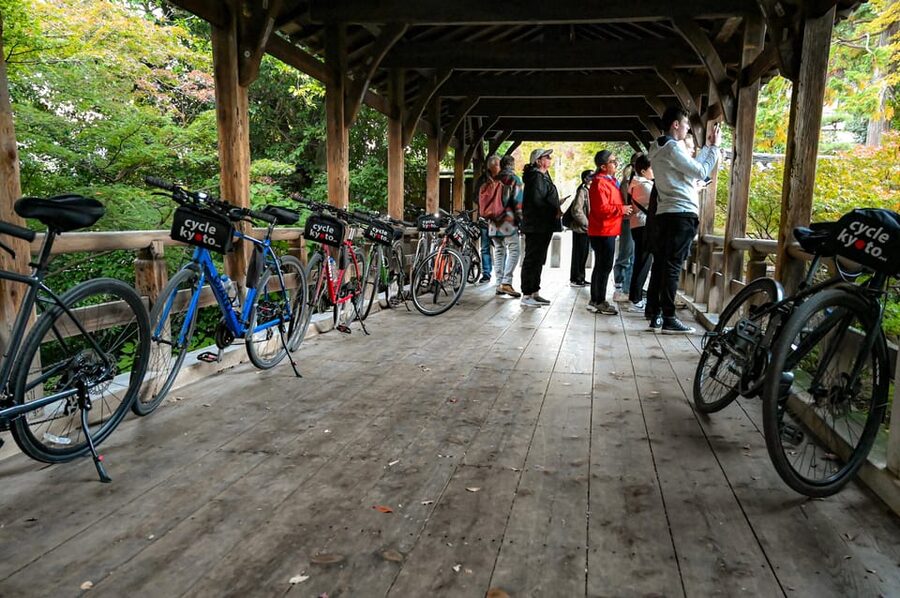
Northern Kyoto can be tricky on your own. The sights are spread out, you’ll bounce between neighborhoods, and you can easily waste time in train and bus hops. This tour solves that with a guided cycling loop that links the most famous stops to the quieter streets between them.
You’ll start near Kyoto Station at Cycle Kyoto, then work your way through a sequence that keeps momentum. The route begins with temples and shrines (good for understanding the area), moves into the Golden Pavilion, then shifts into the former Imperial area, and finally slides toward Gion and the Kamo River.
And because the group is limited to 8 participants, the guide can actually keep things moving without treating you like a stampede. It also means you’re more likely to hear the explanation clearly instead of standing behind someone’s shoulder for 40 minutes.
You can also read our reviews of more tours and experiences in Kyoto.
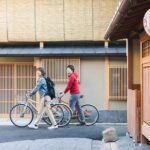
Starting near Kyoto Station: simple directions, smart first minutes
Meeting is easy if you like clear landmarks. From JR Kyoto Station, go past Avanti, cross one traffic light, then walk past the Daily Yamazaki convenience store and take the first left. That takes you to Cycle Kyoto.
Plan to arrive with a little buffer. You’ll get a safety briefing before setting off, and you’ll want your helmet on and your body warm before the first ride segment. If you’ve never ridden in Japanese bike traffic (or just feel rusty), this is exactly the kind of setup that makes the rest of the day feel manageable.
Good to know: bicycle, helmet, and water are included. That’s one less thing to think about, and in Kyoto’s summer heat it matters.
Nishihongwan-ji: the morning temple stop that sets context
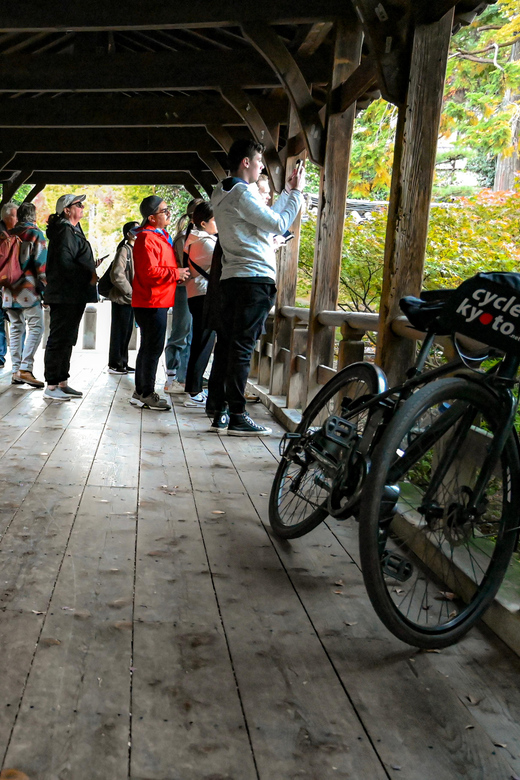
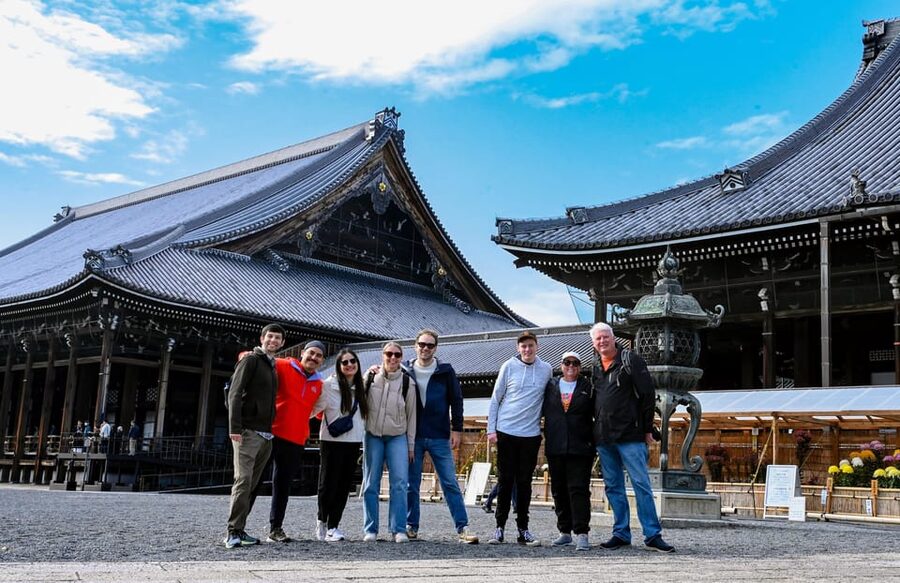
Your first major sightseeing block is Nishi Hongan-ji Temple. You’ll get a guided introduction (about 40 minutes), then additional time on-site (about 35 minutes).
Why this stop works early: it gives you a broader Kyoto frame before you hit the flashier postcard sights. A temple visit with a guide helps you notice what you might otherwise miss, like the way religious spaces are organized and why certain areas matter historically and spiritually.
Practical note: even if you’re mostly interested in the big names later, this is the kind of place where taking your time pays off. You’ll likely want photos, and you’ll also want a slower pace to reset your eyes before the day becomes more photo-heavy.
Kitano Tenmangū Shrine: where the guide’s stories make the walk better
Next up is Kitano Tenmangū Shrine. You’ll have a guided visit (about 45 minutes) and time to absorb the atmosphere.
This is a great follow-up after Nishi Hongan-ji. The shrine experience feels more open and walk-forward, and it naturally leads into the idea of Kyoto as a layered city: different traditions, different architectural styles, and different ways of marking meaning in public space.
If you’re the type who likes to understand what you’re looking at, this is where the English guide really earns the ticket. A well-timed explanation can turn a quick stop into something you remember long after the photos blur together.
Pedaling to lunch: the included meal that keeps the day on track
Lunch is included at a local restaurant in the heart of Kyoto. You’ll have about 1 hour for it.
This is one of the underrated strengths of this tour: lunch is not squeezed into a 25-minute gap. It’s built as a proper reset so you don’t end up hungry while visiting the former Imperial area and then trying to enjoy Gion afterward.
Also, the hot-weather feedback is a useful clue about what the guide prioritizes. On very warm days (around 35°C), the guide (named Sean in one set of feedback) is reported to keep water flowing and respond to lunch needs. That’s exactly what you want to hear when you’re planning a day of cycling plus walking.
What to watch for: extra drinks and snacks are not included, so if you think you’ll want soda/tea beyond water, budget for that during lunch.
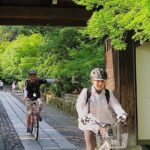
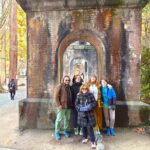
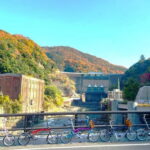
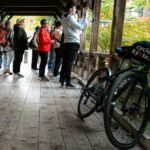
Kinkaku-ji (Golden Pavilion): about 30 minutes to see the real thing
Then comes the Golden Pavilion (Kinkaku-ji). You’ll spend about 30 minutes exploring there, even though the broader stop block is longer. That time window is long enough for photos and a thoughtful walk around the main area, but short enough that the day doesn’t stall.
One good reason to go with a guide here: they can help you manage expectations about what you’ll be able to see in the time you have. The Golden Pavilion is famous for a reason, but it can also be crowded depending on the day. When you have a plan and a guided route, you avoid the time-wasting loop of figuring out where to go next.
Bring your camera. Do not rely on your phone battery alone. You’ll also want comfortable clothes that handle humidity well, since you’ll be cycling in between stops.
Kyoto Imperial Palace: a guided walk through power, now at human scale
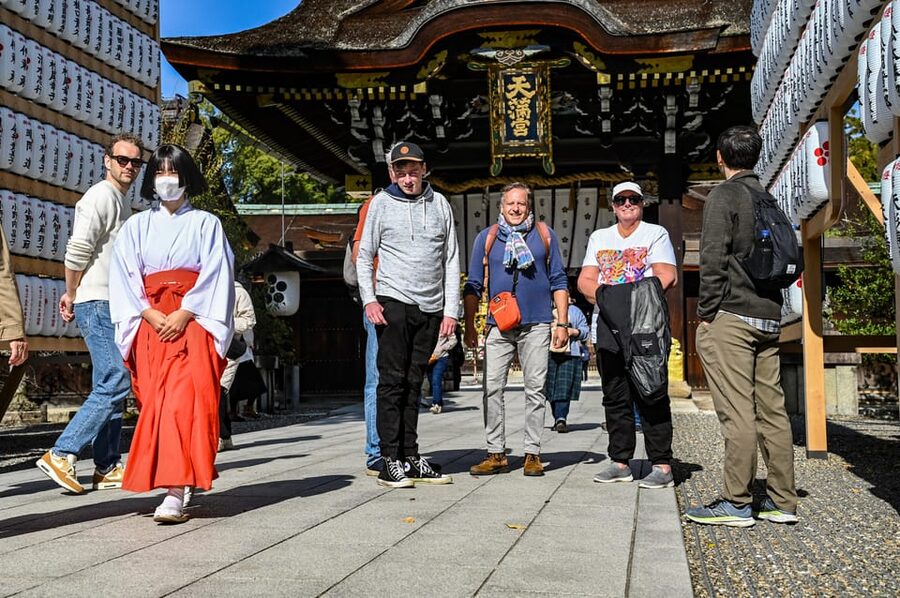
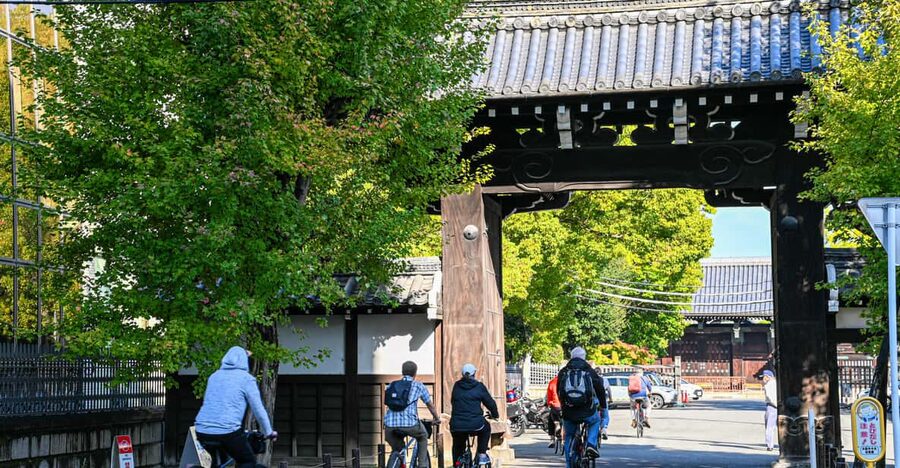
After lunch, you’ll head to the Kyoto Imperial Palace area. You’ll get a guided tour (about 50 minutes).
This part of the day shifts the mood. Instead of a single icon, you’re looking at a larger historic space connected to the former seat of power. The guide’s job matters here. Without context, palace areas can feel like open grounds and complicated layouts. With context, you start to understand what parts relate to ceremonies, governance, and how space was designed for daily life at the center of rule.
Another subtle benefit: after cycling and temple walking, a palace-area pace can feel like a breather. You’re not constantly rushing to the next photo angle. You’re moving, learning, and absorbing at a steadier tempo.
Downhill momentum toward Gion
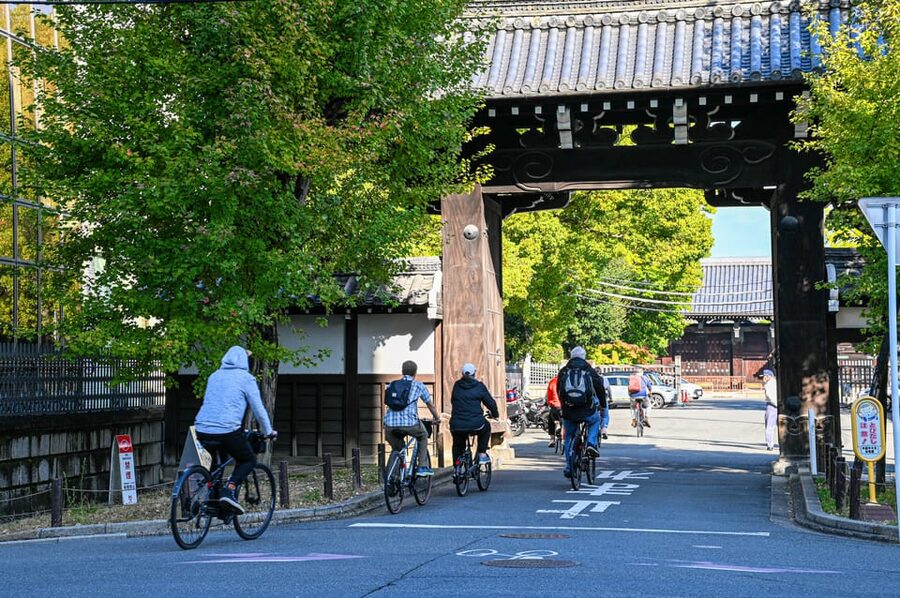
From the former Imperial area, the route takes you along a gentle downhill path towards Gion. That matters more than it sounds. It’s the kind of small planning decision that can be the difference between a fun afternoon and an annoying struggle.
This is where biking becomes part of the sightseeing rather than just transportation. You’re moving across Kyoto’s neighborhoods with a plan, and the downhill stretch helps keep energy for what’s next.
If it’s hot or humid, this segment can feel like relief. If it’s cool and clear, it can feel like the first moment of real enjoyment after a structured morning. Either way, it’s a smart routing choice.
Gion backstreets and the Kamo River: the calm ending you’ll appreciate
Next, you’ll arrive in Gion for a guided visit (about 40 minutes). Then the route brings you toward the Kamo River again, with additional time by the water (about 30 minutes, and the itinerary includes another Kamo River visit block as well).
Gion is famous, but you don’t have to treat it like a movie set. What makes this portion worthwhile is the guide steering you through the backstreets and explaining the area’s background as you go. That kind of walking tour style fits well with Kyoto. It rewards attention and patience, not just speed.
Then you cross or visit the Kamo River as a visual reset. Water gives you a moment of breathing space after temples and historic sites. It’s also a nice way to end a cycling day without forcing you into another “must see” stop.
Price and value: what $103 gets you in real terms
At $103 per person for about 390 minutes, this sits in a mid-range zone for a guided Kyoto day. The value is strongest if you care about both the history explanations and not having to plan transport between scattered North Kyoto sites.
Here’s where the ticket money goes:
- Entrance fees for Nishi Hongan-ji, Kitano Tenmangū, Golden Pavilion, and the Imperial Palace visit.
- Lunch, so you’re not shopping meal options between sightseeing stops.
- Bike + helmet + water, which reduces your day-to-day logistics.
Not included items are basically the obvious extras: extra drinks and snacks. If you’re the type who likes bottled tea or coffee often, you’ll want a small cash plan for that.
One optional cost to know: e-bikes are available for a 3000 yen upgrade. If you’re unsure about cycling stamina or you just want a calmer ride, it can turn the day into a smoother experience without changing the sights.
Who this tour fits best (and who should skip it)
This is a great fit for adults who:
- want English-guided history explanations while moving efficiently
- like cycling as a sightseeing method, not just sitting on buses
- enjoy mixing major icons (Golden Pavilion) with less-processed temple and shrine stops
It’s not suitable for:
- children under 13
- pregnant women
- people with mobility impairments
- anyone under 4 ft 4 in (135 cm)
And if you have appointments or train reservations near the end time, tell the operator ahead of time. That’s not a small detail. A tour that runs close to your departure window can get stressful fast if you haven’t planned for it.
Small-group pacing tips so you get more from every stop
To make the most of the day, I’d do three simple things:
- Wear comfortable shoes and expect some walking between photo moments.
- Bring a camera (and consider a power bank if you use GPS or video).
- Dress for heat. Even with water provided, you’ll feel the sun during the ride segments.
Also, don’t forget the rules: no smoking, and no alcohol or drugs. You’re riding and visiting sacred spaces, so keeping things straightforward helps the group enjoy the same calm pace.
Finally, if you’re sensitive to pace, mention it early. A good small-group guide will adjust how they manage stop timing and walking flow.
Should you book Kyoto: North Kyoto Guided Cycling Tour with Lunch?
I’d book this if you want a guided day that hits Northern Kyoto’s big sights without turning your time into a transport problem. The combination of temple/shrine context, Golden Pavilion time, a real included lunch, and a Gion + Kamo River finish is a smart structure for a first or second trip to Kyoto.
Skip it if you’re not comfortable with a bike-and-walk format or if your day is too tight for a 390-minute block. And if cycling scares you, consider the e-bike upgrade—it can make the same route feel far more relaxed.
If you’re looking for a Kyoto day that’s efficient but still feels human, this is an easy yes.
FAQ
What does the tour price include?
The tour includes entrances to Nishi Hongan-ji Temple, Kitano Tenmangū Shrine, Kinkaku-ji (Golden Pavilion), and the Imperial Palace visit, plus lunch. You also get a bicycle, helmet, and water.
How long is the tour?
The duration is 390 minutes. Starting times vary, so check availability for the specific slot you want.
Is there an English-speaking guide?
Yes. The tour has a live English guide.
Are e-bikes available?
Yes. E-bikes are available for a 3000 yen upgrade.
What are the main stops on the route?
Key stops include Nishi Hongan-ji, Kitano Tenmangū Shrine, Kinkaku-ji, the Kyoto Imperial Palace, Gion, and visits around the Kamo River.
Where do I meet near Kyoto Station?
From JR Kyoto station, go past Avanti, cross over one traffic light, walk past the Daily Yamazaki convenience store, and take the first left to Cycle Kyoto.
What should I bring?
Bring comfortable shoes, a camera, and comfortable clothes.
Is this tour suitable for kids or people with mobility issues?
No. It is not suitable for children under 13, pregnant women, people with mobility impairments, or anyone under 4 ft 4 in (135 cm).
What’s the cancellation policy?
You can cancel up to 24 hours in advance for a full refund.