Kyoto hides in plain sight. This afternoon bike tour is a fast way to see the calm, behind-the-scenes Kyoto that you usually miss, then pop back onto the more familiar main streets. I like how the route is built around narrow backstreets and that still-feels-like-real-life mood shift, and I really value the trained guide approach to traffic safety and local etiquette. The only real catch: you need to be comfortable riding a bicycle on the road, because this is bike-first, not just a sightseeing walk.
What you do for 3 hours is simple: meet in the afternoon, ride a set loop, stop for short looks and explanations, and get little pauses that make each place click. You’ll cover Miyagawacho’s wooden-house lanes, Gion’s geisha district atmosphere, a peaceful moment by Tatsumi Bridge, Kyoto Imperial Palace’s public gardens by gravel paths, and then a breather by the Kamo River in Kashiwayacho. It’s a private tour for your group (with a guide), and you use a mobile ticket—easy on arrival.
In This Review
- Key Things I’d Plan Around
- Why This Afternoon Bike Loop Beats Waiting for the Perfect Moment
- Meeting at 2:00 pm and How the Ride Typically Feels
- Miyagawacho Kaburenjo: Wooden-House Lanes That Feel Like a Time Skip
- Gion: The Famous District, With Context and Better Flow
- Tatsumi Bridge: A Willow-Swing Pause by a Small Stream
- Kyoto Imperial Palace Gardens: Gravel Paths and Seasonal Flower Time
- Kashiwayacho and the Kamo River: Where Locals Actually Exhale
- E-Bikes, Safety Training, and How to Get the Most Out of Small Stops
- Price and Value: What $102.47 Buys You Here
- Rain Plan: Poncho Ride or Public-Transport Walking Shift
- Who Should Book This Tour (And Who Might Skip It)
- Should You Book This Hidden Alleyway Afternoon Tour?
- FAQ
- How long is the afternoon tour?
- What time does the tour start?
- Where does the tour meet, and where does it end?
- Is this tour private?
- How many people can join per guide?
- Does the tour run in the rain?
- What are the age and height requirements for children?
- Is the tour refundable if I cancel?
Key Things I’d Plan Around
- Quiet alley time first: You start where Kyoto slows down, then transition to the more famous areas.
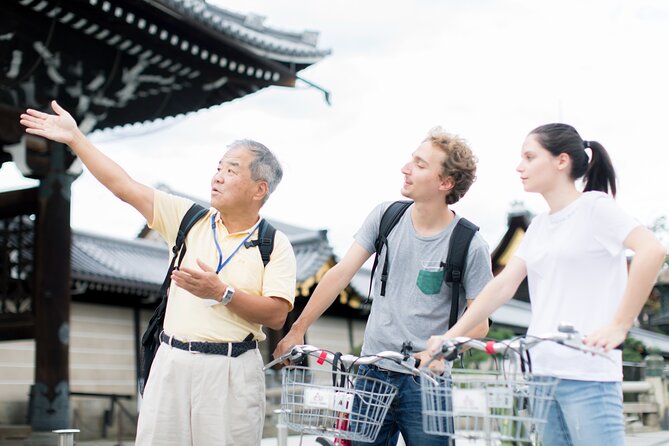
- A guide trained for both culture and cycling: You get local etiquette plus group cycling and traffic-safety know-how.
- E-bike friendly pacing: The ride keeps you moving without turning the afternoon into a full-on workout.
- Five focused stops, not a long day: Short breaks at each highlight make it ideal when you’re on a schedule.
- Imperial gardens by gravel paths: Kyoto Imperial Palace isn’t just viewed—you roll through its garden areas.
- Built-in rain plan: You can ride with poncho or switch to a public-transport walking option if weather hits.
Why This Afternoon Bike Loop Beats Waiting for the Perfect Moment
Kyoto can feel like two cities at once. There’s the postcard Kyoto—temples, geiko sightings, that classic street look. Then there’s the Kyoto people actually live in: quiet lanes, small streams, wooden house fronts, and river edges where daily life keeps going. This tour is designed to stitch those worlds together in one afternoon.
The real win is the feel of moving through the city. When you ride from alley to alley, you notice changes in sound, smell, and light that you’ll never catch at walking speed or from a bus window. And because the tour is time-limited (about 3 hours), you get a clean, efficient route instead of spending your whole day trying to guess what you’re passing.
Still, set your expectations right. This isn’t a slow cultural lecture. You’re cycling, stopping briefly, and going again—so you’ll want to be mentally ready for a steady pace.
You can also read our reviews of more tours and experiences in Kyoto.
Meeting at 2:00 pm and How the Ride Typically Feels
The tour starts at 2:00 pm and ends back at the meeting point. The location is: 552-13 Higashiaburanokōjichō, Shimogyo Ward, Kyoto, 600-8235, Japan. You’ll use a mobile ticket, which keeps the start simple.
Group size is small: the tour accepts 2 to 6 guests per guide. It’s also a private tour/activity, meaning only your group rides together. If your group grows to 7 to 12, an extra guide can be arranged—useful if you want smoother spacing rather than everyone compressing into one tight pack.
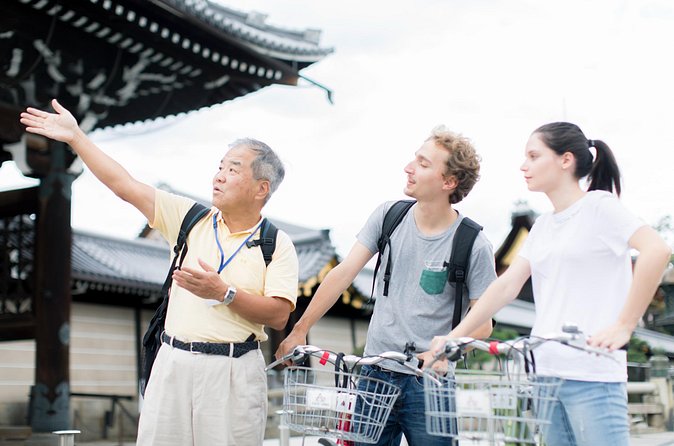
You’ll also be riding with the kind of guidance that matters in Kyoto. The operator says their guides are trained through an original program with traffic safety, group cycling techniques, and local etiquette. In practical terms, you’re not just hoping everyone knows what they’re doing. You’re following a system—where to position, how to move as a group, and how to behave around streets and pedestrians.
One more important point: 1-person participants aren’t accepted. So if you’re traveling solo, you’ll need to join with at least one other person in your group.
Miyagawacho Kaburenjo: Wooden-House Lanes That Feel Like a Time Skip
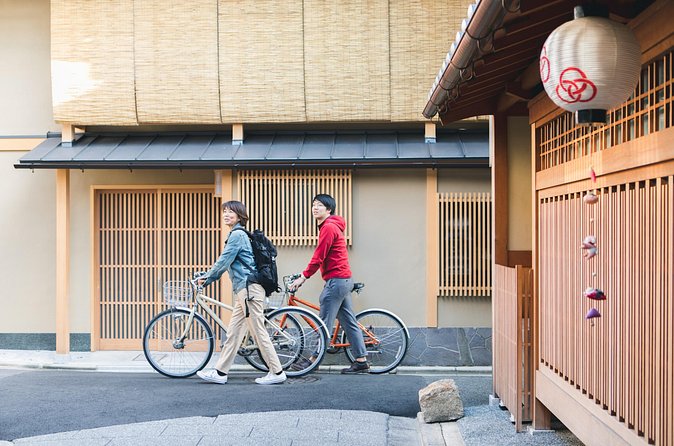
Stop 1 is Miyagawacho Kaburenjo, in Miyagawacho, the second biggest of Kyoto’s five geisha districts. The highlight here is the setting: an alleyway lined on both sides with traditional wooden houses.
This is the kind of place where you start to understand why Kyoto feels different on foot and bike. The street narrows, the background noise drops, and the architecture gets close enough that you notice details—wood texture, the rhythm of building edges, the calm that comes from not being in the main flow of traffic.
What I like about starting here is that it teaches your eye. After the first alley, you’ll recognize similar patterns elsewhere—when a street is built to slow you down, and when it’s meant to move you through.
A small consideration: this stop is short (about 15 minutes). You won’t get time for a long photo detour or lingering for ages. If you love slow street wandering, use those first minutes well. Pick one or two directions to look, then move on when the guide signals.
Gion: The Famous District, With Context and Better Flow
Stop 2 is Gion. This is Kyoto in the classic way: a geisha district developed historically as the home base for Maiko girls and Geiko women. The atmosphere of old times is described as still present here.
The value of this stop isn’t just that it’s famous. It’s the way you reach it. Coming in by backstreets means you arrive with a baseline understanding of what makes Kyoto’s historic districts work. You’ve already seen quieter lanes; now you notice how Gion’s streets change in width, in energy, and in what you’re likely to see.
You’re also given a short, purposeful look (about 15 minutes). That’s ideal if you’re trying to cover highlights without getting swallowed by crowds and late afternoons. You’ll be able to say you saw Gion, but you won’t burn your entire energy packet trying to get the one perfect moment.
Tatsumi Bridge: A Willow-Swing Pause by a Small Stream
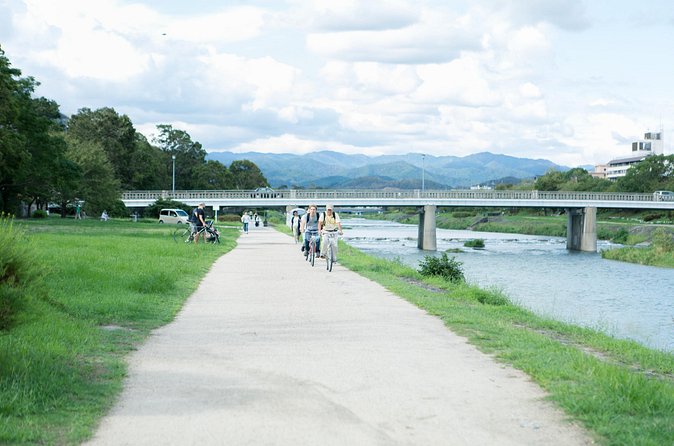
Stop 3 is Tatsumi Bridge, and the tone shifts again. The tour describes a refreshment along a path that runs next to a small stream. The signature detail here is the willow’s swing in the breeze.
This is one of those Kyoto moments where the city quietly shows you its rhythm. When the water and trees line up, the whole experience feels lighter—even if the rest of your day is packed with sights.
You only get about 15 minutes here, so treat it like a reset button. Take your time for the part that matters most to you: watching the water edge, looking for reflections, or simply slowing your breathing and letting your feet rest from the ride.
The drawback? If you’re the type who likes to linger and sketch or photograph for long stretches, a short stop might feel rushed. But for most people, it’s the right length to keep the afternoon feeling energetic rather than dragging.
Kyoto Imperial Palace Gardens: Gravel Paths and Seasonal Flower Time
Stop 4 takes you to the Kyoto Imperial Palace, formerly the residence of Japan’s Imperial Family. Today, it’s open to the public as a national garden with beautiful seasonal flowers.
What makes this stop different from a typical visit is that you cycle along gravel paths. That detail matters. Gravel changes how you move—slower, steadier, and more “garden-like” than street riding. It also changes the vibe from busy Kyoto street noise to something more park and garden oriented.
You’ll spend around 20 minutes here, which is a good match for a first-time look. You won’t cover the entire palace grounds deeply, but you will see the kind of space you’d want to revisit on your own if you fall in love with it.
Also, note that this stop is described as admission free in the tour flow, which makes the visit feel more efficient for your wallet.
Kashiwayacho and the Kamo River: Where Locals Actually Exhale
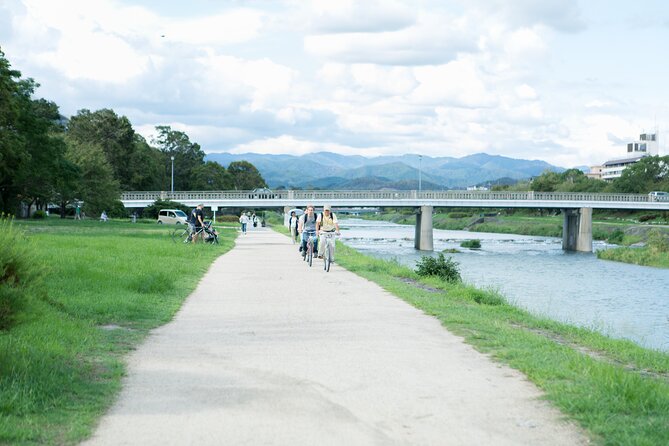
Stop 5 is Kashiwayacho, where you can relax at a river area loved by local residents: the Kamo River. This part is described as included, and it’s your longest vibe-based break at about 20 minutes.
This is where the “real Kyoto” idea pays off. When you stop by a river used by everyday people, Kyoto stops feeling like a set and starts feeling like a living city. Even if you don’t know what to do with your hands, you’ll find yourself watching the water and the movement along the edges.
The tour keeps it simple: you arrive, you take a breather, and you let the city do its thing around you.
E-Bikes, Safety Training, and How to Get the Most Out of Small Stops
Kyoto streets aren’t forgiving. That’s why the guide training matters, and it’s also why E-bikes make a big difference.
In the feedback I’ve seen from people who did this ride, one theme pops up: E-bike riding is the way to go, especially when you want to cover multiple areas without exhausting yourself. The guides also come across as personable and effective in the moment—someone named Yuichi was highlighted as phenomenal, with a mix of informative and funny delivery that made the stops easier to enjoy.
So if you’re planning to book, here’s how to make the experience smoother for yourself:
- Stay relaxed and follow the group rhythm. You’ll get more out of the places if you’re not stressed about where to position yourself.
- Assume short stops require quick focus. Choose what you want to notice—wooden house details, bridge views, or the garden path feel.
- Be ready for road riding in a city. Even at low speed, you’re still sharing space with pedestrians and vehicles.
Also, remember the tour is designed around etiquette. Kyoto has a strong sense of considerate behavior in public spaces, and the guide’s local etiquette training is built into the way the tour flows.
Price and Value: What $102.47 Buys You Here
At $102.47 per person for about 3 hours, this isn’t a budget bus-tour price. But it also isn’t trying to be a full-day private chauffeured sightseeing itinerary.
Here’s what you’re paying for that usually justifies the cost:
- A trained guide who covers culture plus cycling safety and group technique
- A bike-based route that lets you cover areas you’d struggle to reach efficiently by foot
- Multiple distinct stops that include geisha districts, a palace garden, and a river break
- Admission-free stops listed for at least some of the highlights, and a Kamo River relaxation stop with inclusion
You’re also paying for time discipline. A short afternoon tour means you can still eat well, shop a bit, or add another attraction later. If your Kyoto days already feel tightly scheduled, this is the kind of plan that gives you structure without locking you into a whole day.
If you’re the type who hates riding at all, the price won’t feel worth it. But if you’re open to cycling as a way to see the city, the cost starts to make sense fast.
Rain Plan: Poncho Ride or Public-Transport Walking Shift
Kyoto weather can change moods quickly, so the tour is set up for rain. The tour will operate in rain, and you get two options:
- Continue on bikes with a rain poncho (free of charge).
- Switch to a walking tour using public transportation (bus or metro), included in the tour fee.
This is one of the more practical approaches I’ve seen for a bike-focused tour. It avoids the all-or-nothing problem where rain cancels your whole plan. Instead, you’re nudged into the option that matches your comfort level that day.
Just keep one idea in mind: if it’s pouring, the walking version may feel like a different tour in terms of effort and views, but the key areas and the overall flow should remain the same spirit.
Who Should Book This Tour (And Who Might Skip It)
This works best for you if:
- you want a short afternoon plan that hits several Kyoto highlights without a full day commitment
- you like the idea of seeing quiet backstreets rather than only the main drag
- you can handle road cycling and want the payoff of moving through multiple districts
- you’re traveling with family and want a structured route that keeps the day moving
It might not be the right fit if:
- you aren’t comfortable riding a bicycle on city roads
- you’re expecting a slow, wandering, stop-anywhere style tour
Kids must be at least 10 years old, 145 cm or above, and able to ride a bicycle safely on the road unassisted. So if you have younger kids, this is probably not your match.
Should You Book This Hidden Alleyway Afternoon Tour?
If you’re doing Kyoto for the first time, or you want a second-day plan that feels more local than standard sightseeing, I think this one is worth your attention. The route is built to move you from quiet wooden-house lanes to Gion context, then into calmer pauses by the stream, the Imperial garden atmosphere, and finally a river break.
I’d book it when you want:
- efficient coverage in about 3 hours
- a guided blend of culture and practical street know-how
- a ride that keeps you active without turning your afternoon into an ordeal
Skip it if you hate cycling or if you’re likely to get stressed on busy streets. But if you can ride comfortably, this is a smart way to experience Kyoto as a real city, not just a list of landmarks.
FAQ
How long is the afternoon tour?
It runs for about 3 hours.
What time does the tour start?
It starts at 2:00 pm.
Where does the tour meet, and where does it end?
It meets at 552-13 Higashiaburanokōjichō, Shimogyo Ward, Kyoto, and ends back at the same meeting point.
Is this tour private?
Yes. Only your group participates.
How many people can join per guide?
The tour accepts 2 to 6 guests per guide. A 7 to 12 person group can have an extra guide arranged. One-person participation is not accepted.
Does the tour run in the rain?
Yes, it will operate in rain. You can either continue on bikes with a rain poncho, or switch to a walking tour using public transportation.
What are the age and height requirements for children?
Children must be at least 10 years old, 145 cm or above, and able to ride a bicycle safely on the road unassisted.
Is the tour refundable if I cancel?
No. The experience is listed as non-refundable and cannot be changed for any reason.