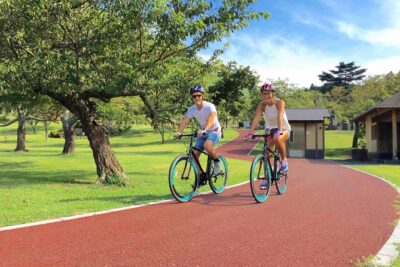
Want Kyoto without the walking legs? KIYOTO’s private e-cycling tour stitches together big names like Fushimi Inari-taisha and Tofuku-ji, plus scenic river areas around Gion, so you can check more off without feeling wrecked.
I love two things right away. First, the electric bike rental is included, so you skip the equipment hunt and just roll. Second, the private guide shapes the pace around your group, with stories that turn the stops from pretty photos into Kyoto context.
One consideration: you do need moderate fitness and the confidence to ride a bicycle in traffic, even though the experience is designed for a tailored, safe-feeling rhythm.
In This Review
- Quick take: what you’ll notice fast
- Why Kyoto feels easier when you’re rolling on an e-bike
- Price and value: what $198.15 buys you in real time
- What’s included: bikes, guiding, and the kind of service Kyoto is famous for
- The route overview: how the day flows
- Stop-by-stop: the Kyoto hits you’ll actually remember
- Higashi Hongan-ji: start with scale and calm
- Fushimi Inari-taisha: the torii tunnel effect
- Komyo-in: a quieter temple mood (with a note about fees)
- Tofuku-ji and Tsutenkyo Bridge: maple colors without the headache
- Hōkan-ji (Yasaka Pagoda): picture-perfect, but still worth it
- Yasui-Konpiragu: the shrine with relationship symbolism
- Hanamikoji Street: Gion’s old alley energy
- Tatsumi Bridge: a smaller riverside pause
- Shirakawa Canal and River Terrace: water sounds, willow vibes
- Heian Jingu Shrine Otorii: the giant gate shot
- Nanzen-ji and Nanzenji Suirokaku: temple grounds plus infrastructure history
- Philosopher’s Walk: the 2-kilometer thinking-stroll alternative
- Honen-in: Zen stillness in a forest setting
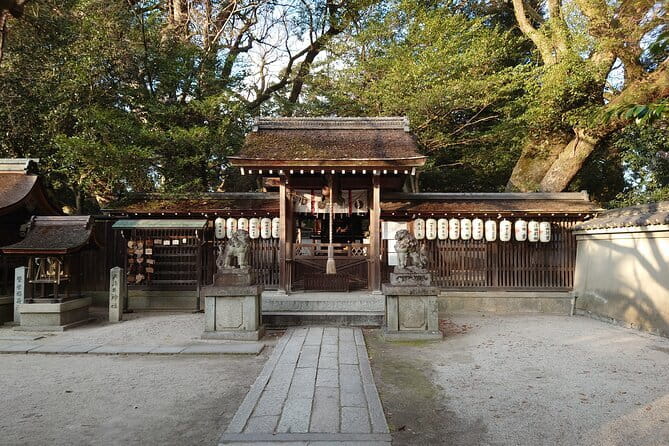
- Shimogamo Jinja: one of Kyoto’s oldest Shinto roots
- Kamogawa Delta: turtles, birds, and stepping stones
- Kyoto Gyoen: park time around the old Imperial Palace
- Ebisugawa stepping stones at Kojin: quick and fun
- Teramachi-dori and Sanjo Street: shopping streets as a final act
- Getting around efficiently: what the bicycle changes
- Best fit: who will love this tour the most
- Practical notes before you go (so your day stays smooth)
- Should you book KIYOTO’s Kyoto private e-cycling tour?
- FAQ
- How much does KIYOTO’s Kyoto Private E-Cycling Tour cost?
- How long is the tour?
- What’s included in the tour price?
- Is this a private tour?
- Do I need to know how to ride a bicycle?
- Are temple and shrine entrance fees included?
- Are food and drinks included?
- Where do I meet the tour?
- Do you have bikes for kids?
- Is free cancellation available?
Quick take: what you’ll notice fast
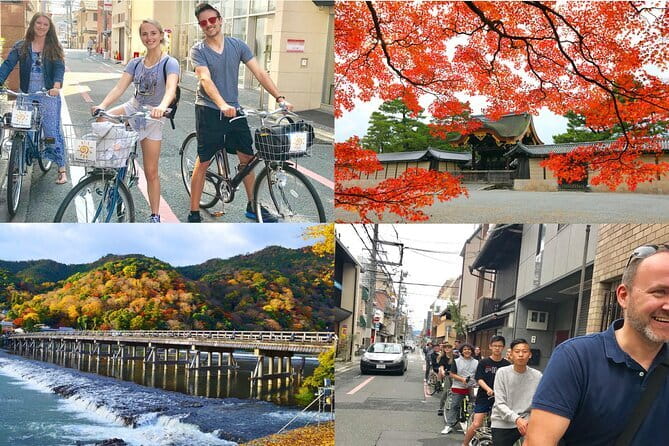
- Included E-bike (and normal bikes) so you can choose electric power or pedal like a classic tour.
- Private pacing means fewer stampedes and more time at the spots that matter to you.
- Temple-and-shrine variety from iconic torii tunnels to quieter Zen corners.
- Photo-friendly routes where the guide actively helps you get good angles.
- River and old-street atmosphere around Gion and the Shirakawa area, not just major gates.
Why Kyoto feels easier when you’re rolling on an e-bike
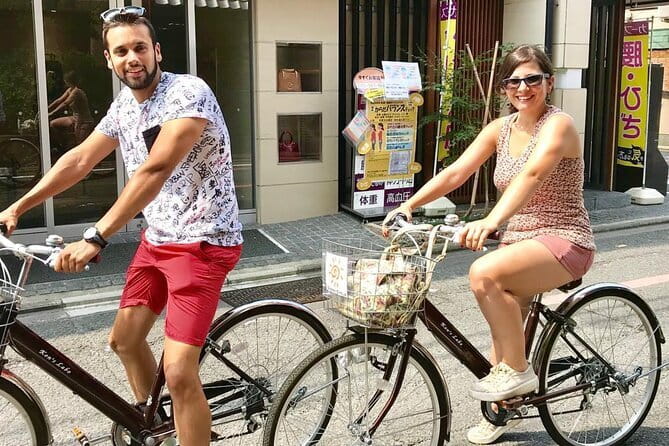
Kyoto is built for walking, but that can turn into a long day of sore calves and “wait, where was that temple again?” On this tour, the bicycle does the heavy lifting, so you can spend your energy on sightseeing instead of just getting between places.
The route is heavy on high-impact stops. You start with temples and shrine landmarks, then you move through Kyoto’s classic neighborhoods—especially around the Higashiyama side and the Gion river area. That mix is what makes this feel efficient without being rushed.
You can also read our reviews of more tours and experiences in Kyoto.
Price and value: what $198.15 buys you in real time
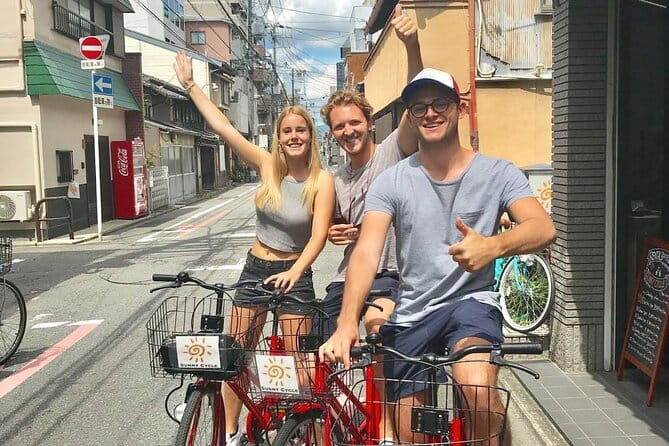
At about $198.15 per person, this sits in the premium zone. The value comes from three places: you get an included electric bike rental, you get a private guide, and you pack a lot of ground in 4 to 8 hours.
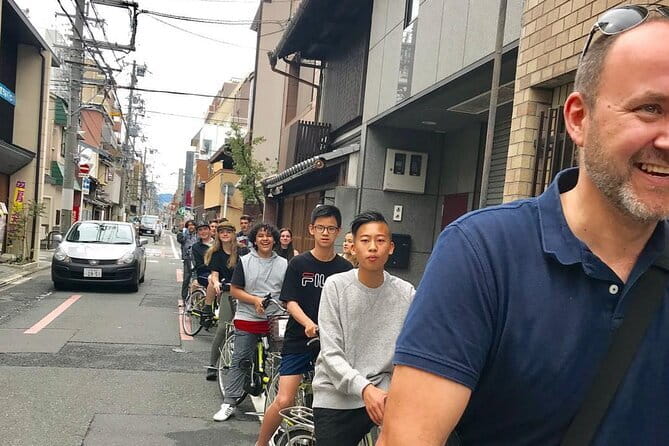
If you were doing this yourself, you’d pay for a bike rental anyway, then spend time planning routes, dealing with traffic timing, and walking long distances between major sights. Here, the guide handles the sequencing and keeps the ride moving at a pace that fits your group. Also, group discounts are available, which can make the per-person cost feel less sharp for couples, families, or friends traveling together.
What’s included: bikes, guiding, and the kind of service Kyoto is famous for
This tour includes an electric bike, plus there’s a normal (non-electric) cycle option. Kids bikes also exist, but availability is limited and you have to request them.
You’ll also get two types of guide value:
- A guide who’s fun and photo-focused, helping you grab memorable angles.
- A guide who brings Japan’s omotenashi hospitality—friendly, thoughtful, and tuned into making the day run smoothly.
In real terms, that means less time “figuring out logistics” and more time letting Kyoto land. Guides also tailor routes within the same neighborhood logic, so you’re not stuck doing a one-size-fits-all checklist.
The route overview: how the day flows
Your chosen duration (4 to 8 hours) determines how much of the full list you cover. The full itinerary stretches across Kyoto in a way that makes sense for a bicycle: start with major sights, then work through Higashiyama and Gion, and continue toward the north/east side with river and shrine stops.
Even if your day is shorter, you’ll still feel the design: a chain of places you can reach without repeating the same street twice.
Stop-by-stop: the Kyoto hits you’ll actually remember
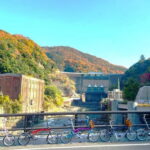
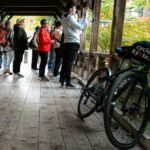
Higashi Hongan-ji: start with scale and calm
This major Jodo Shinshu Buddhist temple (established in 1602) has vast grounds and a big main hall called the Goeido. It’s a good opening because it sets a tone: Kyoto isn’t just about postcard rooftops; it’s also about lived-in religious spaces and long history.
If you like architecture and atmosphere, this stop gives you breathing room before you jump into the more tourist-saturated areas later.
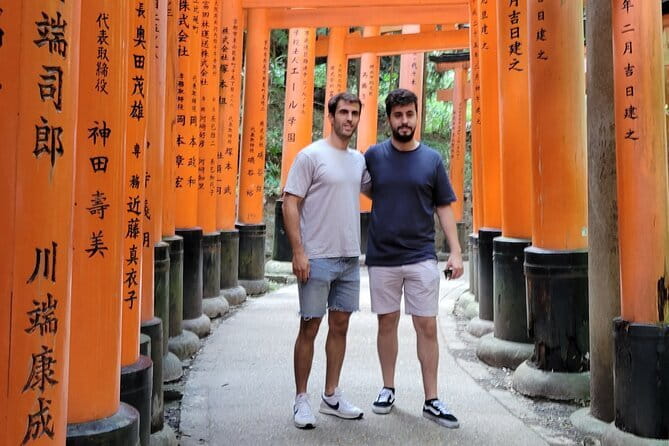
Fushimi Inari-taisha: the torii tunnel effect
Fushimi Inari-taisha Shrine is the head shrine of over 30,000 Inari shrines across Japan. The signature here is the thousands of bright red torii gates that line up along the mountain trails.
You get about 40 minutes, and admission is listed as free. The time window is smart: long enough to feel the flow, short enough that you can keep energy for the rest of the day.
Komyo-in: a quieter temple mood (with a note about fees)
Komyo-in is a sub-temple of Tofuku-ji, and it’s known for a tranquil garden. The autumn leaves description signals the vibe: mossy grounds, color, and a slower pace than the big-name shrines.
Time is listed as 20 minutes, and admission is marked not included, so budget for a ticket if it’s part of your selected route.
Tofuku-ji and Tsutenkyo Bridge: maple colors without the headache
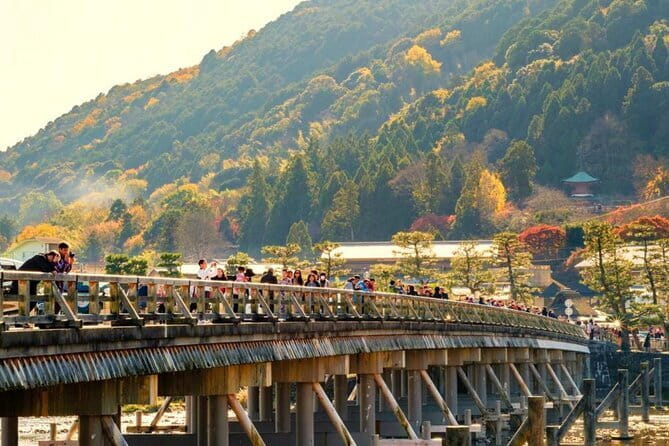
Tofuku-ji’s Tsutenkyo Bridge is one of those Kyoto spots that people love in fall because of panoramic maple views across a valley. Your stop is around 10 minutes, with admission listed as free.
Even if you’re not visiting in peak season, the bridge is still a strong visual anchor for the day: it gives you a wide-frame view instead of another gate-and-hall photo.
Hōkan-ji (Yasaka Pagoda): picture-perfect, but still worth it
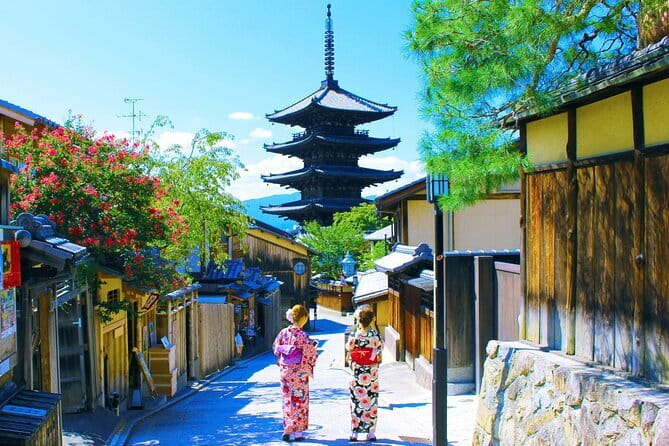
Hōkan-ji’s Yasaka Pagoda is famous for that elegant silhouette against Kyoto’s historic Higashiyama district. Expect about 20 minutes and free admission.
It’s a simple stop on paper, but the payoff is the view. The ride brings you close enough that you don’t spend half your time just getting in the right spot.
Yasui-Konpiragu: the shrine with relationship symbolism
Yasui Konpiragu Shrine is tied to prayers for cutting off bad relationships and bringing in good ones. The itinerary lists 10 minutes, and admission is free.
If you like the human side of shrine traditions—what people actually hope for—this stop hits differently than generic sightseeing. It also adds a fun cultural contrast right in the middle of the classic tourist circuit.
Hanamikoji Street: Gion’s old alley energy
Hanamikoji Street is a charming alley in Gion lined with traditional teahouses and restaurants. Your time is about 10 minutes, free admission.
This is one of the stops where walking-only would waste time. From the bike, you can see the atmosphere quickly and move on before you get stuck in crowds.
Tatsumi Bridge: a smaller riverside pause
Tatsumi Bridge is listed as a “hidden gem” type stop, and it’s described as a small wooden bridge along the Shirakawa River. Your time is around 10 minutes, free admission.
This is the kind of stop that makes the day feel like more than a greatest-hits tour. Short, scenic, and easy to enjoy.
Shirakawa Canal and River Terrace: water sounds, willow vibes
You’ll also pass the Shirakawa canal and a riverside walkway called the Shirakawa Shinsui Terrace. Time is 15 minutes for Shirakawa Canal and 15 minutes for the River Terrace.
Admission is free for both. Expect traditional machiya houses nearby and a calmer stretch where the sound of water does half the relaxing for you. If you want a break from big sights, this is it.
Heian Jingu Shrine Otorii: the giant gate shot
The Great Torii of Heian Shrine is massive, standing at 24.2 meters. It was built in 1929 to commemorate Emperor Showa’s enthronement, and it marks the entrance to the shrine grounds.
You get about 15 minutes, free admission. If your group likes a strong visual landmark, this is one of the best “stop and shoot” moments.
Nanzen-ji and Nanzenji Suirokaku: temple grounds plus infrastructure history
Nanzen-ji is a prominent Rinzai sect temple established in 1291 by Emperor Kameyama. You’ll spend about 15 minutes there, free admission.
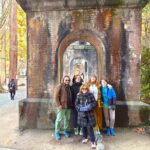
Then comes the Nanzen-ji Aqueduct, called Suirakukaku: a brick aqueduct completed in 1888 to transport water from Lake Biwa. Time is around 10 minutes, and admission is free.
This combo is a great example of why a bicycle tour works. You get both spiritual sites and historic structures that explain how Kyoto functioned.
Philosopher’s Walk: the 2-kilometer thinking-stroll alternative
Philosopher’s Walk (Philosopher’s Path) is a scenic route about 2 kilometers long along the Biwa Canal. Your time is listed as around 30 minutes, free admission.
On foot, it can become a stop-start crowd funnel. On a bike, you can manage the pace while still soaking up the walkway’s vibe.
Honen-in: Zen stillness in a forest setting
Honen-in is described as a peaceful Zen temple founded by Honen Shonin in the 13th century, in a forest setting. Your time is about 15 minutes, free admission.
If your day is starting to feel like too many big sights, this stop gives you quiet. It’s also the kind of place where you notice small details more than you do outside.
Shimogamo Jinja: one of Kyoto’s oldest Shinto roots
Shimogamo Jinja (Kamomioya Shrine) is said to trace back to around 90 BC, making it one of the oldest Shinto shrines in the area. Your stop is about 30 minutes, free admission.
This is a good “deep breath” moment before the river delta scenery, and it adds variety from the temple-heavy stretch earlier.
Kamogawa Delta: turtles, birds, and stepping stones
At the Kamogawa Delta, the Kamo and Takano rivers meet. The itinerary highlights stepping stones shaped like turtles and birds, plus seasonal scenery.
Your time is around 15 minutes, free admission. It’s playful without being goofy, and it’s perfect for photos because it gives you a clear action element.
Kyoto Gyoen: park time around the old Imperial Palace
Kyoto Gyoen is described as a large park area surrounding the old Imperial Palace, used by locals to relax and known for cherry blossoms. Time isn’t specified in the provided list, but it’s included as a stop.
Admission is not called out. Even with that uncertainty, it’s a strong break from temples: wide open space, trees, and historic surroundings.
Ebisugawa stepping stones at Kojin: quick and fun
Ebisugawa Tobiishi are stepping stones across the Ebisugawa (a tributary of the Kamo River). Time is about 10 minutes, free admission.
This is the kind of stop that works for families because it’s short, interactive, and easy to enjoy as a group.
Teramachi-dori and Sanjo Street: shopping streets as a final act
Teramachi-dori runs north-south through central Kyoto and is described as a lively shopping street with traditional Japanese goods, cafes, and fashion shops. Your time is about 10 minutes, free admission.
Sanjo Street is another main east-west street nearby Kawaramachi and the Kamo River, lined with restaurants, cafes, and historic buildings. No exact time is listed, but it’s included as a convenient hub.
This is a smart finish. You end the tour near where it’s easy to grab food on your own, and you don’t feel like your day ends the moment you stop seeing sights.
Getting around efficiently: what the bicycle changes
The e-bike changes the day in three practical ways.
First, you can move between neighborhoods fast without the frantic pace of trying to walk everywhere. Second, you can stop at short photo moments without your legs rebelling. Third, the guide can adjust the plan around where you want more time—like pausing longer at a river terrace or moving on quickly from a spot that’s less interesting to your group.
And yes, Kyoto streets can be crowded. Safety matters. The tour is geared for moderate fitness and requires you to be able to ride a bicycle, and kids bike options exist but are limited.
Best fit: who will love this tour the most
This is ideal for you if:
- You want major Kyoto sights plus quieter corners without spending all day walking.
- You’re traveling with family and want a guide who can keep kids engaged while managing a safe route.
- You like having a knowledgeable person steer you toward meaningful context while you focus on enjoying the scenery.
It might be a weaker fit if you don’t ride bicycles comfortably, or if you’re looking for a purely leisurely stroll day. You’ll trade some slow walking for the freedom of covering ground.
Practical notes before you go (so your day stays smooth)
- You’ll meet at Sunny CycleJapan, 600-8419 Kyoto, Shimogyo Ward, Ōhorichō, 477 1F. The tour ends back at the same meeting point.
- Temple and shrine admissions are not included in the price. Many stops are listed as free, but at least one stop (Komyo-in) is specifically marked ticket not included.
- Food and drink are not included, so plan on finding meals between or after stops.
Should you book KIYOTO’s Kyoto private e-cycling tour?
I’d book this if you want a high-sight-density day where you can still enjoy Kyoto’s textures: torii tunnels, river terraces, old streets, and temple grounds. The private format and included e-bike rental make the price easier to justify, especially in a city where walking distances can feel brutal.
Skip it if biking in traffic makes you nervous, or if your ideal Kyoto day is mostly slow strolling with no schedule pressure. For most people who can ride a bike, this tour is a very practical way to see more without turning the trip into a workout.
FAQ
How much does KIYOTO’s Kyoto Private E-Cycling Tour cost?
The price is listed as $198.15 per person.
How long is the tour?
It runs for about 4 to 8 hours, depending on the option you choose.
What’s included in the tour price?
Electric bike rental is included, along with a guide and mobile ticket. A normal cycle is available too.
Is this a private tour?
Yes. It’s a private tour/activity, and only your group participates.
Do I need to know how to ride a bicycle?
Yes. Participants must be able to ride a bicycle, and the tour requires moderate physical fitness.
Are temple and shrine entrance fees included?
No. Paid entrances are not included. Many listed stops are free, but some are marked as not included.
Are food and drinks included?
No. Food and drink are not included.
Where do I meet the tour?
Meeting starts at Sunny CycleJapan, 600-8419 Kyoto, Shimogyo Ward, Ōhorichō, 477 1F, and the tour ends back at the same place.
Do you have bikes for kids?
Kids’ bikes (non-electric) are available, but availability is limited and you need to request them. Kids seats are also available for children who cannot ride on their own, with limited units.
Is free cancellation available?
Yes. You can cancel for a full refund up to 24 hours in advance.