REVIEW · MARRAKECH
Cycling Adventure in Marrakech
Book on Viator →Operated by Pikala Bikes · Bookable on Viator
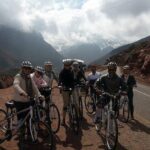
Marrakech looks different at bicycle speed. You’ll pedal through the Medina with local Pikala guides, then roll into Gueliz so you can feel the city’s old-and-new contrast in just a few hours. Along the way, the ride keeps stopping long enough to look, ask questions, and take photos without feeling rushed.
I love the blend of iconic sights like the Koutoubia and Kasbah with everyday places most visitors skip, including a public bakery and the old Hammam. I also like that the guides talk about daily life in Morocco—family, religion, and modernisation—so the tour feels personal, not just scenic.
The one possible drawback is that you’re cycling in real traffic conditions, and the road can feel chaotic in the Medina. One comment even warned that bike quality may vary, so be ready to ride defensively and listen to your guide’s cues.
In This Review
- Key things to know before you go
- What this Marrakech bike tour is really about
- Timing, start point, and how the ride flows
- Pikala guides: you’re not just riding, you’re talking
- Medina streets: Koutoubia, Kasbah, and the detours that matter
- Gueliz contrast: why switching neighborhoods is the point
- Bakery stop and the Hammam: the kind of culture you can smell
- Cafe Clock, sweets, and the second-hand market experience
- Ending at the tomb of one of Marrakech’s seven Saints
- Bikes, bike handling, and the traffic reality check
- Price and value: what $33.28 buys you in Marrakech
- Who should book this bike tour, and who should skip it
- Should you book this Marrakech cycling adventure?
- FAQ
- FAQ
- How long is the Pikala bike tour in Marrakech?
- What is the price per person?
- Do they offer morning and afternoon departures?
- Where does the tour start?
- How big is the group?
- What’s included during the tour?
- Can I cancel for a full refund?
Key things to know before you go
- Pikala-trained local guides: young Moroccans trained by Pikala explain everyday life and answer your questions.
- Medina-to-Gueliz change of pace: tight historic streets then a wider, more modern part of town.
- Real stops, not just monuments: a local public bakery and the traditional Hammam are built into the route.
- Cafe Clock break: juice and sweets are included, with time to reset before the next stretch.
- Market and spiritual stop: you’ll also visit a second-hand market and finish at the tomb of one of the seven Saints of Marrakech.
- Small group size: up to 20 people, so you’re not stuck behind a huge pack.
What this Marrakech bike tour is really about
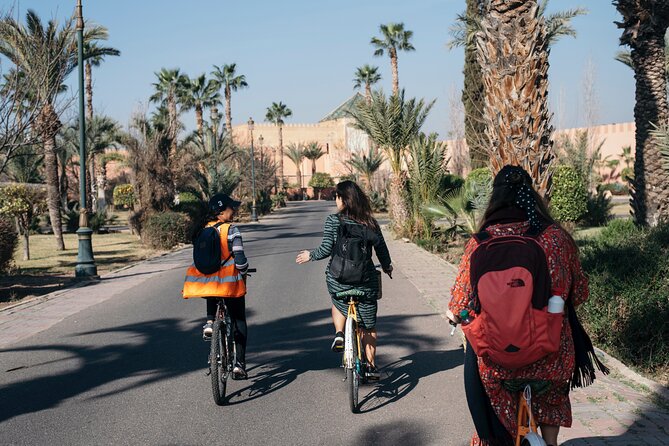
This is a Marrakech bike tour focused on daily life, not only photo stops. Yes, you pass major landmarks like the Koutoubia and Kasbah, but the “aha” moments come when the route turns toward neighborhoods and local routines.
The tour is organized by the Pikala Bikes project, a local non-profit. Your guides are young Moroccans trained by Pikala, and they share how family life, religion, and modern changes show up in real conversations and habits.
It’s also a short tour—about 3 hours—which matters in a city where time gets eaten by getting across town on foot or by car.
You can also read our reviews of more tours and experiences in Marrakech.

Timing, start point, and how the ride flows
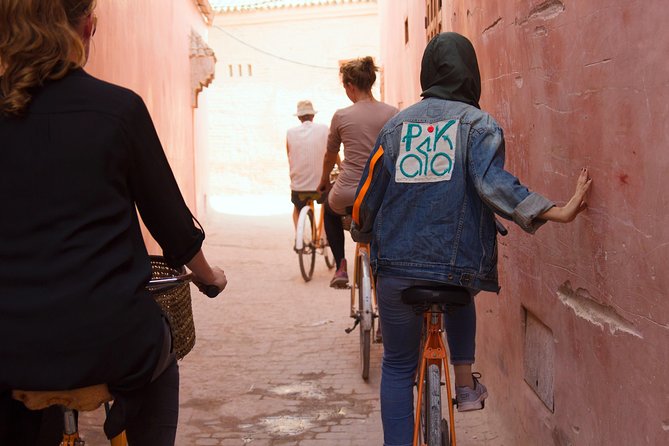
The activity runs for about 3 hours and ends back where you start. You can choose either a morning or afternoon departure, which is handy if you’re pacing the rest of your day (shopping, restaurants, or a hammam visit later).
You’ll meet at 29 Rue Riad Laarous, Marrakesh 40000. It’s a practical location for a bike tour because it’s near public transportation, so you can usually plug it into your broader itinerary without needing a private transfer.
Once you’re underway, the flow is built around frequent stops. The purpose is simple: Marrakech is intense, and you need breaks to actually process what you’re seeing—especially in the Medina.
Pikala guides: you’re not just riding, you’re talking
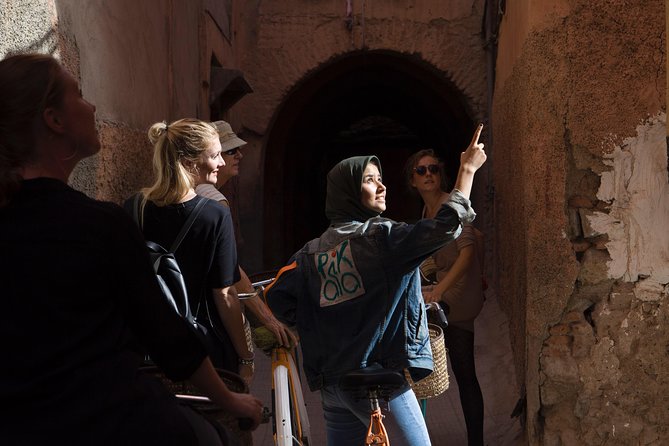
The strongest part of this experience is the human layer. Guides named in feedback include Yasser, Hamit, Kaula, Mo, Zouhair, Khawla (and a few similar-sounding names), and the pattern is the same: they’re there to explain daily life, not just recite facts.
In plain terms, you can expect conversations like:
- why family matters so much
- how people navigate religion and everyday routines
- what’s changing as Morocco modernises
Some guides also handle English especially well (for example, Zouhair is specifically noted for fluent English), and they can keep things moving even when questions come fast. One practical detail from feedback: if someone in the group needs extra attention, the guides may adjust the way they manage the group so everyone stays comfortable.
If you like cultural context—history as lived experience, not a lecture—this part is where the tour earns its 4.9 average.
Medina streets: Koutoubia, Kasbah, and the detours that matter
The Medina section is where the bike tour becomes more than sightseeing. You’ll pass highlights including:
- the Koutoubia area
- the Kasbah
- the Agdal gardens (as part of the sightseeing arc)
But the real value is what happens between those bigger anchors. The route is designed to take you to parts of Marrakech you’re unlikely to find by wandering alone—especially areas tied to daily work and neighborhood life.
That matters because the Medina can be a maze. Cycling with local guidance helps you avoid endless backtracking and gives you a sense of direction without you having to constantly scan street signs.
You’ll also get multiple photo moments, but not just at monuments. Expect stops that let you meet people, look at how trades operate, and connect the landmarks to the surrounding neighborhoods.
Gueliz contrast: why switching neighborhoods is the point
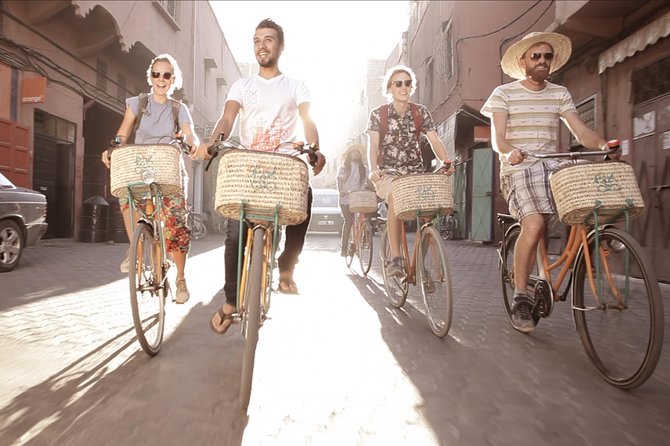
After the tight, historic energy of the Medina, the route heads toward Gueliz, the newer part of town. This contrast is more than a visual shift—it helps you understand Marrakech as two overlapping realities.
In practical terms, Gueliz often feels easier to ride through than the Medina lanes. That’s why many people like the pacing: you get the intensity first, then a more spacious stretch that feels like a mental breather.
The contrast also gives context to the earlier conversations from your guide. If you’re hearing about modernisation, you’ll actually see it rather than only discussing it.

Bakery stop and the Hammam: the kind of culture you can smell
Two stops do a lot of emotional work on this tour: the local public bakery and the traditional Hammam.
At the bakery, you’re not just looking at a shop window. You get a chance to connect everyday food to the rhythm of neighborhood life. It’s the kind of stop that makes the tour feel like you’re seeing Marrakech as residents do.
The Hammam is different. It’s an old traditional bathhouse, and it fits the broader theme of Moroccan daily routines. Even if you don’t plan to book a full hammam session separately, this gives you context for what those bathhouses represent and why they’re part of local life.
Both stops are also good “reset points” in a busy schedule. When the streets feel intense, it helps to have a structured pause where you can listen, look, and ask questions without balancing and pedaling at the same time.
Cafe Clock, sweets, and the second-hand market experience
Between sights, you’ll pause for included refreshments. The tour includes juice and sweets at Cafe Clock, plus tasty snacks and bottled water along the way.
This matters because riding in Marrakech can be tiring in a way that walking isn’t. Breaks keep the tour fun instead of exhausting, and they give you time to chat with your guide without the pressure of moving immediately.
Then comes the market portion, including an enormous second-hand market stop. Markets here aren’t just shopping—they’re social spaces, and the chance to see how people browse, haggle, and reuse items adds texture you won’t get from a standard “big sights only” route.
If you like souvenirs, you’ll likely see plenty that feels more connected to daily life than mass tourist goods.
Ending at the tomb of one of Marrakech’s seven Saints
The tour finishes with a visit to the tomb of one of the seven Saints of Marrakech. This is a powerful way to end, because it connects the earlier conversations about religion to something physical and local.
You’ll leave with a clearer mental map of how spirituality shows up in everyday city geography. Even if you’re not religious yourself, the experience can deepen your understanding of why certain places matter.
One practical note: like any religious site, expect respectful behavior—quiet voices and following your guide’s cues.
Bikes, bike handling, and the traffic reality check
This is the part you shouldn’t gloss over. The tour is often described as not for the faint-hearted, mainly because you’re cycling through real streets where you have to stay alert.
Many riders praise the bikes as modern and easy to ride, and guides work to keep the group moving smoothly. Still, there is at least one caution about bike quality not suiting everyone.
So here’s my practical advice:
- If you’re a confident city cyclist, you’ll likely find this fun.
- If you’re nervous about narrow lanes, sudden turns, or mixed traffic, you’ll want to go in knowing that you’ll be paying attention the whole time.
- In hot conditions (especially peak summer), you may feel more drained, since the route is active and crowded.
The good news: you’re never riding alone. The guides are there to manage the group pace and keep you on the right path.
Price and value: what $33.28 buys you in Marrakech
At $33.28 per person for about 3 hours, this isn’t just a “bike rental plus sights.” You’re paying for:
- local Pikala-trained guides with cultural explanations
- guided stops at specific everyday places (bakery and Hammam)
- included snacks, bottled water, and juice and sweets at Cafe Clock
- a structured route across multiple neighborhoods without getting lost
Also, the group size is capped at 20, which helps keep the experience from turning into a slow, noisy line.
If your budget is tight, choose this tour when you want the city’s texture in a short time. If you already know you want a classic monument-only itinerary, then you might be happier with a more standard walking tour.
Who should book this bike tour, and who should skip it
This fits best if you want:
- a Marrakech Medina experience that includes real neighborhood stops
- a guide-led explanation of family life, religion, and modernisation
- a mix of iconic sights and everyday culture (bakery, Hammam, market)
It’s also great for people who learn best by doing, not by reading a guidebook.
I’d be more cautious if:
- you’re not comfortable riding in chaotic street conditions
- you’re expecting a relaxed, low-traffic cruise
- you’re counting on your bike to feel perfectly matched and perfectly maintained
Still, even that caution comes with nuance. Many people love the tour precisely because it feels like Marrakech, not a filtered version.
Should you book this Marrakech cycling adventure?
Book it if you want Marrakech to feel lived-in. The Pikala angle—local youth guides trained by a non-profit plus meaningful conversations—turns this into more than a ride.
Skip or reconsider if bike handling isn’t your strength. The tour can be intense, and bike condition may vary, even if many rides are praised as smooth.
If you’re on the fence, use this rule: if you’re willing to be alert on the street and you like cultural context, this tour is likely worth your time.
FAQ
FAQ
How long is the Pikala bike tour in Marrakech?
It’s about 3 hours.
What is the price per person?
The price is $33.28 per person.
Do they offer morning and afternoon departures?
Yes. You can choose between a morning or afternoon departure.
Where does the tour start?
The tour starts at 29 Rue Riad Laarous, Marrakesh 40000, Morocco, and it ends back at the same meeting point.
How big is the group?
The tour has a maximum of 20 travelers.
What’s included during the tour?
You’ll get snacks and bottled water, plus juice and sweets at Cafe Clock. The tour also includes visits like a local public bakery and the Hammam, along with market time and other sightseeing stops.
Can I cancel for a full refund?
Yes. Cancellation is free up to 24 hours in advance for a full refund. If you cancel less than 24 hours before the start time, the amount paid isn’t refunded.