REVIEW · MARRAKESH
Marrakech:Guided City Cycling Tour – Culture, Colors & Charm
Book on GetYourGuide →Operated by Marrakesh Green Wheels · Bookable on GetYourGuide
Pedaling Marrakesh felt like learning its secret route. With the small-group ride, I love how guides like Hanan She steer you through the Medina souks without turning it into a stressful traffic scramble, and I also love the stop at the Zaouia Al Abassiya ceramics workshop, where you see craft happening at human scale.
The one real drawback: you should feel comfortable cycling in tight lanes with lots of people and cars crowding the same space. It is not a laid-back stroller stroll, and there is no way to fake confidence here.
In This Review
- Key points
- From Hotel Les Borjs de Kasbah to the Medina: Getting Started the Right Way
- Riding the Medina Souks Like You Belong There
- The tradeoff
- Kasbah, Bab Agnaou, and the Ramparts: History You Can Ride Through
- What to watch for
- Zaouia Al Abassiya and the Ceramics Workshop: A Craft Stop That Feels Real
- The practical side
- Gueliz and the Royal Theater: When Marrakesh Changes Gears
- Why this part matters
- The Café Finish: Mint Tea, Fresh Juice, and Smart Recommendations
- Safety, Pace, and Who This Bike Tour Fits Best
- Price and Value: What $32 Gets You in the Real World
- Should You Book Marrakech Green Wheels?
- FAQ
- How long is the Marrakech guided city cycling tour?
- How much does the tour cost?
- Where do I meet for the tour?
- Are bikes and helmets included?
- What’s included for food and drinks?
- Are entry fees to attractions included?
- What languages are available for the guide?
- Is it allowed to wear headphones during the tour?
- Is the tour suitable for pregnant women or babies under 1 year?
- Is there free cancellation?
Key points
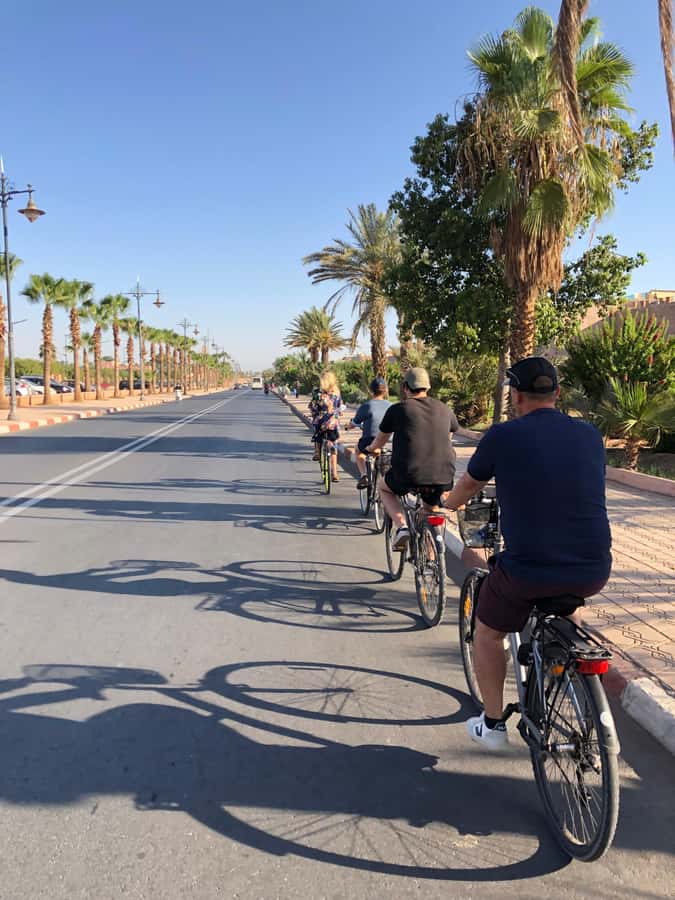
- Youth-led, local guiding through Marrakesh Green Wheels and a social-impact mission for bicycles and youth training
- Medina riding with real stops, including souks and major sights like Koutoubia and the ramparts area
- Zaouia Al Abassiya plus ceramics: a quiet, hands-on look at how traditions get made
- Kasbah, Bab Agnaou, and photo breaks along the walls and historic streets
- Gueliz and the Royal Theater area for a change of pace, plus parks and wide roads
- Mint tea and fresh juice at the end, with practical recommendations from your guide
From Hotel Les Borjs de Kasbah to the Medina: Getting Started the Right Way
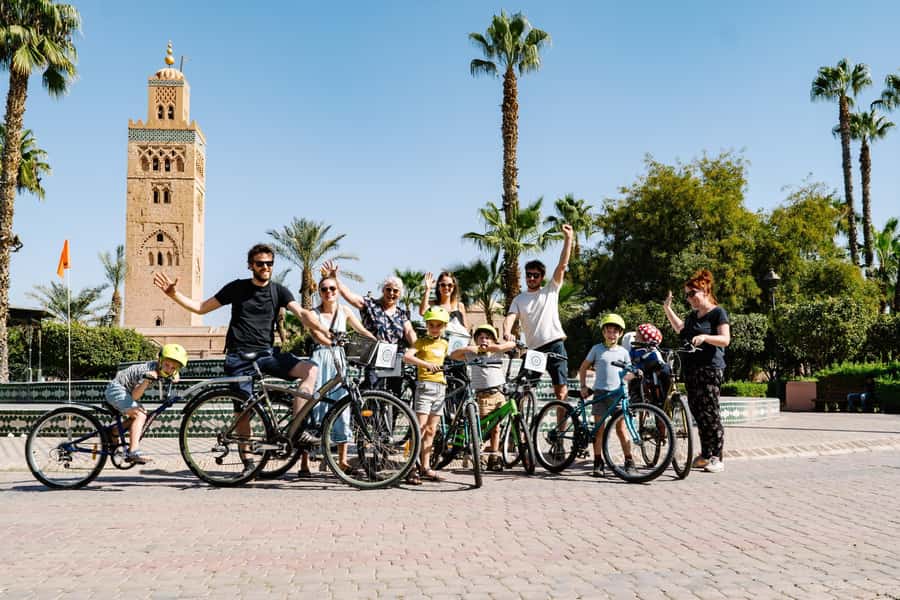
Meeting is simple and visual: you’ll be in front of Hotel Les Borjs de Kasbah with a standing orange flag that says CYCLING. When a meeting point is this clear, you lose less time trying to find the group and more time actually riding.
The tour runs about 3 hours, and it’s built around a bike that feels safe and controlled. You’ll get a helmet and bottled water during the ride. I like that they handle the basic comfort items up front, because in a place like Marrakesh, you want your brain focused on navigation, not logistics.
One important rule that affects your trip vibe: headphones are not allowed. That’s a good call in busy streets. You’ll hear your guide, cars, and the flow of the crowd, which makes the ride feel more readable and less chaotic.
Riding the Medina Souks Like You Belong There
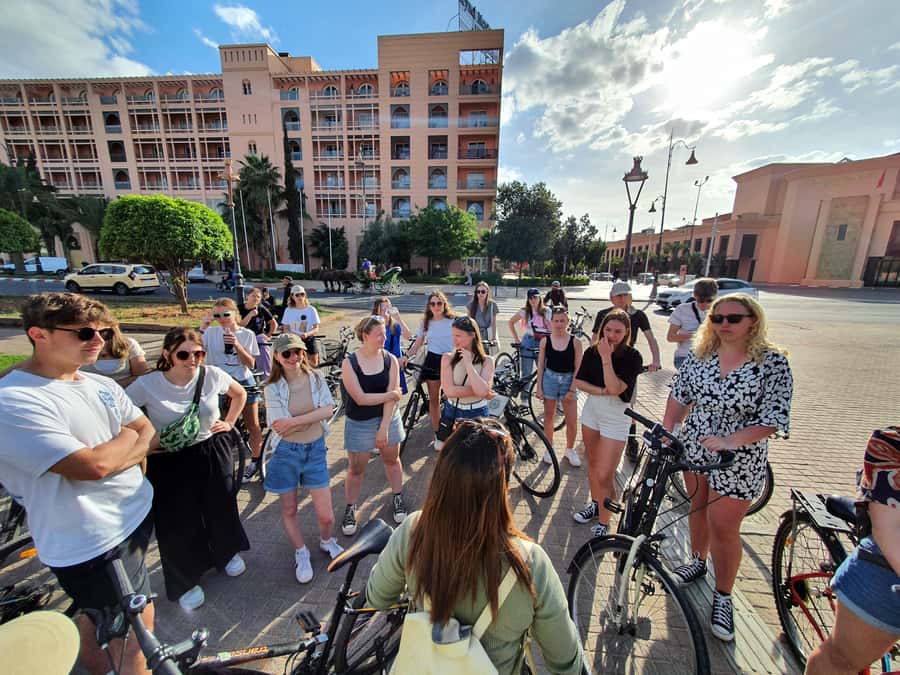
This is the part most people picture when they think of Marrakesh, and the bike gives you a big advantage over foot travel. You glide through narrow streets and busy markets while still being able to see landmarks that get skipped on typical wandering tours.
I love how the guides pace the ride. They keep you moving, but they also stop enough times for the city to make sense. On one tour, the guide was Tariq, and the group rhythm worked: you could feel the intensity of the streets without getting overwhelmed. That balance is the whole point of a guided cycling tour here.
As you head into the medina, you may pass or visit the kinds of places that define the city’s identity: areas like the Mellah quarter, the space around Riad Zitoun, and the big silhouette moments such as Koutoubia Mosque. The streets can be loud and crowded, but from a bike you can actually connect the dots between what you’re seeing and what the guide is explaining.
The tradeoff
Yes, the medina is busy. You are in motion around people carrying on their day. If you’re a brand-new cyclist, bring extra patience, because you’ll be weaving and threading through the flow. The good news is that the guides are used to it and set a pace that keeps the group together.
Kasbah, Bab Agnaou, and the Ramparts: History You Can Ride Through
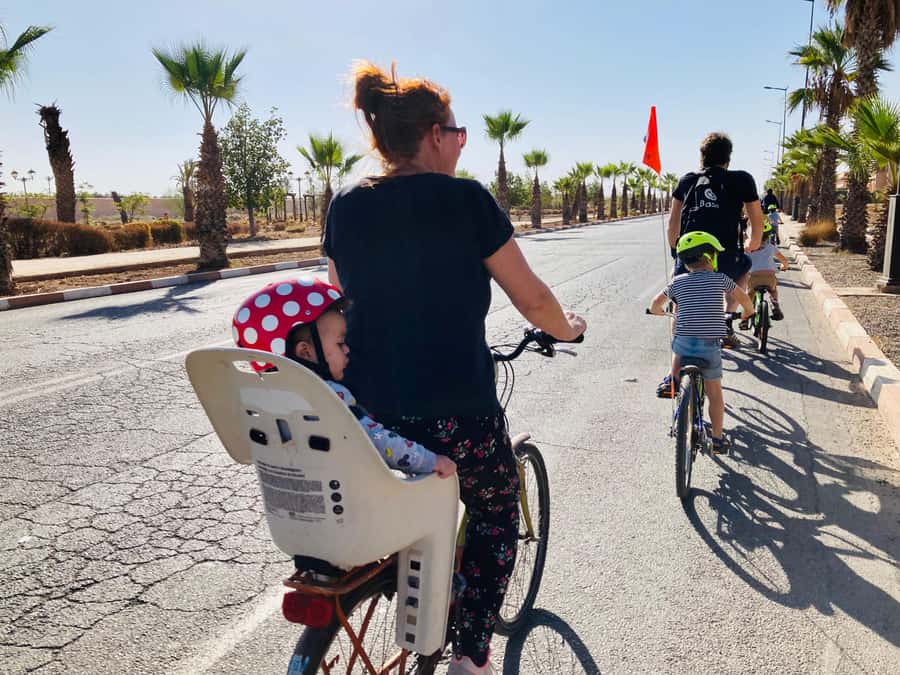
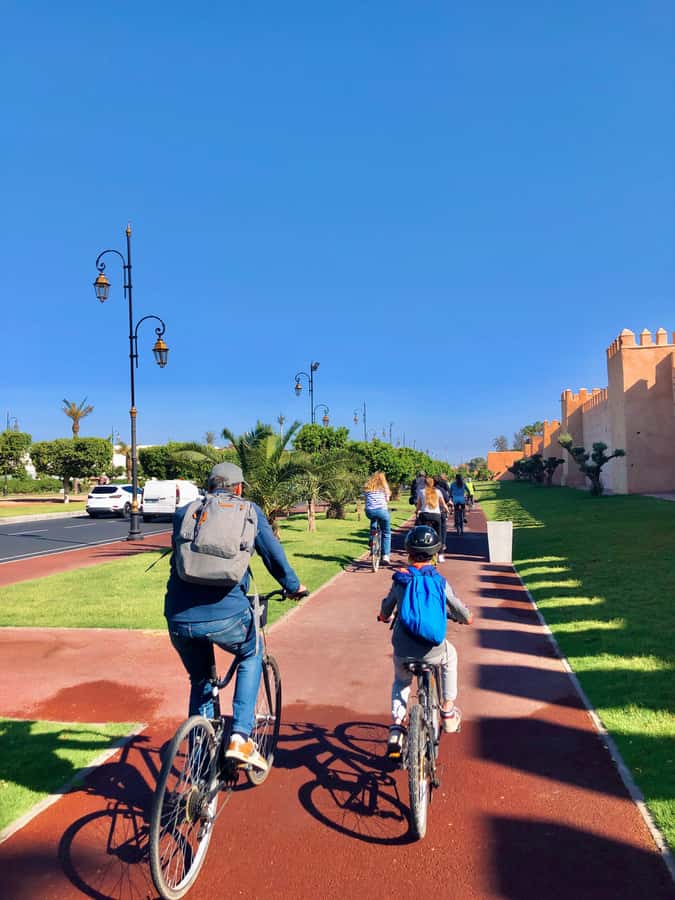
At some point, the tour turns from market energy into royal-neighborhood energy. The Kasbah area gets you a different lens on Marrakesh—closer to the old power center and the long timeline of the city. Even when you’re not going inside major sites, you’re seeing the street layout and feeling how the city organizes itself.
A key checkpoint here is Bab Agnaou. It’s the kind of landmark you can recognize even before you know its story. Standing near it, you’ll get context for why the gateways matter, how the city’s defensive lines shaped movement, and why this area feels distinct from the souks.
Then you get into the ramparts zone. There’s a specific moment for photos and a slower look at how Marrakesh has evolved over centuries—exactly the kind of “stop, look, breathe” break your legs will appreciate. From a bike, you can take in more angles than you could on foot, especially in spots where the streets keep funneling you forward.
What to watch for
The ramparts area can include short crossings and traffic flow that changes quickly. Your job is simple: keep your line, stay alert, and let your guide manage the group movement. If you do that, it feels like a guided ride through history rather than a history lecture from the sidewalk.
Zaouia Al Abassiya and the Ceramics Workshop: A Craft Stop That Feels Real
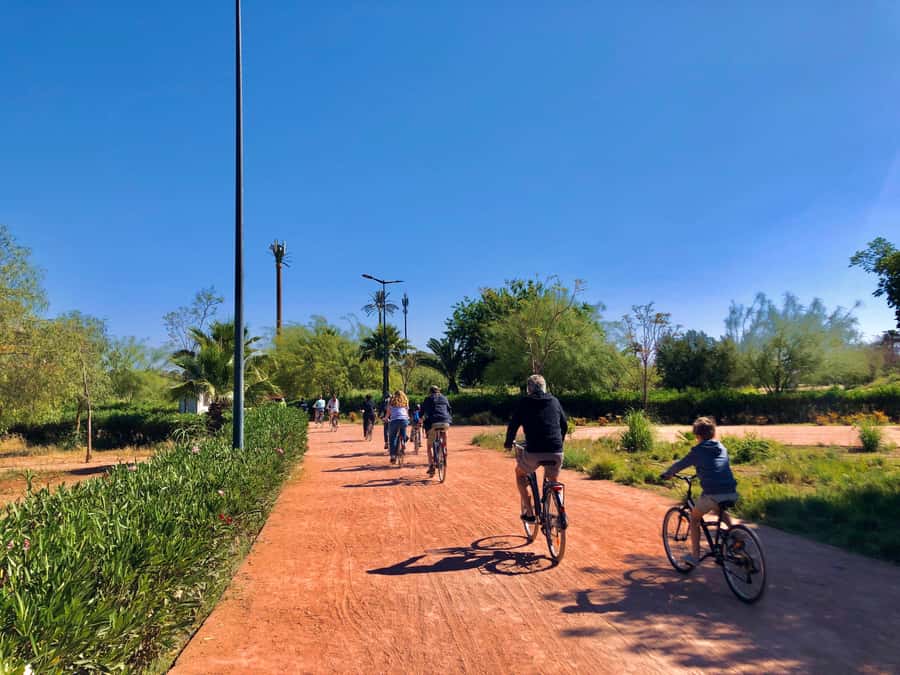
This is where the tour shifts from “see sights” to “see people at work.” The day includes Zaouia Al Abassiya, a serene spiritual sanctuary that locals still value, plus a traditional ceramics workshop.
You’ll watch artisans shape clay using techniques passed down through generations. The tour doesn’t treat this like a quick photo op. It’s more like a focused pause where you can understand the patience behind the craft: shaping, refining, and imagining the final piece before it takes its final form.
I like this stop because it adds texture. Marrakesh isn’t only buildings and landmarks; it’s also daily skill. And when you connect that skill to what you’ve seen in the souks, the market scene starts to feel less like shopping and more like a living supply chain.
The practical side
Give yourself permission to look slowly. This isn’t a sprint stop. Your guide will frame what you’re seeing, but you’ll get the most from it if you take in the details at a human pace—because that’s where the meaning is.
Gueliz and the Royal Theater: When Marrakesh Changes Gears
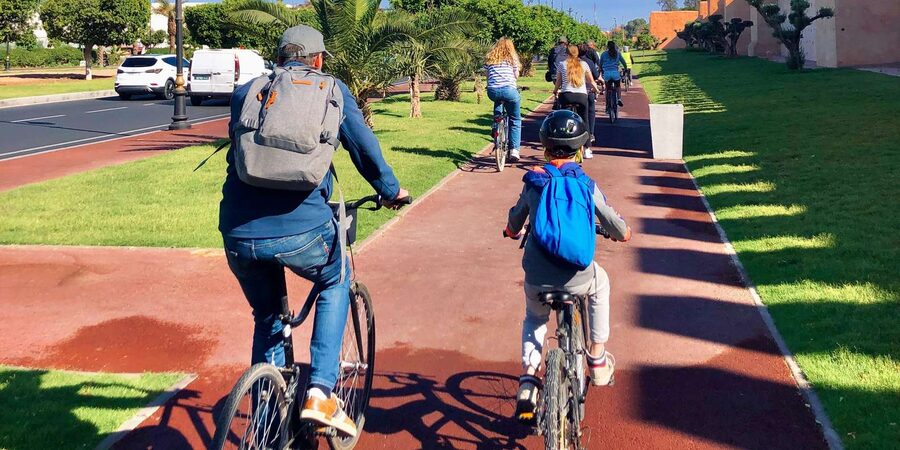
After the medina, the scenery gets noticeably more spacious. Gueliz is early 1900s Marrakesh as a modern, local district: wider roads, green parks, and a different rhythm of everyday life.
One of the highlights is the area around the Royal Theater. The tour includes a photo stop and time to look at the interior design. Even if you’re not a theater person, this is a satisfying shift—architecture that reminds you Marrakesh isn’t frozen in time.
You’ll also pass through or visit the train station area, which helps ground your ride in the city’s current movement. It’s one of those stops that might sound boring on paper, but it changes how you read the city. Marrakesh is not just old walls; it’s also transportation, jobs, and people coming and going.
And yes, the tour highlights include the Marrakech Garden’s green alleys, which is a welcome contrast to the medina’s tight geometry.
Why this part matters
This blend of old and new is not random. It prevents your day from feeling like only one side of Marrakesh. You finish with a mental map that includes both the traditions of the old quarters and the everyday life of Gueliz.
The Café Finish: Mint Tea, Fresh Juice, and Smart Recommendations
The last stretch ends with a break in a cozy Medina café, where you can choose Moroccan mint tea or fresh juice. This is more than a reward. It’s a reset button after moving through busy streets.
Your guide uses this time to share personal stories and insider recommendations. I find these tips most useful when they’re specific—where to go next, how to plan your next neighborhood walk, and what to skip if you have limited time.
It’s also here that the social-impact angle feels tangible. Marrakesh Green Wheels is built around youth training and cycling-focused community support, including helping get bicycles to school. When that mission is part of the ride, your money doesn’t just cover a guide’s time; it supports a structure that helps young people build skills and participate in tourism in a meaningful way.
Safety, Pace, and Who This Bike Tour Fits Best
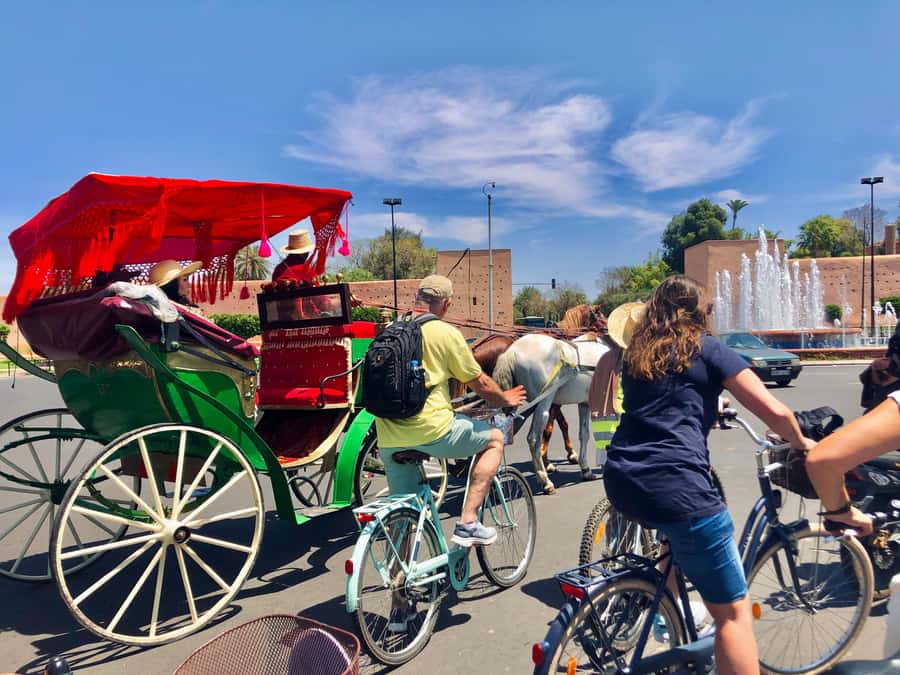
Marrakesh cycling is not for people who expect quiet streets. You’ll ride through traffic and dense pedestrian zones. The good side: the guides are experienced with the choreography needed to keep a group together.
From the guides I’ve seen mentioned—people like Ayoub, Selma, Salah, Abdo, and Nana—the pattern is the same: they respond to questions, keep a comfortable group pace, and manage safety so you can focus on the city.
That said, you should be honest about your comfort level. If you’re a nervous cyclist or have balance issues, this could feel stressful. If you’re someone who rides a bike regularly and can handle stop-and-go movement, you’ll likely love it.
Also note who this is not for: it’s not suitable for pregnant women, and it’s not suitable for babies under 1 year. (If you’re traveling with very young kids, you may need a different plan.)
Price and Value: What $32 Gets You in the Real World
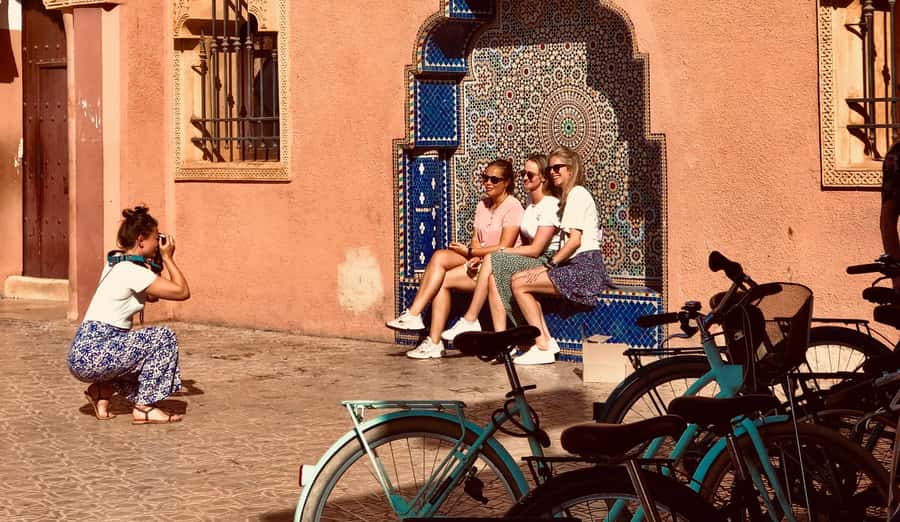
At $32 per person for about 3 hours, this is a strong deal if you count what you’re actually buying: a bike, helmet, bottled water, and end refreshments. You also get an experienced local cultural guide, not just a route.
But the real value is time. In a city where getting oriented can eat hours, you’re seeing a lot of Marrakesh without needing to figure everything out yourself. You hit medina streets, historic gateways, ramparts viewpoints, and modern Gueliz roads in one morning or afternoon block.
On top of that, you’re supporting a local youth guiding program and a mission connected to bikes for school. That makes the tour feel like a community exchange rather than a packaged sightseeing circuit.
The only cost caveat: entry fees to attractions are not included, so if you’re hoping to pay to go inside specific places, you’ll want to plan for that separately.
Should You Book Marrakech Green Wheels?
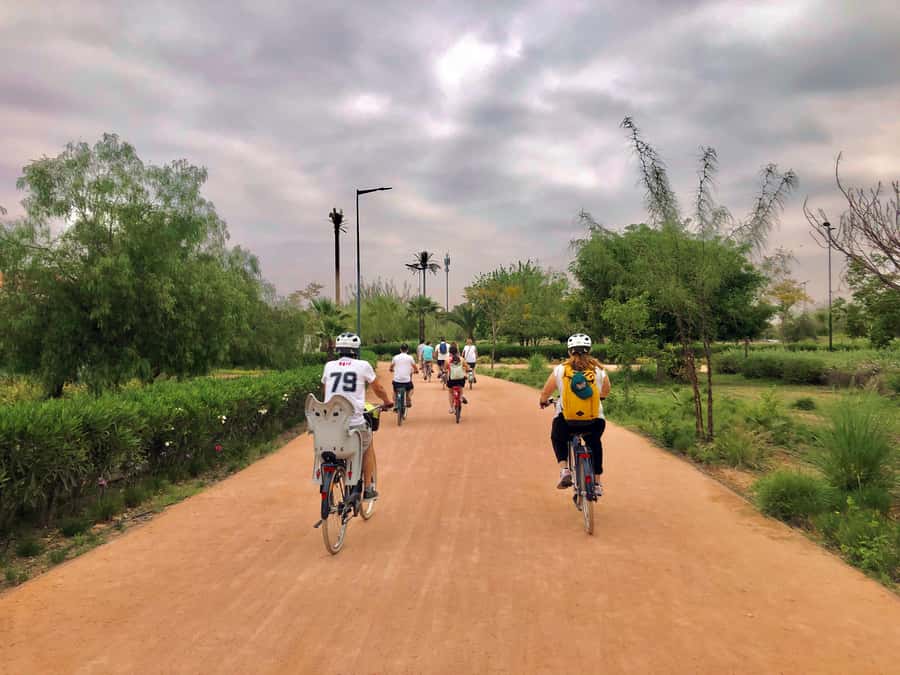
Book it if you want a guided bike ride that mixes medina landmarks with a modern-neighborhood change of pace, and you like learning from a local guide while moving fast enough to see real distances. I’d especially recommend it as an early Marrakesh activity to help you get your bearings, because the route makes your self-guided exploring afterward much easier.
Skip it if you strongly prefer quiet, car-free walking routes, or if you’re not comfortable cycling in crowded streets. If you can handle that one big reality, this tour is an efficient, fun way to understand Marrakesh beyond postcards.
FAQ
How long is the Marrakech guided city cycling tour?
It’s about 3 hours long.
How much does the tour cost?
The price is $32 per person.
Where do I meet for the tour?
You meet in front of Hotel Les Borjs de Kasbah, at the spot with a standing orange flag that says CYCLING.
Are bikes and helmets included?
Yes. The tour includes a quality bike and a helmet.
What’s included for food and drinks?
You’ll get bottled water during the ride, plus Moroccan mint tea and fresh juice.
Are entry fees to attractions included?
No. Entry fees are not included.
What languages are available for the guide?
The live guide is available in English, French, and Dutch.
Is it allowed to wear headphones during the tour?
No. Headphones are not allowed.
Is the tour suitable for pregnant women or babies under 1 year?
No. It is not suitable for pregnant women and it’s not suitable for babies under 1 year.
Is there free cancellation?
Yes. You can cancel up to 24 hours in advance for a full refund.