REVIEW · HOI AN
Mountain Bike Riding from Hoi An
Book on Viator →Operated by Heaven & Earth Bicycle Tours · Bookable on Viator
Getting out of town by bike is the point. This 5-hour countryside ride around Hoi An mixes rice paddies, bamboo and floating bridges, and quiet village life into a real-world day away from the crowds. You cover roughly 30–50 km on winding country roads, and the route can flex to the group’s ability.
What I liked most is how it stays human-scale. You get a small-group experience (max 8) with a guide who focuses on everyday details, not just photo stops, and you can hear how local work actually fits into the rhythm of the countryside.
One thing to consider: the path mix can get muddy. Expect a combination of dirt and concrete, plus bridges that may feel rickety, so it’s best if you’re comfortable riding carefully when conditions aren’t perfect.
In This Review
- Key things to know before you pedal
- Morning start in Hoi An: why 7:30 matters
- What you’ll actually ride: rice fields, villages, and river islands
- The pre-ride moment at Heaven and Earth Bicycle Tours
- Stop for lunch and banh mi: fueling the middle of the ride
- Mud, dirt, and concrete: what the MTB portion feels like
- Guides who turn cycling into culture: Tram, Tuyen, and Pascal
- How flexible the route really is
- Who should book this Hoi An mountain bike ride
- Price and value: is $55 worth it?
- What to bring (so you don’t regret it)
- Should you book Mountain Bike Riding from Hoi An?
- FAQ
- How long is the mountain bike ride from Hoi An?
- What distance will I cycle?
- Where do I meet, and does the tour return to the same place?
- What’s included in the price?
- Is the ride technical?
- How many people are in each group?
- What should I bring with me?
Key things to know before you pedal
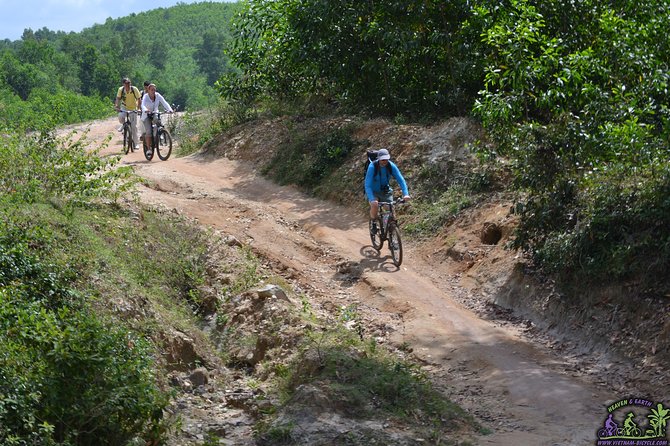
- Small-group ride capped at 8 people, so you’re not stuck waiting on the slowest bike
- 30–50 km of countryside, with an effort level that can match your ability
- Bridges and river-island sections (including a floating bridge) that make the route feel like more than a loop
- A local lunch break, including a banh mi stop at a coffee shop during the halfway break
- Non-technical mountain biking, but the route can be muddy depending on the day
- Guides with strong English and a knack for showing daily life, including local artisans and disappearing jobs
Morning start in Hoi An: why 7:30 matters
This ride begins at 7:30 am at 61 Ngô Quyền, Phường Minh An, Hội An. Starting early helps you beat the worst heat and gives you calmer roads, especially when you’re cutting through rural areas. It also means you’re back at the meeting point by around midday, which is perfect if you still want time for old town strolls and dinner plans later.
Because there’s no hotel pickup/drop-off, you’ll want to plan how you’ll get there. It’s near public transportation, so you should be able to reach it without too much hassle. If you’re doing it as part of a busy schedule, the fixed start time is also a win: you’re not guessing how the day will fall apart.
You can also read our reviews of more tours and experiences in Hoi An.



What you’ll actually ride: rice fields, villages, and river islands
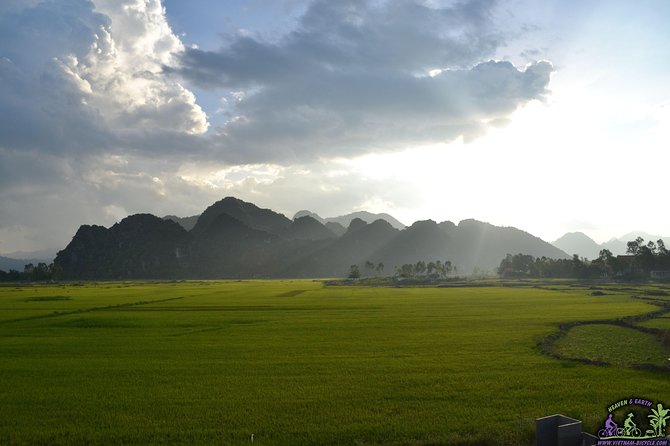
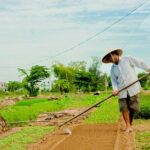
The heart of the experience is the route itself. You’ll pedal through rice paddies, quiet villages, and country roads that feel like they belong to daily life, not sightseeing. The distance target is roughly 30–50 km (and one common figure you may see around 45 km), which is a good length for people who want a workout but don’t want an all-day grind.
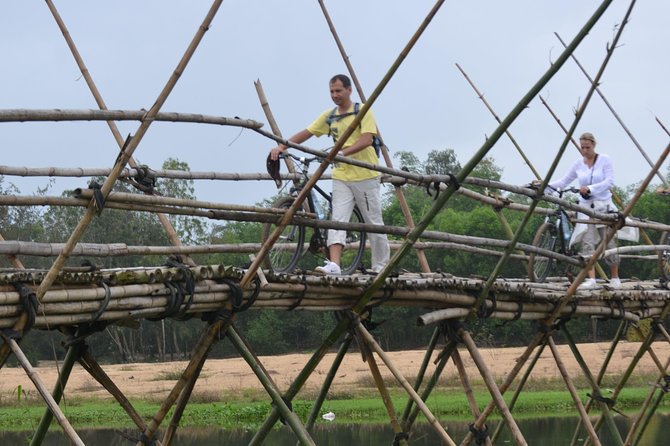
A big draw is the river and island section. The route includes getting onto river islands and crossing a bamboo bridge and a floating bridge. Even if you’ve ridden before, bridges change the feeling of the day because you slow down, balance, and pay attention to what’s around you. That’s also when the countryside turns from scenery into an experience.
You also might get short water-based segments depending on the exact island approach. One rider noted a brief boat time at the start of an island portion, which lines up with the idea that the river delta is part of the plan, not just a backdrop. Either way, the goal stays the same: mix pedal power with glimpses of local life along the river.
The pre-ride moment at Heaven and Earth Bicycle Tours
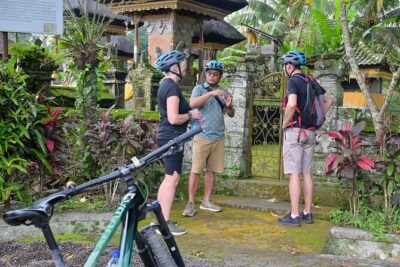
Your day begins at Heaven and Earth Bicycle Tours. You’ll start by checking in and getting set up with your ride. Included in the price are a bicycle and a helmet, plus bottled water and snacks, so you’re not scrambling for basic gear before you hit the road.
This part of the day is also where you should get clarity on pace and terrain. The ride is described as suitable for all ages and abilities, but you still want to listen for the guide’s advice on riding over mixed surfaces and crossing bridges carefully. If you’re traveling with family, this is when you’ll see how they handle different comfort levels in the group.
Small detail, big payoff: because the group is capped at 8 people, you’re less likely to get lost in a slow shuffle. You can usually follow the guide’s rhythm without feeling like you’re playing catch-up for the entire route.
Stop for lunch and banh mi: fueling the middle of the ride
Some tours in Vietnam are great, but you’re hungry by the time you finish. This one builds in a break that matches the effort. You’ll take a halfway break that includes a banh mi stop at a local coffee shop.
The broader plan is a picnic-style lunch along the way. Even if the exact setup varies, you should count on a real food stop rather than a quick snack and go. For cycling days, this matters because it keeps energy stable for the second half, especially if the terrain gets a bit more challenging (or muddy).
Practical tip: you’ll be in the sun for hours, and you’ll likely be sweaty. Pack sensible expectations. Go for water and salty foods, and don’t rely on coffee or juice alone to keep you going.
Mud, dirt, and concrete: what the MTB portion feels like
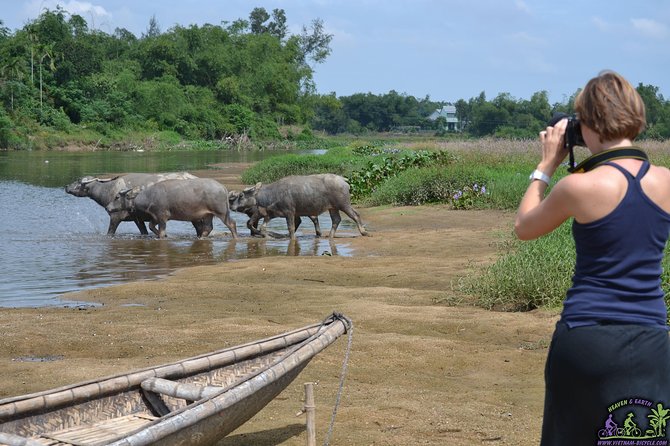
This is a mountain bike style ride, but it’s not about technical skills. The route is described as easy and fun, with no technical demands. What you need instead is basic comfort with mixed surfaces and the willingness to ride slowly when conditions are messy.
A key note: the trail is a mix of dirt and concrete, and it can get very muddy. That means traction matters. If you’re the kind of rider who wants perfectly smooth pavement the entire time, you might find the route a little more hands-on than expected. If you’re okay adjusting your pace and keeping your eyes on the ground, it’s a non-issue.
Also, expect some bridge crossings that can feel rickety. That’s part of the charm, but it’s also why the tour is recommended for people in good physical condition. You don’t need to be a racer, but you should be able to handle steady effort for hours.

Guides who turn cycling into culture: Tram, Tuyen, and Pascal
The guides are a major reason this ride earns a near-perfect score. Different guides appear across the experience, including Tram, Tuyen, and Pascal, and the common theme is how well they explain what you’re seeing.
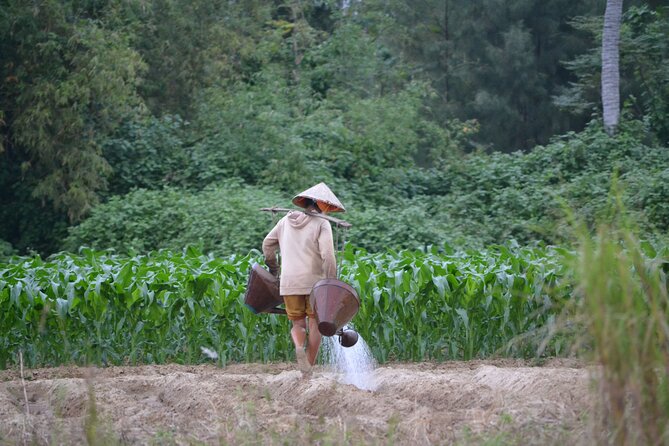
You’ll learn about daily life and local work while you ride. That can include everything from how people live around the villages to what certain professions look like now and why some may disappear as life changes. One of the standout elements for many people is that the guides don’t just point and wave. They connect the countryside you’re pedaling through with the human stories happening there.
Language also matters. Many riders highlight strong English, which makes the ride feel smoother and more meaningful, especially for families or mixed-age groups. If you’re traveling with kids, a guide who can explain in a friendly way turns a bike ride into a day the whole family remembers.
How flexible the route really is
The route is set up to be flexible based on ability. That doesn’t mean chaos; it means the guide can adjust the way you ride through the countryside and manage pacing. You’re not locked into one unchangeable pace where the fast riders suffer or the slower riders feel left behind.
This flexibility is one of the reasons the tour works for mixed groups. Riders have done it with age ranges stretching from 6 up to 75, which tells you the tour structure can handle different comfort levels. It’s also why experienced cyclists still find value: off-road sections can be enjoyable, not just a token dirt path.
The best approach for you: match your effort to your comfort, not your fitness ego. If you push too hard early, the muddy stretches and bridges will feel more annoying than exciting.
Who should book this Hoi An mountain bike ride
This tour fits best if you want a countryside day that feels real, not staged.
- Families: The combination of relaxed riding and cultural stops makes it easier for kids and adults to stay engaged. A group of mixed ages is specifically part of the success story here.
- Non-cyclists who still want an active day: Many people appreciate that it’s not technical. If you can ride a bike at a steady pace, you’ll likely enjoy the slower, scenic sections.
- Active travelers who also want meaning: If you ride regularly and like off-road variety, the countryside segments and dirt sections can add fun without becoming a skills test.
If you have a serious injury or you can’t comfortably ride for hours, you should think twice. The description repeatedly points to moderate physical fitness and good condition being important.
Price and value: is $55 worth it?
At $55 per person for about 5 hours, this is positioned as good-value active sightseeing. Here’s what your money supports.
You get:
- Professional guide
- Bicycle and helmet hire
- Bottled water and snacks
- A route that includes rice fields, villages, bridges, and river/island access
- A lunch break and a banh mi stop during the halfway period
You don’t get:
- Hotel pickup/drop-off
- Insurance (you’ll want your own travel coverage)
The value comes from the blend of effort + access. You’re not just seeing countryside from a bus window. You’re moving through it, which changes what you notice: how people work, how the villages are arranged, and how the river delta shapes daily life. For many people, that authenticity is the real souvenir.
What to bring (so you don’t regret it)
The tour is simple, but you’ll ride in real conditions. Bring:
- Sunscreen
- A hat
- Sunglasses
Because the path can be muddy, closed-toe shoes with decent grip are smart. Also expect to get a bit dusty or dirty, especially after dirt and bridge crossings.
One more practical note: use the day as a cycling day. Don’t plan a long, sweaty outfit change right before you meet. If you’re doing this as part of a longer Hoi An itinerary, choose a day when you can relax afterward.
Should you book Mountain Bike Riding from Hoi An?
You should book this ride if you want a small-group, non-technical mountain biking experience that feels local—rice paddies, village life, and river islands—not just a generic sightseeing route. The guides’ ability to explain daily life in clear English is a huge plus, and the route structure works for mixed-age groups.
Skip it if you hate uneven surfaces, get nervous over bridges, or you’re hoping for perfectly clean, smooth roads the entire time. Mud happens, and while the ride is designed to be manageable, it’s still a real countryside circuit.
If you like your travel days active but not stressful, this is a strong fit.
FAQ
How long is the mountain bike ride from Hoi An?
It runs for about 5 hours.
What distance will I cycle?
You’ll cover around 30 to 50 km. One listed distance is 45 km.
Where do I meet, and does the tour return to the same place?
You meet at 61 Ngô Quyền, Phường Minh An, Hội An and the tour ends back at the same meeting point.
What’s included in the price?
The price includes a professional guide, bicycle and helmet hire, plus bottled water and snacks. The route also includes a lunch stop and a halfway banh mi stop.
Is the ride technical?
It’s described as easy and fun with nothing technical—more about steady effort than bike skills.
How many people are in each group?
The group size is capped at 8 people.
What should I bring with me?
Bring sunscreen, a hat, and sunglasses. The tour notes that the path can be muddy due to a mix of dirt and concrete.