REVIEW · HOI AN
Tra Que Village Cycling And Farming
Book on Viator →Operated by Hoi An Food Tour - Private Day Tours · Bookable on Viator
A quiet countryside ride beats another day of scooters. This Tra Que Village Cycling And Farming tour takes you about 15 minutes from Hoi An’s Old Quarter into real farm life, with a local guide like Kim pointing out rice fields, water buffalo, and the village’s organic growing methods. I like that the day is family-friendly, structured, and practical—plus you get a light pho lunch without hunting for food afterward.
What I really like is the hands-on farming part. You join gardeners with activities that can include preparing the land, working in the veggie areas, and picking produce, and you also learn to make traditional rice paper using local techniques.
One thing to consider: this is outdoors and the ride is in open countryside. If you burn easily, plan for strong sun, and bring the right footwear because you’ll spend time on uneven ground around the fields.
In This Review
- Key things that make Tra Que special
- Why Tra Que Cycling feels like the right kind of break from Hoi An
- Getting started at 119 Tran Quang Khai (and keeping the morning simple)
- The ride out: rice fields, rivers, and a mostly stress-free pace
- Tra Que’s organic veggies: seaweed fertilizer and hands-on farm work
- Making traditional rice paper (the skill that turns the tour into a story)
- Lunch with pho: light, included, and timed after the farm work
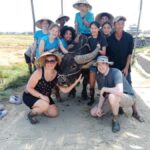
- Guides make or break it: Kim, Emma, and Tintin’s different styles
- Price and value: why $25 feels fair for what you get
- What to bring: sun care, camera-ready stops, and footwear that works on farms
- Who should book Tra Que village cycling and farming
- Should you book this tour or skip it?
- FAQ
- How long is the Tra Que Village Cycling And Farming tour?
- What time does the tour start?
- Where do I meet the group?
- What’s included in the $25 price?
- Is pickup available?
- How big is the group?
Key things that make Tra Que special
- Easy countryside cycling: a short ride from Hoi An with scenic rice fields and glassy water views
- Organic farming with seaweed fertilizer: Tra Que’s veggies are grown using seaweed instead of chemical fertilizers
- Rice paper making: a hands-on skill that connects the food to the farm
- Real garden work: you can help with practical tasks, from land prep to harvesting
- Small-group feel (max 15): less crowding, more time to ask questions
- Lunch included: light pho served after your farm activities
Why Tra Que Cycling feels like the right kind of break from Hoi An
Hoi An is charming, but it can also feel nonstop. This tour is a clean escape: you leave the busy center and roll into the green patch called Tra Que vegetable village. The best part is that it’s not staged like a theme park. You’re looking at working farmland, seeing how people actually grow food, and meeting them in the middle of their day.
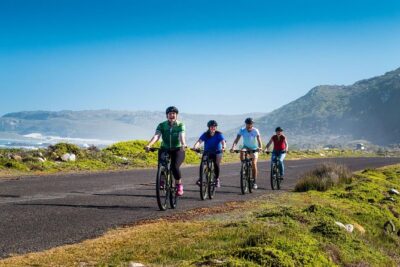
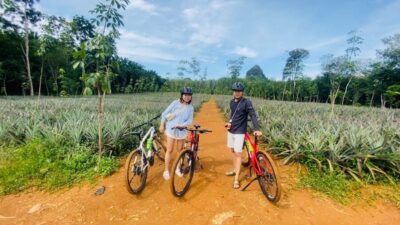
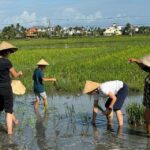
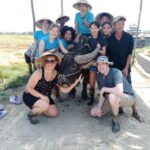
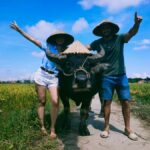
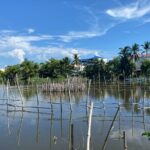
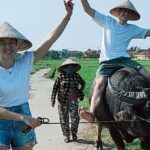
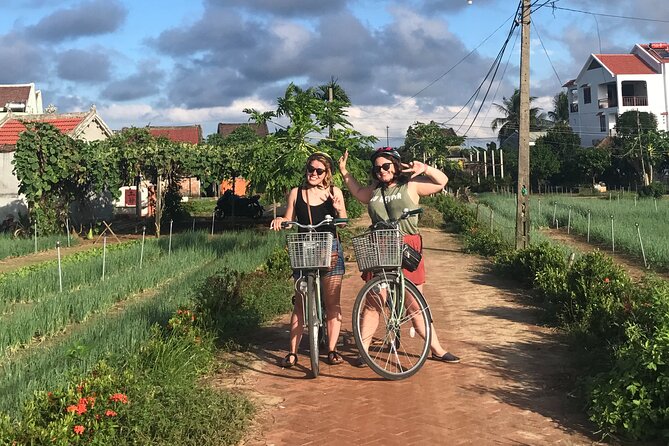
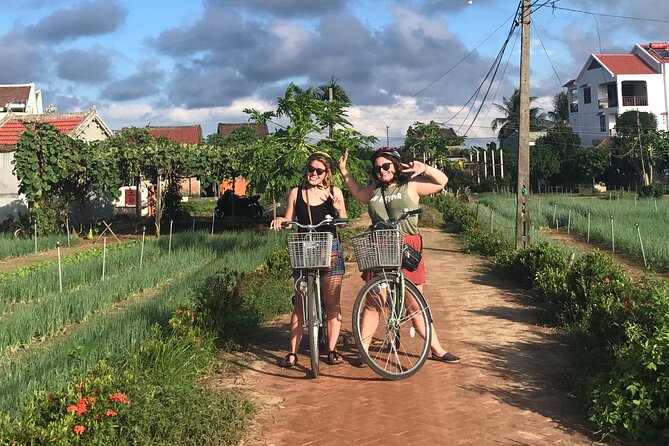
You’ll ride through scenery that’s easy on the eyes and good for photos: rice fields, slow rivers, and water buffalo lounging in the mud when the weather is hot. It helps that the ride is described as easy and mostly flat, so you’re not fighting your bike the whole time.
And then there’s the food connection. You don’t just eat Vietnamese dishes; you learn how an ingredient becomes something you recognize on your plate. Rice paper is the big one, and it ties the farm work to what you’ll taste later.
You can also read our reviews of more tours and experiences in Hoi An.



Getting started at 119 Tran Quang Khai (and keeping the morning simple)
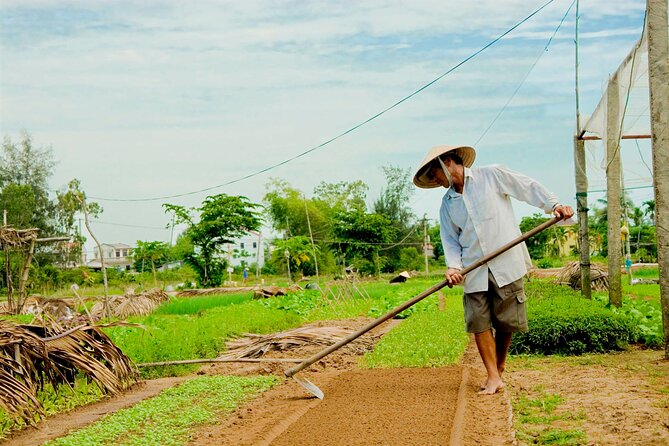
The meeting point is at 119 Tran Quang Khai in Hoi An. The tour typically starts at 8:30 am, which is smart. You avoid the worst heat and you’re more likely to get calm roads for cycling.
What makes the logistics easy is what’s included. You get a bicycle and helmets on required, plus water for the ride. There’s also an English-speaking local guide, and the tour is capped at 15 travelers, so it doesn’t feel like a cattle call.
If you’re staying near the Old Quarter, the timing matters: you’re about 15 minutes cycling to the village area. That means you get the farm experience without losing half your day in transit. And if you’re tired after a night out or you just don’t feel like navigating, pickup is offered.
The ride out: rice fields, rivers, and a mostly stress-free pace
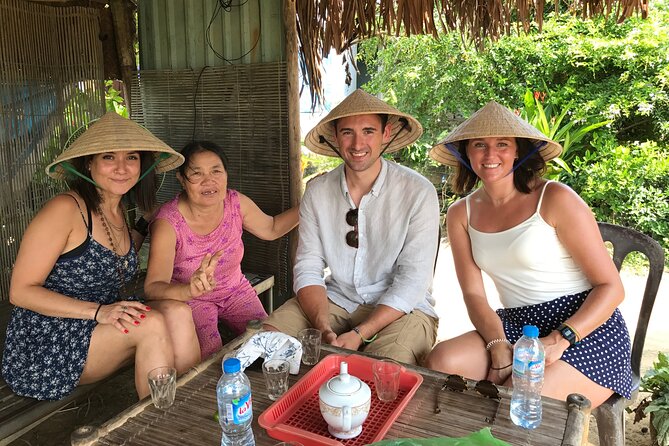
This is the part you’ll remember even if you’re not a cyclist. The route is a short trip from Hoi An into the countryside, and it’s set up as an easy bike outing rather than a workout. The descriptions point to flat terrain and a scenic path, which is exactly what you want on a family tour.
As you go, you’ll pass rice fields and likely spot water buffalo and the canals or waterways around the village. One guide’s style really matters here: local guides tend to slow down when something’s worth noticing, so you don’t miss the small details. In past experiences with this kind of route, guides like Kim are praised for safety and clear navigation, especially if your cycling confidence isn’t high.
There’s also a practical side to an easy pace. You can actually look around and talk to your guide. That’s the whole point: you’re traveling through the farming area, not just passing it in silence.
Tra Que’s organic veggies: seaweed fertilizer and hands-on farm work
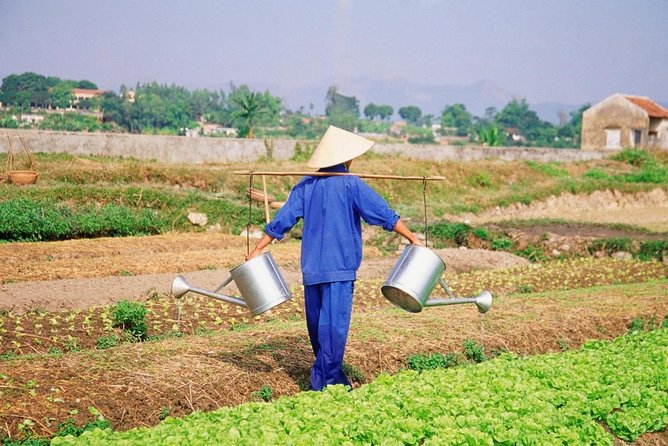
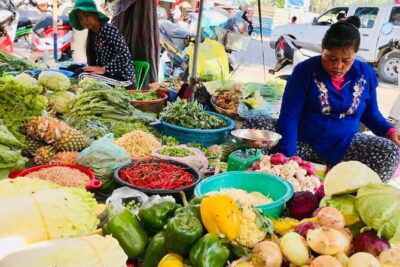
Tra Que is known for its organic approach, and the signature detail is how the farmers fertilize. Instead of chemical fertilizers, the village uses seaweed to feed the herbs and vegetables. That’s a big deal for two reasons.
First, it gives you a simple story behind what you’re seeing. When you hear seaweed fertilization, it stops being a generic “farm tour” and turns into something you can connect to food. Second, it makes the whole farm visit feel more intentional. You’re not just walking through green scenery; you’re learning how the green gets there.
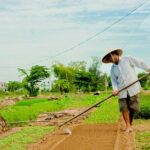
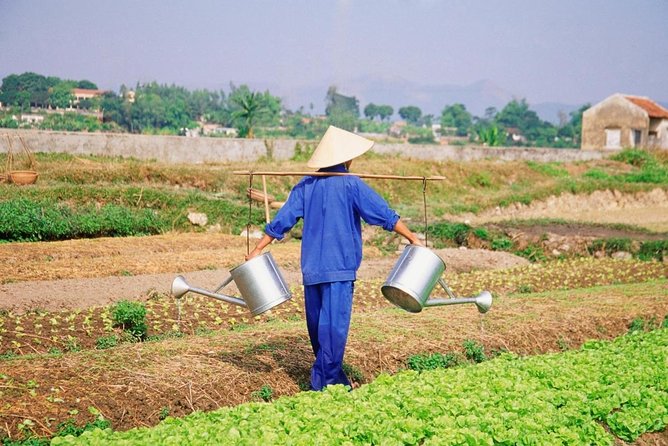
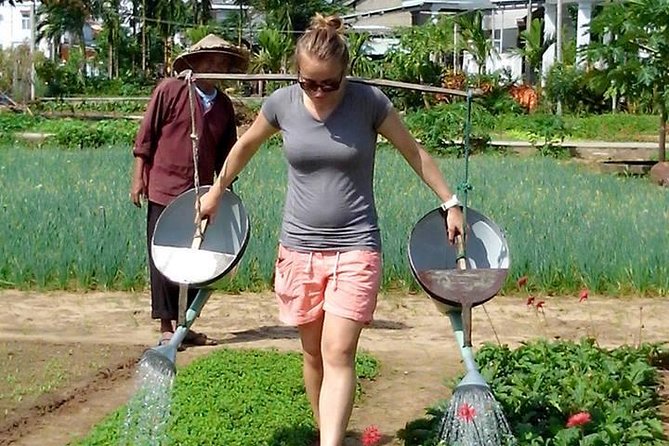
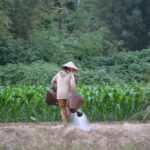
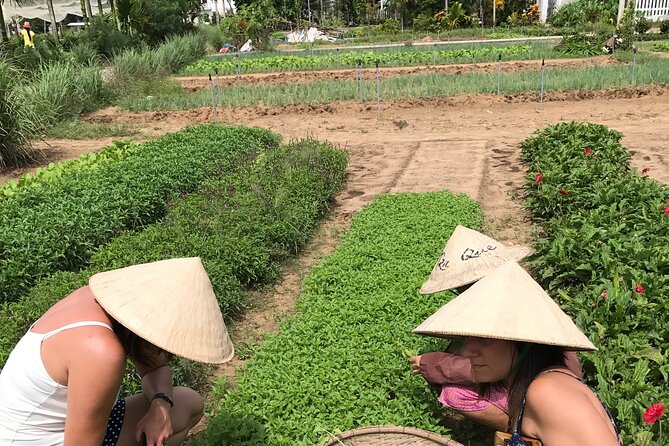
Your time in the village includes gardening activities. Depending on how the group is doing things that day, you may help with tasks like preparing the land and joining harvesting or picking activities. It’s the kind of work that’s participatory but not overly technical, which is ideal for families and mixed skill levels.
You’ll also interact with local people while you’re working and moving around the farm spaces. That interaction is where the tour earns its authenticity. People talk about what they’re growing, how they care for it, and what their routines look like. If you enjoy real daily life over scripted performances, this is the part you’ll appreciate most.
Making traditional rice paper (the skill that turns the tour into a story)
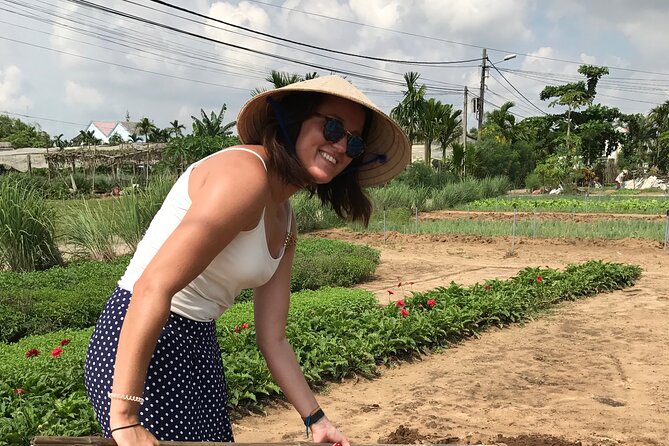
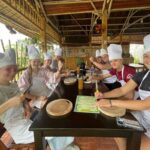
If you only remember one activity, make it this: learning to make traditional rice paper. This isn’t presented as a quick photo-op step. It’s framed as a hands-on local food tradition, connected to the crops in Tra Que.
Rice paper is one of those foods you usually treat as a given. Here, you see it as work: ingredients, process, and technique. That makes the eventual pho lunch feel more grounded. You’re eating Vietnamese flavors with a clearer sense of where the main components come from.
One practical tip: come ready to participate. Even if you’re not confident, the work is meant to be friendly and guided. You’re with a local host who can explain what’s happening and help you along. In other experiences with this tour style, guides have been praised for patience with language barriers, including guides like Kim who also speak Japanese and help make communication comfortable.
Lunch with pho: light, included, and timed after the farm work
After the farming activities, you’ll get a light lunch with pho (beef noodle soup). It’s included, so you don’t need to figure out where to eat in the middle of the day. And timing is the key: you’ll be ready for food after cycling and hands-on work.
One thing to know is that it’s described as a light lunch. That’s great if you like to keep traveling after, but if you usually need a heavy meal to feel satisfied, you might plan for a later snack in Hoi An.
There can also be extra food moments depending on the guide and the route. In some runs with guides like Kim, you might be brought to try a specialty pho-style experience and even a street dessert. Since that’s not listed as a guarantee, just treat it as a possible bonus if your guide suggests it.
Either way, the included lunch is a real value add. It keeps the tour feeling like a complete morning plan instead of a half-day activity followed by a food scavenger hunt.
Guides make or break it: Kim, Emma, and Tintin’s different styles
Small tours live or die by the guide. With this one, the guide names you’ll hear in the experience are a strong sign of quality: Kim, Emma, and Tin Tin show up repeatedly in feedback.
Kim is often described as bubbly, with excellent English and the kind of patience that helps even when your cycling comfort is not perfect. Emma gets praise for clear English and for making learning feel easy, while Tin Tin is highlighted for being energetic and fun—especially with kids.
So what does that mean for you? It means you can expect more than directions. A good guide keeps the pace right, explains what you’re seeing, and helps translate the farm story into something you can understand. And when the group is small, you’re more likely to get real answers to your questions instead of generic facts shouted over a crowd.
Price and value: why $25 feels fair for what you get
The price is $25 per person. On paper, it looks simple. But look at the inclusions and you’ll see why it’s good value.
You get:
- a bicycle and helmet
- an English-speaking local guide
- activities in the village
- water
- light pho lunch
- entrance fees included
- photo opportunities
That’s a full package. Many tours in Hoi An charge separately for bikes, entry fees, and meals, and it adds up fast. Here, the structure is set so you pay once and show up.
Also, the group size limit of 15 matters. It’s not just a number on a page. Smaller groups generally mean more comfort on the ride, easier conversation with your guide, and less waiting during the hands-on parts like rice paper making.
One small value tip: this tour is booked on average 71 days in advance, which suggests it’s popular. If you’re traveling in a busier stretch, it’s smart to lock it in early rather than gambling on availability.
What to bring: sun care, camera-ready stops, and footwear that works on farms
Even though the ride is described as easy, you’ll be outside and moving around farm areas. The tour info specifically suggests bringing sun protection such as creams and lotions, and it also recommends items like sunglasses and a hat or cap.
Footwear matters more than you’d think. Flip-flops, thongs, and sandals are mentioned as acceptable options, but farm ground can be uneven. If you want to reduce slip risk, consider shoes with grip if your style of footwear allows it. The goal is simple: keep your feet comfortable for a few hours outdoors.
Bring a fully charged camera if you care about photos. The experience is designed for plenty of picture moments: rice fields, buffalo in the mud, canals, the village setting, and the rice paper process.
And if you tend to get thirsty, good news: water is included, so you can focus on the experience instead of hunting for a drink.
Who should book Tra Que village cycling and farming
This tour fits best if you want an authentic rural morning near Hoi An without committing to an all-day trek. It’s also a strong match for families. The activity level is approachable, and it’s explicitly positioned as family friendly.
You’ll also enjoy it if you like hands-on travel. The mix of cycling, working in the fields, and making rice paper gives you variety. You’re not just watching from the sidelines.
If you’re short on time but still want something different from beach and shopping, this works nicely. It’s about 3 hours 30 minutes total, starting at 8:30 am, so you still have plenty of day left for Hoi An.
Should you book this tour or skip it?
Book it if you want a real farm experience that’s easy to join, guided by locals, and designed around local food. The organic seaweed-fertilized approach, the rice paper making, and the included pho lunch are the standout combination that makes the tour feel worth the money.
Skip it only if you strongly dislike outdoor activities in bright sun or if you need a very heavy lunch as part of your plan. The ride is meant to be comfortable, but this is still a countryside morning.
If you want a calm, green counterpoint to Hoi An, I think this is a smart bet.
FAQ
How long is the Tra Que Village Cycling And Farming tour?
It runs for about 3 hours 30 minutes (approx.), with the main village experience around two hours.
What time does the tour start?
The start time is 8:30 am.
Where do I meet the group?
You meet at the office at 119 Tran Quang Khai, Hoi An.
What’s included in the $25 price?
The tour includes a bicycle, helmets (if required), an English-speaking guide, activities, water, a light pho lunch, and entrance fees.
Is pickup available?
Yes, pickup is offered.
How big is the group?
The maximum group size is 15 travelers.