REVIEW · CHIANG MAI
Cycling tour and Buatong waterfall
Book on Viator →Operated by ActiveThailand · Bookable on Viator
One-day biking in northern Thailand sounds simple. It’s not. You pedal through Mae Taeng Valley scenery, then pair temples and waterfall time with a guide’s on-the-road explanations.
I love the real-rural rhythm of the day: small farms, rice fields, forest edges, and village lanes you can actually see at bike speed. I also like that the guide work matters, with English-speaking commentary that turns the route into a story about northern Thai ecology and daily life.
The main drawback is also the obvious one: this is an active day. You should be reasonably fit with prior cycling comfort, because the mix of paved roads and dirt tracks runs for about 7 to 8 hours.
In This Review
- Key things that make this bike day worth your time
- Price and logistics: what $81 buys you in Chiang Mai
- What riding feels like: pace, road types, and fitness reality
- Mae Taeng Valley by bike: the rural Chiang Mai side most people miss
- Wat Ban Den: a big temple stop that feels like more than photos
- Mae Ngat Dam and the Sri Lanna National Park edge: scenery with a purpose
- Bua Thong Waterfalls (Nam Phu Chet Si): splash time plus a real trail choice
- Lunch, snacks, and the guide factor (Tri / Three)
- Practical tips for your day: how to set yourself up for an easy win
- Who this Chiang Mai cycling day fits best
- Should you book this Mae Taeng cycling + Bua Thong waterfalls tour?
Key things that make this bike day worth your time
- Mae Taeng Valley first, then temples and water: your day is built like a route, not random stops
- Small group size (max 12 people): more attention from the guide when questions pop up
- Wat Ban Den as the temple anchor: you’re going to one of the big regional Buddhist temples, not a tiny photo stop
- Mae Ngat Dam and Sri Lanna National Park edges: breathing space between culture and the main waterfall
- Bua Thong Waterfalls includes time to splash or hike: you choose your energy level on-site
- English-speaking guide who gets people talking: names like Tri and Three come up in feedback for being responsive and upbeat
Price and logistics: what $81 buys you in Chiang Mai
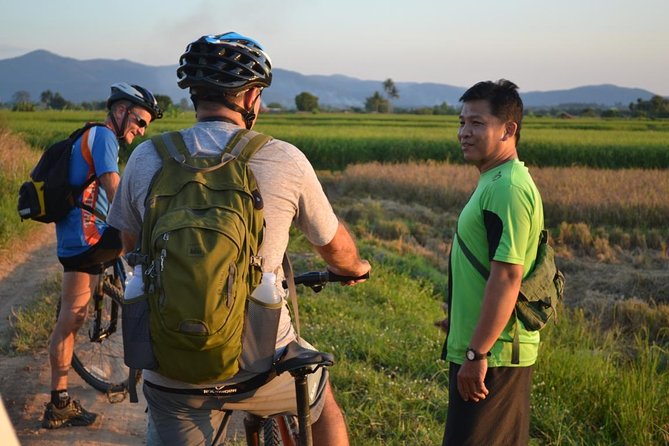
At about $81 for a 7–8 hour day, the value comes from how much is bundled. You get hotel pickup and drop-off, round-trip transport into the Mae Taeng area (about 50 km / 30 miles), an English-speaking guide, and a built-in lunch stop with snacks and water.
Also, timing and ticket handling are low-stress. The tour uses a mobile ticket, so you’re not hunting for paper. And since group discounts are offered, it can make even more sense if you’re traveling with friends or a small group that wants the same plan.
One practical note: this is a group ride, so the schedule moves as the group moves. Routes can vary by season, and your guide adjusts to keep things scenic and safe. That’s a plus, but it means you shouldn’t treat the day like a set-in-stone checklist.
You can also read our reviews of more tours and experiences in Chiang Mai.

What riding feels like: pace, road types, and fitness reality
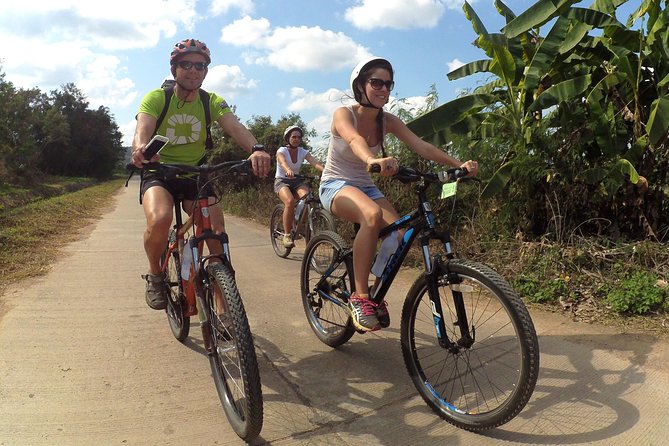
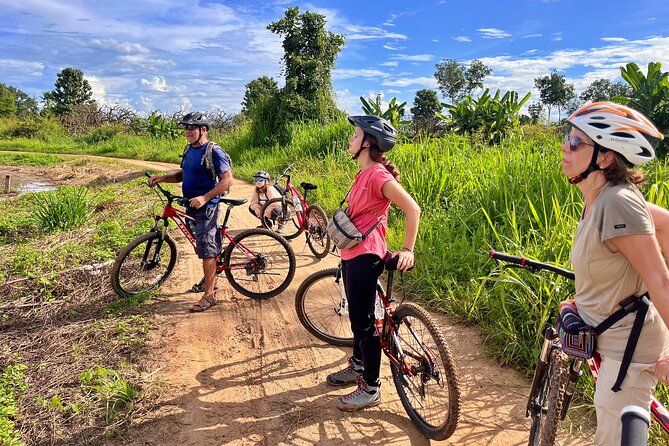
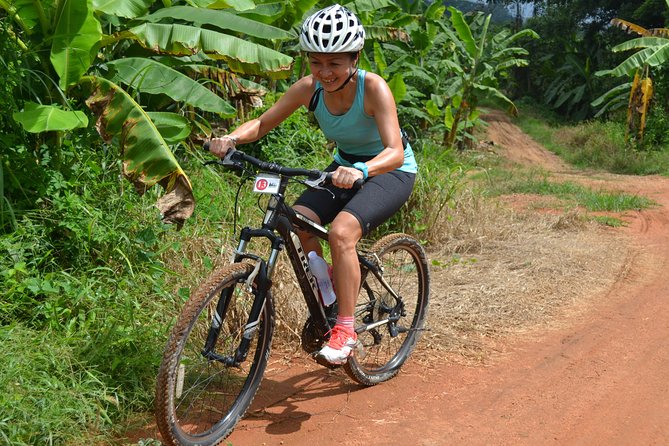
This tour is best for people who are comfortable cycling already. The guidance is clear: you should be reasonably fit and have some previous cycling experience. The ride covers both paved roads and dirt tracks, and you’ll be working through a rural mix of surfaces, not just smooth city roads.
The good news is that you’re not trying to set a personal speed record. The day is structured around stops—Wat Ban Den, the dam area, and then Bua Thong—so you get breaks built into the route. Still, you should expect the day to add up physically. If your idea of a vacation bike ride is 30 minutes and a gelato, this probably won’t be your best match.
If you’re on the fence, I’d plan for the more active option: saddle time plus a waterfall-side nature trail.
Mae Taeng Valley by bike: the rural Chiang Mai side most people miss
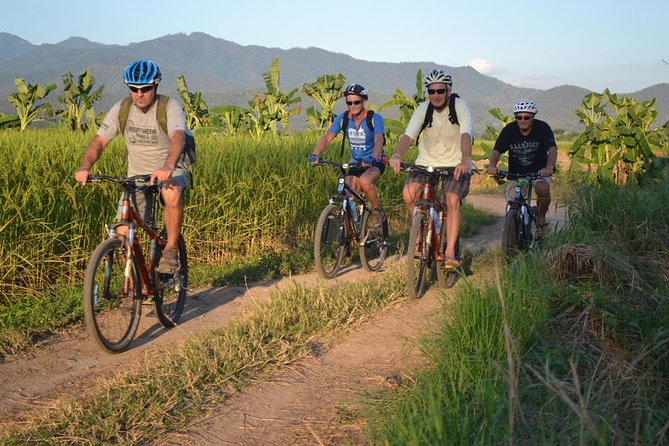
The day starts with a drive from Chiang Mai toward Mae Taeng district—about 50 km. Once you’re there, you switch from car sightseeing to slow-motion local-life observation.
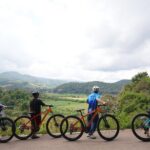
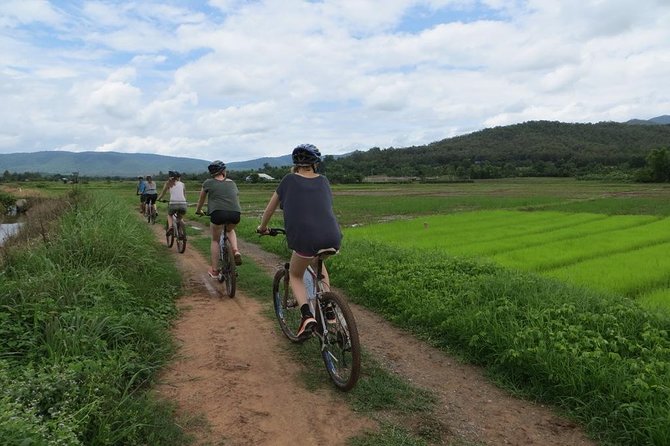
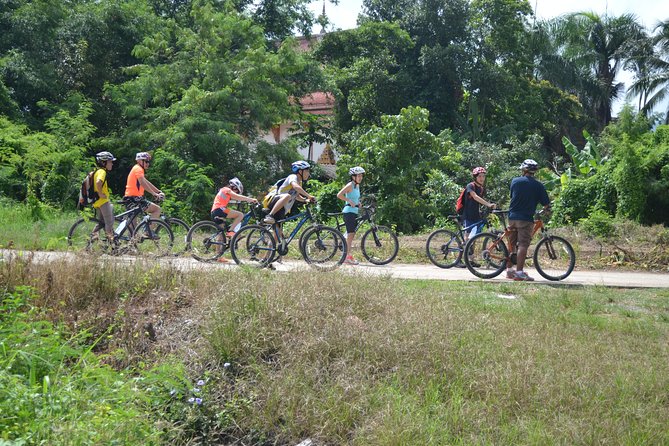
This is where the tour earns its keep. You ride along roads and paths that thread through:
- small farms and rice fields
- village areas and forest edges
- areas near parks and natural features
At bike speed, you notice details you’d never catch from a bus window: how villages are arranged, how people use land, and how the ecology shows up in day-to-day life. The guide’s commentary on northern Thailand’s ecology and traditions is meant to connect what you’re seeing to the bigger picture.
The downside? That same “real rural” feel means some parts may be bumpy or uneven, especially on dirt tracks. It’s not a technical mountain-bike course, but it isn’t a flat cruise either.
Wat Ban Den: a big temple stop that feels like more than photos
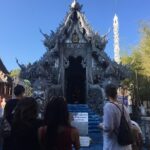
After your first stretch of riding, you cycle to Wat Ban Den. This is described as the largest Buddhist temple in the region, so it’s not the kind of quick pass-through where you only have time for a snapshot.
Plan for a short time on-site—about 30 minutes—which means you’ll want to focus. Look at the temple details, take in the setting, and use the guide. The best value here is asking questions while you’re there, because the guide can tie what you see back to northern Thai traditions.
A good consideration: because the stop is time-limited, it’s less ideal if you want long wandering time inside every nook. If you want a deep temple day, this is the “great highlight,” not a full religious slow tour.
Mae Ngat Dam and the Sri Lanna National Park edge: scenery with a purpose
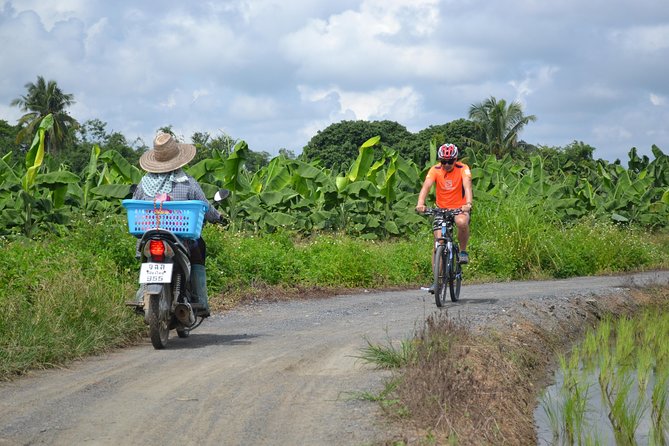
Between major stops, you ride through two more nature-linked areas:
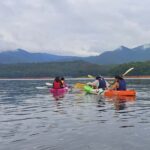
- the Mae Ngat Dam water reservoir route
- the edge area of Sri Lanna National Park
These sections work like a palate cleanser. One part is water-focused, the other is nature-park adjacent. You’re not just stretching your legs—you’re shifting from culture to ecology and back again.
The practical benefit for you: these stretches can break up the ride mentally. You get the chance to reset, regroup, and enjoy the scenery without feeling like you’re constantly in “stop-and-go sightseeing mode.”
Because routes can change by season, the exact feel of these segments may vary. But the intent is consistent: keep you outside, moving, and learning while you ride.
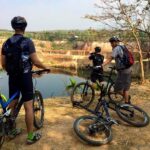

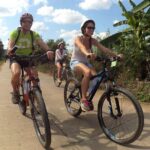
Bua Thong Waterfalls (Nam Phu Chet Si): splash time plus a real trail choice
The final highlight is Bua Thong Waterfalls—also known as Nam Phu Chet Si. You get about 1 hour on-site, and that hour gives you options.
You can:
- explore the waterfall area
- hike down a nature trail on your own
- splash and relax
If you want more adventure, the site includes areas where people climb on sticky limestone surfaces. That’s fun if you’re comfortable moving carefully, but it also means you should take the surface seriously. It can be easy to underestimate how slippery or grippy it feels underfoot.
Practical takeaway: wear shoes you’re comfortable getting damp. Bring a small towel if you have one. And if you don’t want to climb, you’re still able to enjoy the falls without going full fearless mode.
Lunch, snacks, and the guide factor (Tri / Three)
This tour includes a restaurant lunch set of Thai delicacies, with a vegetarian option available. You’ll also have water and snacks provided, which matters on a day that blends cycling with heat and humidity.
Now for the part that often makes or breaks a day like this: the guide. The best feedback points to guides who actively listen and answer individual questions—not just recite facts. One guide was mentioned as Three, and another mention points to Mr Tri, which suggests you may meet someone in that guiding style who keeps the ride lively and personal.
What you’ll actually feel on the ground:
- You’re not stuck with one-way lectures
- The ecology and history talk connects to what you see outside
- The group can ask questions without it feeling awkward
That’s the difference between a bike ride with stops and a bike ride that teaches you something you’ll remember later.
Practical tips for your day: how to set yourself up for an easy win
Here’s how I’d prep if you’re aiming to enjoy every stop instead of rushing through it:
- Plan for a long riding day: 7–8 hours is the reality, even with stops.
- Bring a simple rain plan: the waterfall stop will get you damp anyway, but rain can change road conditions on dirt tracks.
- Wear grippy footwear: the waterfall area involves a nature trail and surfaces that are described as sticky limestone.
- Use the guide’s knowledge: if you have questions about village life, temples, or northern Thailand’s ecology, ask while you’re riding.
- Bring a bit of flexibility: routes can vary by season and timing can shift with traffic.
One small “don’t forget” detail: tips/gratuities are optional, not included. If you do tip, do it based on how the guide and group supported you during the day.
Who this Chiang Mai cycling day fits best
This tour is a strong match if you:
- want active sightseeing instead of a bus tour
- like rural Thailand—rice fields, small farms, and village life
- feel comfortable on a bike for most of the day
- want a guide who talks in a way that connects places to context
It also tends to work well for groups who want one clear plan that includes transport, lunch, and the big highlights: Wat Ban Den and Bua Thong.
It’s probably not your best pick if you:
- want a short, gentle ride
- hate dirt tracks or uneven ground
- are looking for lots of free time at temples or the waterfall
Should you book this Mae Taeng cycling + Bua Thong waterfalls tour?
Yes—if you’re comfortable with a moderate, whole-day effort and you’d rather learn through motion than through screens. The mix is smart: rural roads first, a meaningful temple stop, a nature break near the dam and national park edge, then a waterfall finale where you can choose how adventurous to get.
Book it with confidence if you value a good guide-led day. If you prefer purely relaxed sightseeing or you’re not ready for longer bike time, choose something lighter.