REVIEW · BATTAMBANG
Cultural Cycling Tour – half day (8:00-11:30)
Book on Viator →Operated by First Cycling Tour · Bookable on Viator
Cycling in Battambang can feel like a shortcut to everyday life. This half-day ride pairs local food production with temple and market stops, guided by a Khmer interpreter who helps you understand what you’re seeing. I love that the day isn’t about big sights only, it’s about craft and taste.
Two things I really like: you get to sample the real stuff (think Kralan and roadside snacks) and you do it with an English-speaking guide such as Paov or Sothea. The pacing is also built for comfort: most people can join, and the group stays small, so questions don’t get lost.
One drawback to consider: this is a biking tour, so if you’re not comfortable riding for a few hours in the morning heat or road conditions, you’ll want to plan ahead—your operator says a tuk-tuk can be included if your group can’t bike.
In This Review
- Key things to know before you ride
- Why this Battambang bike-and-food morning works
- Wat Samrong Knong: oldest pagoda vibes plus rice-paper making
- Khmer Prahok Market: watching fermentation up close (and smelling it too)
- Ek Phnom: rice wine, rice paper, and dried banana chips
- The guide makes the difference: translation + real conversations
- Price and value: $16 for more than just sightseeing
- Riding conditions, pacing, and what to bring
- Who should book this cycling tour
- Should you book this half-day tour?
- FAQ
- Do I need to buy tickets for the stops?
- How long is the cycling tour?
- Is pickup available?
- Do I need to bring food or water?
- What should I bring?
- Is the tour affected by weather?
Key things to know before you ride
- Small group (max 10): more time to chat instead of queueing.
- Food stops that actually explain the process: fish fermenting, sticky rice desserts, and workshop production.
- Mix of included tastings and entry fees: water, snacks, and key admission costs are covered.
- Temple visit with context: Wat Samrong Knong connects to Battambang’s darker past.
- If biking doesn’t work for you, a tuk-tuk option exists: ask when you book.
Why this Battambang bike-and-food morning works
Battambang is one of those places where the best stories aren’t always at the loud, postcard-famous spots. This tour is built around the kind of work you normally only notice from the sidewalk: ladies pressing rice paper, families fermenting fish into prahok, and artisans making banana chips and rice wine.
You start early, around 8:00, and you’re back by 11:30. That timing matters. The roads are calmer, you’re not roasting by noon, and you still get a relaxed day afterward to explore on your own. The tour is also priced at $16 for about four hours, which is strong value when you factor in a bicycle, a local guide, bottled water, snack tastings, and included entry fees at some stops.
The guiding style is what makes it feel authentic rather than like a checklist. You don’t just get dropped at places—you get translation and explanation as you go, including names, how-to details, and the role these foods play in daily life.
You can also read our reviews of more tours and experiences in Battambang.
Wat Samrong Knong: oldest pagoda vibes plus rice-paper making
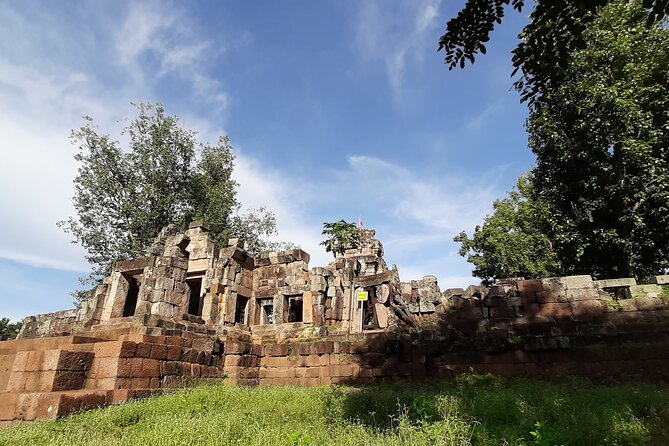
Your first stop is Wat Samrong Knong, described as the oldest pagoda in Battambang. It’s also tied to the Killing Fields, so the visit carries weight. Even if you don’t want a heavy lesson, the guide’s interpretation helps you understand why this place is remembered.
You’ll have about 20 minutes here, and admission is included. This isn’t a long temple sit-down; it’s a quick orientation that sets the tone for the morning: Cambodia isn’t just “culture” as a theme—history is part of the physical landscape.
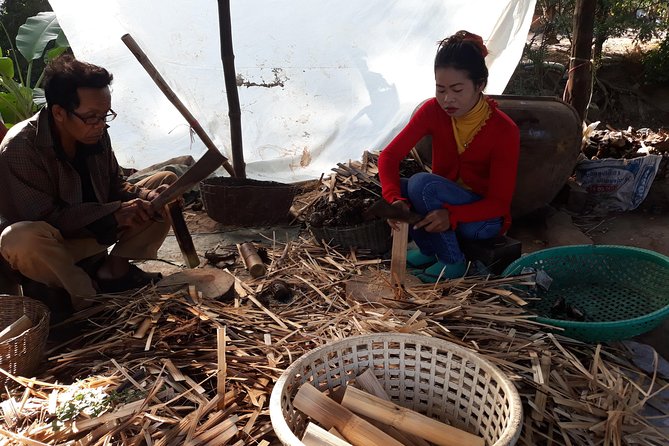
Then the day shifts toward food work in the surrounding area. At Samrong Knong, you’ll see local women—often referred to as Ming (aunts)—making rice paper discs used for wrapping spring rolls. Watching the production is where a food tour becomes more than eating. You can see the steps and the rhythm of the work, and the guide translates what matters: what the texture should look like, what changes during drying, and how these foods fit into meals people actually eat.
If you’re lucky with timing, this is also where you may sample something more special: Kralan, a sticky rice preparation with black bean and coconut milk. The description you’ll get is specific—cooked in a bamboo tube over charcoal with a little salt—so it doesn’t feel like generic “Cambodian snack time.” It feels like learning a technique you can recognize later.
Plan tip: bring a hat or light layer. Even in the morning, temple walks and food stops can mean bright sun and short rests.
Khmer Prahok Market: watching fermentation up close (and smelling it too)
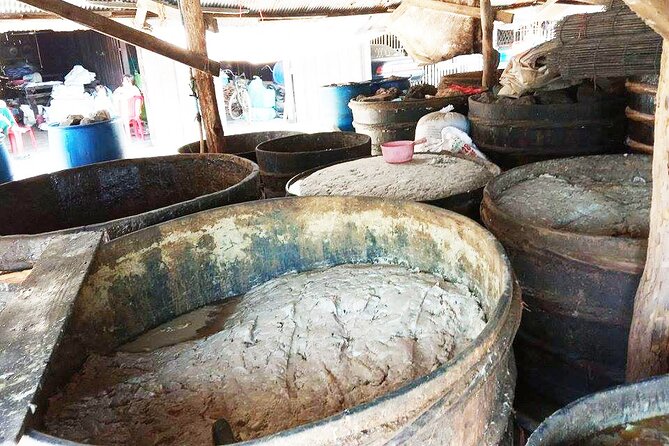
Next comes a stop that sounds quirky until you experience it: Khmer Prahok Market. Prahok is a cornerstone ingredient in Cambodian cooking, and here you can witness the process of fish fermenting in jars. You’ll spend about 20 minutes, and admission there is free.
This kind of stop is valuable because it answers a question you might have later, especially if you eat Cambodian dishes with deep, salty flavor: where does it come from, and why does it taste the way it does?
The reality is simple: fermentation isn’t glamorous, but it’s practical. You’re seeing food turned into shelf-stable flavor—something families can rely on across seasons. The guide helps you connect the jars you see to the meals you’ll recognize on menus later.
One consideration: the scent can be strong. If you’re sensitive to smells, you’ll want to prepare yourself mentally. That said, this is part of the point. If you want to understand local food, you can’t skip the raw, real process.
Ek Phnom: rice wine, rice paper, and dried banana chips
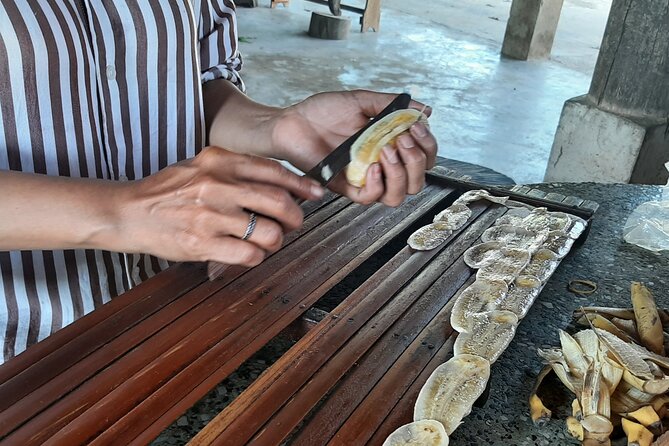
Your final major stop is Ek Phnom, where the focus becomes hands-on production—traditional rice wine, rice paper, and dried banana chips. You’ll spend about one hour here, and admission is included.
This is usually where the tour’s “aha” moments land. Earlier, you saw ingredients and basic production ideas. Here, you get a clearer picture of how multiple snacks come from overlapping skills: drying, fermenting, roasting, slicing, and timing. Even if you don’t remember every step, you’ll start to notice what artisans are watching—color, thickness, and doneness cues.
And yes, there’s tasting. You’ll get snacks made by the artisans you visit, plus bottled water. That combination makes the learning stick. You don’t just hear about textures and flavors; you test them, and your brain files the information away faster.
Ek Phnom also fits the “small group” feel. With a max of 10 travelers, you’re more likely to ask questions instead of listening from the back of a crowd. If you enjoy food, you’ll appreciate being able to compare what you’re seeing to what you’re tasting right then.
Food tip: banana chips are the easy souvenir because they’re shelf-stable. The tour itself doesn’t promise shopping, but you’ll likely recognize what you want when you try the local version.
The guide makes the difference: translation + real conversations
A cycling tour lives or dies by the guide, and this one is guided by a “genuine Khmer guide” who acts as an interpreter. That matters more than you’d think.
When you have translation, you can ask why a product is made a certain way. You can also understand the social side: who does the work, how it fits family routines, and why certain foods show up during specific moments. Guides such as Paov and Sothea are mentioned as standout English speakers with friendly, fun energy and cultural context. Even if your guide isn’t one of those names, you can expect the same goal: help you connect the visuals to meaning.
You’ll also get the chance to talk to artisans directly (through the guide). This is where the day stops being just “watching.” You’re learning how Cambodian food work supports everyday life.
Price and value: $16 for more than just sightseeing
At $16, this is the kind of tour you book when you want a lot of input without a big dent in your budget. What makes it good value isn’t only the low price—it’s what’s included:
- Bicycle use
- Bottled water
- Snack tastings from the artisans you visit
- All fees and taxes
- Admission tickets included for key stops (Wat Samrong Knong and Ek Phnom)
That’s a practical checklist. If you were trying to recreate this day on your own, the cost would creep upward quickly once you add transport, entry fees, and guided help to interpret food processes.
Also, the time window—roughly four hours—is efficient. You get a full morning experience, then you still have the rest of the day to wander Battambang at your own pace.
Riding conditions, pacing, and what to bring
This is described as “more relaxed and easy” for many guests, with a moderate pace. Since everyone’s comfort levels differ, treat that as guidance—not a guarantee.
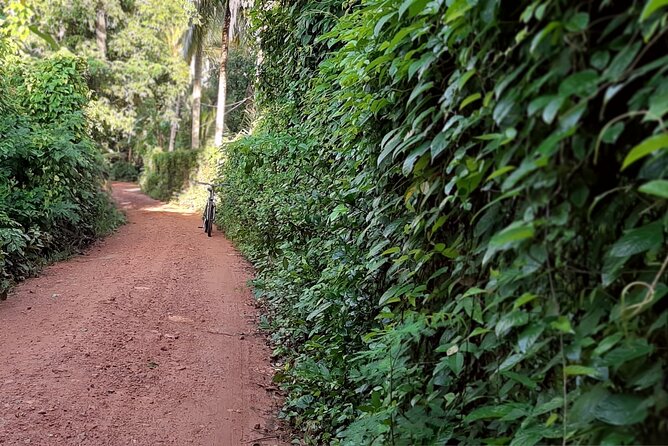
The tour includes cycling, but it also builds in short stops, which helps. You aren’t doing a long, high-intensity ride where you never stop. You’ll pause often enough to look closely at what’s happening, take photos, and listen.
What to bring:
- Sunscreen (explicitly not included, and the morning sun can still hit)
- Sunglasses/hat
- A light layer if you get breezy mornings
- If you plan to snack beyond tastings, bring a little extra money for your own choices (shopping isn’t part of what’s included)
If your group has someone who can’t bike, the operator says a tuk-tuk can be included. That’s a helpful safety valve, but it’s worth asking at booking so the plan matches your needs.
Who should book this cycling tour
This tour is best for you if you:
- Love food experiences that explain how things are made, not only what they taste like
- Want a smaller-group day in Battambang without the big-tour feeling
- Appreciate Khmer history context, including the somber connection at Wat Samrong Knong
- Prefer morning activities that end while the day is still young
It’s not the best fit if you:
- Can’t handle biking at all (even with the option of a tuk-tuk, the experience is still designed around cycling)
- Are extremely sensitive to strong fermentation smells (praho k is a real process)
Should you book this half-day tour?
Yes—if your idea of a great morning is local craft you can see with your own eyes, plus tastings that make the story understandable. The mix of Wat Samrong Knong, Khmer prahok fermentation, and the Ek Phnom workshop area hits the sweet spot between history and everyday food work.
If you’re on a tight schedule, it’s also a smart pick: 8:00 to 11:30 is enough time to feel you learned something, but not so much time that you’re stuck to a plan all day.
If you’re hesitant, your decision can come down to two things: your comfort with biking and your comfort with food-process smells. If those check out, this is an easy “book it” for Battambang.
FAQ
Do I need to buy tickets for the stops?
Admission tickets are included for Wat Samrong Knong and Ek Phnom. Khmer Prahok Market is listed as ticket-free.
How long is the cycling tour?
It runs for about 4 hours and is scheduled from 8:00 to 11:30.
Is pickup available?
Yes, pickup is offered.
Do I need to bring food or water?
No. Bottled water and snack tastings are included. You may want extra snacks if you have specific preferences, but the tour does provide tastings.
What should I bring?
Bring sunscreen and sunglasses if you use them, since these aren’t included. You’ll also want your own items for comfort and any extra shopping you choose to do.
Is the tour affected by weather?
Yes. The experience requires good weather. If it’s canceled due to poor weather, you’ll be offered another date or a full refund.