REVIEW · ROME
Rome: Cycling through Eternity
Book on GetYourGuide →Operated by Romes Ultimate · Bookable on GetYourGuide
Rome on a bike changes your rhythm fast. This Cycle through Eternity route strings together major landmarks and lesser-known green edges in small-group comfort, with a guide named Dimitri making the history click as you pedal. I especially love the mix of big-ticket sites like Circus Maximus and Baths of Caracalla with calmer stretches in the countryside, and I like how the aqueduct park and Via Appia sections feel like you’re seeing the Roman world at its most intact. One possible drawback: you’ll be riding on real paths and occasional bumpy old-road sections, so comfy shoes and basic biking comfort matter.
The best part is how the tour keeps you moving: quick stops for context, then back on the bike to connect the dots. You’re set up with a helmet and bike hire, and the group stays small (up to 10), which helps you feel safe on city streets near the start. Still, it’s not a good fit if you have mobility limitations, are pregnant, or you’re traveling with kids under 10.
In This Review
- Key Highlights Worth Getting Excited About
- Why This Rome Bike Ride Feels Different
- Meeting at Via dei Serpenti and Getting Set Up Fast
- Colosseum Area to Circus Maximus: Quick Context, Then Pedal
- What I like about the pace
- What to consider
- Baths of Caracalla and the Aurelian Walls Story You’ll Actually Remember
- Saint Callixtus and Via Appia Antica: The Ride Through the Queen of Roads
- Why the catacombs section works
- Parco degli Acquedotti: Aqueducts, Open Views, and Engineering at Human Scale
- Caffarella and Torre Fiscale: Where Urban Rome Meets Green Space
- A practical tip
- Via Cristoforo Colombo: A Final Stretch That Shows Rome’s Scale
- Riding Style, Group Size, and Safety (Including the E-Bike Reality)
- Price and Value: What $100 Buys You in 4.5 Hours
- Who This Tour Fits Best
- Should You Book the Cycle Through Eternity Bike Tour?
- FAQ
- FAQ
- How long is the Cycle through Eternity bike tour?
- Where does the tour start and end?
- What does the tour cost?
- What’s included in the price?
- Is there a live guide, and what language do they speak?
- How big is the group?
- Does the tour run in bad weather?
- What should I bring with me?
- Is the tour suitable for everyone?
- What’s the cancellation policy?
Key Highlights Worth Getting Excited About
- Aurelian Walls views plus the Museo delle Mura stop, focused on Rome’s boundary walls and why they mattered
- Via Appia Antica on a bike, including time riding through the Saint Callixtus area and panoramic catacombs territory
- Parco degli Acquedotti aqueduct scenery, where Roman engineering and open-air views meet
- Parks that feel like a break from the city, especially Caffarella and the green edges around the outskirts
- Small-group guidance from Dimitri, with a pace that keeps you together without rushing
Why This Rome Bike Ride Feels Different
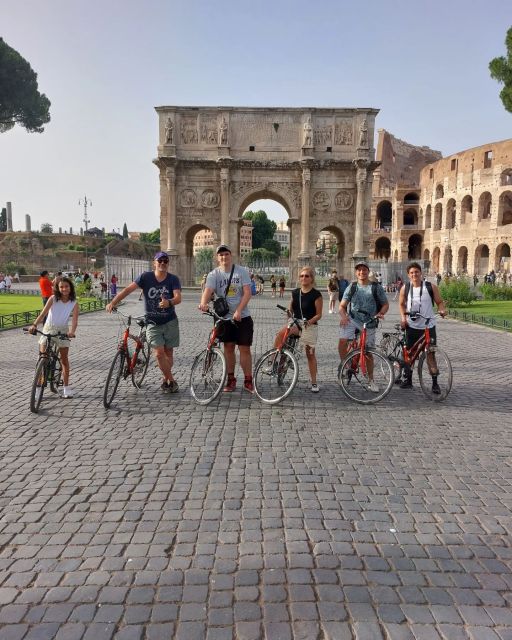
Rome is great on foot, but a bike lets you cover real distance without losing the street-level feel. This tour uses cycling as the storytelling tool: you get a short explanation at key points, then you glide onward to the next scene. That matters in Rome, because the city reads like a layered map. When you move through it at the speed of a bike, you start seeing how the pieces connect.
I also like that it balances famous monuments with quieter spaces. You’re not stuck only at the obvious stops. Instead, you get a broader sense of how Rome works—from inner-city giants to outer green zones where the ruins look less like a postcard and more like part of the landscape.
You can also read our reviews of more tours and experiences in Rome.

Meeting at Via dei Serpenti and Getting Set Up Fast
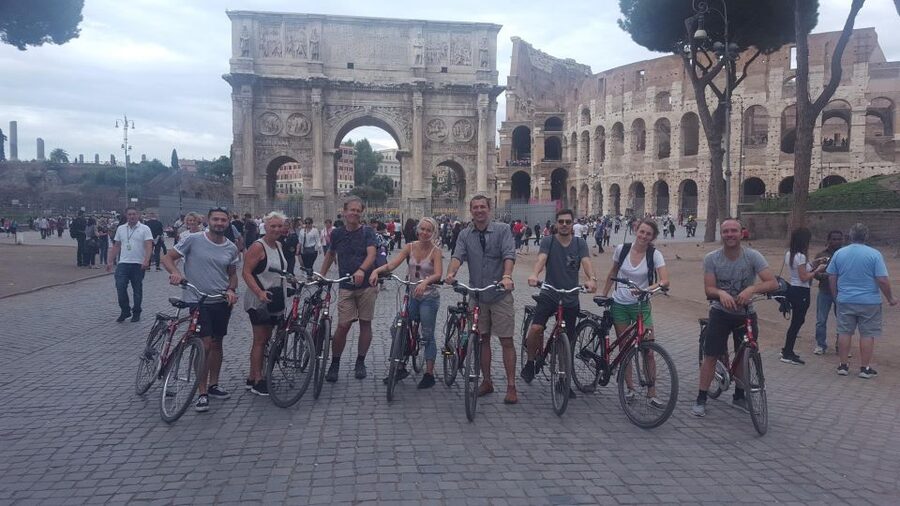
The ride starts and ends at Via dei Serpenti, 89, right near the Colosseum area. That’s helpful because you spend less time crossing town and more time riding. Once you meet your guide and group, you get your helmet and bike hire, then you’re off.
Here’s what to watch for: bike feel matters. One rider noted that e-bikes may need attention and that controls can vary. So when you’re handed the bike, take 30 seconds to test the basics—brakes, gears or assist, and how the handlebar feels—before you roll into busier streets.
Also, keep your water ready. With a 4.5-hour duration, you’re moving continuously enough that dehydration sneaks up, especially in warm weather.
Colosseum Area to Circus Maximus: Quick Context, Then Pedal
The first stops are short, which is exactly the point. You begin with a 20-minute bike segment near the Colosseum area where your guide shares context about what you’re looking at and how the surrounding sites fit together. The goal is not a long museum-style lecture. It’s more like getting your bearings, so the next monuments make sense as you pass them.
Then you head toward Circus Maximus (about 10 minutes). This is the huge stadium complex from the ancient world, often remembered only in fragments. On a bike, it feels less like a distant ruin and more like a real space that once held serious crowds and spectacle. Even if you don’t stop for long, you come away with a clearer mental picture.
What I like about the pace
- Short teaching moments tied to what you’re seeing right then
- Time gained for the bigger ride segments later
What to consider
If you’re the type who wants deep, slow explanations at every single stop, this route may feel too “on-the-move.” The payoff is that you get more variety overall.
Baths of Caracalla and the Aurelian Walls Story You’ll Actually Remember
After Circus Maximus, you ride to Terme di Caracalla (around 10 minutes). These baths were Rome’s second-largest public bathing complex, and they’re a perfect “big statement” stop—massive scale, practical engineering, and everyday life all in one place. You don’t need a long guided walk to understand the impact. The bike route sets the scene quickly.
From there, the tour shifts toward the Museo delle Mura, the museum of the Aurelian Walls (about 20 minutes). This is one of the smarter choices on the route because city walls are not just background decoration. They were Rome’s strategy in stone—defense, control, and identity all tied together.
On this tour, that theme matters. You don’t just see walls as something you pass. You get the framing for why the walls existed and what they protected. Later, when you notice how Rome’s ruins sit next to newer neighborhoods, the wall story gives you a better lens for the whole city.
Saint Callixtus and Via Appia Antica: The Ride Through the Queen of Roads
One of the main attractions is the Catacombs of Saint Callixtus area and the surrounding road network tied to Via Appia Antica, often called the Queen of Roman roads. You spend about 30 minutes here, with a ride that takes you through the ancient-road atmosphere.
What makes this part special is how it changes the feeling of the day. You’re not cruising past modern traffic and convenience stores. You’re riding through a setting that feels more anchored in the Roman idea of connecting places with durable roads.
Why the catacombs section works
The tour emphasizes a panoramic ride through the largest catacomb complex of Rome in this area. So even if you’re not doing a long interior visit, you still get that sense of scale—this was a whole subterranean world shaped by centuries.
One rider also called out that you’ll hit some bumpy ground for a short stretch. That’s normal for old roads. The solution is simple: choose shoes that you’re comfortable walking in and don’t expect perfectly smooth pavement.
Parco degli Acquedotti: Aqueducts, Open Views, and Engineering at Human Scale
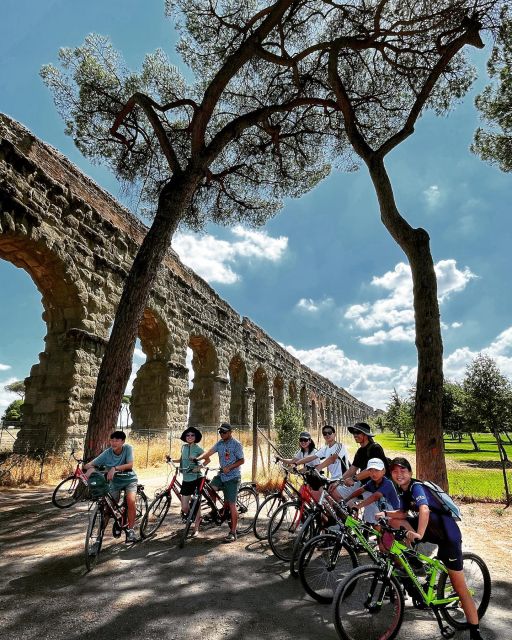
Then you leave the heavy-hitter monuments behind and move to the aqueduct country—Parco degli Acquedotti (about 30 minutes). This is where Roman engineering becomes scenic.
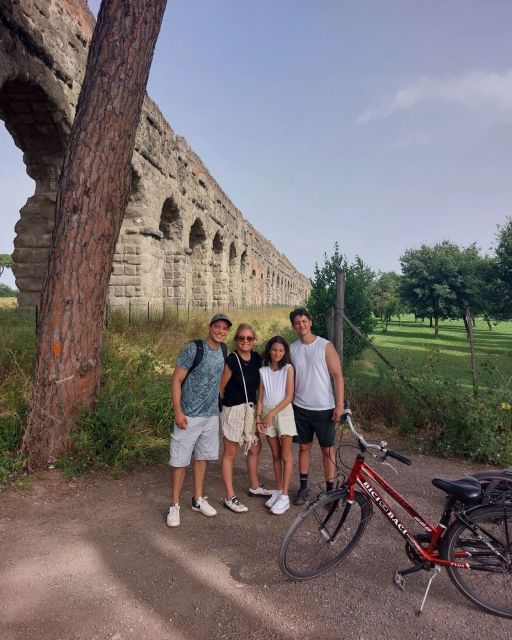
The aqueduct park sits on the outskirts, and the views can be surprisingly wide. You get a sense of how these structures weren’t only functional infrastructure. They also became part of the region’s long-term visual identity. Seeing intact sections on a bike makes a difference, too. You notice angles, spacing, and how the route of water shapes the surrounding environment.
This is one of the parts that I’d prioritize if you love architecture and “how it works.” Even without a deep technical explanation, you’ll leave understanding the sheer ambition it took to build and maintain these systems.
Caffarella and Torre Fiscale: Where Urban Rome Meets Green Space
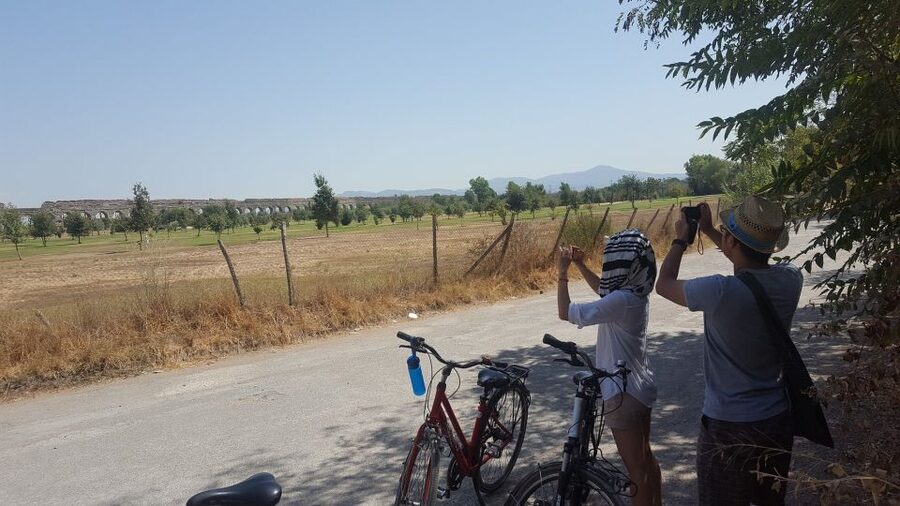
After aqueduct views, the ride continues with Parco di Torre Fiscale (about 15 minutes). The tour frames it around the history of the Fiscal Tour and its purposes, so it’s not just a pretty pause. It’s another chance to understand how Rome organized space and movement.
Next up is Parco della Caffarella (about 45 minutes). This is where the city and nature meet in a way that feels like a break. You get longer green-space time compared to some stops, which helps the day feel balanced rather than nonstop monuments.
Then you make a quick stop for Egeria, L’Acqua Santa di Roma (about 10 minutes). This part adds a lighter, legend-adjacent tone. Springs and sacred water sources in Rome have a way of sticking in your brain because they blend practical geography with storytelling.
A practical tip
If it’s hot, the tour may start slightly earlier. Still, heat can hit hard in open park areas. Wear sunscreen, and plan to drink water steadily rather than waiting until you feel thirsty.
Via Cristoforo Colombo: A Final Stretch That Shows Rome’s Scale
The last stretch is Via Cristoforo Colombo (about 20 minutes). This road links the historic center to Ostia, the gateway of the Eternal City toward the Tyrrhenian Sea. Even though you’re not doing a deep dive into each neighborhood, the ride gives you a sense of Rome’s reach—how the city connects inward and outward, land to coast.
On a final ride leg, that matters because your brain has been cataloging ruins and parks. Ending with a road that points toward Ostia helps you see the bigger system behind the individual sites.
Riding Style, Group Size, and Safety (Including the E-Bike Reality)
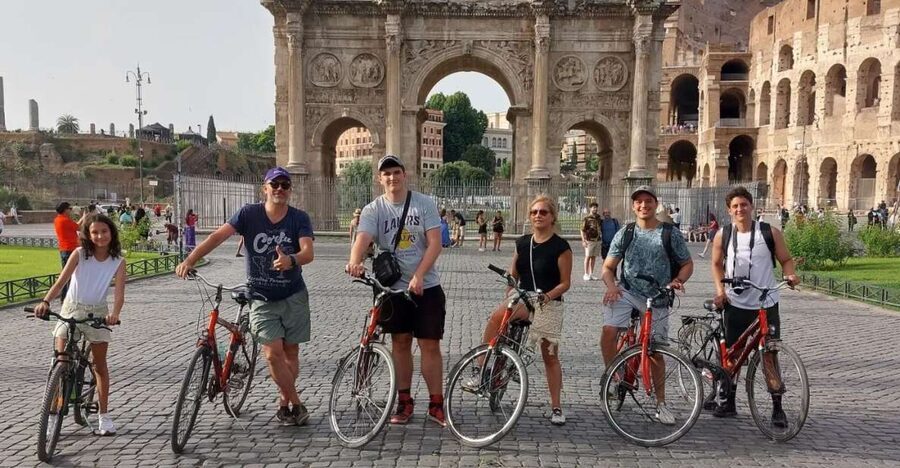
This is a small-group tour with a maximum of 10 participants, and that plays into comfort. A rider mentioned feeling safe and confident even on city streets near the meeting point. In my view, that’s not luck—it’s pacing and organization. When your guide keeps an eye on the group and you don’t get dropped into chaos, cycling through a historic city feels manageable.
Your main “difficulty level” is not advanced technical riding. It’s stamina and comfort. You’ll be on the bike for hours, and you may hit a short bumpy section due to ancient paving. Bring comfortable shoes and clothes, and think of this as a moderate ride day.
If your bike is electric, pay attention to the controls. One person mentioned that e-bikes may need tune-ups and more straightforward controls for tourists. You don’t need to panic—but do the small safety checks up front so you’re not figuring things out while moving.
Price and Value: What $100 Buys You in 4.5 Hours
At about $100 per person for a 4.5-hour experience, the value comes from four things you don’t always get together:
- A live English guide doing the “connect the dots” work
- Bike hire included, so you avoid rental headaches
- Helmets included, which is a real quality-of-life detail
- A small group that makes a difference on busy streets and narrow paths
This tour also gives you a lot of Rome in one structured day, without forcing a marathon of walking. You’ll see the Colosseum area, Circus Maximus, Baths of Caracalla, the Aurelian Walls museum stop, the Via Appia Antica and Saint Callixtus catacombs area, and then you roll into aqueduct park and greener spaces.
If you already know you want more than a monument checklist, this price starts to feel reasonable. You’re paying for a guided route that turns transit time into sightseeing time.
Who This Tour Fits Best
This is a great match if:
- You want Rome beyond the biggest crowd magnets
- You like history explained in motion, not only through long stops
- You’re comfortable riding for a few hours and walking short distances if needed
- You like variety: monuments, walls, catacombs territory, aqueduct views, and parks
It may not be a good match if:
- You need wheelchair or mobility-friendly routing
- You’re traveling with very young kids (the tour isn’t suitable for children under 10)
- You’re pregnant, since the activity isn’t designed for that
Should You Book the Cycle Through Eternity Bike Tour?
Book it if you want a Rome day that feels like a living circuit—ruins plus parks, big names plus the quieter edges, and a guide like Dimitri who helps you understand what you’re seeing without turning the day into a slideshow.
Skip it if you prefer slow walking tours with lots of time inside major sites, or if bumpy surfaces and long saddle time sound like a chore. Also, if you’re sensitive to heat, plan your clothing and sunscreen carefully—parks and roads can be sun-heavy.
If you can handle a moderate bike day and you’re curious about Rome’s layers, this is one of those trips that’s hard to replicate on your own.
FAQ
FAQ
How long is the Cycle through Eternity bike tour?
The tour lasts 4.5 hours.
Where does the tour start and end?
It starts and returns to Via dei Serpenti, 89.
What does the tour cost?
The price is listed as $100 per person.
What’s included in the price?
The tour includes helmets and bike hire.
Is there a live guide, and what language do they speak?
Yes, there is a live tour guide in English.
How big is the group?
The group is limited to 10 participants.
Does the tour run in bad weather?
The tour runs rain or shine unless there is extreme rain.
What should I bring with me?
Bring comfortable shoes, comfortable clothes, and water. Sunscreen is also recommended.
Is the tour suitable for everyone?
No. It is not suitable for people with mobility impairments, pregnant women, or children under 10.
What’s the cancellation policy?
Free cancellation is available up to 24 hours in advance for a full refund.