REVIEW · SICILY
Etna Bike Tour – Cycling in Sicily
Book on Viator →Operated by Cycling Sicily · Bookable on Viator
One volcano. Eight riders. A serious climb you can actually manage. This Mt. Etna cycling tour turns the hardest part of planning into someone else’s job, with a guide and full carbon road bikes built for the steep stuff. I especially like the small group size (max 8) and the clear route flow from the lowlands up to Rifugio Citelli.
The ride is tough by design, and the day rewards solid effort with nonstop views and a real sense of altitude. The one thing to think about is pacing: if you’re slower than the group’s rhythm, the total time can stretch beyond the 4-hour estimate and cramps can happen.
In This Review
- Key highlights that matter before you pedal
- Starting in Giardini Naxos: bike setup that actually sets you up for success
- From the lowlands toward Catania: warming up before the real slope
- Above Fiumefreddo and up to Piedimonte Etneo: the first true altitude payoff
- Etna Wine Road and volcanic water: a smart reset before the last hard push
- Bartali & Coppi to Rifugio Citelli: the climb that defines the whole experience
- The downhill moment: when your legs stop working and your focus switches
- Private guide and group of eight: why this pacing works better than map-hunting
- Bikes, pedals, and gearing: the comfort you’ll feel on the steep parts
- Price and value: what you really get for about $162
- What to bring: simple items that protect your energy
- How fit do you need to be for this Etna climb?
- Should you book the Etna Bike Tour?
- FAQ
- FAQ
- How long is the Etna cycling tour?
- Where does the tour start and end?
- What’s included in the price?
- What do I need to arrange myself?
- What fitness level do I need?
- What happens if weather is bad?
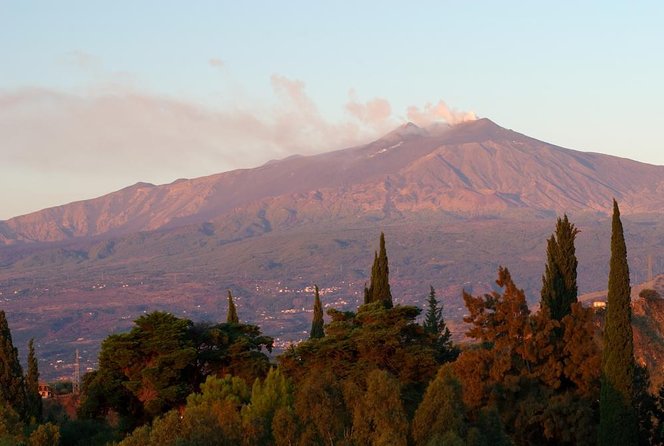
Key highlights that matter before you pedal
- Max group of 8 keeps the climb steady and makes regrouping feel controlled, not chaotic.
- Guided route up Etna means you’re not stuck reading maps on busy roads or guessing turns.
- Full carbon road bike + pedal options (flat, Shimano, Look) for a more comfortable fit.
- Water at the right moment: you’ll top up bottles with fresh volcanic mineral water before the final big ascent.
- The Bartali & Coppi climb takes you from about 827 m to Rifugio Citelli at roughly 1,750 m, then you descend.
Starting in Giardini Naxos: bike setup that actually sets you up for success
The tour starts at Via Recanati, 26, Giardini Naxos (back at the same point at the end). Before you roll, you’ll set up your bike at headquarters and talk through the itinerary—this matters because Etna is not a “casual spin.” Even the first segment is there to get your muscles awake, not just to get you out of town.
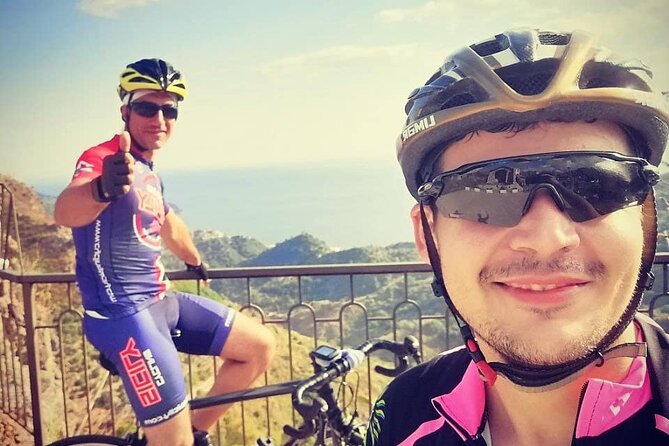
You’ll be on a full carbon road bike and you’ll get a helmet. Pedals are provided too, and you can choose among flat, Shimano, or Look. That’s a small detail, but it helps if you travel with specific shoes or want to keep things simple with flats.
Also, because this is offered in English and capped at eight people, you can ask practical questions without the usual crowd-noise.
You can also read our reviews of more tours and experiences in Sicily.
From the lowlands toward Catania: warming up before the real slope
After setup, you start pedaling from Giardini Naxos, heading toward Catania for about 5 km in a lowland area. The goal here is straightforward: warm up your legs, get used to the bike, and settle into your effort.
Then the route adds a soft but steady push—about 5 km with gradients roughly 5% to 10%. This part is a good “check-in.” If you’re already overcooking the climb, you’ll feel it later. If you pace well, your breathing will be under control when the terrain starts to bite.
Even with road bikes, Etna’s elevation changes are the headline. Your body will care more than your bike will.
Above Fiumefreddo and up to Piedimonte Etneo: the first true altitude payoff
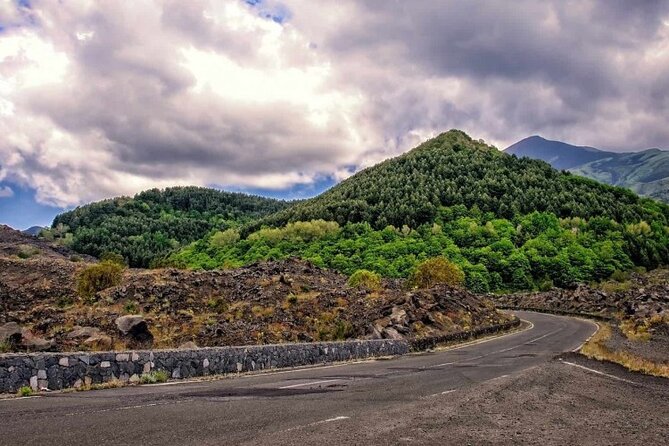
Once you’re climbing, you pass above Fiumefreddo di Sicilia, then continue upward to Piedimonte Etneo, a town built on an ancient lava flow on the northeastern face of the volcano.
This is where you start to feel like the ride has a “story,” not just a line on a route map. You’ve gone roughly 10 km and about 350 m of climbing (D+) by this stage, which means your effort has a clear rhythm: work, settle, and climb again.
At the end of this first tough section, you’re about 18 km and 800 m D+ into the day. That’s a lot of altitude for a half-day ride, and it sets you up for the moment that most people remember: the shift to Etna’s higher-world riding.
Etna Wine Road and volcanic water: a smart reset before the last hard push
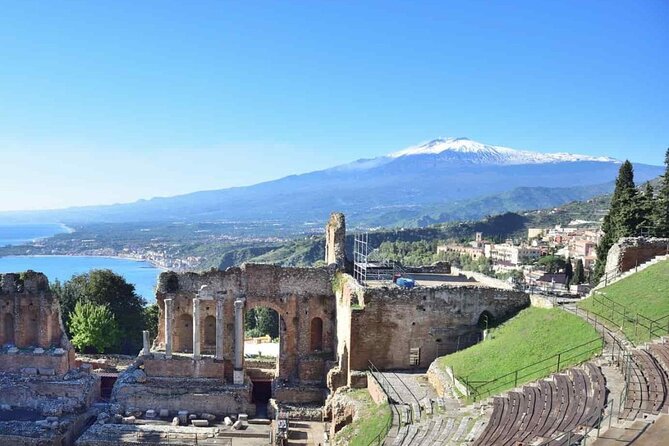
After the first climbs, you’ll ride on the Mt. Etna Wine Road, which runs along the eastern side on the northern slope. This matters because Etna isn’t just steep—it’s steep in a particular way. The wine-road routing tends to keep you moving forward with purpose, rather than stopping and starting.
Right here, there’s a practical moment that can make or break a hard ride: you’ll fill bottles with fresh volcanic mineral water before facing the final ascent. That’s not a “nice extra.” In the later gradient, hydration turns into performance.
This is also a great time to drink and regroup mentally. The day is clearly split into phases:
- warm-up and early climbs
- steady grind up to town
- a reset on the wine road
- the final climb to Rifugio Citelli
- then downhill
Bartali & Coppi to Rifugio Citelli: the climb that defines the whole experience
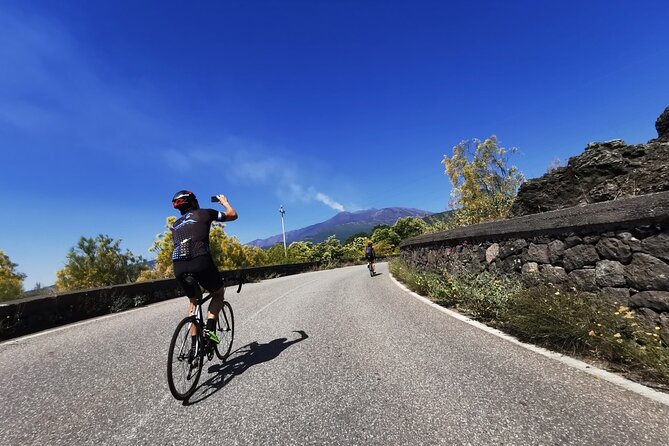
The last big ascent is called the slope of Bartali & Coppi, named for famous cycling legends (and yes, that’s the vibe: you’re not just commuting uphill). You climb from around 827 m up to about 1,750 m at Rifugio Citelli.
Expect this segment to be the centerpiece of the day. It’s also the part where small pacing differences show up fast. One rider noted that if you don’t average roughly 6–10 km/h, the ride can run long and cramps can show up near the end. Another person ended up doing the full ride in about 4 hours, but only by keeping the effort consistent.
So here’s the simple advice: treat this as a controlled grind. If you go out too hard on the earlier parts, the final ascent won’t forgive you.
Once you reach Rifugio Citelli, the ride turns to payoff. You’ll start the downhill portion back down toward the starting area.
The downhill moment: when your legs stop working and your focus switches
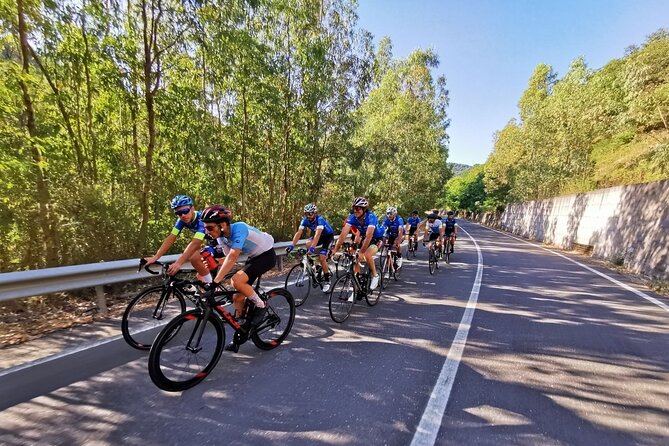
The itinerary has you ride down after reaching Rifugio Citelli. Downhill on a road bike is fun—but on Etna it’s also about control. You’ll be tired, and tired people make sloppy decisions.
Because the group is small and you have a guide, you’re less likely to get separated or confused on turns. But you still want to stay alert: shifting your weight and braking smoothly is part of enjoying the descent.
This is one of those days where the descent feels like a reward, not a sightseeing interlude.
Private guide and group of eight: why this pacing works better than map-hunting
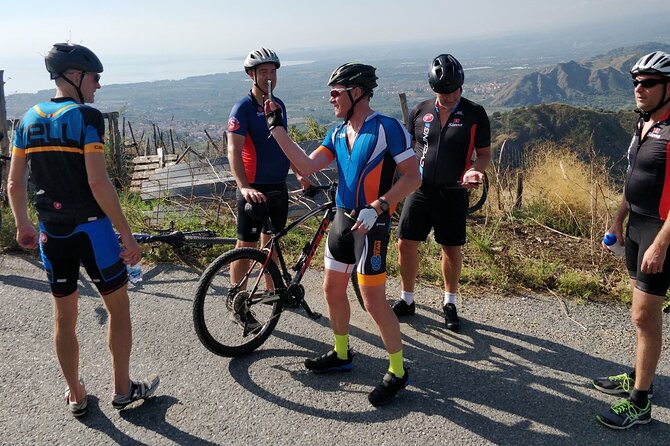
A big selling point here is the guide. You’ll cycle with someone so you don’t waste brainpower on navigation. That’s especially valuable on volcanic roads, where traffic patterns and road conditions can be unpredictable.
The eight-person max changes the feel. You’re not stretching single-file across every stretch. You can maintain a steady pace, regroup when needed, and keep your legs working rather than stopping and starting.
Guides also matter. I’ve seen firsthand how much patience can change the experience on steep days—one guide was praised for waiting comfortably with an older or slower rider, and that’s exactly what you want on a climb like this. Another guide kept the group topped up with fluids during hot weather (around 91°F), which shows they’re thinking about safety and performance, not just movement.
Bikes, pedals, and gearing: the comfort you’ll feel on the steep parts
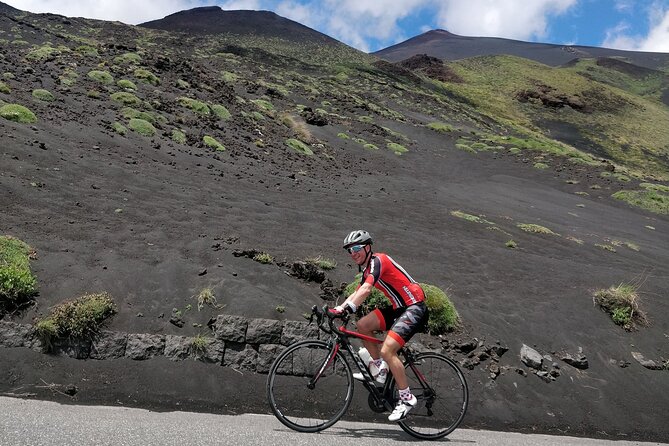
You get a road bike with pedal choices, which is helpful. But the fine print that matters for real life is gearing. One comment flagged that a bike had a semi-compact chainring and a not-easy cassette, which made the climb harder for regular cyclists.
So if you’re not a pure climber, don’t assume every bike will feel equally forgiving. When you arrive, ask about the bike setup and whether the gearing range suits long climbs at moderate speed.
In general, this tour suits you best if you can hold steady pressure for long gradients, or if you’re willing to pace down your expectations and accept a slower rhythm.
Price and value: what you really get for about $162
At about $162.03 per person for roughly 4 hours, the value is less about the time and more about what’s included:
- Private guide
- Full carbon road bike
- Helmet
- Pedals (with choices)
- The route is organized around the steep sections of Etna
If you had to rent a road bike yourself, find a guide separately, and then still plan the route, your costs and time would stack up. Here, the logistics are folded in so you can focus on the climb.
The other value lever is group size. With a maximum of 8 people, your guide can manage pacing and regrouping. That’s not just “nice.” It directly affects whether your day feels hard in a good way or hard in a chaotic way.
What to bring: simple items that protect your energy
The tour provides volcanic mineral water for bottle top-ups, and you’ll be in a guided rhythm. Still, the safest approach is to bring what you need to avoid running on empty—especially if you’re aiming for a steady climb pace.
A helpful tip from past rides: set expectations and pack your own food and proper hydration. One rider mentioned that they expected fueling stops but mostly relied on water during the ride. If your body needs calories during long efforts, bring them.
At minimum, I’d show up with:
- a plan for snacks you can eat at low intensity
- enough water for the effort (even with topping up available)
- layers for temperature swings (Etna can feel different at height)
How fit do you need to be for this Etna climb?
The tour is listed for moderate physical fitness, and the route includes serious climbs plus a high-altitude finish around 1,750 m.
Here’s the practical test: if you can ride a road bike comfortably at a sustained effort and you’re not expecting to sprint up hills, you’ll likely be fine. If you know you’re prone to cramps when you push too hard, pace early and keep your effort smooth.
Also, the itinerary can run longer depending on how the group rides. One comment suggested that setting expectations for up to 5–6 hours (instead of strictly 4) is smarter if your pace is closer to the lower end.
Should you book the Etna Bike Tour?
Book it if:
- you want a real Mt. Etna climbing experience without dealing with route-finding
- you prefer small-group riding (max 8)
- you’re comfortable riding uphill and handling a bike day that’s more work than sightseeing
Maybe skip or consider a different format if:
- you’re looking for an easy “views only” outing
- you need frequent long breaks and don’t want to manage pacing on gradients
- your cycling comfort depends heavily on very specific gearing and you’re not sure the bike setup will match
FAQ
FAQ
How long is the Etna cycling tour?
It’s scheduled for about 4 hours (approx.), though the total time can feel longer depending on the group’s pace on the climbs.
Where does the tour start and end?
The meeting point is Via Recanati, 26, 98035 Giardini Naxos ME, Italy, and the activity ends back at the same meeting point.
What’s included in the price?
Included are a private guide, a full carbon road bike, a helmet, and pedals (flat, Shimano, or Look).
What do I need to arrange myself?
Private transportation is not included. The tour is near public transportation.
What fitness level do I need?
The tour is suitable for people with moderate physical fitness level.
What happens if weather is bad?
This experience requires good weather. If it’s canceled due to poor weather, you’ll be offered a different date or a full refund.
If you tell me your cycling level (and whether you ride with clip-in pedals or flats), I can help you judge whether this route and bike setup sounds like a good match.