REVIEW · WARSAW
3-Hour Guided Cycling Tour of Warsaw
Book on GetYourGuide →Operated by Station Warsaw · Bookable on GetYourGuide
Warsaw looks different at bike speed. You get a smooth, city-friendly way to see the famous places and the less-obvious corners around them, led by guides like Marcin or Jakub. I love the easy pace (about 8 miles) and how the route mixes major sights with spots many people miss outside Old Town.
One thing to plan for: you’ll cover some cobbblestones and mixed street surfaces, so bring a comfort-first mindset, especially if the weather turns wet.
In This Review
- Key highlights worth circling
- Getting Started at Eat Polska (and why the meeting point matters)
- A $41 tour that’s really about time on the bike
- Warsaw Uprising Monument to Old Town: where the story starts
- What I’d watch for
- Castle Square and the Royal Route: the center’s “spine”
- Presidential Palace, Tomb of the Unknown Soldier, and Saxon Garden
- plac Grzybowski to Palace of Culture and Science: the city’s different eras
- The café break: a real pause, not a tourist trap stop
- Holy Cross Church, Copernicus Monument, and the “move toward the river” shift
- The Warsaw Mermaid and Vistula Boulevards: panoramas that land
- Royal Castle Gardens, Multimedia Fountain Park, and Curie’s monument to finish strong
- Riding reality: cobblestones, rain, and how to be comfortable
- Guide quality: why the storytelling is the main event
- Who should book this Warsaw bike tour
- Should you book this tour?
- FAQ
- How long is the 3-hour guided cycling tour of Warsaw?
- What is the price and what’s included?
- Is refreshments provided during the tour?
- Where does the tour start and what are nearby transit options?
- Can I bring my own bike?
- Is the tour suitable for children?
- What rules apply during the tour?
Key highlights worth circling
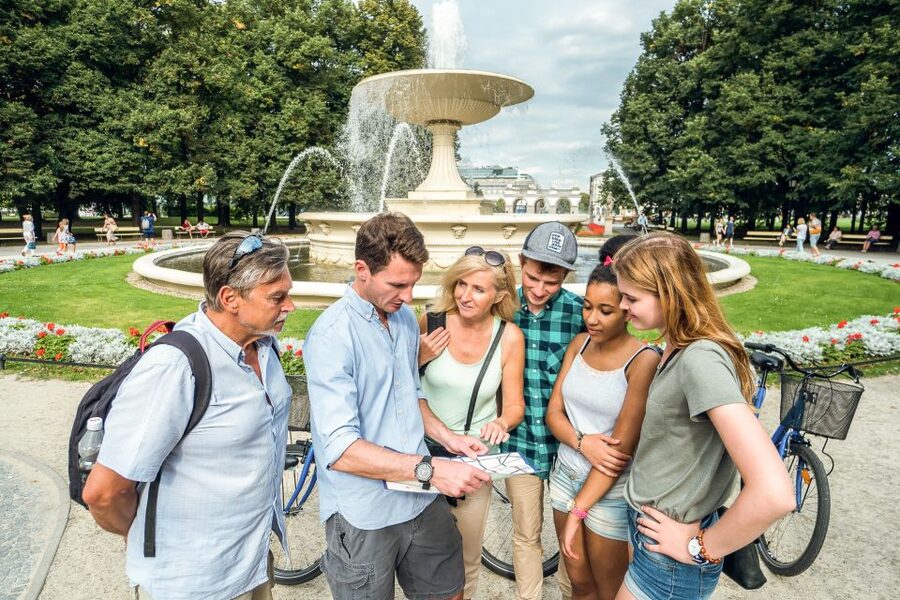
- A 3-hour overview that actually fits a first day without turning into a sprint
- Iconic monuments plus “how locals move” streets beyond the Old Town bubble
- English live guide who ties landmarks to what Warsaw went through
- A midpoint café break so you don’t gas out or scramble for snacks
- Vistula River views and the mermaid moment that land at just the right time
Getting Started at Eat Polska (and why the meeting point matters)
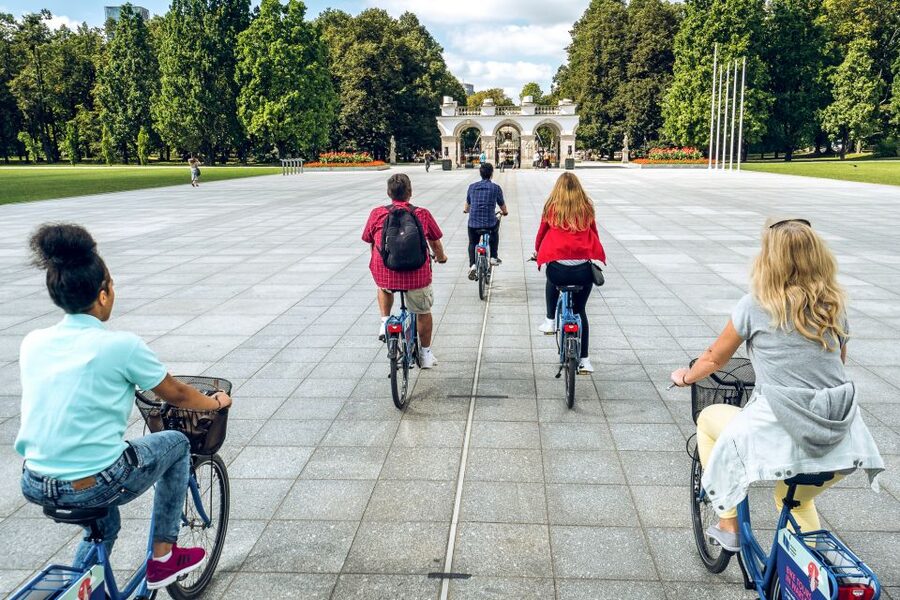
The tour begins at Eat Polska, then you roll out toward the city center right away. The specific meet-up point is at 16/18 Koźla Street, about a kilometer from Sigismund’s Column in Royal Castle Square. If you’re using public transit, the nearest metro stop is Metro Ratusz Arsenał, roughly 1.2 km away—close enough that you can get there without a long walk.
This start location is smart for two reasons. First, you’re already near the sights, so you don’t waste your ride on transfers. Second, starting near the Royal Castle Square area helps you build context fast—Warsaw’s layout makes more sense once you see the “shape” of the center from street level.
Your guide will have the group set up with bikes, and the tour runs in English. Bikes are rented as part of the price, so you’re not stuck figuring out a rental shop on your limited time.
A $41 tour that’s really about time on the bike
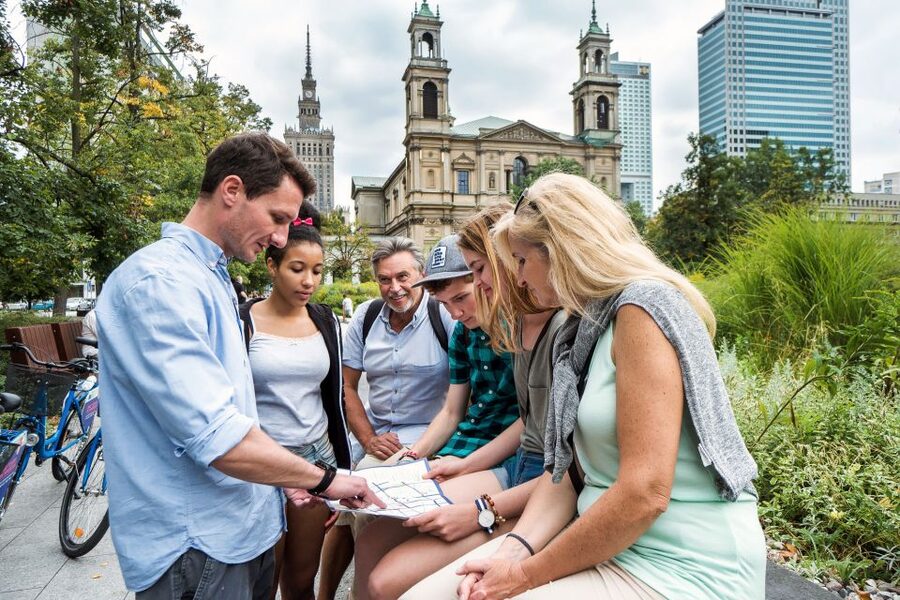
At $41 per person for 3 hours, this is priced like a classic “orientation tour,” but with bike coverage instead of slow walking. Bike time is the key value here: you move between far-apart landmarks quickly, while still stopping often enough to actually understand what you’re seeing.
Included basics are simple: bike rental and a guide. Refreshments are not included along the way, but there’s a planned 30-minute café break mid-tour. That means you can budget for a drink or snack without feeling like you must bring everything with you.
Also, if your plans are fluid, you can book with free cancellation up to 24 hours in advance and a reserve now, pay later option. That flexibility matters in a city where weather can shift quickly.
Warsaw Uprising Monument to Old Town: where the story starts
The first major stop is the Warsaw Uprising Monument. Even with just a quick look (about 10 minutes), it sets the emotional tone of the city. Warsaw’s modern look is tied to what the city survived, and this stop gives you a framework for the rest of the ride.
From there you bike into Old Town, Warsaw, with another short stop. This part matters because it’s one of those places where standing still can make you feel lost. On a bike, you get the orientation first—the streets, the layout, and how visitors concentrate in certain pockets—then your guide can explain why the area looks the way it does.
What I’d watch for
- Listen for the way your guide connects places you’ll see later (and not just the monument in front of you).
- If you’re sensitive to crowds, enjoy Old Town earlier in the day when the ride-through feels calmer.
Castle Square and the Royal Route: the center’s “spine”
Next comes Castle Square, followed by the Royal Route. This is where biking feels especially efficient. You can connect the dots between visual landmarks without turning your tour into a long series of “wait, walk, wait.”
On the Royal Route, you’ll get a feel for Warsaw as a capital city: wide stretches, big civic spaces, and architecture that signals power and identity. One of the big tour advantages is that you’re not stuck only inside the Old Town tourist corridor—you get the main-city flow too.
Your guide also brings in the Warsaw themes beyond the postcards. The tour description highlights a connection with Frederic Chopin, so expect commentary that ties Warsaw’s cultural memory to the landmarks you’re riding past (even if you’re focused on the riding itself).
Presidential Palace, Tomb of the Unknown Soldier, and Saxon Garden
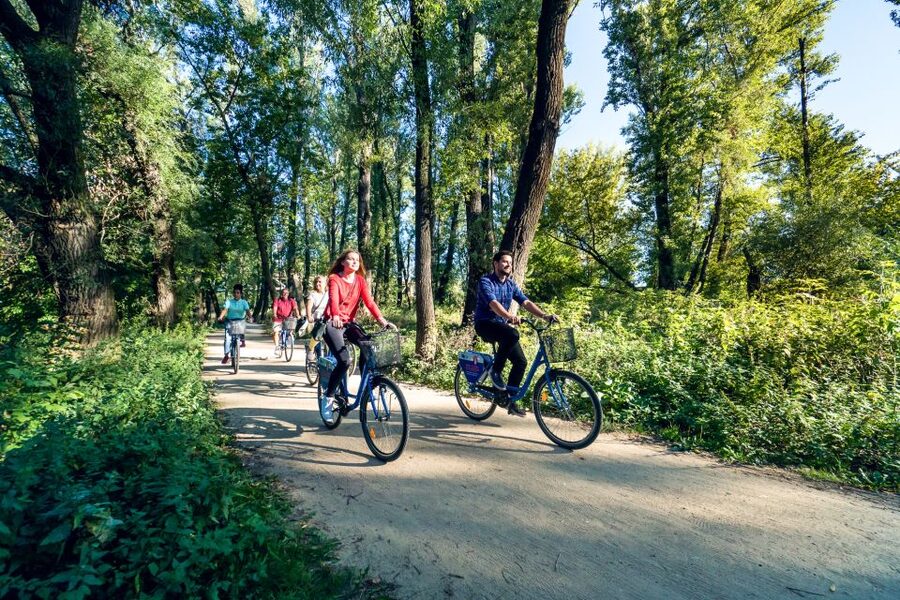
The route then heads to the Presidential Palace area, and after that you stop at the Tomb of the Unknown Soldier. This sequence works because it moves from political symbolism to national remembrance. The Tomb stop is short, but it’s the kind of place where even a few minutes can change how you see everything else on the route.
After that you ride through Saxon Garden. Gardens sound like a breather, but here they also help you reset your eyes after the monument intensity. It’s a good moment to catch your breath, adjust your grip on the handlebars, and get ready for the next chunk of city scenes.
From what you’ll see and what your guide explains, this part of Warsaw is about contrasts: the monumental and the everyday, the commemorative and the lived-in.
plac Grzybowski to Palace of Culture and Science: the city’s different eras
Then you roll past plac Grzybowski and into the orbit of the Palace of Culture and Science. If Old Town is the “storybook face,” this area is the big, unmistakable marker of another era—one that shaped how Warsaw rebuilt and rebranded itself over time.
The Palace of Culture and Science stop is quick, but it’s worth paying attention to the details your guide offers. This is one of the best places on the tour to understand why Warsaw feels layered: different decades left visible fingerprints, and the city grew around them rather than wiping the slate clean.
If you like understanding a city by time period, this is a highlight run. You’ll feel how the ride stitches eras together instead of keeping them in separate neighborhoods.
The café break: a real pause, not a tourist trap stop
Mid-tour, you take a 30-minute break at a local café. Refreshments aren’t included, so you can order what you actually want without the pressure of a pre-set package.
This is also one of the best moments to reset mentally. The tour packs a lot into three hours, so the break keeps you from arriving at later stops tired and distracted. If the weather is bad, it’s also your “dry window,” since the route is designed to keep moving when possible.
One practical note: there are short stops throughout the route, so use the café break to recharge, not to try to cram extra sightseeing. Your best view moments are still coming.
Holy Cross Church, Copernicus Monument, and the “move toward the river” shift
After the café, you go to Holy Cross Church and then to the Copernicus Monument. This stretch is a shift from civic landmarks toward ideas—religion, science, and the broader cultural identity Warsaw carries.
Biking between these stops keeps your energy steady. You’re not trekking long distances on foot, but you’re still moving slowly enough to notice architectural cues and city rhythms as you pass.
The Warsaw Mermaid and Vistula Boulevards: panoramas that land
Next is Powiśle Mermaid Monument, then the ride continues along the Vistula Boulevards. This is where the tour gets more open and scenic. The city loosens its grip and gives you those wide river views that are hard to get quickly on foot.
The mermaid stop is short, but it’s a memorable one. It also captures the tour’s style: you’re not just seeing big official monuments—you’re seeing local symbols that help Warsaw feel personal.
On the Vistula, you get a different angle on the skyline and bridges, and the ride feels more like cruising than touring. If you’ve been inside museums or dense historic streets all day, this section is the reset button.
Royal Castle Gardens, Multimedia Fountain Park, and Curie’s monument to finish strong
The tour then heads toward the Warsaw Royal Castle Gardens, and continues to Multimedia Fountain Park. Finally, you stop at the Maria Skłodowska Curie Monument, before returning to Eat Polska.
Finishing with this run of gardens, open spaces, and then Curie’s monument is a strong way to close. It leaves you with a more rounded sense of Warsaw as a city of both tradition and big thinkers. The fountain park adds a modern touch, which helps the last stretch feel less like repetition.
By the time you circle back, you don’t just have a list of landmarks. You have a map in your head for what to revisit later—especially if you want to explore deeper neighborhoods on a second day.
Riding reality: cobblestones, rain, and how to be comfortable
The tour is pitched as easy and relaxed, about 8 miles total, and it’s designed for city cycling. Still, Warsaw’s streets can include cobbblestones and uneven sections. Several riders specifically noted cobblestone riding, including a tougher moment near the end for some people.
So here’s my practical take: treat this as a sightseeing bike ride, not a road-race event. If you’re new to cycling on rough European streets, go slow over the rough spots and let your guide’s pacing lead the rhythm.
Weather also matters. The tour can run in rain, and your guide will keep things moving. You can buy a rain poncho for 10 PLN if needed, and a bike basket for 10 PLN is an option if you want an easier time carrying small essentials.
Guide quality: why the storytelling is the main event
This tour lives or dies on the guide, and the guide names you’ll see attached to the experience include Marcin, Jakub, and Maria (among others). What stands out is how many of the stops feel connected by explanation, not just random point-and-snap photos.
You’ll get more than a list of dates. The stops are paired with anecdotes and context that help the city make sense as a place that has repeatedly reinvented itself.
You also benefit from group management in real city conditions—busy sidewalks, traffic-adjacent areas, and the occasional crowd pressure. That’s a big deal because it keeps the ride safer and calmer than you’d expect in a dense center.
Who should book this Warsaw bike tour
Book it if:
- You want a fast orientation to Warsaw in a single half-day
- You’re comfortable riding a city bike and want stops at major landmarks plus a few extras outside Old Town
- You care about the story behind the sights, not just the photos
Skip it if:
- You’re under 150 cm (the tour lists this height as not suitable)
- You’d rather avoid any cobblestone or mixed pavement segments
- You don’t want to ride in traffic-adjacent city spaces (even if routes use safer paths)
Also, keep it simple with behavior: alcohol and drugs are not allowed, and the guide may refuse a participant who appears unfit or impaired.
Should you book this tour?
Yes, if you want the smartest first-day move in Warsaw. For $41, you get a guided ride that combines major landmarks with a wider sweep of the center—plus the Vistula scenery and mermaid moment—without burning your whole day.
The only real reason to hesitate is comfort with city cycling over cobbblestones and variable pavement. If you’re okay with that and you like your history tied to places you can actually see, this is a strong bet.
FAQ
How long is the 3-hour guided cycling tour of Warsaw?
It lasts 3 hours total, with an approximate 30-minute café break at the midpoint.
What is the price and what’s included?
The price is $41 per person, and the tour includes bike rental plus an English live guide.
Is refreshments provided during the tour?
No. Refreshments along the way are not included, but there is a local café stop during the break where you can buy something.
Where does the tour start and what are nearby transit options?
Meet at 16/18 Koźla Street, about 1 km from Sigismund’s Column in the Royal Castle Square area. The nearest metro station is Metro Ratusz Arsenał (about 1.2 km away).
Can I bring my own bike?
Yes, you can bring your own bike.
Is the tour suitable for children?
There are no child seats or trailers. If you’re bringing children, you need to contact the activity provider.
What rules apply during the tour?
Alcohol and drugs are not allowed. Also, the participant must confirm they can ride a bicycle and knows Polish road rules for bicycles.
If you want, tell me when you’re visiting (month is enough) and your cycling comfort level (smooth streets only vs okay with cobblestones), and I’ll suggest the best time to fit this into your day.