REVIEW · SHIMANE PREFECTURE
Tsuwano Cycling Tour with Local Guide
Book on Viator →Operated by Yu-na ~Discover Rural Tsuwano~ · Bookable on Viator
Tsuwano can feel like time travel on wheels. This 3-hour electric bike tour pairs Tsuwano Hyakkeizu, the Edo-era 100 sceneries, with today’s town streets and sacred sites. I love how it’s small-group and story-driven, so you’re not just riding past things, you’re actually seeing the pattern.
Two things I really like: you get guide-led context at every stop, and you ride at an easy, manageable pace thanks to the electric bike. There’s also a strong “present meets past” theme, with images from the Hyakkeizu used to frame what you’re looking at now.
One possible drawback to plan for: the tour needs good weather, and you’ll be on a bike for the full 3 hours, so if you hate cycling or are very sensitive to rain, you’ll want to think it through.
In This Review
- Key things that make this Tsuwano bike tour worth it
- Tsuwano on an electric bike: the Hyakkeizu theme you’ll feel right away
- Timing, group size, and where you start in Tsuwano
- Stop 1: Tonomachi Street and getting oriented fast
- Stop 2: Yasaka Shrine and the Hyakkeizu stories you won’t guess on your own
- Stop 3: Narutaki jinja, a waterfall spot, and a brief moment of meditation
- Stop 4: Washibara Hachiman Shrine, joyato and baba, plus Yabusame context
- Stop 5: Tsuwano Shrine and the rural views around former lords
- Stop 6: The 1,000+ year cedar tree that makes the ride feel complete
- Why the 30-minute stops and electric bike pace work
- Value for $99: what you actually get
- What to bring (and what to plan for) so the tour feels effortless
- Should you book the Tsuwano Cycling Tour with Local Guide?
- FAQ
- How long is the Tsuwano Cycling Tour?
- What does it cost?
- Is the tour done on electric bikes?
- Where does the tour start and end?
- What stops are included?
- What’s included in the price?
- Are snacks included?
- How big is the group?
- What if the weather is bad or I need to cancel?
Key things that make this Tsuwano bike tour worth it
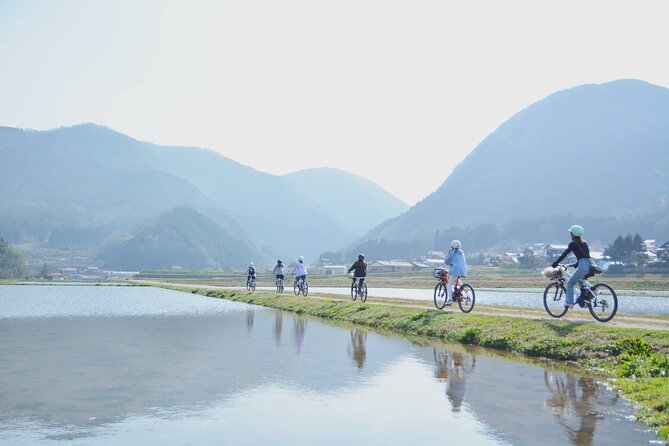
- Hyakkeizu “100 Sceneries” framing: you connect Edo-period paintings to what you see today
- Electric bike ease: helps you keep a relaxed pace even if you’re not sure about your fitness
- 6 stops, 30 minutes each: enough time for stories, photos, and short pauses
- Shrines with specific details: joyato stone lanterns, baba horse track, and Yabusame ritual connections
- A hidden waterfall stop: with a brief meditation moment for a calmer rhythm
- Max 6 travelers: you actually hear the guide and ask questions
Tsuwano on an electric bike: the Hyakkeizu theme you’ll feel right away
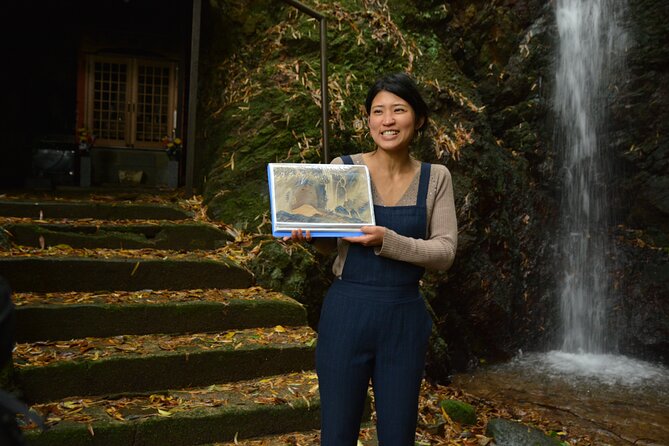
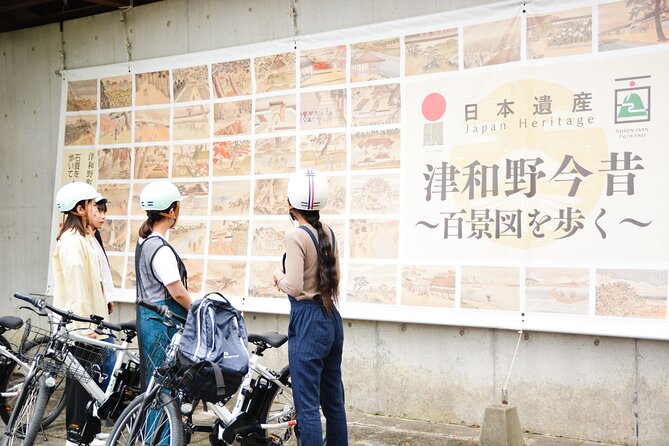
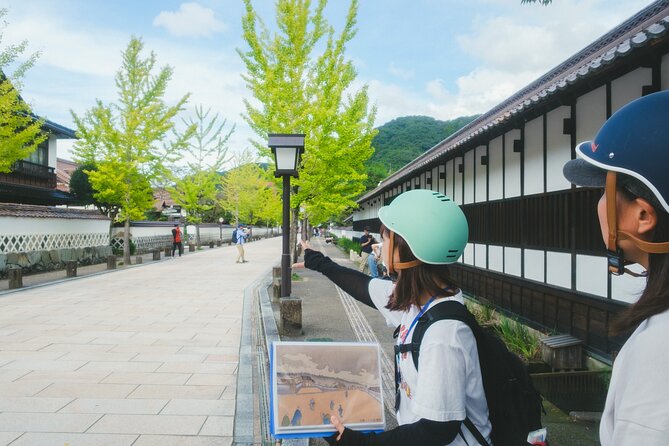
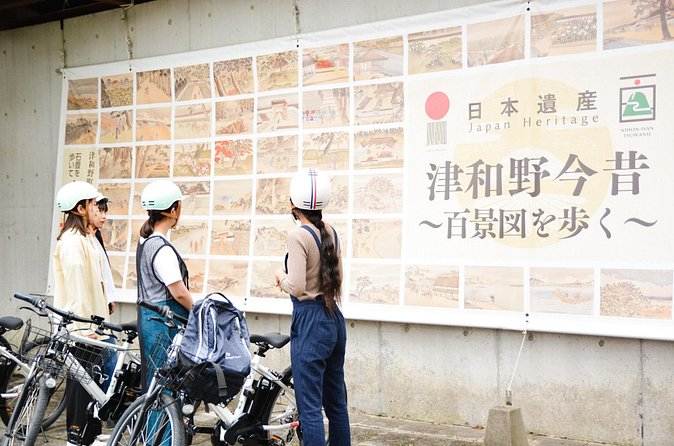
Tsuwano is a small rural town in Shimane Prefecture that has kept a lot of its older character. What makes this tour special is the method: you don’t just visit a checklist of shrines. You ride with your guide through the town while matching what’s in the Tsuwano Hyakkeizu (the One Hundred Sceneries) to what exists now.
That “past-to-present” approach changes the way you look. A street becomes more than a street. A shrine becomes a clue. A waterfall spot becomes a pause in the story, not just scenery you quickly pass.
The guides bring that to life using easy explanations and frequent anecdotes. In past tours, guides like Yui and Ale have focused on clear, friendly commentary, and they also contrast old maps/images with the current town so you can picture how Tsuwano looked back in the Edo period.
Timing, group size, and where you start in Tsuwano
This experience runs about 3 hours, and it’s paced so most people can participate. The group stays small, with a maximum of 6 travelers, which matters more than it sounds. Smaller groups mean you’re less rushed at each stop, and the guide’s stories land better.
You’ll start and finish back at the meeting point: Tsuwano Eki mae Ushiroda (near the station area). You also get a mobile ticket, which is handy if you don’t want to manage paper.
A practical note: the tour is weather-dependent. If conditions are poor, the operator offers a different date or a full refund. That’s a good setup in a place where skies can change fast.
Stop 1: Tonomachi Street and getting oriented fast
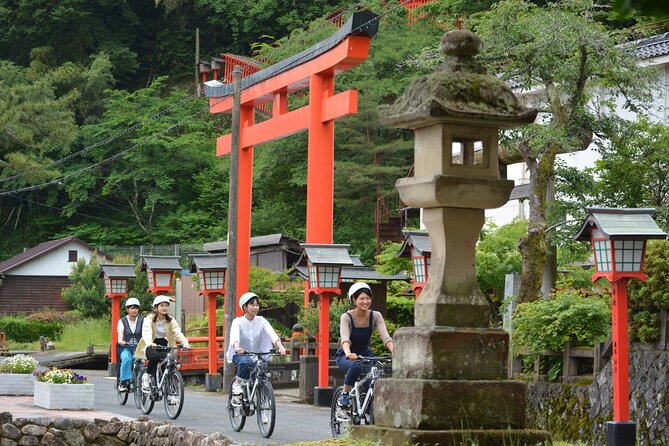
You kick off on Tonomachi Street, Tsuwano’s main street. This first stop is smart because it helps you get your bearings before the tour turns more historical and quiet.
Expect the guide to explain what you’re seeing in plain terms and connect it to Tsuwano’s older image. One reason this works well for first-time visitors is that Tonomachi Street gives you the baseline geography of the town, so the later stops start to make sense as parts of a bigger whole.
The cycling here keeps things light—about 30 minutes total at this stop—so you’re not exhausted early. It’s also a good moment to get used to the bike feel.
Stop 2: Yasaka Shrine and the Hyakkeizu stories you won’t guess on your own
At Yasaka Shrine, you learn the shrine’s history and, more importantly, you uncover hidden stories tied to the Tsuwano Hyakkeizu. The Hyakkeizu is a major thread of the tour, described as a national heritage designation featuring 100 paintings of the Tsuwano feudal domain from around 160 years ago.
Here’s the practical value: without context, a shrine visit can feel like quiet and beautiful but still vague. With the Hyakkeizu link, you start noticing how different scenes relate to the town’s historic identity.
This is also where you begin to feel that the guide is doing something more than reciting facts. They tend to explain in an easy-to-follow way, including small background details that make the shrine feel connected to Tsuwano’s broader past, not floating off on its own.
Stop 3: Narutaki jinja, a waterfall spot, and a brief moment of meditation
Stop 3 brings you to Narutaki jinja, described as a hidden waterfall spot. If you like breaks that are more than just a photo stop, this one is built for that.
You’ll explore the area for about 30 minutes, and the tour includes a chance to practice simple meditation. For me, that combination is the point. It slows the tour down just enough that you reset your attention. When you move back onto the bike afterward, everything feels sharper and less rushed.
There’s also an emotional rhythm change here: the quiet nature setting and the short mental pause help shift from “tour mode” into “observing mode,” which fits Tsuwano’s calm vibe.
Stop 4: Washibara Hachiman Shrine, joyato and baba, plus Yabusame context
Washibara Hachiman Shrine is where the tour gets delightfully specific.
You’ll learn stories behind the large joyato (stone lantern) and the baba (horse track), and you’ll hear how these connect to the Yabusame ritual—horseback archery. This is a great stop if you’re the type who likes how religion, local tradition, and practical space (like where people did an event) overlap.
The best part is how the guide ties objects you can actually see—stone lantern shape, track layout, shrine setting—back to a living tradition rather than treating them like isolated monuments. The tour stays respectful and explanatory, not theatrical.
It’s also a nice change from the nature-focused stop before. You’re back in “human history” territory, with ritual details that make the site feel active in meaning even if you’re just visiting.
Stop 5: Tsuwano Shrine and the rural views around former lords
Stop 5 is Tsuwano Shrine, with an emphasis on the rural views around it and the stories of the former lords of the Tsuwano domain. This is where the tour keeps zooming out, connecting individual stops back to the political world that shaped the town.
You’ll spend about 30 minutes here. The guide’s job is to help you connect what you see now—paths, shrine grounds, everyday rural surroundings—with the era represented by the Hyakkeizu paintings.
If you’re wondering why a cycling tour includes a “former lords” lesson, here’s the practical answer: Tsuwano’s preserved look didn’t happen by accident. It’s tied to the way the feudal domain organized land and community life, and those influences show up in town layout and the importance of certain places.
Stop 6: The 1,000+ year cedar tree that makes the ride feel complete
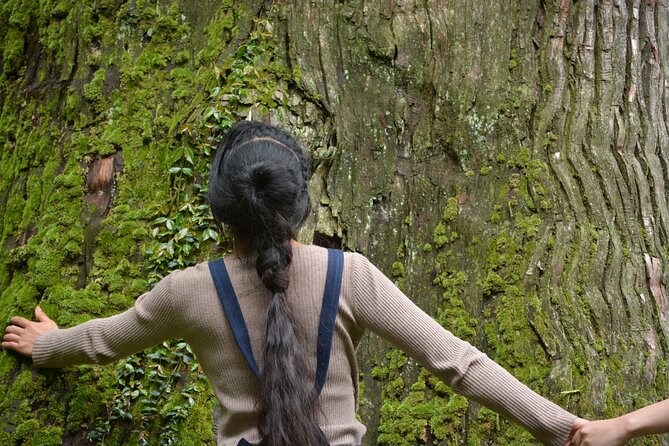
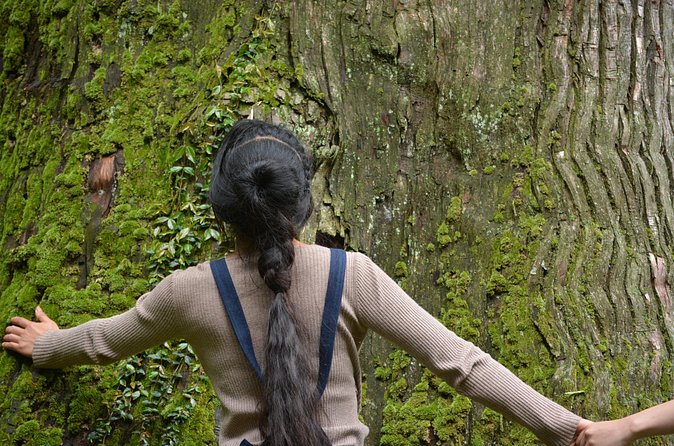
The final stop loops back to Washibara Hachiman Shrine again, but with a different focus. You’ll visit a giant cedar tree said to have watched over Tsuwano for more than 1,000 years.
This ending choice is great because it gives you a visual “anchor.” After moving through streets, shrines, and a waterfall spot, you end with something timeless. The cedar tree becomes a natural closing frame for the tour’s main theme: the past is still present here, not hidden behind a museum wall.
You’ll spend about 30 minutes here, and it’s also a good moment to absorb what the guide tied together across the full 3 hours. When the tour works, that last stop is where it clicks: you stop seeing random sights and start recognizing a pattern.
Why the 30-minute stops and electric bike pace work
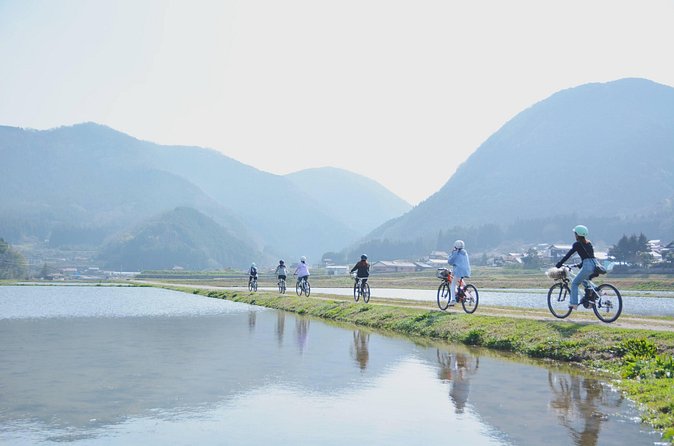
A big part of the positive energy in this tour is the pacing. Each stop is about 30 minutes, and between stops you’re cycling at an easy rhythm. Because it’s on an electric bike, you’re not fighting hills or building endurance while trying to listen to stories.
That pacing shows up especially if you’re someone who worries about physical fitness. The tour is designed so you can enjoy the ride and still pay attention. People have described the meticulous pace as a reason they could fully enjoy the experience even if they weren’t sure they could handle more strenuous travel.
Also, the small group size makes the timing feel better. The guide can slow down when you want a few extra minutes to look, and you’re less likely to feel like you’re being swept along.
A consideration: you will still be cycling. If you have mobility limits or balance concerns, you should think carefully before booking, even with electric assist.
Value for $99: what you actually get
At $99 for about 3 hours, this tour is a good value if your goal is cultural understanding, not just movement.
Here’s what you’re paying for:
- A local guide (included)
- Electric bike cycling (bicycle included)
- Multiple structured stops with explanations
- Admission ticket-free at the stops listed in the itinerary
- A strong interpretive theme tied to the Hyakkeizu
Even though snacks aren’t included, the experience itself gives you a reason to keep going without needing a lot of extras. The tour keeps you busy and engaged with stories at each location, so you’re not waiting around for activities that don’t connect.
For many visitors, the Hyakkeizu angle alone makes this worth it, because it turns Tsuwano from a quiet town into a readable one. You walk away knowing how to look at the place again on your own.
What to bring (and what to plan for) so the tour feels effortless
Snacks aren’t included, so if you’re the kind of person who gets hungry mid-ride, bring something small. You’ll also be outdoors, so dress for weather, since the tour requires good conditions.
Because the tour ends back at the meeting point, you don’t need to plan a complicated second transit step right after. That makes it easier to fit into a day that also includes station time or other sightseeing.
Also, bring curiosity. This isn’t a tour that only works if you love history books. It works if you like understanding why a place looks the way it does and how traditions leave physical traces in everyday streets.
Should you book the Tsuwano Cycling Tour with Local Guide?
Book this if:
- You’re visiting Tsuwano for the first time and want context fast
- You like the idea of matching old Edo-era paintings (Hyakkeizu) to real places you can see
- You want an easy cycling experience thanks to an electric bike and a small group
Maybe skip it (or choose another option) if:
- You don’t want to ride a bike for the full 3 hours
- Weather is unpredictable for your dates and you don’t want to deal with rescheduling
If your schedule is flexible, I think this tour is an excellent way to start Tsuwano. The town can feel quiet and time-warped, and this ride gives you the guide-style map for understanding why.
FAQ
How long is the Tsuwano Cycling Tour?
The tour lasts about 3 hours.
What does it cost?
The price is $99.
Is the tour done on electric bikes?
Yes, it is described as an electric bike cycling tour, and a bicycle is included.
Where does the tour start and end?
It starts at Tsuwano Eki mae Ushiroda in Tsuwano and ends back at the same meeting point.
What stops are included?
You visit Tonomachi Street; Yasaka Shrine; Narutaki jinja; Washibara Hachiman Shrine; Tsuwano Shrine; and a final stop at Washibara Hachiman Shrine.
What’s included in the price?
The included items are the bicycle and a guide.
Are snacks included?
No, snacks are not included.
How big is the group?
The tour has a maximum of 6 travelers.
What if the weather is bad or I need to cancel?
The tour requires good weather. If it’s canceled due to poor weather, you’ll be offered a different date or a full refund. Free cancellation is available up to 24 hours in advance for a full refund.