REVIEW · DA LAT
Cycling from Dalat to Nha Trang
Book on Viator →Operated by Viet Challenge Tours · Bookable on Viator
A long downhill is the main event here. You’ll bike from the cooler hills of Da Lat toward Nha Trang with pine-forest roads, waterfall stops, and Bidoup Nui Ba scenery. I like that the day has real variety: a short climb, then a long glide, plus a lunch break that feels like you escaped the traffic. One drawback to plan for: you can get warm toward the end, since the route trends away from Da Lat’s chill.
What makes this ride work is the structure and support. There’s an English-speaking guide who sets the pace and keeps the group together, and a vehicle follows along for safety and easy bail-out moments. The main consideration is skill and comfort with downhill cycling—most of the fun is also where your hands and brakes get the job.
In This Review
- Key points at a glance
- A Da Lat to Nha Trang bike day built around one long downhill
- Morning pickup and the pine-forest start outside Dalat
- Climb, mountain passes, and Bidoup Nui Ba’s park roads
- Waterfalls and the 30 km continuous downhill you’ll remember
- Riverside picnic lunch before the push toward Nha Trang
- The ride back to Dalat: when legs, heat, and van backup matter
- Guide support that actually changes the day (Bell and Vinh)
- Price and value: what your $107.30 covers on this pass
- What to bring so you enjoy the heat and downhill
- Should you book this Da Lat to Nha Trang cycling tour?
- FAQ
- What time does the cycling tour start in Da Lat?
- Where is the meeting point?
- How long does the tour last?
- Do I get pickup from my hotel?
- What’s included in the price?
- What are the major ride portions like?
- Is there a vehicle backup during the day?
- What if the weather is bad?
- Can I cancel for a full refund?
Key points at a glance
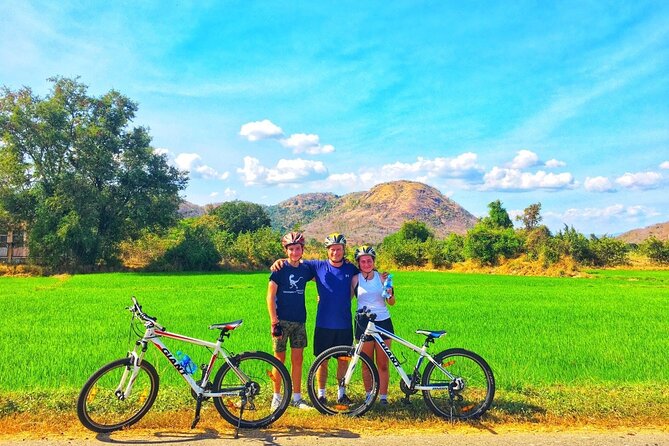
- Bidoup Nui Ba national park riding, with pine forest roads and mountain views
- One long continuous downhill section, roughly 30 km, with waterfalls along the way
- Riverside picnic lunch at the pass area before you head toward Nha Trang
- Small-group vibe, with a maximum of 10 travelers
- Vehicle transfer and backup during the day, so you’re not stranded if legs tire or conditions change
A Da Lat to Nha Trang bike day built around one long downhill
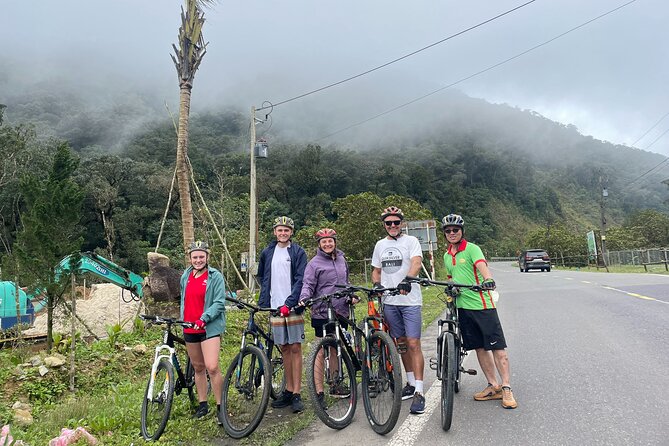
This is a one-day crossing that feels like two different worlds. You start in Da Lat’s higher elevations, where mornings can feel pleasant and crisp. Then you spend the middle of the day working through the pass system—after a climb, the focus shifts to sustained downhill, with views opening up and waterfalls showing up as you roll down.
The payoff is simple: you get distance without spending the whole day grinding uphill. You still do some effort—there’s a climb between mountain passes—but the long downhill is what makes this ride memorable. If you like motion, scenery, and a clear goal for the day, this route fits.
The other big value is that you don’t have to “figure it out.” Transfers handle getting you to the start area, a guide manages the rhythm of the group, and the plan includes a backup car. That matters if you’re traveling with limited bike experience, or if you just want to enjoy the day instead of managing logistics.
You can also read our reviews of more tours and experiences in Da Lat.
Morning pickup and the pine-forest start outside Dalat
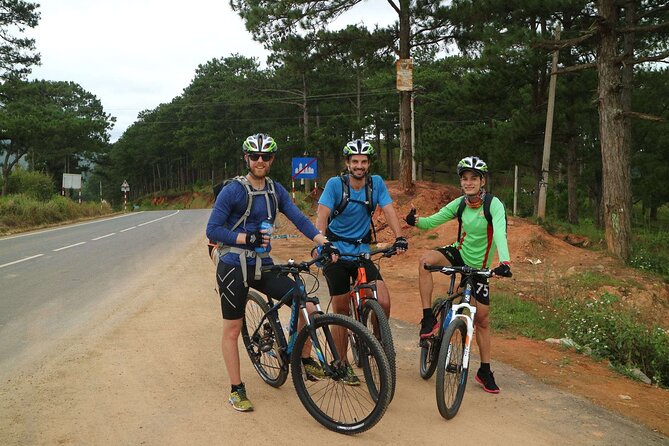
Your day begins with hotel pickup around 7:30am. From there, you’re transferred to the northeast side of Dalat for the cycling start—about 25 km of riding to begin the morning. This matters because it avoids wasting daylight on getting out of town and lets you start with the proper terrain right away.
Once you start pedaling, the vibe is countryside quiet. The first part runs through a pine forest, then you transition into rolling hills with open sightlines. You’ll see farms and countryside stretches, plus small minority village areas that give the route a human scale. In other words, it’s not just a road trip with a bike stuck to it. You’re actually moving through the region.
The early timing also helps you set up for the rest of the day. You’re not fighting peak heat right from the gate. You’re building momentum while conditions are still comfortable enough to enjoy the ride and take photos without sweating through everything you packed.
Climb, mountain passes, and Bidoup Nui Ba’s park roads
The route builds toward a key moment: a 3-kilometer climb to reach the top between passes. That climb is short enough to feel doable, but it’s steep enough to wake up your legs. It also sets the tone for the main event—because once you crest, you’re rewarded with sweeping views and the chance to coast longer than you’d expect.
From there, you’re riding through Bidoup Nui Ba national park, which is a big part of why this trip feels more authentic than a simple downhill stunt. Park riding means you’re on roads and tracks meant for travel through a protected natural area, not a city shortcut. It’s a route where the scenery changes in real time: forest cover, mountain contours, and then the open sky view when you reach higher stretches.
Also, the plan is designed around permits and access. You get the necessary forest and tourist permits handled for you, plus a first aid kit in the mix. That doesn’t make the view better, but it does make the day smoother—no last-minute paperwork stress.
Waterfalls and the 30 km continuous downhill you’ll remember
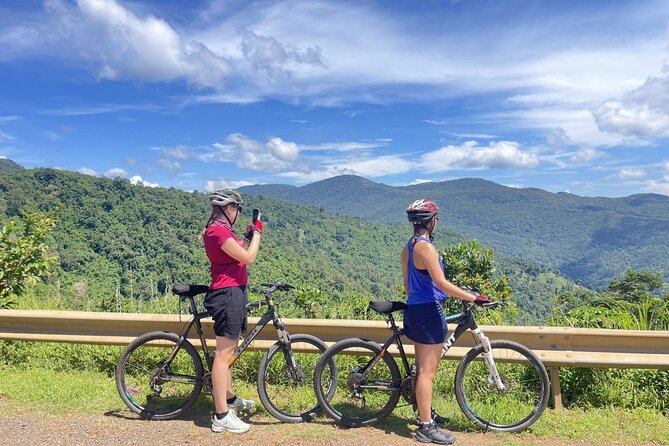
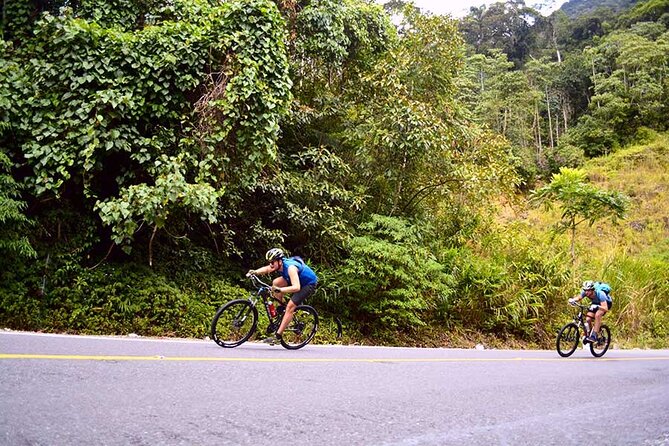
Here’s where the day grabs you. After the climb, you’ll spend the next stretch on a long continuous downhill, roughly 30 km, with waterfalls along the way. Think of it like this: you’ll have enough downhill time to relax your pace, keep your weight stable, and enjoy the scenery instead of constantly looking for the next turn.
This is also the section that makes the trip feel different from “normal” biking. A sustained descent is about more than speed. Your job becomes staying controlled. You’ll want to keep a light grip, avoid hard braking too late, and treat the downhill like a smooth ride rather than a race. If you’re new to hills, the good news is that the day is structured so you’re not forced to suffer—there’s a vehicle backup, and the guide can adjust the pace.
One practical point from the trip experience: bike condition can vary in small ways. In at least one case, gears needed a bit of attention. That’s not a dealbreaker, but it’s a reason to do a quick check when they hand you the bike: shift through gears before you start the downhill, and make sure braking feels firm.
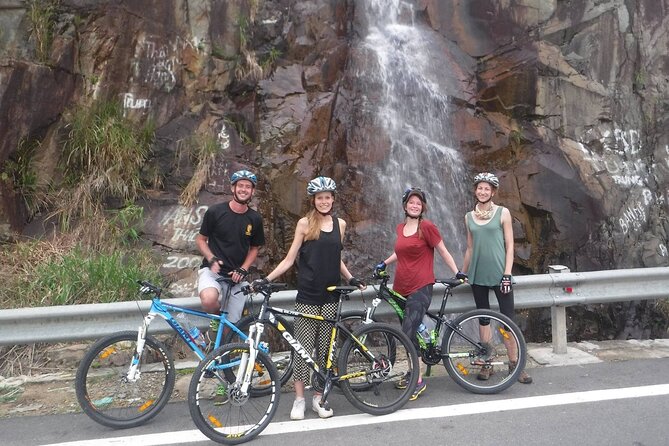
If you’re chasing views, this is the highlight. You’ll look down from below and spot the cascading water. It’s the kind of descent where you start counting less and start noticing more.
Riverside picnic lunch before the push toward Nha Trang
At about 12:00pm, you stop for a picnic-style lunch by the river after reaching the bottom of the pass. This break is more than food—it’s a mental reset. Midday on a pass can feel intense, especially after the climb, and the riverside setting gives you a calm moment before the pace changes again.
The lunch is included, and bottled water is provided. So you can focus on eating and rehydrating instead of hunting for a shop. I also like that the picnic format keeps the stop from dragging. You’re not stuck waiting around for a formal meal schedule.
After lunch, you ride toward Nha Trang city, still with countryside texture. The day continues on smaller farms and rolling hills for about an hour. The route is described as averaging around 70 km total riding distance, but the day isn’t framed as one rigid mileage demand. You can ride more or less depending on your comfort level.
By this point, you may feel the temperature shift. Da Lat’s altitude cooling starts to fade, and the route moves you toward warmer conditions. This is the moment to slow down just a bit, drink regularly, and not overthink your pace.
The ride back to Dalat: when legs, heat, and van backup matter
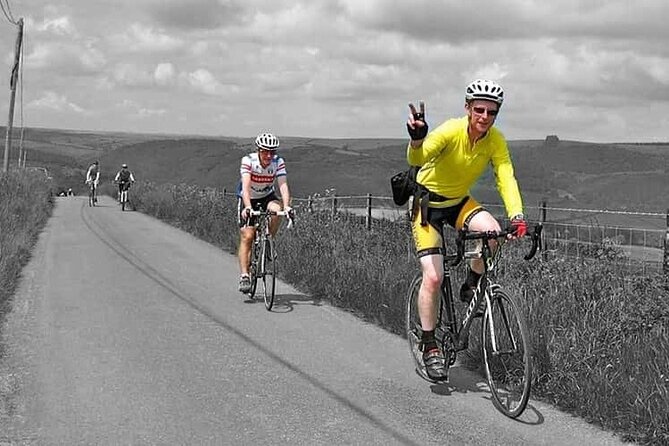
Around 1:30pm, you either bike back to Da Lat or switch to the car, depending on how you feel. This is a smart design choice for a long downhill day. Downhill can look easy, but after hours of steering, balancing, and braking, your body notices it—especially if you don’t ride often.
If you do continue biking back, you’re still cycling in a day that already included a climb and a major descent. So the return can feel different: more about steady effort than about thrills.
If you switch to the vehicle, you get to finish the day without paying the “leg tax.” And that matters for group harmony. This trip can include people who are cycling confidently and others who are more cautious, including older groups noted for wanting a patient guide pace and an easy option to jump in the van.
Either way, you’re back for hotel drop-off around 3:30pm. That gives the day a clean ending: you’re not stuck cycling late into the evening.
Guide support that actually changes the day (Bell and Vinh)
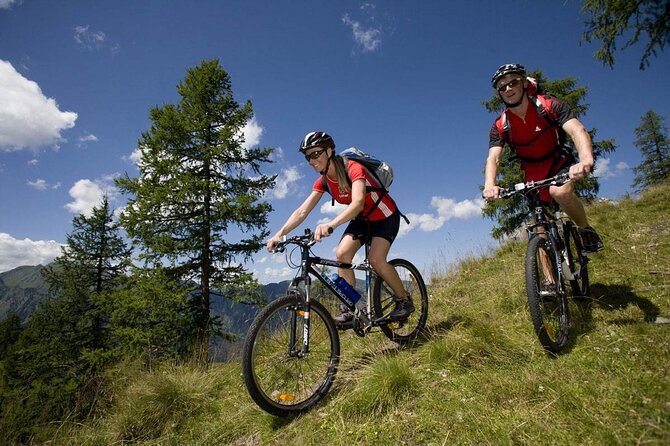
This ride lives or dies on how the guide manages pace. The experience includes an English-speaking guide, and the names Bell and Vinh come up in the ride experience. Both are described as attentive and friendly, with guides who take photos and video for the group and help riders not feel pressured.
I like that guide style tends to reduce the “solo rider anxiety.” You’re not wondering whether you’re going too slow. You’re also not stressed about safety at junctions because the group stays together. And if someone needs to rest or take the backup vehicle, the day’s design accounts for that.
In one experience, guides handled a mixed group of older riders by going patient and slow. In another case, the guide took the stress out of photography by taking care of captures while biking. That’s a small thing, but it changes how you experience the downhill: less distraction, more watching the waterfalls and the view.
Also, the tour runs with a small cap—up to 10 travelers. Small groups are easier to steer on winding roads and keep moving smoothly without turning it into a stampede.
Price and value: what your $107.30 covers on this pass
At $107.30 per person, this is not a “cheap day” in the way a bus ticket is cheap. But it’s also not just a ride with a guide awkwardly present. Your price includes a lot of the invisible stuff that normally costs time or effort.
Here’s what you’re paying for, in practical terms:
- An English-speaking guide who manages pace and safety
- Bike, helmet, and gloves (so you don’t need to rent basic protection)
- Lunch plus bottled water
- All necessary permits for the area you ride
- First aid kit on the day
- Vehicle transfer and vehicle backup, which reduces risk and lets riders bail out if needed
That mix is what makes the day good value. The long downhill is the headline, but the included support is what lets most people enjoy it without overplanning.
If you’re coming from out of town and want a guided, permission-sorted ride that still feels like you’re out in the real countryside, this price makes sense. If you’re an advanced cyclist who hates vans and wants to ride every meter yourself, you might feel like some of the structure limits freedom—but for most people, it’s exactly the right level of help.
What to bring so you enjoy the heat and downhill
The trip provides helmet, gloves, bike, bottled water, and lunch, so you’re already covered on the basics. What you should add is mostly about comfort and safety in real conditions.
Bring:
- Sun protection for the later part of the day, since the ride trends warmer as you head toward Nha Trang
- A layer for the early morning if you’re sensitive to cool air (Da Lat mornings can feel different than midday)
- A small stash bag for personal items you can access easily during stops
- Something to manage sweat and dust, since downhill days can still get dusty on rural roads
And mentally prepare for the day’s shape. Even though the long downhill is the thrill, there is a short climb first, and the day includes enough cycling that you should expect to feel it in your legs. If you treat it like a casual scenic stroll, your body might disagree. If you treat it like a guided ride with breaks and a backup plan, it’s a great match.
Should you book this Da Lat to Nha Trang cycling tour?
I think you should book if you want a guided pass ride that trades hours of decision-making for hours of views. This works best if you like downhill thrills but also want the safety net of a vehicle backup and a guide who keeps the group together. The small group size adds to the feel: more personal, less chaotic.
I’d skip it—or choose another option—if you specifically want to avoid any car support at all, or if you hate the idea of mixed effort (short climb plus long descent). And if you’re very worried about heat later in the day, you’ll need to plan your hydration and pace carefully.
Overall, this is a smart “destination cycling” day: you get the national park feel, the waterfall pass drama, and an easy-to-manage schedule, all in one go.
FAQ
What time does the cycling tour start in Da Lat?
The tour starts at 7:30am, with hotel pickup around that time.
Where is the meeting point?
The meeting point is 38 Đường Tăng Bạt Hổ, Phường 1, Đà Lạt, Lâm Đồng 671220, Vietnam.
How long does the tour last?
It’s listed as about 1 day, and the day ends with hotel drop-off around 3:30pm.
Do I get pickup from my hotel?
Yes, pickup is offered.
What’s included in the price?
Included are an English-speaking guide, bottled water, lunch, bike + helmet + gloves, all necessary permits, a first aid kit, and vehicle transfer.
What are the major ride portions like?
You’ll cycle from the Dalat area toward the northeast start point, do a climb to the top between passes, then enjoy a long continuous downhill with waterfalls before continuing toward Nha Trang.
Is there a vehicle backup during the day?
Yes. There is vehicle transfer, and the plan includes the option to ride back to Da Lat or go by car.
What if the weather is bad?
The experience requires good weather. If it’s canceled due to poor weather, you’ll be offered a different date or a full refund.
Can I cancel for a full refund?
Yes. You can cancel up to 24 hours in advance for a full refund. If you cancel less than 24 hours before the start time, the amount paid is not refunded.