REVIEW · BERLIN
Berlin Wall History Small Group Cycling Tour
Book on GetYourGuide →Operated by BBT-Sightseeing & More · Bookable on GetYourGuide
The Berlin Wall lives in streets, not museums. On this 4-hour small-group bike tour, you follow the Mauerweg between key border-crossing points and see how the Cold War shaped everyday life. I especially liked cycling through the Bornholmer Straße area where the border pressure finally broke, and then getting the story at the Wall Memorials around Bernauer Straße. One thing to consider: most of the Berlin Wall is gone now, so you’ll read the past through traces, markers, and preserved spots rather than long stretches of surviving concrete.
I like that the group stays small, so you get real back-and-forth instead of rushing through names and dates. The guide is German, and guides such as Marcus and Kathrin are known for keeping the ride relaxed while still packing in detail.
You’ll also ride in real Berlin weather, with a rain poncho provided if needed. Since food and drinks aren’t included, bring a plan for a snack stop before or after so the history doesn’t outlast your energy.
In This Review
- Key things to know before you pedal the Berlin Wall route
- Why this Berlin Wall bike tour feels different from a walking tour
- Bornholmer Straße crossing, rabbits on the ground, and Mauerpark
- Bernauer Straße Wall Memorials: the border line you can still feel
- Chausseestraße ghost-station and border-crossing context
- Invaliden Graveyard and Invalidenstraße: the quieter side of the border
- Government Bank to the Parliament of Trees and the ride into central Berlin
- Friedrichstraße, the Tränenpalast, and why you get more than a Wall checklist
- Price and value: what $36 for 4 hours actually buys you
- Meeting point at Bornholmer Straße: easy transit connections
- Ride-ready tips: what to bring and how to stay comfortable
- Who should book this Berlin Wall bike ride (and who might not)
- Should you book? My practical decision guide
- FAQ
- How long is the Berlin Wall history cycling tour?
- What’s the group size?
- Where does the tour start and end?
- What language is the live guide?
- What’s included in the price?
- Is food and drink included?
- What should I bring?
- Is luggage allowed?
- Does the tour run in rainy weather?
- Are there multiple starting times?
Key things to know before you pedal the Berlin Wall route
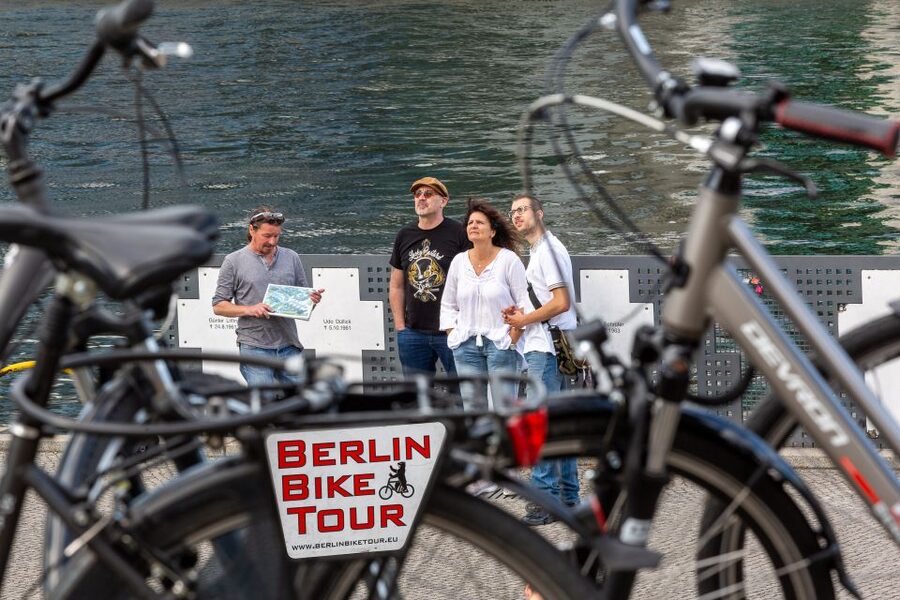
- Bornholmer Straße crossing plus the route toward Mauerpark, where the border story turns from threat to escape.
- Bernauer Straße Wall Memorials with preserved context that explains what the Wall meant in daily terms.
- Chausseestraße ghost-station and border-crossing area, a strong stop for the human side of history.
- Invaliden Graveyard and Invalidenstraße, where the past feels quieter and more reflective.
- Checkpoint classics with context: Brandenburg Gate, Potsdamer Platz, Checkpoint Charlie, and the Tränenpalast on Friedrichstraße.
Why this Berlin Wall bike tour feels different from a walking tour
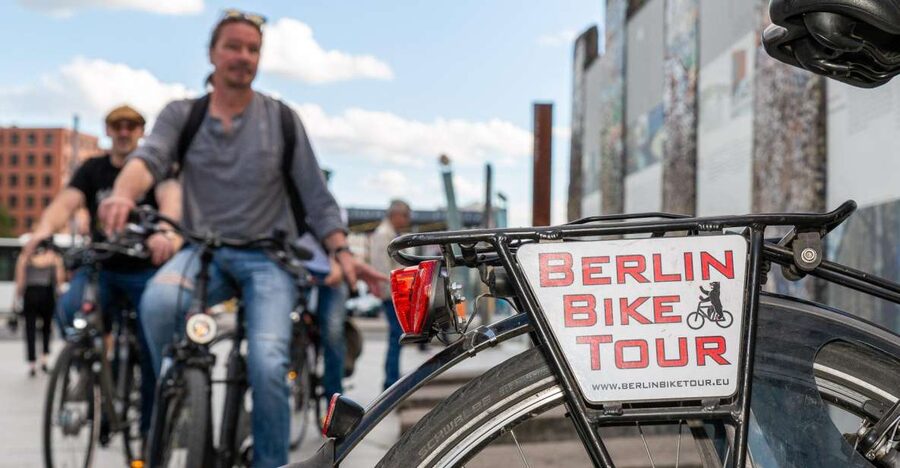
Cycling changes your pace in a good way. You still get the meaning of each location, but you cover more ground and connect the dots between East and West faster than on foot.
This ride focuses on the parts of the Berlin Wall route you can still access today, especially between major former border-control points. Even where the wall itself is missing, you can follow the logic of the border: where people were stopped, where access tightened, and where the atmosphere shifted.
The result is not just a facts-only history session. It feels like you’re tracing a system. And when your guide explains the choices, fences, and crossings, those choices start to make sense.
Bornholmer Straße crossing, rabbits on the ground, and Mauerpark
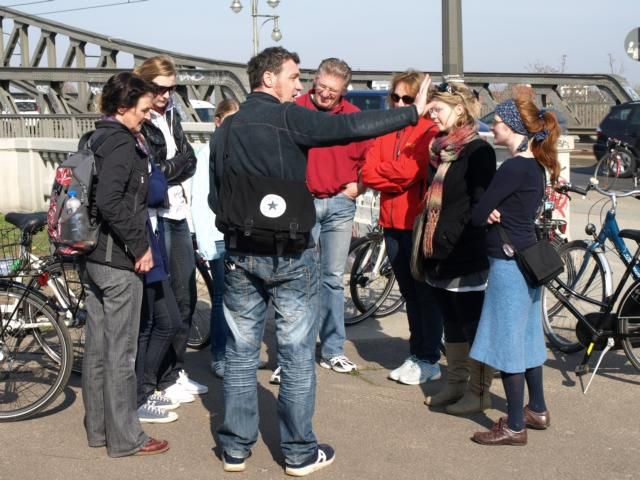
Your tour starts at 75 Bornholmer Straße, right where a key chapter of 9 November 1989 played out. The feeling here is immediate: you’re standing in the place where the first East German citizens crossed, and that matters because the story doesn’t start in a classroom. It starts in a square and a decision.
One of the neat details you’ll hear is about the cherry trees that came to be grown on Bornholmer Straße. They’re the kind of thing you’d normally pass by, but here they become a symbol of how the space changed after the border era.
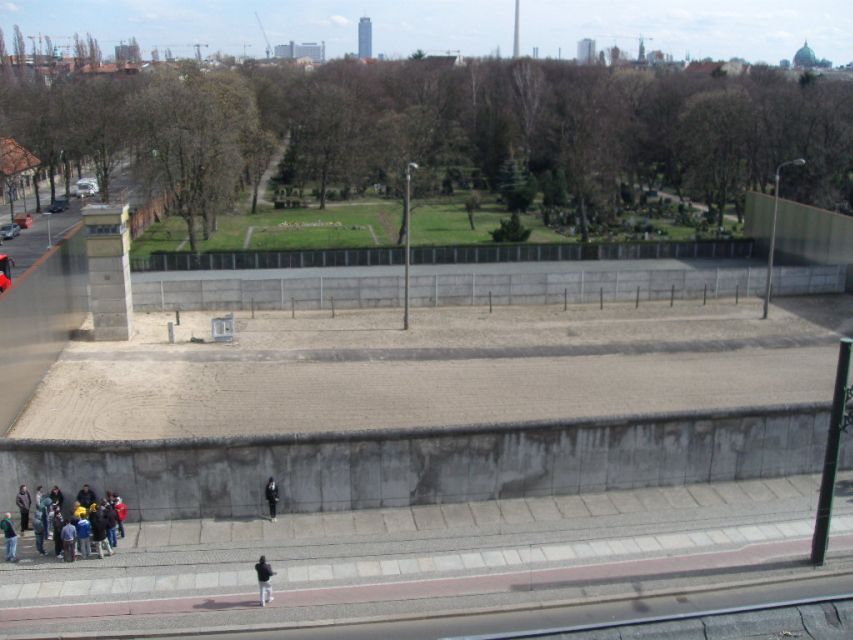
Then you cycle through the area with the last visible elements of the border setup, including an original watchtower and the death-strip. The guide’s job is to help you picture what you’re seeing and what you’re not seeing anymore. That contrast is the whole point: the wall is partly gone, but the planning behind it wasn’t.
You’ll also follow the route past spots described with visual cues, including rabbits shown in pictures on the ground. It sounds like a quirky detail, but it’s actually helpful for orientation when you’re moving quickly and learning at the same time.
From here, you work your way toward Mauerpark, connecting the border story to what Berlin chose to do with these areas after the fall. The change of use is part of why this tour hits.
Bernauer Straße Wall Memorials: the border line you can still feel
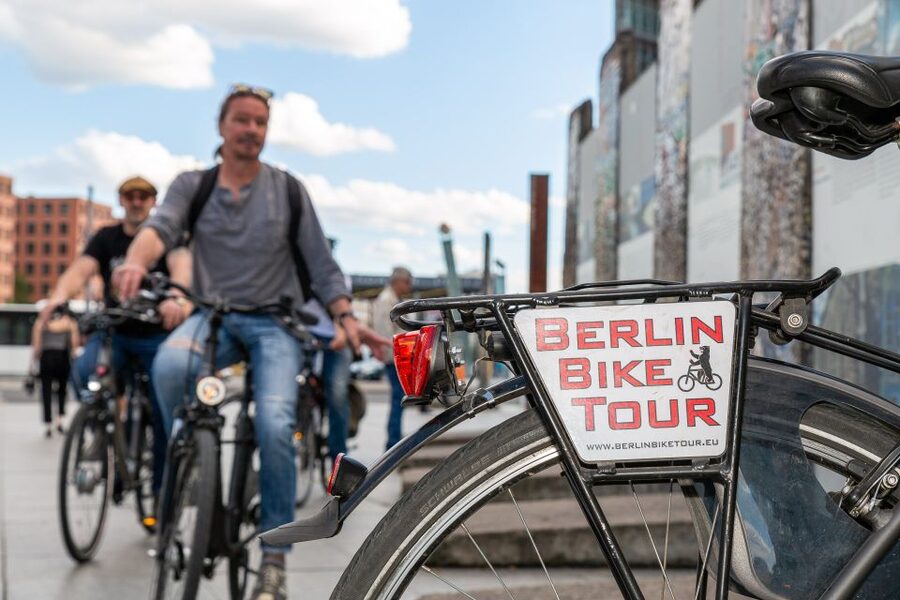
A big strength of this tour is that it doesn’t treat the Wall like a single object. It treats it like a boundary with consequences.
At Bernauer Straße, you visit Wall memorials that help you understand why this area is so important. This is one of the places where the history isn’t abstract. You get a clearer sense of how the border functioned and why attempts to cross were so dangerous.
There’s also the emotional weight of hearing tragic stories while you’re surrounded by real streets and real buildings. That’s when cycling becomes an advantage: you’re not stuck at one viewing point. You move, and the guide helps you keep the geography in your head.
Potential drawback here: if you’re expecting long stretches of preserved Wall, you’ll have to accept a different style. The value comes from interpretation and preserved context, not from big intact sections everywhere.
Chausseestraße ghost-station and border-crossing context
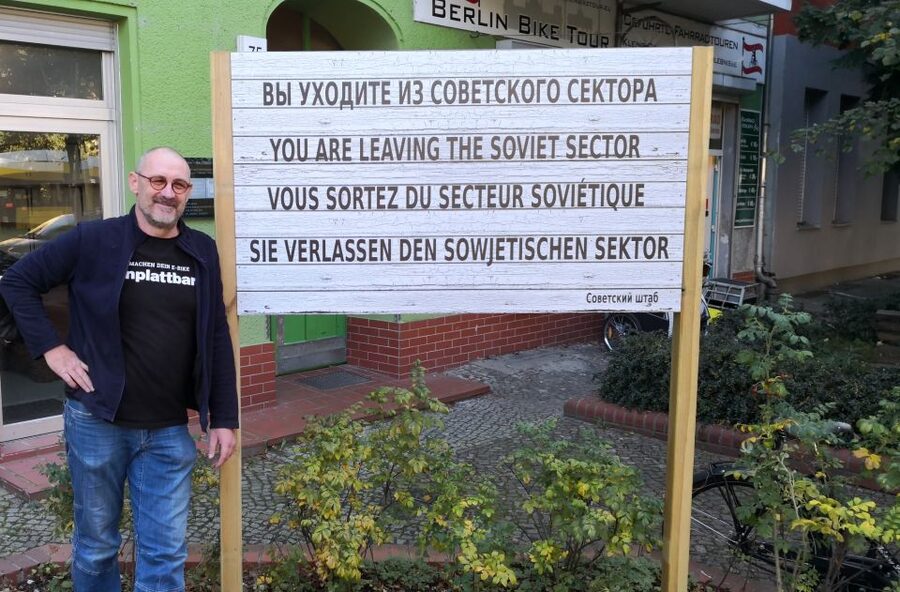
Next, you head to Chausseestraße, where you’ll visit the ghost-station area and the border-crossing point there. This is one of the stops that tends to stick with people because “ghost-station” suggests emptiness, but the guide makes it about tension and control.
You’ll learn how Berlin’s transit and infrastructure were pulled into the border system. That’s a key Cold War theme: it wasn’t only walls and guards. It was how ordinary movement got regulated.
As you cycle through this section, keep your eyes up and your brain switched on. Your guide will connect buildings and routes to what you’re seeing as you pass. If you prefer listening plus looking, this stop is a great payoff.
Invaliden Graveyard and Invalidenstraße: the quieter side of the border
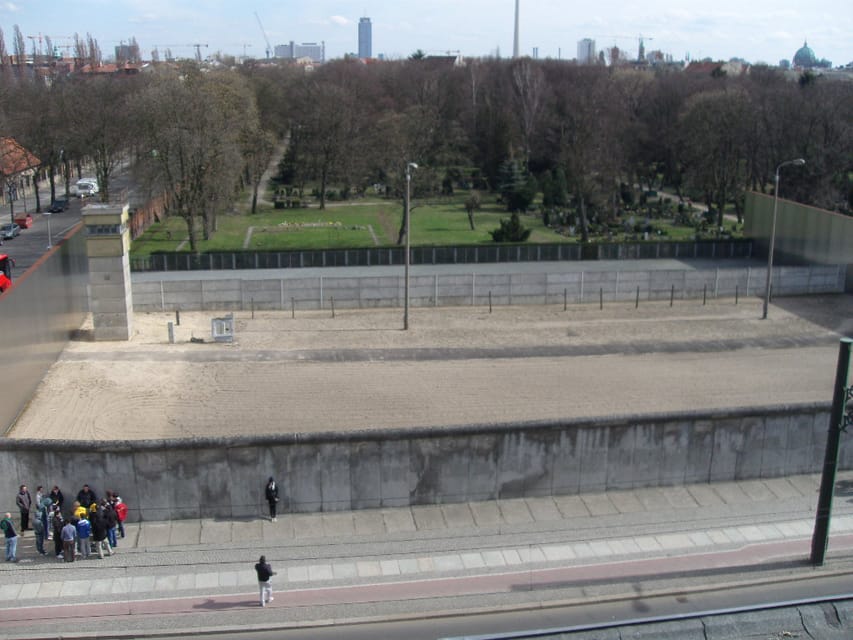
Then the ride shifts to a more reflective tone at the Invaliden Graveyard. This area gives you a different emotional texture than the busier, more central landmarks later in the day.
From there, you’ll also see the former border-crossing at Invalidenstraße. That pairing matters. The graveyard helps you slow down mentally, while the crossing point brings you back to how the border system affected real people in a very practical way.
If you like history that feels human rather than just strategic, this is the section where the story tends to land. It’s also a nice mental reset before you get thrown back into the best-known Berlin highlights.
Government Bank to the Parliament of Trees and the ride into central Berlin
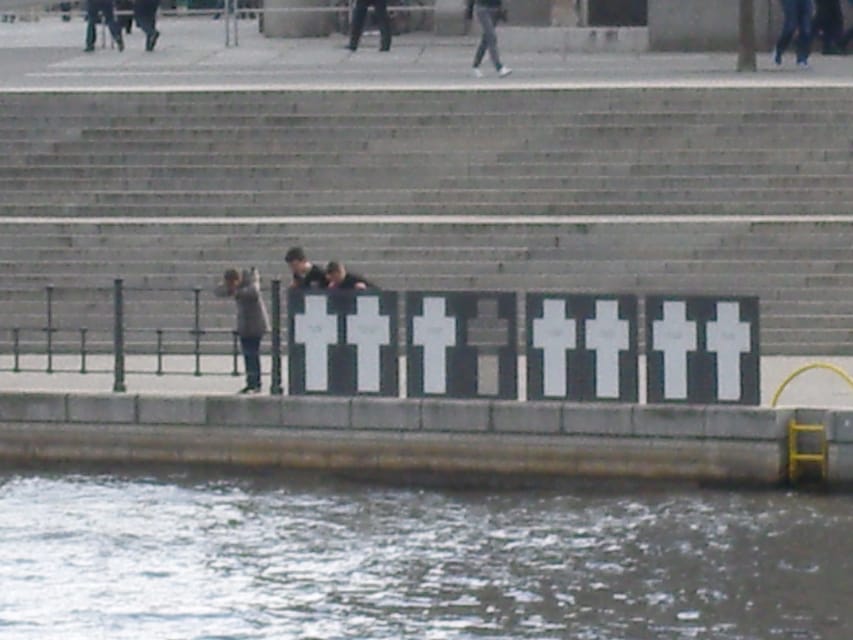
A clever part of this tour is how it uses symbolism without turning it into a lecture. You’ll ride along the Government Bank area and then reach the Parliament of Trees. This is the kind of place where the city shows post-divide priorities—how Berlin reclaims spaces with new meanings.
After that, you start hitting the famous central landmarks that many people come to see anyway. The difference is that you’re seeing them with Wall-route context running in the background.
You’ll pass through or near:
- Brandenburg Gate
- Potsdamer Platz
- Checkpoint Charlie
- Friedrichstraße, where the Tränenpalast (Palace of Tears) sits
Seeing these places in a Wall narrative can be oddly satisfying. It turns tourist stops into waypoints in a much bigger story.
Friedrichstraße, the Tränenpalast, and why you get more than a Wall checklist
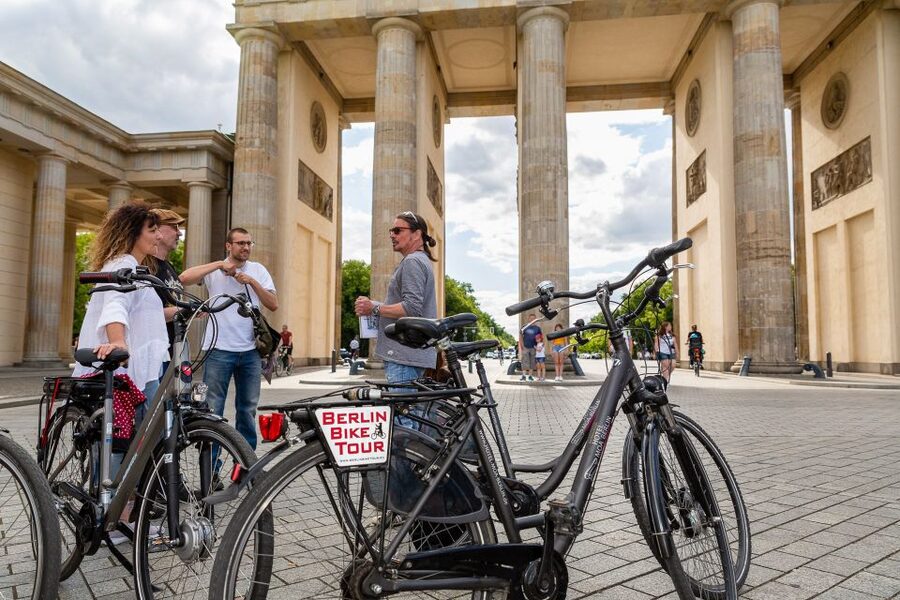
The Tränenpalast, Palace of Tears on Friedrichstraße is a standout moment because it points to the emotional side of crossing attempts. Even if the walls are mostly gone, the human cost wasn’t.
You’ll also cycle through areas that build your sense of Berlin’s layout while staying in the same day-long story arc. The route includes passing Friedrichstadt Palace, Museum Island, the New Synagogue, and the Old Berlin Post Office.
That mix is useful if you want a tour that does more than name-drop. It helps you recognize that the border divide ran through the same city you’re sightseeing today. You’re not just learning about the Wall. You’re seeing the parts of Berlin that had to live with it.
Price and value: what $36 for 4 hours actually buys you
At $36 per person for a 4-hour guided bike tour, this is good value if you want structure and context. You get the bicycle, fees, a city guide, and a rain poncho if necessary.
What you don’t get is food and drinks, so you’ll want to plan for water and a snack before or after. That’s the main budgeting piece to keep in mind.
In plain terms: you’re paying for a guide who can connect locations fast enough to be useful, without turning it into a sprint. The small-group limit (max 8 participants) is also a value factor. Smaller groups generally mean fewer bottlenecks at stops and more time for questions.
Meeting point at Bornholmer Straße: easy transit connections
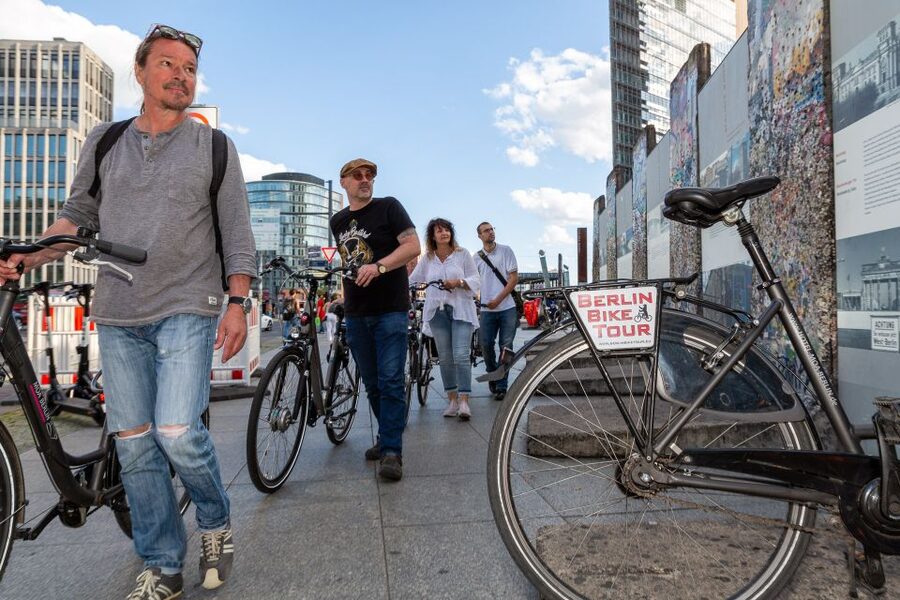
Meet your guide at 75 Bornholmer Straße, Berlin 10439.
For public transport, it’s very walkable:
- About 1 minute from the tram-stop Björnsonstraße (Lines M1, M13, M50)
- About 2 minutes from S-Bahn Bornholmer Straße (Lines S1, S2, S8, S25, S85)
- About 10 minutes on foot from Schönhauser Allee (Lines S8, S41, S42, S85, U2)
You’ll end back at the same meeting point. That makes planning simple, especially if you’re pairing the tour with other central sightseeing later.
Ride-ready tips: what to bring and how to stay comfortable
This tour runs in all weather. On rainy days you’ll get a rain poncho, so bring sunglasses and a sun hat for fair-weather comfort and a camera for the memorial stops.
Bring:
- Passport or ID card
- Sunglasses
- Sun hat
- Camera
Avoid bringing:
- Luggage or large bags
Also, consider the day’s rhythm: since food and drinks aren’t included, don’t assume you’ll find a stop mid-tour. A quick snack plan helps you enjoy the more emotional memorial moments without rushing.
The guide language is German, so if you don’t speak German fluently, you might feel more comfortable if you’re okay with listening through a guided flow rather than deep conversation.
Who should book this Berlin Wall bike ride (and who might not)
This tour is a strong fit if you:
- Want to understand the Berlin Wall through the actual route logic (where the border controls were)
- Like cycling as a way to cover distances without sacrificing context
- Appreciate a guide who can make Cold War details feel approachable and human
It might be less ideal if you:
- Can’t comfortably ride a bike for about 4 hours
- Strongly prefer tours fully delivered in English (this one is German)
- Want only preserved wall segments rather than traces and memorial interpretation
Should you book? My practical decision guide
Book it if you want a small-group, guided, bike-based way to track the Wall when so much of it is gone. You’ll get the high-impact places like Bornholmer Straße, Bernauer Straße, Chausseestraße, Invalidenstraße, and then the famous central hits including Checkpoint Charlie and the Tränenpalast—all tied to a coherent story.
Skip it if your goal is purely sightseeing photos of intact Wall sections. This tour is built for meaning: traces, preserved points, and the guide’s explanations that turn geography into history.
FAQ
How long is the Berlin Wall history cycling tour?
It lasts 4 hours.
What’s the group size?
It’s a small group, limited to a minimum of 3 participants and a maximum of 8 participants.
Where does the tour start and end?
It starts at 75 Bornholmer Straße, Berlin 10439, and it ends back at the same meeting point.
What language is the live guide?
The live tour guide is German.
What’s included in the price?
The price includes the bicycle, fees, a city guide, and a rain poncho if necessary.
Is food and drink included?
No. Food and drink are not included.
What should I bring?
Bring your passport or ID card, sunglasses, a sun hat, and a camera.
Is luggage allowed?
No. Luggage or large bags are not allowed.
Does the tour run in rainy weather?
Yes. It takes place in all weathers, and you’ll be given a rain poncho on rainy days.
Are there multiple starting times?
Yes. Starting times depend on availability, so you’ll need to check what’s offered.