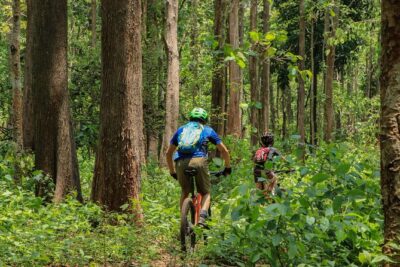
Another Japan waits beyond Tokyo. In a small-group ride, you pedal Okutama’s old trade road and learn the area’s history through shrines, wasabi fields, and quiet mountain villages on the way to Lake Okutama.
I love the up-close pacing for up to six riders, and I love how guide David uses the route itself as a living classroom—spring water you can drink, a shrine built under a large rock, and an old bridge high over the river valley where wildlife might show up.
One thing to plan for: the tour depends on good weather, and waterproof wear isn’t included, so bring a rain layer if the forecast looks questionable.
In This Review
- Key highlights at a glance
- Why Okutama’s old trade road feels worlds away from Tokyo
- Price and value: what $184.61 buys you (and why it’s not just a bike rental)
- The small-group rhythm: what “up to 6 travelers” changes
- Start in Okutama: check in early and get geared up
- Stop 1: Okutama Mukashimichi old road—springs, wasabi, and shrine stops that matter
- Wildlife chances near the suspension bridge (and how to think about it)
- Stop 2: Lake Okutama—man-made scale, dam walk, and a small museum
- Mugiyama Floating Bridge: the calm mid-lake moment
- Back in town: foot-soaking at a local onsen (simple, satisfying recovery)
- Cycling logistics that matter: bikes, helmets, water, and rain planning
- Who should book this Okutama cycling tour
- Should you book? My practical call
- FAQ
- Where is the meeting point and when does the tour start?
- How long is the Tokyo’s hidden nature cycling tour – Okutama Historical Road Tour?
- How much does the tour cost?
- What’s included in the tour price?
- Is there an entrance fee for the stops?
- What should I bring if it might rain?
- What fitness level is required, and can children join?
Key highlights at a glance
- Small group of up to 6 keeps the experience relaxed and easy to follow
- Okutama Mukashimichi old road features wasabi fields, drinking spring water, shrines, and statues
- Lake Okutama dam walk + small museum focus on local heritage with free admission
- Mugiyama Floating Bridge gives you calm mid-lake time
- Local onsen foot soak helps you recover without needing a full spa day
- Intercom helmet helps you hear the guide clearly while riding
Why Okutama’s old trade road feels worlds away from Tokyo
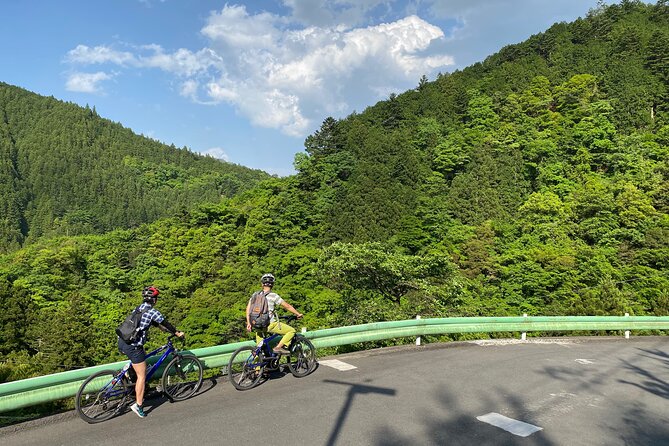
Tokyo is all angles and speed. Okutama is the opposite. In just a few hours, you trade train timetables for forest air, river sounds, and narrow mountain roads that feel like they’ve kept their rhythm for a long time.
This tour is interesting because it’s not built around one big photo spot. It’s built around movement—cycling through the older route used to connect trade and travel between the mountains and the city. Along the way, you stop often enough to absorb the place, but you’re still riding most of the time, so you feel like you actually left Tokyo behind.
I also like that the experience blends nature and culture in a practical way. You don’t just see landmarks; you learn what they meant to people who lived here—why springs mattered, why shrines were placed where they were, and why bridges and dams changed life around the lake.
You can also read our reviews of more tours and experiences in Tokyo Prefecture.
Price and value: what $184.61 buys you (and why it’s not just a bike rental)
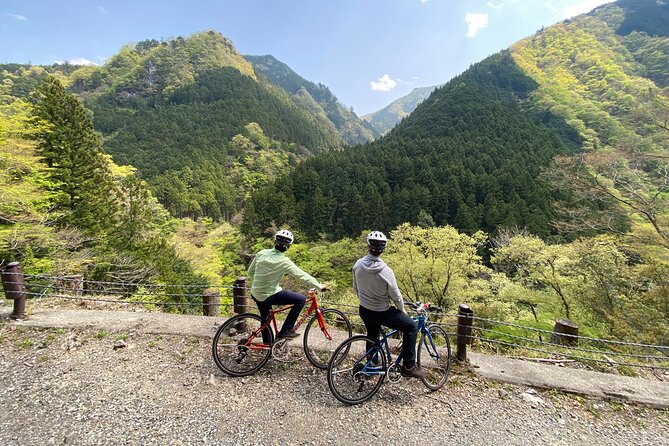
At $184.61 per person for about 3 hours 30 minutes, you’re paying for more than a bicycle. You’re paying for a guide who can make a short ride feel like a full day in context, plus equipment that reduces friction.
Here’s what you get that typically costs extra elsewhere:
- Bike + water already handled, so you’re not hunting for essentials mid-ride
- Intercom helmet, which is a big deal on a route with bends, trees, and changing traffic sounds
- The ride includes free admission at the listed stops (no surprise entrance fees)
For the money, the best part is the “translation layer.” Okutama can feel quiet and self-explanatory at first glance, but David’s route notes help you notice the details you’d likely miss on your own—especially the smaller roadside shrines and statues that mark the road’s story.
The small-group rhythm: what “up to 6 travelers” changes
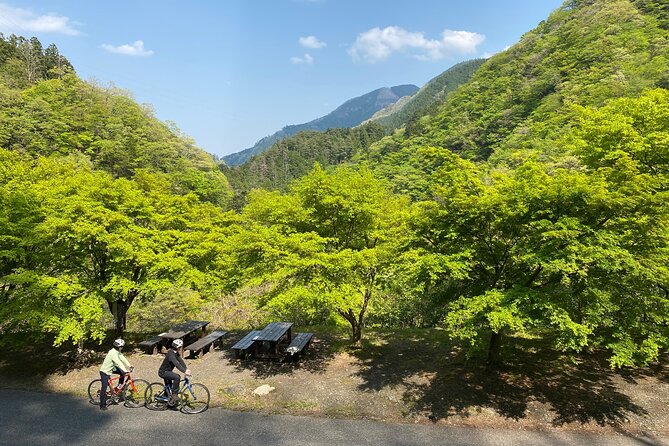
With a maximum of 6 riders, the pace is easier on everyone. You can ask questions without shouting over the group. You get time to slow down at viewpoints and to regroup without feeling like you’re holding people back.
This also means your guide can manage the ride style for different abilities. The route is described as requiring moderate physical fitness, which sounds vague until you’re actually on the road. Even if you’re comfortable on a bike, mountain terrain can sap energy fast. Having a small group helps keep things smooth instead of turning into a “last person speed-run.”
Start in Okutama: check in early and get geared up
The tour starts at 1:00 pm, and you should arrive 30 minutes early to check in and get ready. That means planning for a 12:30 arrival if your start time is 1:00.
The meeting area is in Okutama, in Tokyo’s Nishitama District, and it’s noted as being near public transportation. That’s useful because Okutama can feel remote if you rely only on taxis and day-trips from the city center.
When you show up early, you can handle the basics—getting fitted on the bike, grabbing your water, and making sure your intercom helmet is working. It’s a small step that makes the ride feel calm instead of rushed.
Stop 1: Okutama Mukashimichi old road—springs, wasabi, and shrine stops that matter
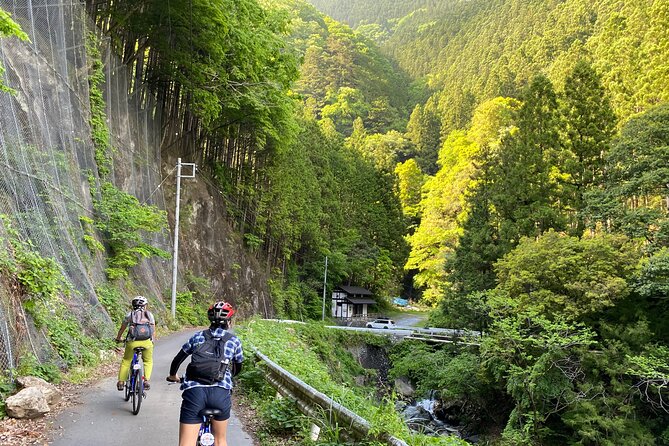
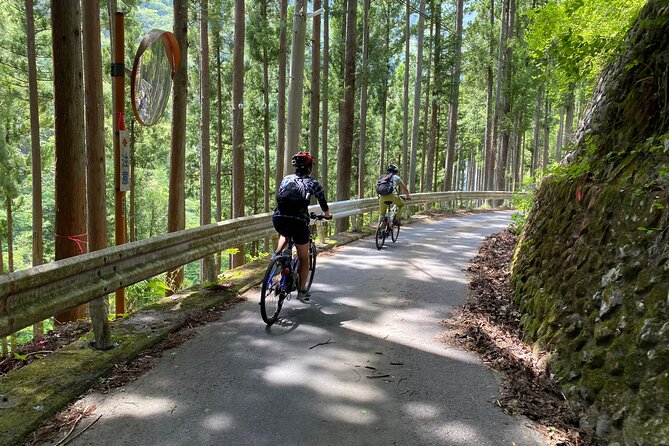
The first stretch is about atmosphere and texture. You cycle through a mountain forest and pass a small village area where you’ll see a spring water source that you can drink. That detail sounds simple, but it changes how you experience the place. You’re not just walking past water—you’re treating it as a real everyday resource the way locals did.
You’ll also see wasabi being grown. Even if you’ve tried wasabi in Tokyo, it helps to connect the flavor to the environment that makes it possible—cool water, shade, and careful growing beds.
Then the route turns more spiritual and historical. You’ll visit a mountain shrine built under a large rock. Visually it’s memorable, but the bigger value is understanding how these spaces were placed and used. In mountain regions, shrines aren’t just decoration. They’re markers tied to the road, the weather, and the safety of travel.
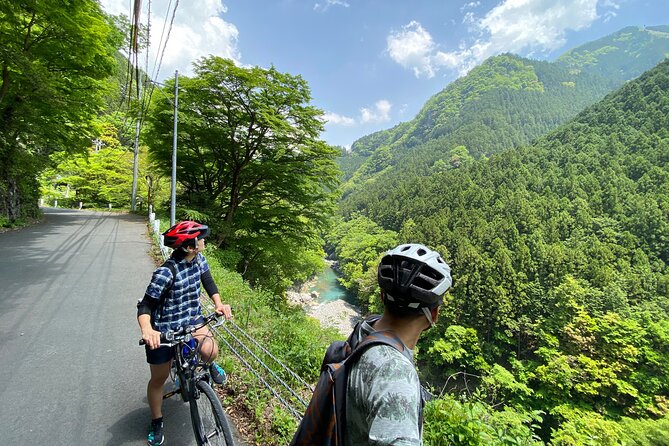
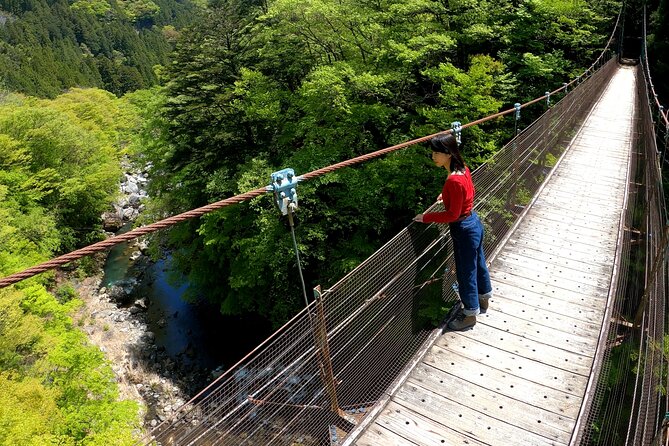
After that, you move toward an old suspension foot bridge high over the river valley. This is where the ride gets “cinematic” in the best way: depth, height, and the sense that the valley below has been a constant for generations.
Possible drawback here: this section is also where you may feel the effort most, depending on the bike you use and how your body reacts to the terrain. If you’re unsure, ask for the easiest bike option available when you check in—some groups use e-bike support, and that can change everything for first-timers.
Wildlife chances near the suspension bridge (and how to think about it)
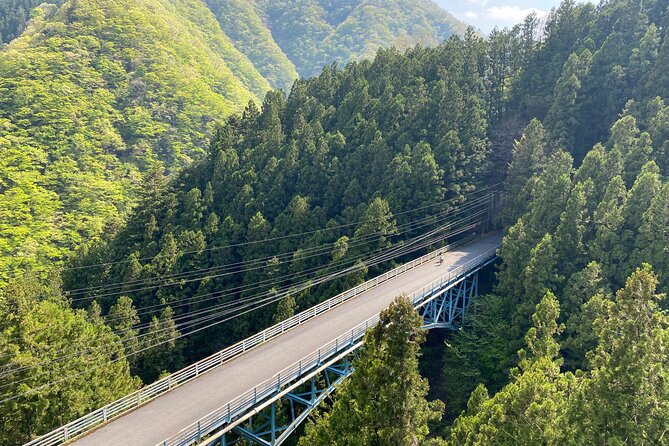
The chance to spot local wildlife—especially monkeys—is part of the appeal. But you should treat it as a possibility, not a guarantee. Forest edges can be quiet for stretches, and wildlife often appears unpredictably.
How to make the most of it:
- Keep your eyes up and slow down your scanning so you don’t miss movement
- Listen as much as you look; sounds often cue what’s nearby
- Don’t stress if nothing appears—Okutama still delivers without wildlife
Even when animals don’t show up, the bridge stop is worth it. It gives you a clear view into the river valley and reminds you why this route mattered in the first place: crossing terrain safely was everything.
Stop 2: Lake Okutama—man-made scale, dam walk, and a small museum
When you reach Lake Okutama, the scenery shifts dramatically. This is described as a large man-made lake, so you’re experiencing the scale of how humans shaped life in the mountains.
You’ll get time to view the lake and visit a small museum focused on local heritage. The museum admission is listed as free, which is a nice bonus because it means the stop stays accessible. You’ll also walk along the dam area, which adds a “how this place works” perspective.
What I like about this part is balance. Cycling through forest and villages is all motion and breathing space. The lake and dam area slow you down. You can take photos, read the museum context, and then decide how you want to use the rest of your time—either soaking in the quiet or focusing on the engineering story behind the water.
Mugiyama Floating Bridge: the calm mid-lake moment
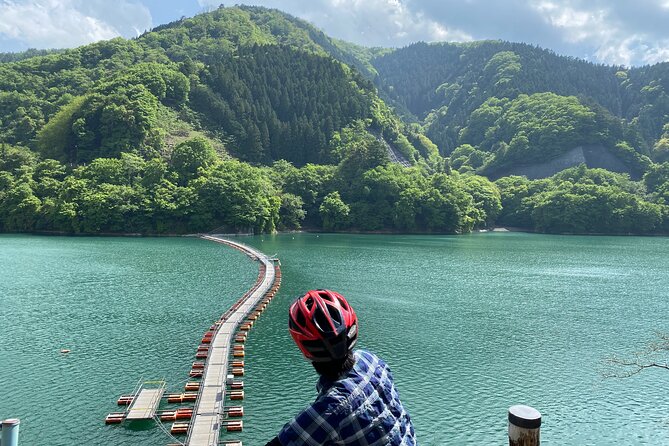
Halfway along Lake Okutama, you’ll visit Mugiyama Floating Bridge. The best way to describe this stop is: stillness. You’re out on the water, surrounded by lake views, and the pacing of the experience shifts from “active sightseeing” to “soft scenery.”
You have about 15 minutes here, which is enough time to take in the bridge, look around, and enjoy the calm without feeling rushed or trapped by crowds.
If you’re someone who enjoys short “reset” breaks during travel, this stop is a good one. It also helps you recover mentally and physically before the ride finishes and you transition back to town.
Back in town: foot-soaking at a local onsen (simple, satisfying recovery)
After the ride, you return to town for a local onsen experience: you soak your feet. This is not a full-day spa plan, and that’s part of the appeal. After a few hours of cycling, your feet usually ask for attention first, and a foot soak hits the spot without turning your schedule into a long recovery session.
It’s also a cultural bridge. Even if you’ve done onsen before, this version feels tied to the ride—less formal, more practical, and perfect for calming down before souvenir browsing.
Cycling logistics that matter: bikes, helmets, water, and rain planning
Included equipment makes a difference on a day like this. You’re provided:
- Bicycle
- Water
- Intercom helmet
The intercom helmet is especially useful. On a forest road, it’s not always easy to hear instructions over wind and bike sounds. Clear audio helps the group stay together and makes stops smoother.
Rain is the wildcard. Waterproof wear is explicitly not included. The experience also requires good weather, and if weather turns poor, you’re offered a different date or a full refund. Translation: don’t treat this as a guaranteed outdoor day no matter what the forecast says.
What I’d pack, based on the fact waterproof gear isn’t included:
- A light rain jacket you can wear while riding
- Optional rain pants if you tend to get soaked easily
- A small dry bag or zip pouch for your phone and wallet
Who should book this Okutama cycling tour
This is a great match if you:
- Want an outdoor day that’s not just “walk and go”
- Like learning how everyday places connect to history
- Prefer a smaller group and a guide who explains what you’re seeing
- Are comfortable with moderate physical effort for about a few hours
You might want to skip it (or adjust expectations) if you:
- Hate getting cold or wet in changing weather
- Have very limited mobility on a bike seat
- Expect a challenge-heavy route. This is described as moderate, not extreme training.
Kids over 12 or over 150 cm tall can join, which makes it a potential family option for older teens who actually like cycling.
Should you book? My practical call
If you want a Tokyo escape that feels real, book it. This ride is built for travelers who like context: you learn why the road existed, you see springs and wasabi in the same day, and you end with a grounded local ritual in town.
It’s also strong value for the structure you get. In a short window, you cover:
- a forest-and-village road section,
- a lake heritage stop with free museum time,
- a calm bridge moment on the water,
- and a foot-soak recovery.
The only real reason to hesitate is weather. If rain is likely and you don’t have a rain plan, you could lose the day to rescheduling.
If you can handle a moderate ride and you pack for rain, this is one of the more memorable ways to see Tokyo’s mountain edge without feeling like you’re just passing through.
FAQ
Where is the meeting point and when does the tour start?
The tour starts at Okutama, Nishitama District, Tokyo, Japan. Start time is 1:00 pm, and you should come 30 minutes early to check in and get ready.
How long is the Tokyo’s hidden nature cycling tour – Okutama Historical Road Tour?
The duration is about 3 hours 30 minutes.
How much does the tour cost?
The price is $184.61 per person.
What’s included in the tour price?
The tour includes bicycle use, water, and an intercom helmet.
Is there an entrance fee for the stops?
Admissions for the listed stops are marked as free.
What should I bring if it might rain?
Waterproof wear is not included if the forecast is rain, so bring your own rain protection.
What fitness level is required, and can children join?
The tour is for travelers with a moderate physical fitness level. Children over age 12 or over 150 cm tall can join.