REVIEW · PENANG
Penang Countryside Cycling Tour. PPA2 by Matahari
Book on Viator →Operated by Matahari cycle tours and travel sdn bhd · Bookable on Viator
Pedal Penang beyond George Town in the morning. This Penang Countryside Cycling Tour takes you out to Balik Pulau and the river-and-fishing areas around Kuala Sungai Pinang, with a ride that mixes quiet lanes, hamlets, and farmland plus real conversations with local hosts. I especially like the small-group vibe (max 12) and the way the day includes more than just scenery—there are tea/coffee breaks, local delicacies, and a hands-on food-making moment with rice-grain powder.
I also like how the tour is built for comfort and control: bicycles are adjusted to your height, helmets are part of the setup, and the pace is described as gradual and suitable for most people. One possible drawback to know up front: this is an outdoor, weather-dependent ride, and rain can change the feel of the trip—though the guides will adjust so you’re not stuck in the worst conditions.
In This Review
- Key highlights that make this ride worth your time
- Why Balik Pulau’s countryside is the right side of Penang
- Price and logistics: what $75.49 buys you (and why it feels fair)
- The bikes, the pace, and how comfortable this really is
- Stop-by-stop: the route that mixes farms, fishermen, and Hakka culture
- Getting from Georgetown to Balik Pulau
- Sector one: hamlets to a goat farm area
- Sector two: Kuala Sungai Pinang fishing village and clan stories
- Tea/coffee and delicacies with the community rhythm
- Kampung Permatang Pasir: welcoming service and fitting
- Rolling back toward the river mouth
- Walking on planks over the water
- Trying rice-grain powder preparation
- Chinese Hakka temple time, connected to fishermen
- More river mouth time, then into working plantations
- Returning to your hotel
- What you actually learn (beyond the scenery)
- Wildlife moments and what to bring for a better ride
- Rain, weather, and how flexible the day feels
- Who this tour suits best
- Final call: should you book Penang Countryside Cycling Tour with Matahari?
- FAQ
- What time does the Penang Countryside Cycling Tour start?
- How long is the tour?
- Is pickup included?
- What’s the group size?
- Is the tour suitable for most people?
- What happens if the weather is bad?
Key highlights that make this ride worth your time
- Early 7:00 am start that puts you on the roads before the day gets busy
- Bikes fitted to your height plus helmet and safety briefing through the Matahari Welcoming Service
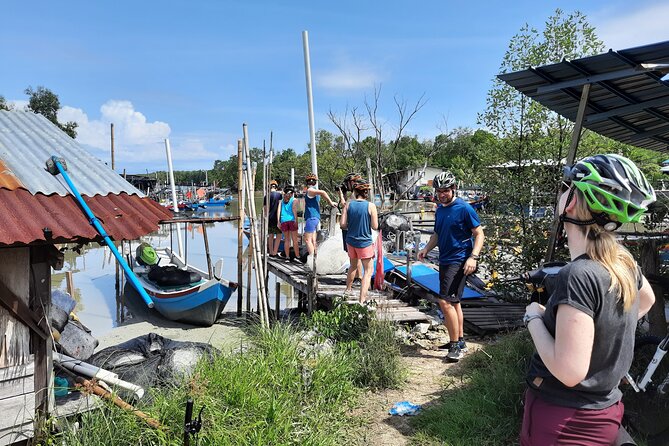
- Waterways and fishing-trade views, including a walk on planks over the water
- Food you can taste, from coffee/tea with local delicacies to trying rice-grain powder preparation
- Cultural stops that explain daily life, including a Chinese Hakka temple connected to the fishing community
- Guides with real local roots, such as Princillia with SJ and Eng Choon Wooi
Why Balik Pulau’s countryside is the right side of Penang
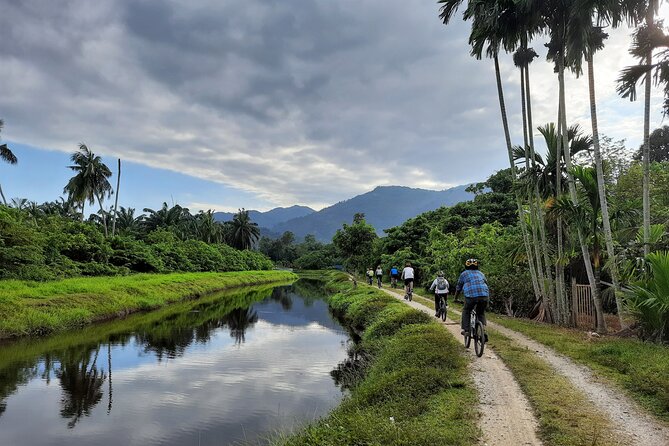
Penang is famous for George Town, but the island has another personality once you leave the main sights. This tour leans hard into that quieter Penang: you’re riding between hamlets, village lanes, waterways, and working farmland. The result is a day that feels like you’re seeing how people live when they’re not performing for tourists.
I like that the route starts with a gradual approach. It matters because countryside cycling is still cycling—narrow lanes, turns, and uneven edges can add up—but a gentle start helps you get your rhythm early. Once you’re rolling, you’ll be surrounded by the everyday details: farm activity, village life, and the riverfront work that runs through Kuala Sungai Pinang.
The other big draw is the human scale. With a maximum of 12 travelers, you’re not just a passenger in a bus tour. You can actually listen, ask questions, and notice how the community mixes cultures and routines in the same place.
Price and logistics: what $75.49 buys you (and why it feels fair)
The price is $75.49 per person, and at this length—about 4 hours—it has a simple goal: get you out to the countryside and into the daily-life parts of the island without wasting half your day on transit. A 40-minute transfer from Georgetown to Balik Pulau is included, and there’s also a return transfer at the end.
Here’s what makes the value feel solid: you’re not paying only for bike rental. The tour bundles guidance, safety setup, cultural interpretation, and multiple stops where you eat or try something. The stops themselves are listed as free admission, which keeps the cost from ballooning in the middle of the day.
Also, there’s pickup offered and a mobile ticket, which reduces friction. In practical terms, it means less time hunting for meeting points and more time pedaling.
The bikes, the pace, and how comfortable this really is
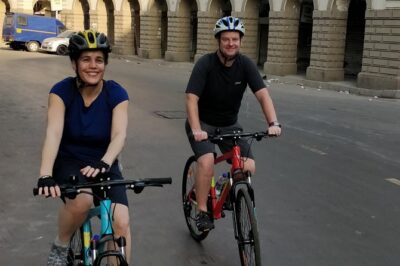
Cycling comfort isn’t just about having a bike. It’s about whether it fits you and whether the ride is manageable in the real world. This tour states that each bicycle is issued to suit your height, and your setup includes helmet fitting and a safety briefing under the Matahari Welcoming Service.
From the way the ride is described—paths, back routes, a gradual start, and flat cycling—it’s clearly aimed at everyday cyclists, including first-timers. One review summed it up as relaxing and rural, with quiet narrow roads and a route that doesn’t feel like hard mountain work.
Still, I’d treat it as an outdoor cycling experience, not a city spin class. Expect to be on real village roads and river-adjacent paths. If you’re new to balancing on narrower lanes or you hate getting slightly wet, you’ll want to bring the right gear and go in with calm expectations. The good news: the guides are attentive, and rain situations can be handled by adjusting how you’re outside.
Stop-by-stop: the route that mixes farms, fishermen, and Hakka culture
This itinerary is short on paper minutes but packed with variety. You’ll transfer first, then cycle in sectors with breaks and village moments built in.
Getting from Georgetown to Balik Pulau
You start at 7:00 am, and you’ll be taken from Georgetown to Balik Pulau by car/MPV or van for about 40 minutes. I like this because you don’t have to plan your own transport to the start of the countryside ride.
If you’re the kind of traveler who gets cranky before coffee, plan for an early start. This is one of those tours where showing up on time actually improves the day.
Sector one: hamlets to a goat farm area
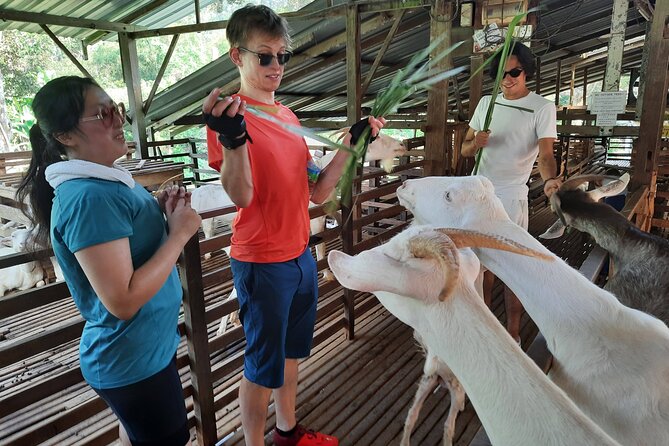
Once you’re on the bikes, you roll out along paths passing hamlets toward a goat farm. This is the part that sets your expectations: you’re not riding through postcard scenery only; you’re riding through where people actually live, with multicultural village life you can observe up close.
It’s also where the gradual approach pays off. You settle in, get comfortable on the bike, and start paying attention to the details—vegetation along the route, village routines, and the way waterways shape the layout.
Sector two: Kuala Sungai Pinang fishing village and clan stories
You then cycle toward Kuala Sungai Pinang, described as a rustic fishing village. Here, the tour shifts from scenery to story. You’ll hear an inside story about Chinese clan migration and settlement beginning in the early 19th century, and the visit includes a Hakka temple element tied to local fishermen.
This matters because it explains why the village looks the way it does. You’ll see that these places weren’t built randomly—they reflect migration patterns, work, and community worship.
Tea/coffee and delicacies with the community rhythm
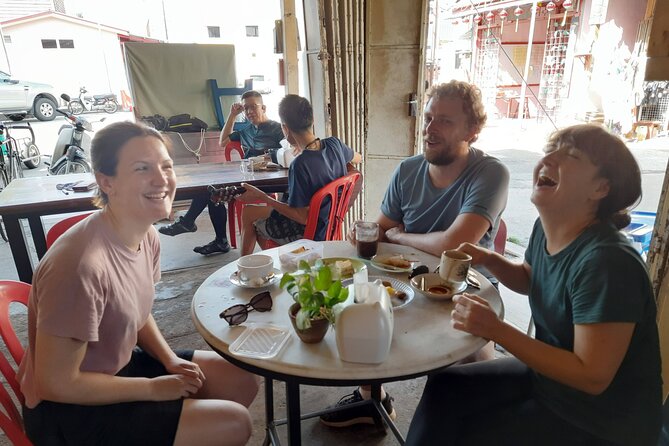
Next, there’s a stop to observe how this multiracial community lives and mingled, followed by coffee/tea and tasting local delicacies. This is one of the best ways to travel on two wheels: you’re not forced into a formal restaurant. Instead, you get a taste of everyday hospitality tied directly to where you’re riding.
One practical note: eat when you’re offered food. These breaks are short, and you’ll likely want energy for the later parts by the river.
Kampung Permatang Pasir: welcoming service and fitting
You arrive at Kampung Permatang Pasir, Balik Pulau, where the host welcomes you. This is where the Matahari Welcoming Service happens: safety briefing, bicycle and helmet fitting, and an introduction to your lead guide.
I like this structure because it prevents the awkwardness of trying to get ready while the ride already started. You also get confirmation that the bike setup matches your height, which makes a big difference on a multi-stop ride where you’ll be shifting gears and braking often.
Rolling back toward the river mouth
After the welcoming moment, you return to your saddle and move slowly toward the river mouth in Kuala Sungai Pinang. The area is described as busy with activities and trades, which is exactly what you want to see on a cycling day. This isn’t a quiet museum setting.
You also get a change in texture: village lane to riverfront life. Your pace becomes more observational, and you’re likely to slow down when you see nets, boats, or birdlife.
Walking on planks over the water
One stop is designed for up-close viewing: you can get near the fishing trades through planks built over the waters. The guide helps you connect what you see with what it means—types of fish, birds, and other animals in the habitat, plus a challenge to spot as many as possible.
If you like nature and photography, this is the moment. Bring your phone or camera and be ready for close, slightly different angles than you’d get from a bridge.
Trying rice-grain powder preparation
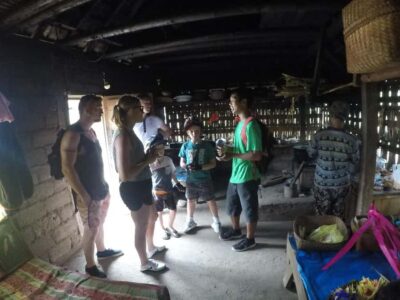
Then comes a hands-on cultural food activity: making rice-grain powder, described like a panacea and used through generations. You’ll try it yourself while the guide walks you through the steps.
This is the kind of stop that makes a cycling tour feel real. It’s not just watching. It’s learning how a village food process works—simple, practical, and tied to local needs.
Chinese Hakka temple time, connected to fishermen
After that, you’ll walk through the village atmosphere and step into a small Chinese Hakka temple. The focus is on the function and importance of the worship place for fishermen living in the area.
This stop works best when you view it as part of the fishing world, not a standalone sightseeing object. It helps connect spirituality to daily work and community life.
More river mouth time, then into working plantations
You’ll head back toward the river mouth again, then finally cycle past palm oil estates and plantation plots on the way to the finishing point.
This last stretch is a good reality check: Penang isn’t only heritage buildings and street food. There’s agriculture and large-scale work too. Seeing plantation areas from the bike can make the island’s economy feel more grounded.
Returning to your hotel
You finish with the return transfer to your hotel, about 40 minutes. The day ends before it turns into a long exhaustion spiral, which is useful if you want evening plans later.
What you actually learn (beyond the scenery)
The learning on this tour isn’t framed like a lecture. It comes from the stop choices: goat farm areas, a fishing village, Hakka worship spaces, hands-on food prep, and plantation views. Put together, you get a clearer picture of how different cultural threads and livelihoods sit side by side on Penang Island.
From guide-led stories—like the Chinese clans migration and settlement—you understand why communities cluster around work routes and how identity shows up in daily spaces. The Hakka temple stops add that layer of meaning, especially when the guide links it to fishermen.
And the food moments do more than fill time. When you taste local delicacies and try rice-grain powder preparation, you see that “local life” isn’t only buildings and costumes. It’s food processing, hospitality, and routine.
Wildlife moments and what to bring for a better ride
This is a countryside cycling day, so you should expect nature to show up. One review mentioned seeing monkeys and wildlife along the route, and the river habitat stops add birds and animals to the mix.
What I’d bring:
- A light rain layer, because weather can change quickly
- Comfortable shoes you can walk in at village stops
- Sunglasses and sunscreen for morning light
- A camera or phone with enough storage for riverfront close-ups
If you’re wondering whether you’ll be in shade—most of the day is outdoors. That early start helps, but you’ll still want sun protection.
Rain, weather, and how flexible the day feels
The tour states it requires good weather. If it’s canceled due to poor weather, you’ll be offered a different date or a full refund. That’s the official side of it.
On the lived side, at least one experience included a lot of rain, and the guides were good about ensuring people weren’t left out in torrential conditions. So you should plan for the possibility of wet weather, even if the morning looks fine.
My practical advice: pack smart for changeable weather. Even a small umbrella or a light waterproof jacket can turn a stressful moment into a manageable one.
Who this tour suits best
This ride is a strong fit if you want:
- A break from George Town’s streets
- A relaxed cycling day with a gradual approach
- Cultural stops that connect to daily work
- Food tastings plus at least one hands-on moment
It also works for many fitness levels because the experience is described as something most travelers can participate in, with easy, flat-feeling segments and a short overall ride time.
If you hate early mornings, tight scheduling, or you have very limited flexibility in rainy conditions, you’ll want to think twice. This is outdoors, so the day is always tied to the weather.
Final call: should you book Penang Countryside Cycling Tour with Matahari?
I’d book it if your idea of a great Penang day includes countryside life, riverfront fishing trade, and a few real cultural stops with food. The price feels fair for what you get: a morning start, guided small-group cycling, fitted bikes and helmets, and multiple village moments.
You might skip it if you only want famous landmarks and don’t care about working villages and plantations. This tour is about normal life on the island, not postcard history. If that’s your style, it’s an excellent use of half a day.
FAQ
What time does the Penang Countryside Cycling Tour start?
The tour start time is 7:00 am.
How long is the tour?
The experience runs for about 4 hours.
Is pickup included?
The tour offers pickup, and there are also transfers from Georgetown to Balik Pulau at the start and back to your hotel at the end.
What’s the group size?
The tour has a maximum group size of 12 travelers.
Is the tour suitable for most people?
The experience states that most travelers can participate, and the ride is described as a relaxed, easy countryside route with a gradual approach.
What happens if the weather is bad?
The tour requires good weather. If it’s canceled due to poor weather, you’ll be offered a different date or a full refund.