REVIEW · MARSEILLE
Marseille Shore Excursion: Calanques National Park by Electric Mountain Bike
Book on Viator →Operated by EVTT PROVENCE · Bookable on Viator
Calanques looks like it belongs to hikers only, but this electric mountain bike route brings you in fast. I like how the electric pedelec helps you cover real distance without turning it into a suffer-fest, and I love the fact you reach the Calanque de Sormiou area with guide navigation and frequent photo stops. One thing to consider: the ride can be rough and steep in spots, so you’ll want real bike control for inclines and descents.
You start right at the cruise area with port pickup, then roll out from the Pointe Rouge side through roads that quickly put you into the park mood. The guide handles route-finding and commentary, so you’re not stuck staring at a screen while the cliffs and sea steal your attention.
This is a small group outing (max 12), run in English, and it’s built for people with at least moderate physical fitness. If you’re expecting an easy, flat “city biking” day, you might feel surprised by the mountain-bike style roads and the pace on descents.
In This Review
- Key things I’d mark on your mental map
- From the cruise port to Pointe Rouge: getting rolling without stress
- Electric pedelec setup: helpful assist, not a free ride
- Roy d’Espagne to la Cayolle and Cortiou’s Pass: the climb that pays off
- Calanque de Sormiou and the turquoise water break
- Pastré Castle, the Canal de Marseille, and Marseilleveyre cliffs
- Pace, terrain, and the one thing you should not ignore
- Price and what makes it feel like value at $144.57
- Practical tips for a smooth 3-hour shore outing
- Should you book this electric Calanques bike tour?
- FAQ
- FAQ
- How long is the Calanques National Park e-bike shore excursion?
- What time does the tour start?
- Is port pickup and drop-off included?
- How many people are in the group?
- Are the bikes electric?
- Is a helmet included?
- Is the tour offered in English?
- Is food or drink included?
- What physical fitness level do I need?
- What if the weather is bad?
- Can I get a refund if I cancel?
Key things I’d mark on your mental map
- Port pickup and drop-off so you’re not wrestling with taxis on a cruise timetable
- Pedelec assist that helps you climb while still giving you a workout
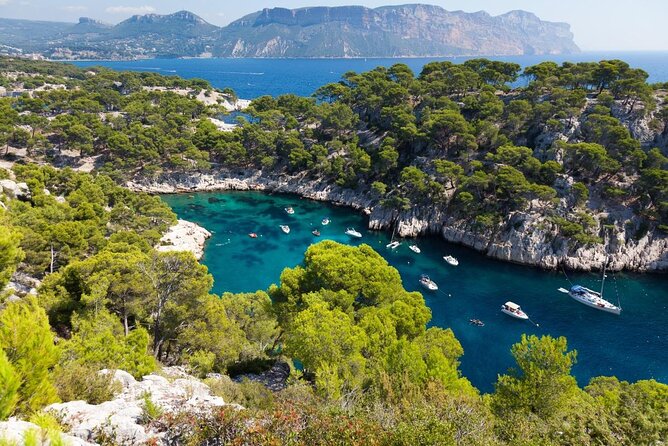
- Routes through la Cayolle and Cortiou’s Pass toward Calanque de Sormiou
- Beach time at the Calanques plus a visit to a small fishing port and hamlet
- Shaded return ride by the Canal de Marseille with Marseilleveyre cliff views
- Small group size (12 max) makes it easier to pause, regroup, and take photos
From the cruise port to Pointe Rouge: getting rolling without stress
Your morning starts with pickup from your cruise terminal. The transfer across Marseille takes about 25 minutes by minivan or taxi, which is a big deal on a shore excursion. You get to arrive at the start point without planning, dragging bags, or guessing how the streets connect.
Once you’re near the sea in the Pointe Rouge area, you’ll meet your guide and get set up with the electric mountain bike. There’s time to learn the settings on the pedelec before you leave the starting zone and get onto the park-side roads.
This is one of the reasons I like this tour type for cruising: the operation is designed to get you back to the ship early. They also say they always wait for you to start, and they guarantee you’ll be back in advance.
You can also read our reviews of more tours and experiences in Marseille.
Electric pedelec setup: helpful assist, not a free ride
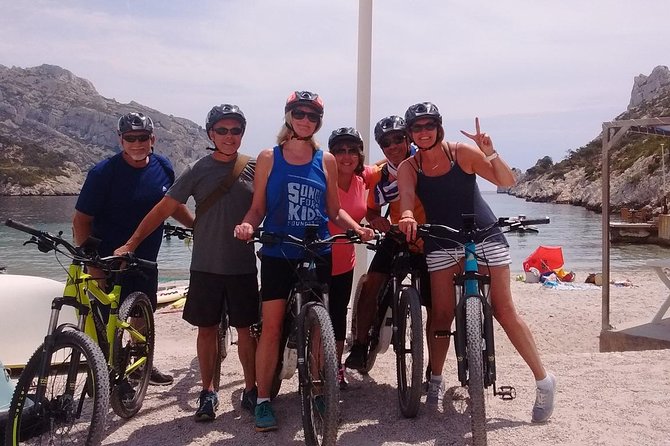
An electric assist bike can feel like cheating—until you hit real road. Here, the pedelec helps with effort, but you’re still responsible for shifting gears and controlling speed, especially on descents. One safety-focused note: you should know how to shift and brake on downhill grades.
Before you roll out, spend those few minutes getting comfortable. Test your braking a couple times in a safe spot. Try the assist levels so you know what to expect when the terrain changes.
Also, helmets are provided (certified), and that matters here because the roads are not flat and smooth. In one experience, someone pointed out helmet fit and safety checks as an issue, so I’d treat it as a reminder to adjust your helmet properly before you ride.
Roy d’Espagne to la Cayolle and Cortiou’s Pass: the climb that pays off
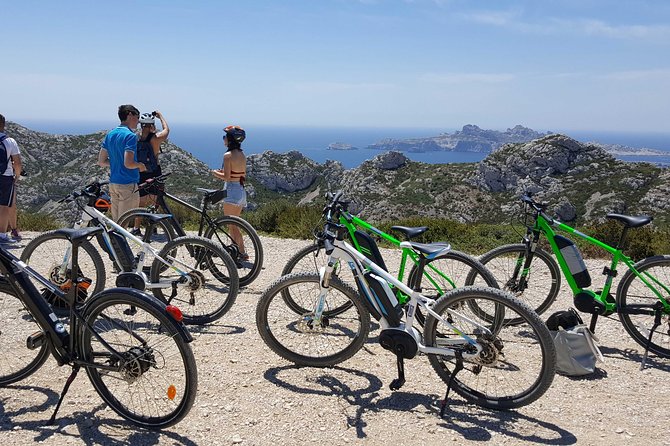
The route leaves the Pointe Rouge side and heads toward the Roy d’Espagne area on small roads. Even though the bikes are electric, you still feel the route turning from city streets into park roads.
Then you move onto a road normally closed to traffic for vehicles, and that change in atmosphere is instant. It’s quieter, it feels more “in the wilderness,” and you’re set up for proper views as you climb.
La Cayolle and Cortiou’s Pass are the kind of names you remember because they belong to the steep stretches and the sea reveals. You ride through the park area toward Cortiou’s Pass, and your first big payoff comes as you near the Calanque system.
This is also where the “good for people in good shape” line really shows up. One account described it as more intense than expected, with rough terrain and steep changes in grade. So if you’ve mostly ridden flat paths, you may want to pause and think: can you handle uneven road and the kind of braking you need at speed?
Calanque de Sormiou and the turquoise water break
Reaching the Calanque de Sormiou area is the heart of the tour. The route brings you to the National Calanques Park zone, where the cliffs and water shape everything. You’re not just seeing “a viewpoint”; you’re getting access to a small beach setting with that famous mix of steep rock walls and sea color.
On the way in, you also visit a small fishing port and its hamlet. That stop changes the feel from scenery-only to lived-in coastal life. You get a break from riding, you can reset your legs, and you’re reminded that this is a working coastline as well as a postcard.
From May 1 to Sept 31, motor vehicle access is restricted. That’s a key reason electric bikes make sense here. It’s not just convenience; it’s how you reach places that would otherwise be harder by car during the busy season. In the same spirit, the guided stops help you see the park’s details—fauna and flora by ground level, plus what’s going on under and over the water when conditions allow.
There’s time to cool off. If you want to swim, this is the moment. One ride account said they didn’t get the chance to swim because the pace felt rushed, so I’ll be honest: plan your priorities, and don’t assume the schedule will automatically stretch to your personal water goals.
Pastré Castle, the Canal de Marseille, and Marseilleveyre cliffs
For the return, you retrace part of the route back toward La Cayolle, then the ride continues again into the Calanques park area on large tracks and easy paths toward Pastré Castle.
This section is a rhythm change. After the more dramatic calanque approach, you shift into a shaded ride along the Canal de Marseille. The cliffs of Marseilleveyre frame the route, and that combination—shade, movement, and big rock walls—feels like a nice reset after the steeper segments.
If you have time and you’re up for extra scenery, there may be detours depending on the day’s timing, including the port of Madrague de Montredon or Goudes. These optional add-ons are useful because they let the guide adapt to group pace and energy.
The tour also includes multiple stops for heritage and nature observations. Think: short pauses where the guide points out what to look for on land and in the air, and how the coastline changes. If you like meaning behind scenery (not just photos), those stops are a real part of the value.
Pace, terrain, and the one thing you should not ignore
Let’s talk honestly about ride difficulty. This outing is rated for moderate physical fitness, and the electric assist helps. Still, several descriptions emphasize that this is not a gentle family cycle path.
You should expect steep climbs and steep declines, and roads that can be rough. One account described it as high intensity and more appropriate for experienced mountain bikers, including moments with fast downhill speed where riders had to follow closely. Another account praised the need for an electric bike on rough terrain and said the views were excellent.
So here’s my practical advice: before you commit, ask yourself these questions.
- Can you control your speed on downhill sections using braking?
- Are you comfortable riding over uneven road or rocky surfaces?
- Do you trust yourself to stay with the group even when the terrain changes fast?
If the answer is no—or if you’re bringing teenagers who mostly ride on smooth pavement—then this might still work, but only if the group pace and guide expectations match your comfort level. One family story included teens around ages 12 and 14 who had a great time, which shows it can work for younger riders when everyone handles the bike well.
Also remember: you’re on a shared route environment at times, and one rough-experience account mentioned traffic circles. That’s another reason to stay switched on and not treat this like a closed-course trail.
Finally, guides have first aid training (but they aren’t doctors). In one account, another group member stepped in to help after a fall. That’s exactly the kind of moment you hope never happens—but it’s a reminder to wear your helmet correctly and to ride within your limits.
Price and what makes it feel like value at $144.57
At about $144.57 per person for roughly three hours, you’re paying for three things that add up in a hurry: electric bike access, a guided route through the park, and cruise-port logistics.
Here’s the value math I see:
- Electric bike + helmet included means you’re not renting gear elsewhere or trying to figure out where to store it.
- Port pickup and drop-off is often the hidden cost on Marseille cruises. If you’ve ever dealt with last-minute transport, you know how quickly that burns money and time.
- A small group (12 max) makes it easier to get navigation help and more frequent stops, which matters when you want the scenery plus the “how to read this place” commentary.
What’s not included is food and drink. So you should budget for a snack and water. And if swimming is part of your plan, bring a realistic view of how quickly you’ll need to get back on the bike.
Is it a bargain? If you were going to rent an e-bike anyway and still pay for guide-level navigation, the total often creeps close to this price. If you just want an easy sightseeing bus day, then it’s overpriced for your needs. But if you want active access to Calanques highlights, the structure makes sense.
Practical tips for a smooth 3-hour shore outing
This is a morning-style excursion that ends back at your meeting point, with the expectation you’ll return to the ship early. Timing is key on cruises, and the schedule is tight enough that you should show up ready.
Wear clothes you can move in. You’re on a mountain bike, even with assist. Bring layers, because coastal areas can shift from cool to warm quickly.
Because food and drink aren’t included, pack a small snack if you’re the type who gets hungry mid-ride. You’ll also want water even if the stops include breaks.
If you’re new to pedelec bikes, take the setup time seriously. Practice your shifting and braking before you roll out into the steeper sections. The guide handles navigation, but you handle safety.
One more note from the real-world experiences: a few people ran into bike issues, but the ride still finished for them. That’s another reason to treat the first couple minutes as a check: make sure the bike feels right, the brakes work, and the assist responds how you expect.
Should you book this electric Calanques bike tour?
I’d book it if you want active access to the Calanques and you’re okay with mountain-bike terrain. You’ll likely love it if you enjoy steep viewpoints, short nature-and-heritage stops, and the feeling of getting into the park without fighting cars—especially during the months when vehicle access is restricted.
I’d hesitate if your idea of biking is smooth, level, and slow. If downhill speed makes you nervous, or if you’re not confident braking on rough ground, you’ll probably feel stressed instead of excited. In that case, look for a gentler option and save your energy for walking portions.
If you do book, do two things: set expectations about intensity, and talk with the guide (out loud) about your comfort level before you start. That conversation alone can prevent the most common problem: feeling rushed while trying to keep up.
FAQ
FAQ
How long is the Calanques National Park e-bike shore excursion?
It’s about 3 hours.
What time does the tour start?
The start time is 9:00 am.
Is port pickup and drop-off included?
Yes. Port pickup and drop-off are included, and pickup and drop-off time is flexible.
How many people are in the group?
The group maximum is 12 travelers.
Are the bikes electric?
Yes. You ride electric mountain bikes with pedal assist (pedelec).
Is a helmet included?
Yes. A certified helmet is included.
Is the tour offered in English?
Yes, it is offered in English.
Is food or drink included?
No. Food and drink are not included.
What physical fitness level do I need?
You should have moderate physical fitness. You also need the ability to shift gears and brake on descents.
What if the weather is bad?
This activity requires good weather. If it’s canceled due to poor weather, you’ll be offered a different date or a full refund.
Can I get a refund if I cancel?
Yes, there’s free cancellation up to 24 hours in advance for a full refund.