REVIEW · ANTIGUA GUATEMALA
Antigua Guatemala: Half-Day Mountain Bike Tour with Guide
Book on GetYourGuide →Operated by Old Town Outfitters · Bookable on GetYourGuide
Volcán downhill on a bike is a special kind of therapy. This guided ride starts high on Volcán Acatenango and funnels you onto fast, flowy volcanic singletrack, then builds to a long, view-filled finale. I love the sheer amount of downhill you get for a half-day, and I also love the real cultural stop at the San Andrés ruins, where a 16th-century earthquake-wrecked church sits in the valley. The main drawback: this is not a lazy cruise. Expect steep, technical sections and creek crossings, plus a couple of climbs that will make your legs pay attention.
You’ll be with a small group (12 max) and a live English guide, which matters a lot when the trail gets sketchy. If you’re the kind of rider who likes knowing what you’re seeing—volcano names, ridge viewpoints, and what you’re passing—this setup feels extra worth it. One more consideration: it’s not ideal for anyone with low fitness or anyone prone to motion sickness, since you’re on a shuttle and the trail can be jolting.
Key things I’d circle before you go
- 2,500 feet of downhill on singletrack early in the ride
- San Andrés ruins and the 16th-century earthquake-wrecked church
- Full-suspension bike + helmet plus a water bottle you keep
- English guides such as Gilberto and Joel (attentive and helpful on harder spots)
- A 45-minute final descent with rocks, drops, switchbacks, and an aqueduct-style finish
In This Review
- Why This Antigua Ride Feels Like Volcanic Freeride
- Morning Setup in Antigua: Meeting at Old Town Outfitters
- The 8,300-Foot Launch: 2,500 Feet of Singletrack Downhill
- San Andrés Ruins: Where the Ride Meets Antigua’s Past
- The Grind Back Up: 4×4 Road to a 656-Foot Push
- Lush Forest and the Final Big Descent Set-Up
- The 45-Minute Finale: Switchbacks, Drops, and an Aqueduct Trail
- Gear, Bike Feel, and Why the Small Group Matters
- Fitness Reality Check: Motion Sickness and Technical Trail Bits
- Price and Value: Is $80 Worth It for 4.5 Hours?
- Should You Book This Antigua Mountain Bike Tour?
- FAQ
- What time does the tour start and where do I meet?
- How long is the ride?
- What’s included with the tour price?
- Do I need to bring my own food or drinks?
- What should I bring and prepare before I go?
- Is this tour suitable for kids or accessibility needs?
- How difficult is the route?
Why This Antigua Ride Feels Like Volcanic Freeride
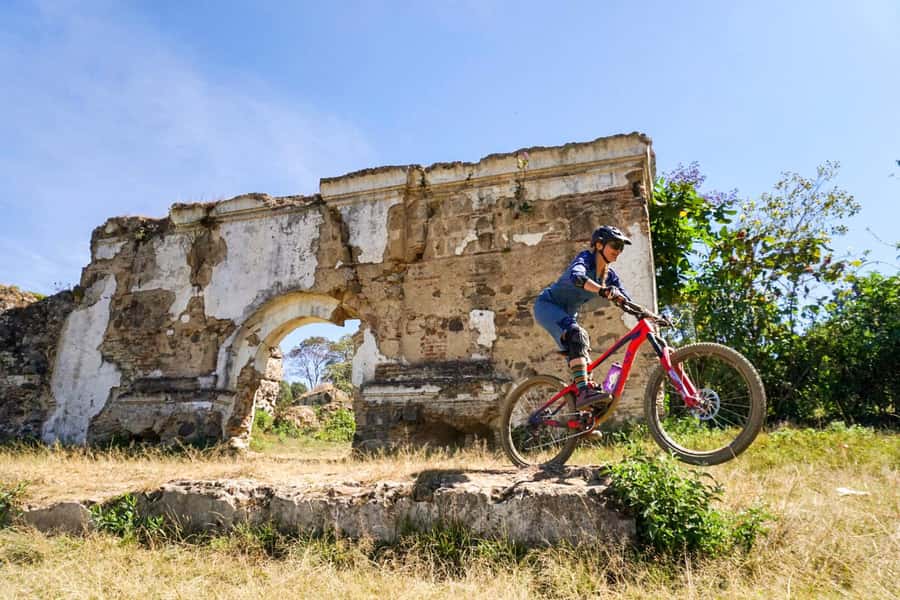
This is a half-day that doesn’t waste time on sightseeing you can do from a bus window. The big idea is simple: get up high on Volcán Acatenango, then ride down through Antigua’s volcano valley using trails that cut ridges and skirts farm country. You’re not just looking at mountains—you’re moving through them.
Two things make it click. First is the amount of vertical you cover (tons of descent for 4.5 hours). Second is that the scenery changes in chunks: alpine slopes to farmland to forest to big ridge viewpoints. That pacing keeps you mentally engaged, especially during the moments when your legs are working.
The vibe in the small-group format also matters. With only 12 participants, the guide can steer you through technical sections and help you stay smooth. In the same spirit, the ride feels built for fun downhill rather than racing—though it definitely includes serious “hold on” bits.
Morning Setup in Antigua: Meeting at Old Town Outfitters
You meet at 09:00 at the Old Town Outfitters shop (Avenida Sur No.12, one block south of Central Park on the corner of 5th Avenue and 6th Street). If you want to grab anything last-minute—snacks, gear, or clothing—you can do it at the shop, which is open daily from 08:00 to 18:00.
Then the day shifts from Antigua street life to mountain logistics. The tour includes a shuttle that takes you up to the trailhead outside Antigua at about 8,300 feet (2,600 meters). That altitude jump is part of the ride’s thrill, but it’s also why you should dress smart. Sunglasses and sunscreen are worth it here, and comfortable clothes make a difference when you’re climbing and then flying downhill.
Also, plan to come with the right basics: a charged smartphone, personal medication, and a signed waiver. You’ll want your phone for photos and, practically, to keep track of what the guide explains. Just don’t show up with a backpack you need to carry—those aren’t allowed.
The 8,300-Foot Launch: 2,500 Feet of Singletrack Downhill
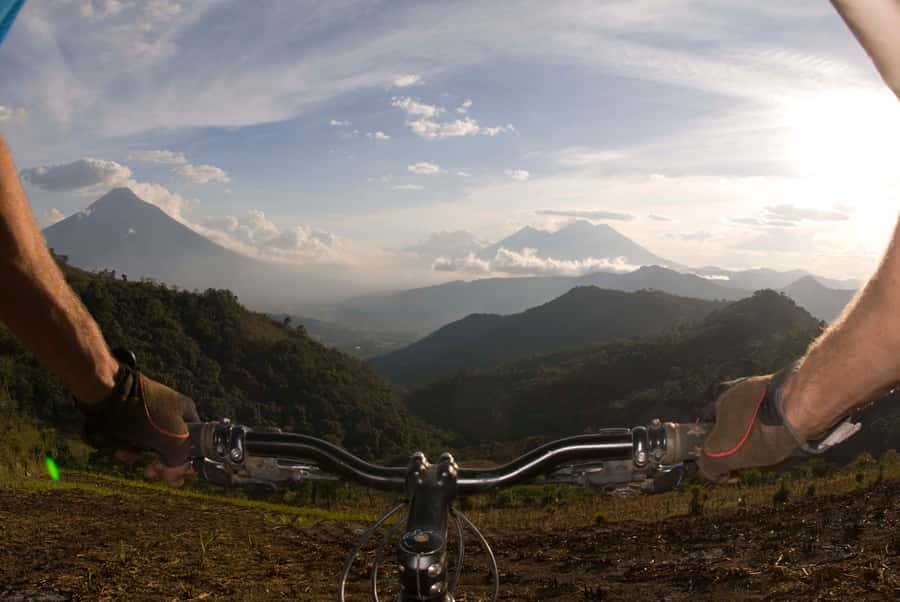
Once you start, the ride does its job: it gets you moving without endless waiting. You’ll shuttle up, then do a brief climb before landing on singletrack descent that follows agricultural trails along a dramatic ridge.
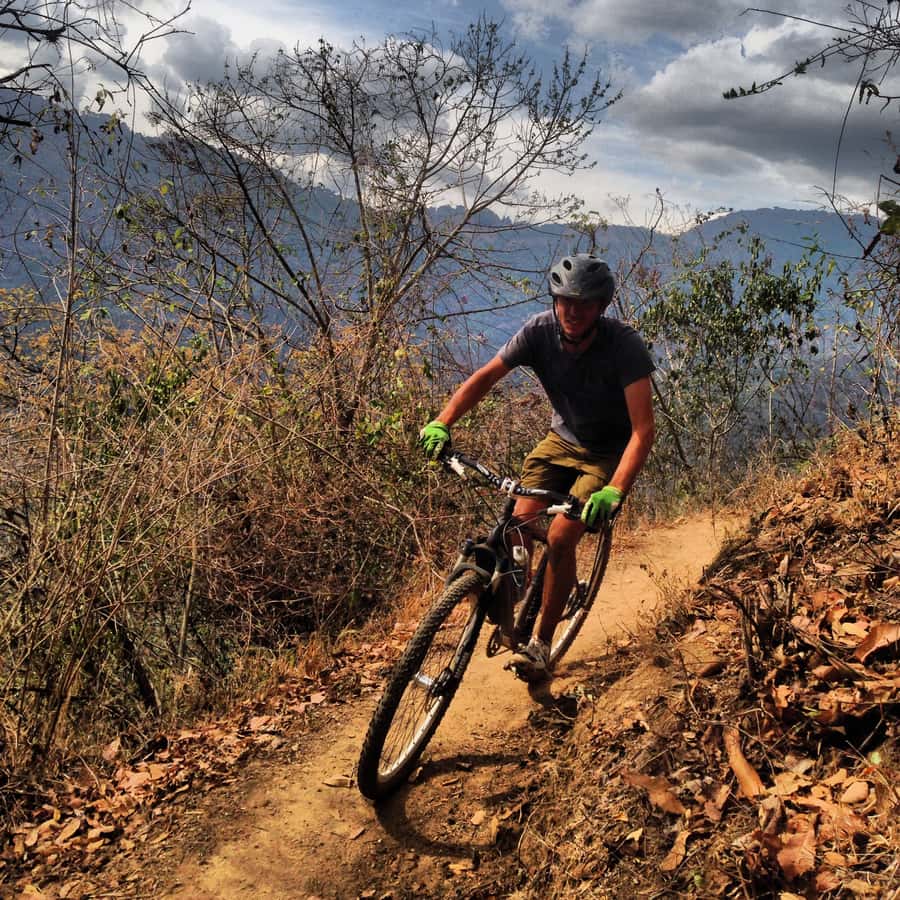
This is where the ride earns its reputation. The trail drops about 2,500 feet (760 meters) in a big early downhill push. The volcanic soil tends to be soft and fast, which is great for flow—less chattery than rocky terrain. There are also few small rocks, so when you get a clean line, it can feel almost like the trail is rolling under you.
Now the honest part: this isn’t a smooth green trail. You’ll hit steep technical sections and creek crossings. The creek crossings are brief, but they can be slippery. Your best move is to stay relaxed, let the bike move, and follow the guide’s line advice instead of trying to muscle every obstacle.
If you like downhill, you’ll probably grin through most of this section. The guide’s English explanations can also make the ridge ride more rewarding—like when they talk about what volcanoes you’re looking at and why the trail follows the shape of the land.
San Andrés Ruins: Where the Ride Meets Antigua’s Past
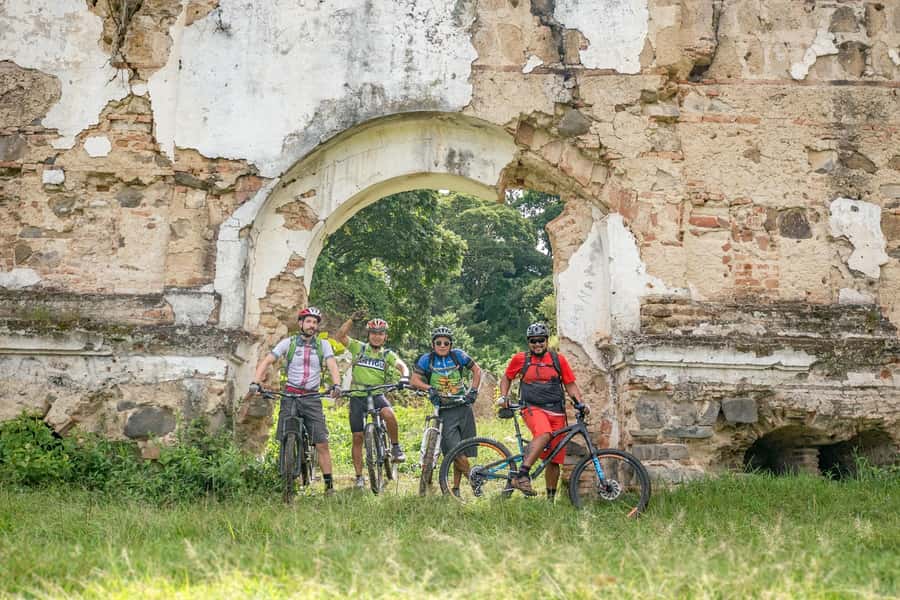
At the base of the first major descent, you don’t end the adventure—you transition into a climb and a cultural moment. You ride up a 4×4 road through agricultural fields, and along the way you pass the San Andrés ruins: an earthquake-wrecked church from the 16th century.
This stop is valuable because it breaks the ride’s rhythm in a good way. When you’re coming off a long downhill, the body needs a reset anyway. Moving through farmland at a moderate pace gives you time to breathe, hydrate, and shift from “riding mode” to “looking around.”
It also adds meaning to the valley scenery. Antigua isn’t just dramatic because volcanoes exist—it’s dramatic because people built here, suffered impacts, and kept living around the ruins. Seeing the earthquake-wrecked church while you pedal through fields makes the landscape feel less like a backdrop and more like a place with memory.
The tradeoff? You’re still on a climb at this stage, so this is not a full break. But it’s a mentally nicer climb than a climb with nothing to see.
The Grind Back Up: 4×4 Road to a 656-Foot Push
After that initial farmland climb, you follow a moderate grade and then reach the part that turns the legs on. The final stretch includes a steep push of about 656 feet (200 meters). Don’t panic when it turns steep; this is exactly the moment where riders either get tense or get smart.
The smart approach is to keep your effort steady. Don’t sprint. Stay seated if that works for you, keep your breathing under control, and let the bike’s suspension do its part on the uneven ground. Your legs will burn, but the payoff is the next descent.
This is also where an attentive guide makes a difference. Guides on this ride—like Gilberto and Joel, based on past experiences—tend to help you through the harder parts rather than just shouting encouragement. Their focus seems to be keeping you safe while still letting you have fun.
The timing also supports the climbing stage. You’re building toward the lush forest segment and another big downhill, so the climb isn’t random. It’s part of the route’s logic: you’re repositioning for the ridge line that sets up the final drops.
Lush Forest and the Final Big Descent Set-Up
After the steep push, the route carries you through a lush forest. This section matters because it changes the feel of the ride. You’re not constantly staring at giant open slopes, and that can help you reset your attention. It also tends to make the ride feel less exposed than the earlier ridge riding.
Then you enter the stage that downhill fans wait for: the final descent down an ancient trail cut deeply into a ridge. The description is clear about the payoff: there are large drops on either side, and the trail has technical charm—rocks, drops, and switchbacks—without turning into a pure slog.
One practical thing: when you transition from forest to open drops, your speed perception changes fast. If you’re going from shaded trail into brighter viewpoints, give your eyes a second to adjust before you commit to maximum speed. It sounds small, but it helps you stay confident when the trail starts moving quickly.
This final descent is also the emotional finish line of the tour. If you’re the type who likes “worth it” moments, this is that moment. The route is designed so you feel the build-up, not just the final drop.
The 45-Minute Finale: Switchbacks, Drops, and an Aqueduct Trail
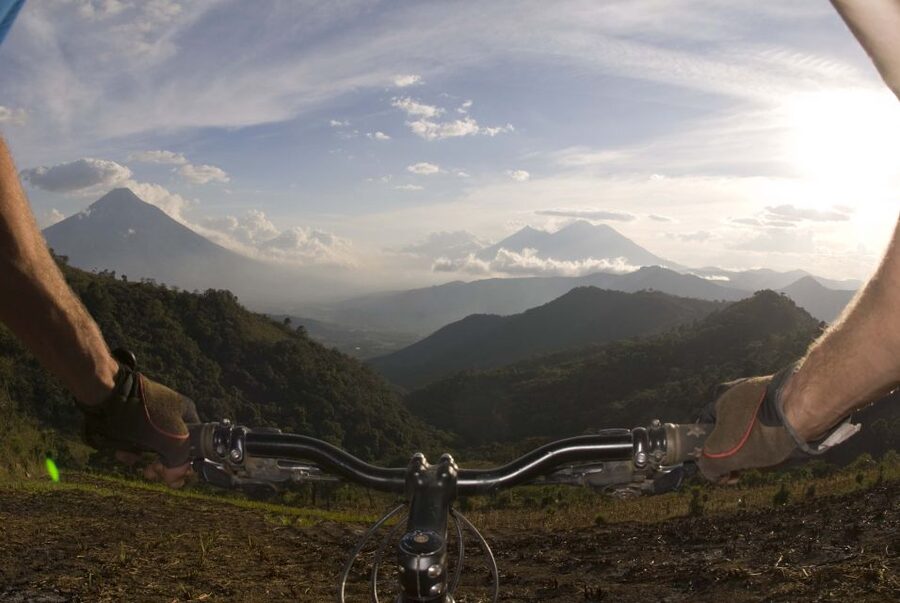
The last ride segment is about 2,500 feet (760 meters) of downhill and takes roughly 45 minutes. It’s loaded with fun features: rocks, drops, switchbacks, and a final stretch described as a half-pipe-like aqueduct trail.
That aqueduct-style finish is the kind of detail that makes the ride memorable because it’s different from the earlier sections. You get a sense of the trail engineering—water management and old pathways—while still doing the modern sport thing: fast downhill riding.
This is also the part where your technique matters. Keep your weight balanced, stay loose on the bike, and don’t lock your arms even when you’re excited. The guide will likely manage the group pace, especially around the steeper or rockier choices, so you can keep moving without forcing risky lines.
If the earlier downhill felt like a thrill ride, the finale is where it becomes a story. It’s the section that makes riders talk about how the ride is both challenging and fun—often with the same theme: there’s a climb, but then it pays off in a way you can actually feel on your tires.
Gear, Bike Feel, and Why the Small Group Matters
Good downhill days are mostly about setup. You’re provided a full-suspension mountain bike, a helmet, and a water bottle (which you get to keep). That’s practical value, since it removes the hassle of figuring out rentals, bike compatibility, and whether you’re riding safely with the right protection.
A full-suspension bike also changes how you experience the technical sections. When the trail gets steep or uneven, suspension helps you stay in control rather than absorbing every jolt through your body. On volcanic terrain that can be fast and sometimes slick—especially near creek crossings—this matters.
The group limit of 12 participants keeps the ride moving in a way that’s less chaotic. You still need to listen and follow instructions, but you aren’t stuck in a long line of riders blocking each other. In a ride with real downhill and steep bits, that’s not a minor detail.
And yes, bring your own basics. Sunglasses help with brightness, sunscreen matters at altitude, and comfortable clothes keep you from feeling distracted. If you’re carrying a phone, keep it secure. The ride includes motion and vibration, so you’ll want it protected.
Fitness Reality Check: Motion Sickness and Technical Trail Bits
This is a half-day, but it’s not a walk in the park. The ride includes an ascent of about 3,185 feet (971 meters) and a total descent around 6,217 feet (1,895 meters). Those numbers explain why the route feels intense even though the schedule clocks in around 4.5 hours.
You should also expect that the tour isn’t for everyone. It’s explicitly not suitable for children under 13, pregnant women, wheelchair users, and people who are visually impaired. It also isn’t for people with low fitness, and it isn’t for those with motion sickness.
That last one is a big deal. Between shuttle travel and jolting downhill segments, this is the kind of day that can trigger symptoms in sensitive riders. If you’ve had motion sickness issues before, treat this as a strong sign to look for a different Antigua activity.
On the trail, the soft volcanic soil can be fast and flowy, but you’ll still hit steep and technical sections, plus creek crossings. The goal is not to scare you—it’s to help you plan. Go into this with the right expectations: you’ll work on the climbs and you’ll earn the big downhill.
Price and Value: Is $80 Worth It for 4.5 Hours?
At $80 per person, this ride lands in the “you pay for the real activity” category. You’re not just buying a guide’s time. You’re buying transportation up the mountain, a shuttle to the trailhead, and a full-suspension bike with helmet plus a water bottle.
If you had to rent the right bike on your own, add a guided route, and then still figure out where to ride safely, the cost would usually climb fast. Here, those pieces are bundled, which is what makes the price feel more reasonable. You also get a route with actual vertical drop—about 2,500 feet early and another 2,500 feet later—so the bike time doesn’t feel like it’s padding.
You do pay extra attention elsewhere. Food and drinks aren’t included, and you’ll want to budget for a tip for an excellent guided experience if you feel the guide earns it. But that’s fairly standard for tours where the guide’s job is active—keeping you safe, helping on hard spots, and explaining what you’re seeing.
If you want a half-day that mixes sport, terrain, and a cultural stop, this price makes more sense than a generic excursion.
Should You Book This Antigua Mountain Bike Tour?
Book it if you want a true downhill-focused ride with big volcanic views, a real stop at the San Andrés ruins, and guides who look out for you when the trail gets tricky. This is also a great match if you like being in a small group and getting English explanations that help you connect what you see to what you’re riding.
Skip it if you need a low-impact day, have motion sickness tendencies, or want something more accessible and predictable. The tour has real climbs and steep technical moments, and it’s not designed for riders who want an easy pedal-and-photo loop.
If you’re on the fence, I’d judge your comfort with downhill first. If you’re excited about that and you can handle a push uphill, this ride is the kind of Antigua experience that gives you more than just pictures—you get the feeling of the valley under your tires.
FAQ
What time does the tour start and where do I meet?
You meet your group at 09:00 at the Old Town Outfitters shop, Avenida Sur No.12, Antigua. It’s one block south of Central Park on the corner of 5th Avenue and 6th Street (Calle).
How long is the ride?
The duration is listed as 4.5 hours, with details like starting times shown when you check availability.
What’s included with the tour price?
The tour includes a full-suspension mountain bike, a helmet, a water bottle for you to keep, and a shuttle up to the trailhead outside of Antigua.
Do I need to bring my own food or drinks?
Food and drinks are not included. Plan to bring what you need or purchase snacks/gear at the shop before you start.
What should I bring and prepare before I go?
Bring sunglasses, sunscreen, comfortable clothes, a charged smartphone, personal medication, and a signed waiver.
Is this tour suitable for kids or accessibility needs?
It’s not suitable for children under 13. It’s also not suitable for wheelchair users, and it’s not designed for visually impaired people.
How difficult is the route?
You’ll ride with major elevation changes, including a total ascent of about 3,185 feet and a total descent of about 6,217 feet. The route includes steep downhill sections, technical areas, and creek crossings, plus a steep uphill push near the middle.