REVIEW · GIFU PREFECTURE
Private-group Morning Cycling Tour in Hida-Furukawa
Book on Viator →Operated by SATOYAMA EXPERIENCE · Bookable on Viator
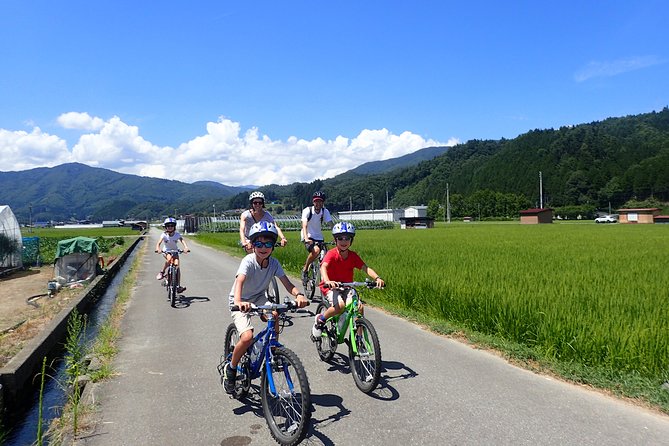
Waking up to pedal through rural Japan is the point here, and Hida-Furukawa’s satoyama scenery is the payoff. You’ll glide past traditional wooden houses, rice paddies, and mountain-backed farming views while learning what you’re seeing from a private local guide.
I like that the route is long enough to feel like a real outing (about 22 km), but the pace is still set up for relaxed sightseeing. I also like that it’s a small-group experience capped at 8 people, so you actually get answers to questions instead of listening to a lecture at the back of the pack.
One thing to consider: you’ll ride without a built-in basket, so if you bring extra layers or a small camera setup, plan on using your own bag or a comfortable backpack.
In This Review
- Key highlights at a glance
- Why morning wheels through Hida-Furukawa work so well
- Price and value: what $214.48 gets you
- Route snapshot: old town to satoyama farming life
- The old-town start: find the village rhythm early
- Transition to satoyama: mountains meet fields
- Rice paddies and traditional homes: what to look for
- The market moment: vegetables and everyday commerce
- What your private guide actually adds
- Timing, weather, and the real comfort details
- Bikes, gear, and what to pack (since there’s no basket)
- Who this tour suits best
- Practical meeting point: where to start
- The small-group vibe you’ll feel in the countryside
- Should you book this morning cycling tour in Hida-Furukawa?
- FAQ
- How long is the cycling tour?
- How far will we cycle?
- Where does the tour start?
- What time does it depart?
- What’s included in the price?
- Are food and drinks included?
- What’s the group size limit?
- What is the cancellation policy?
Key highlights at a glance
- Private, small-group format (up to 8 people) for real interaction with your guide
- 22 km morning route through old-town streets, farming areas, and satoyama views
- Traditional Japan context from a guide who explains local history and how village life works
- Snacks included, plus you’ll see vegetable markets and old folk houses along the way
- Rain-day flexibility: if weather turns, the guide can offer alternative choices
Why morning wheels through Hida-Furukawa work so well
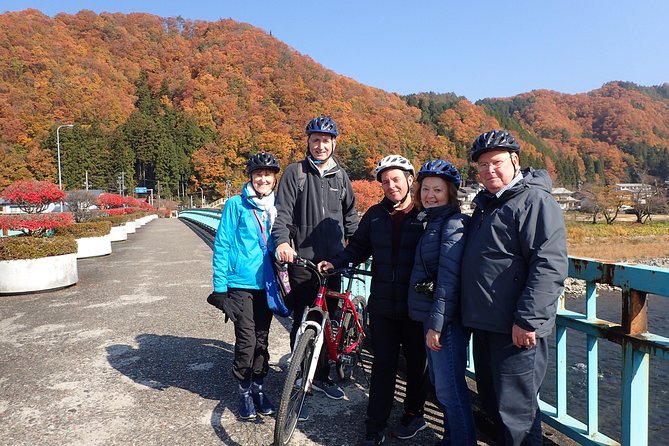
The morning start is smart. Rural Japan shifts quickly after sunrise, and cycling at that time lets you catch the day when things feel most normal for local people. You’re not just taking photos of scenery. You’re getting a front-row view of daily rhythms: village streets warming up, fields waking, and that quiet morning energy that’s hard to replicate later.
This tour is also designed to help you see places bigger vehicles can’t easily reach. Instead of only looking from the side of a road, you ride into areas where the scale changes—narrower lanes, farming paths, and the kind of angles you simply don’t get from the bus window.
And because it’s private-group, you’re not forced into a one-size-fits-all pace. If your group needs a slightly slower moment for photos or questions, that’s the kind of thing a guide can manage better with a small headcount.
You can also read our reviews of more tours and experiences in Gifu Prefecture.
Price and value: what $214.48 gets you
At $214.48 per person, this isn’t the cheapest way to bike in Japan. The value comes from what’s bundled and from the access you get.
You’re paying for:
- A local guide who provides history and context (not just directions)
- Bike + helmet
- Insurance and local taxes
- Snacks
Those details matter more than people think. Bike tours can go sideways fast when you have to sort out rentals, safety gear, or unclear meeting points. Here, the core equipment is handled for you, and the tour time is used for riding and viewing—not for logistics.
You also get something intangible but important: a guided look at rural life. The whole point is to see beyond the “Japan postcard” version, and a good guide helps you connect what you’re seeing (rice paddies, folk houses, village markets) to why it exists in the first place.
One practical note: food and drinks are not included. Since snacks are provided, plan to bring or buy water for comfort, especially on a warm day.
Route snapshot: old town to satoyama farming life
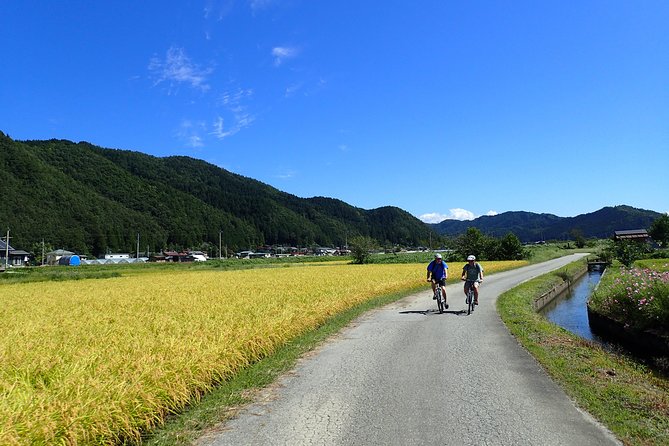
The ride is about 3 hours 30 minutes total, built around a 22 km route. Expect a mix of graceful old-town segments and countryside riding where the scenery opens up.
The old-town start: find the village rhythm early
The tour begins by rolling through the old town area of Hida, before the farming views take over. This first stretch helps you “get your bearings fast.” You’ll notice how villages are laid out—streets designed for walking and local movement, not speed.
It’s also the moment where you can relax into the ride. You’ll be adjusted to the bike, the helmet, and the guide’s style before you reach the longer stretches through rural areas.
Transition to satoyama: mountains meet fields
As you move out, the satoyama scenery gradually comes into view. Satoyama is that working landscape where farming and nature coexist side by side, and cycling is one of the best ways to experience its texture. Instead of only seeing fields from a distance, you ride alongside them—close enough to notice the spacing, edges, and how the land is used.
This is where you’ll likely start feeling the beauty described in many travel pieces, but with a difference: you’re not stopping just for photos. You’re traveling through it at a human pace.
Rice paddies and traditional homes: what to look for
You’ll pass rice fields spread around, framed by mountains. You’ll also see traditional wooden houses and old folk houses scattered through the area. That scatter matters—these aren’t just “set-piece” buildings. They’re part of a living village layout.
When you spot an older structure, slow down for a moment and watch how the road, field edge, and house sit together. That relationship is the real story. It’s one of the reasons this kind of guided cycling feels more meaningful than doing a quick scenic walk.
The market moment: vegetables and everyday commerce
You’ll also see local vegetables lined up in a market setting. Even if you don’t buy anything, it’s a strong window into day-to-day life—who sells what, how produce is arranged, and how villagers think about ordinary tasks.
This stop can be the highlight for people who like culture that feels practical, not staged.
What your private guide actually adds
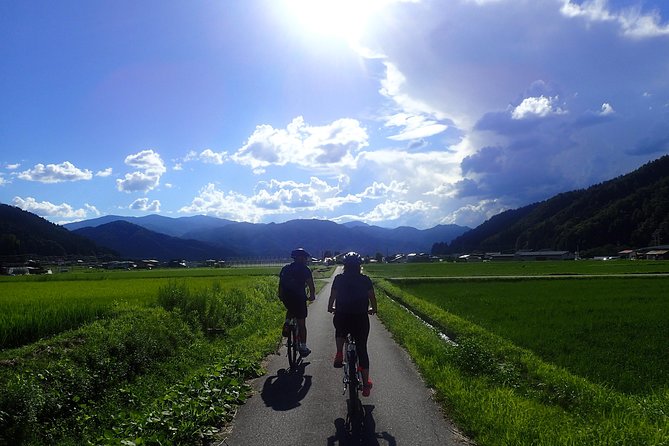
A bicycle tour can become just exercise plus scenic minutes. Here, the guide is part of the product.
The tour description emphasizes that your guide shares important context about the region’s history. In practice, that usually means you’ll get explanations tied directly to what you’re riding past: why the area developed the way it did, what agricultural patterns look like from ground level, and how traditional architecture fits the local lifestyle.
Because this is private (only your group), the guide can adjust to what you’re interested in: photos, daily life, local farming, or just quick clarifications as you go. With a group of up to 8, the conversation stays accessible.
It’s also worth saying: a friendly guide helps you feel comfortable riding in a rural setting. You’re not just handed a bike and left to follow a route. You have support.
Timing, weather, and the real comfort details
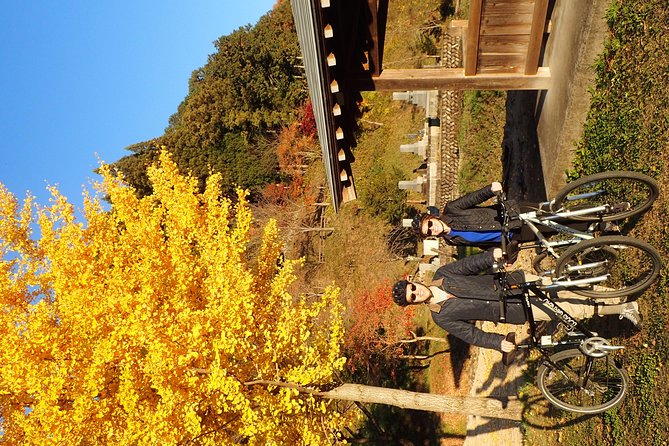
This is a morning tour departing from the operator’s Furukawa office area, with the meet time listed at 8:30 am and the departure at 9:00 am. Expect a straightforward start: you arrive, gear up with the bike and helmet, then you’re rolling as the countryside wakes.
Weather can be the big question for a cycling tour. One of the strongest signals from recent feedback is that when conditions weren’t ideal, the guide offered multiple options instead of pushing everyone out into bad rain. That’s exactly what you want: flexibility plus guidance.
Still, be practical. Bring layers you can handle if temperatures shift. Also, because food and drinks are not included, you’ll want to manage hydration yourself. Snacks are included, but they’re not a full meal.
Bikes, gear, and what to pack (since there’s no basket)
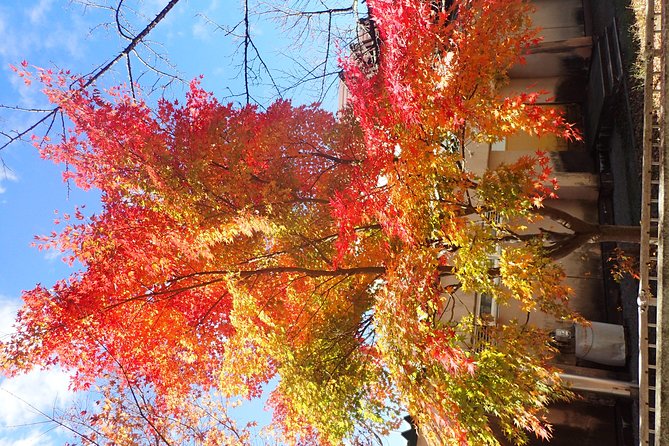
The tour includes use of bicycle and helmet, plus insurance and local taxes. That removes the common pain points: you’re not hunting for rentals, and safety gear is handled.
But there’s one detail that affects your personal packing: there’s no basket attached to the bike. So don’t count on stowing a bag on the front or sides. Plan for:
- A small backpack or daypack
- A way to keep your phone and camera protected if the road is damp
- Extra layers in case the morning is cool and then warms up
You’ll be riding for about half the morning. If you’re someone who likes to stop for photos often, having your personal items secured matters more than you’d think.
Who this tour suits best
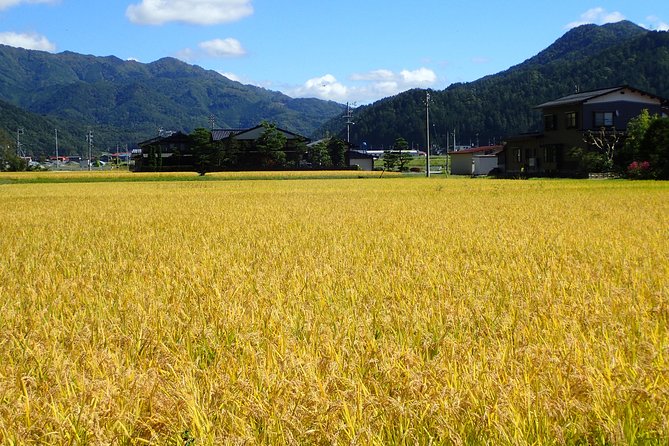
This works well if you want:
- Rural Japan without the “tour bus only” feeling
- A guided look at daily village life—houses, fields, and markets
- An active morning that doesn’t swallow your whole day
It’s also good for families, because the route is described as a balanced mix of exercise and relaxation. There are minimum requirements: age 6+ and minimum height around 125 cm. If you’re traveling with kids, make sure the child meets the height requirement and is comfortable on a multi-hour ride.
If you dislike cycling for long distances, this may or may not fit—22 km is not a quick spin. But if you can handle a moderate distance and enjoy scenery and small stops, it’s a strong match.
Practical meeting point: where to start
You’ll meet at 11-32 Furukawachō Ninomachi, Hida, Gifu 509-4235, Japan, and the tour ends back at the meeting point. The location is described as near public transportation, which helps if you’re staying in the area and want to avoid complicated transfers.
You’ll also use a mobile ticket (so have it accessible on your phone). Confirmation is typically provided within 48 hours of booking, depending on availability.
The small-group vibe you’ll feel in the countryside
A lot of Japan tours feel crowded even when the group size is “reasonable.” Here, the cap of 8 people per booking changes the feel. You can hear your guide. You can ask questions without waiting. You’re not constantly threading around other riders.
That matters especially on quiet rural roads and near village areas where stopping is part of the experience. Fewer people also means the ride feels calmer. You get the chance to look around without feeling like you’re rushing through a checklist.
And that connects to the biggest praised aspect in the feedback: this tour isn’t just about riding. It’s about having a guide who can react when conditions change, including when the weather doesn’t cooperate.
Should you book this morning cycling tour in Hida-Furukawa?
If you want a morning outing that mixes real countryside with traditional village sights—and you care about understanding what you’re seeing—this is a great choice. The combination of private group size, guided context, and 22 km access to places bigger vehicles can’t easily reach makes it strong value for the price.
Book it if:
- You like active sightseeing and want more than a quick photo stop
- You want rural Japan beyond the main tourist shortcuts
- You travel with family and want a structured, supported ride
Skip it or think twice if:
- You’re not comfortable cycling for 22 km
- You don’t like weather uncertainty (even though the guide offers options, you should still be prepared)
If you’re on the fence, my take is simple: this is the kind of tour where the details matter—the bike setup, the small group, the guide’s explanations, and the way the morning timing shapes the experience. When those click, the ride feels like local life, not just sightseeing.
FAQ
How long is the cycling tour?
It runs for about 3 hours 30 minutes.
How far will we cycle?
The route is about 22 km.
Where does the tour start?
You meet at 11-32 Furukawachō Ninomachi, Hida, Gifu 509-4235, Japan, and you return to the same meeting point.
What time does it depart?
The meet time is listed as 8:30 am, with departure at 9:00 am.
What’s included in the price?
The tour includes a local guide, bicycle use, helmet use, insurance, local taxes, and snacks.
Are food and drinks included?
No. Snacks are included, but food and drinks are not.
What’s the group size limit?
The maximum is 8 people per booking, and it’s a private tour for your group.
What is the cancellation policy?
You can cancel for free up to 24 hours before the experience’s start time for a full refund. Cancellation cut-off is based on local time.