REVIEW · ASO
Private E-MTB guided cycling around Mt. Aso volcano & grasslands
Book on Viator →Operated by Aso Caldera Tour · Bookable on Viator
Aso feels different when you ride into it. This private guided e-MTB tour takes you around Mt. Aso and the grasslands, including an up-close look at the smoking Nakadake crater area.
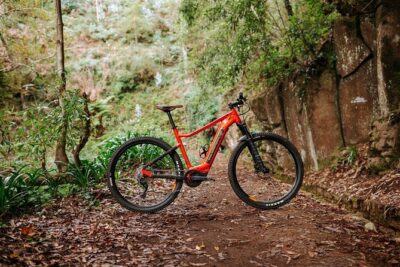
I especially love how the electric assist lets you aim for big views without needing elite bike skills. I also like that your guide brings the place to life—Geopark context, caldera history, and real help getting comfortable on the bike.
One thing to consider: you still ride a route with a major elevation change (about 800m), so plan on having at least moderate fitness for a steady uphill effort, even with assistance.
In This Review
- Key highlights worth planning for
- How this e-MTB tour changes your view of Mt. Aso
- Getting comfortable fast: the test ride and beginner-friendly setup
- The ride up: from Aso Station to the Nakadake crater views
- Stops that make sense: Geopark context, Aso viewpoints, and Kusasenrigahama
- Aso Geopark stop: seeing the volcano’s logic
- The crater approach: the moment the caldera feels alive
- Kusasenrigahama and the grasslands: where the scenery gets quietly dramatic
- Your guides matter: Joe-san and Fuji-san’s helpful pace
- Timing, pickup, and the luggage trick that saves your afternoon
- Price and value: what $203-ish buys you (and what it doesn’t)
- Hot spring option after the ride
- Should you book this Mt. Aso e-MTB tour?
- FAQ
- FAQ
- Where do we meet for the tour?
- What time does the tour start and how long is it?
- Is this a private tour or shared with other groups?
- What’s included in the price?
- What should I bring since water and food aren’t included?
- Can beginners ride this even if I’m not confident cycling uphill?
- Can I leave luggage during the tour?
- Does weather affect the tour?
Key highlights worth planning for
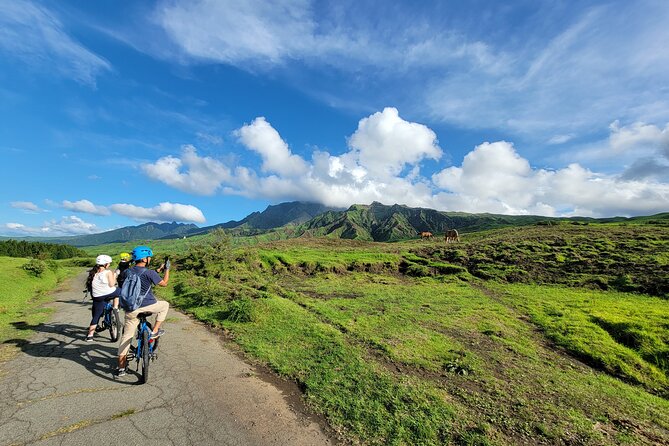
- E-bike assist for a serious climb up toward Nakadake, with a test ride first so you’re not guessing
- Aso Station to Nakadake elevation shift of about 800m (roughly 2,600 ft) for big-view payoff
- Kusa no Michi, the Weeds’ Road, a route tied to mountain ascetics, used to reach higher ground
- Grasslands conservation connection through the Millennium Grassland effort, with part of the fee supporting it
- Guides who manage the details, including taking photos and sharing them after the ride
How this e-MTB tour changes your view of Mt. Aso
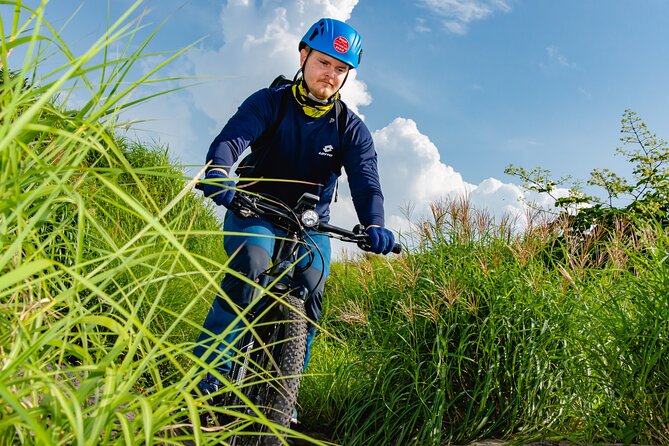
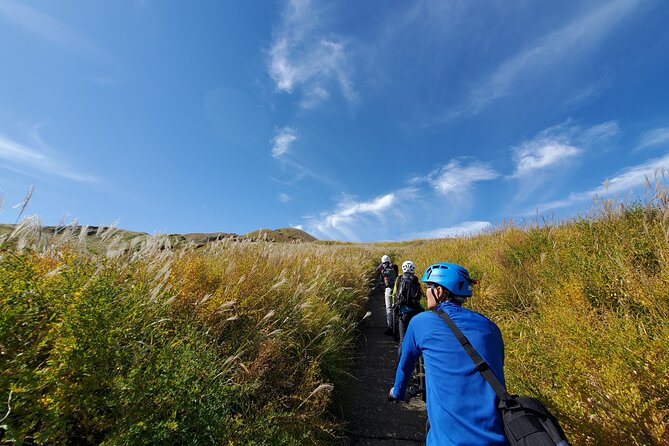
Mt. Aso isn’t just another volcano stop—it’s a working caldera and a living ecosystem. What I like about this tour setup is that you’re not stuck with exhaust fumes and engine noise. You move under your own pedal power, with the electric motor handling the heavy part so you can focus on what you’re seeing.
The tour is also designed for access. Certain viewpoints and grassland areas are hard to reach on your own without a car, and this guide-led format gets you onto the routes that usually sit outside the quick photo-and-go routine.
And since it’s private, the pacing is built around your group. If you need breaks, want extra explanations, or just want time to stare at the crater smoke without rushing, the ride is easier to manage than on a larger group tour.
Getting comfortable fast: the test ride and beginner-friendly setup
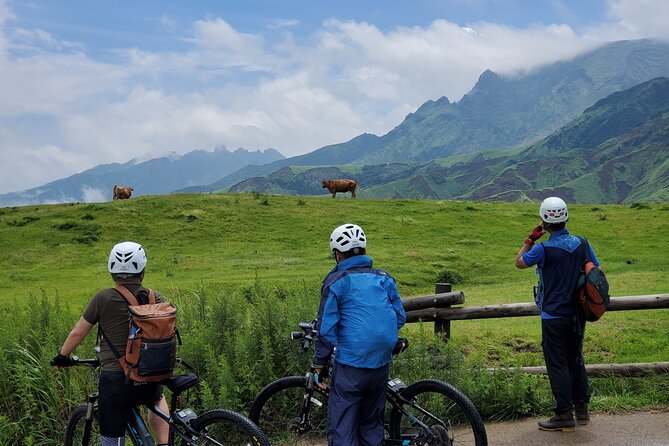
Before you head out, you start at Aso Station and get an intro to the area. Then you get the bike time you actually need: a gear run-through plus a test before going our way. That matters because e-MTBs feel different than regular bikes—especially the way the motor responds when you start climbing.
Even if you’ve never ridden an e-bike, this experience is set up to help. The key point is that you don’t need extreme cycling skills. The motor gives powerful assistance, which means you can concentrate on staying balanced, using the correct assist level, and enjoying the terrain rather than fighting it.
The guide’s job isn’t just to point. They explain how to use the bike and they’ll help you with breaks at key spots. In one real example, the guide also handled a mixed-needs group with older participants—suggesting this tour can be flexible when comfort levels vary inside a private group.
What to bring mindset-wise: expect a steady workout. You’re not sprinting, but you are going uphill with purpose.
The ride up: from Aso Station to the Nakadake crater views
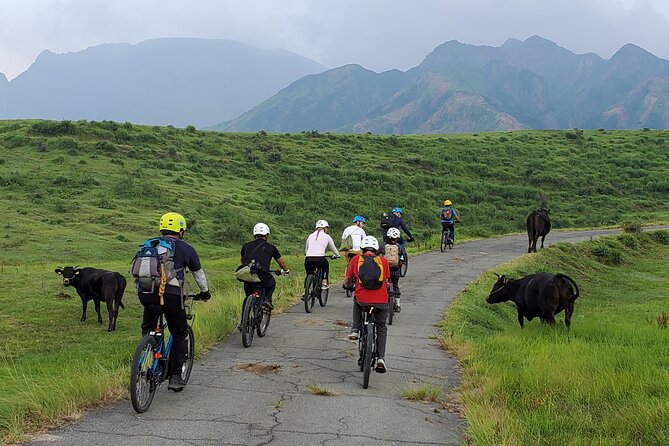
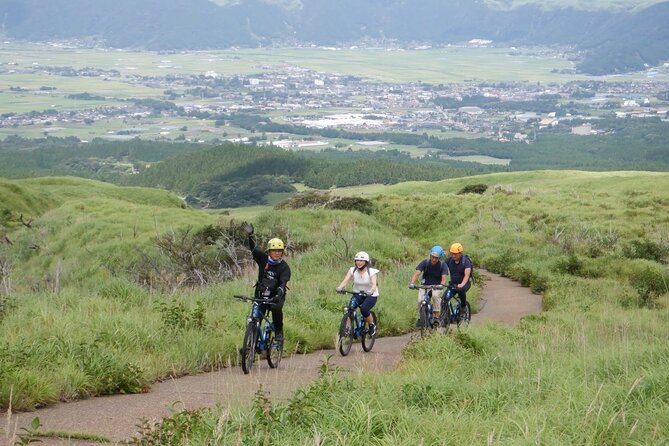
The tour is built around a dramatic vertical story. Starting near the caldera base around 500 meters above sea level, you work your way up toward Aso Nakadake crater at roughly 1,300m. That’s about an 800m elevation difference, which is why the e-bike assistance is the whole point.
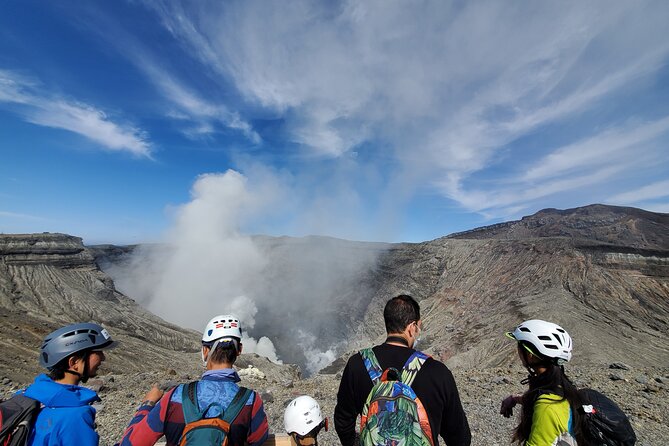
At the top, you’re not just looking from far away. The route includes getting up closer to the crater emitting smoke, which is the moment most people came for. The crater is the emotional centerpiece of Mt. Aso—big, active, and constantly changing how it looks and smells depending on the conditions.
A special detail here is the ascent route called Kusa no Michi (the Weeds’ Road). It’s described as a path once used by mountain ascetics. That doesn’t mean you’ll do a religious tour, but it adds meaning to the climb. You’re not merely riding a hill—you’re following a route that has history tied to getting higher and getting closer to the earth.
On the descent, the caldera opens up again in front of you. That’s when a lot of the ride feels like a panoramic cruise: grass, edges of the caldera, and wide sky.
Stops that make sense: Geopark context, Aso viewpoints, and Kusasenrigahama
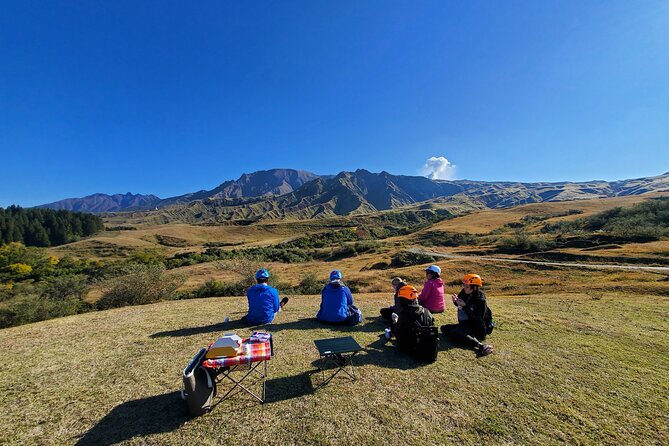
This isn’t a random loop. The itinerary has a clear sequence: you move from Aso Geopark context into Aso viewpoints, then toward Mt. Aso Nakadake crater, and later toward broader scenery like Kusasenrigahama.
Here’s how I’d interpret the value of each part:
Aso Geopark stop: seeing the volcano’s logic
Starting with Aso Geopark is smart because it gives you the mental map for what you’re about to ride through. Even if you don’t know volcanic geology, you’ll usually leave with a clearer sense of why the caldera looks the way it does and how the region’s nature formed.
The crater approach: the moment the caldera feels alive
Once you’re on the route to the crater area, the experience becomes less about theory and more about direct impression. Smoke from Nakadake is hard to fake. It pulls your attention away from anything else.
If weather turns, the guide still tries to keep the important moments in reach. One guide experience included sudden rain but getting up close to the smoking crater anyway when the weather improved.
Kusasenrigahama and the grasslands: where the scenery gets quietly dramatic
Later, you reach Kusasenrigahama, which is tied to the grasslands identity of Aso. This is where you start feeling the region as a place shaped by wind, pasture, and careful maintenance—not just volcanic rock.
Also, this tour doesn’t treat grassland as scenery only. A portion of your participation fee goes back to the grassland association as conservation support for the Millennium Grassland. That’s a real-world connection you’ll feel good about because your ride supports upkeep, not just photos.
And yes, the ride is also described as happening without exhaust gas or noise, which helps you notice smaller things: how the wind moves across the grass, and how the open areas change the sound.
Your guides matter: Joe-san and Fuji-san’s helpful pace
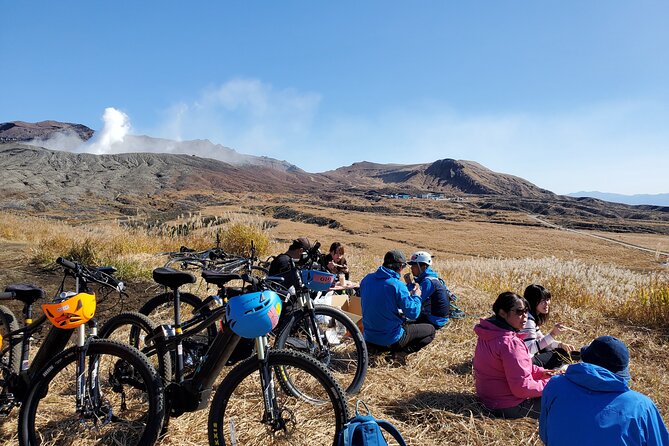
The tour experience improves a lot when the guide reads your group well. In this case, names like Joe-san and Fuji-san show up in the way people describe the day: friendly, helpful, and good at explaining what you’re seeing.
What stands out from their style is not just information—it’s organization. They’ll take time to explain scenery along the route and manage stops so you don’t feel like you’re constantly dismounting and remounting. They also take a lot of photos and share them afterward, which is a small but big comfort if you’re busy thinking and riding.
They’re also described as making appropriate breaks. That matters on an e-bike climb because the effort feels easier than a traditional bike ascent—but you still need pauses so you can enjoy the views and not arrive at the crater drained.
And because this is private, the guide can adjust the pace to your comfort. That’s especially helpful if your group includes a wide range of ages or cycling confidence.
Timing, pickup, and the luggage trick that saves your afternoon
The tour starts at 1:00 pm and runs about 4 hours. That length is a sweet spot: long enough to reach the crater area and experience the grasslands, short enough to keep your day flexible after.
Pickup is offered, and the tour is near public transportation. If you’re staying close to transport hubs, it’s easier to plan your day without a complicated logistics puzzle.
One practical perk: you can leave your luggage with the guides. That means you can travel light and just enjoy the open grasslands without dragging bags onto bikes. If you’re carrying camera gear, this is also a sanity saver.
At the end, the tour returns to JR Aso Station, unless you booked a ride to your accommodation. So you’re not stuck wondering how to get back to your base after the ride.
Also, you’ll use a mobile ticket, which simplifies arrival.
Price and value: what $203-ish buys you (and what it doesn’t)
At about $203.63 per person, this isn’t a budget activity—but it also isn’t just bike rental. You’re paying for a guided private experience that includes:
- E-MTB (electric mountain bike)
- Air-conditioned vehicle
- Helmet and glove
- Local guidance through volcano viewpoints and grasslands
Your cost also connects to conservation support for the Millennium Grassland effort. That’s not just a marketing line here—it’s part of how the fee is used.
What’s not included is important for planning: bottled water and any food/drink aren’t included. Since you’re cycling and climbing, I’d treat water and snacks as non-negotiable. Even if you’re not famished, you’ll feel better with something ready for the breaks.
Finally, the timing detail matters if you’re planning far ahead. This tour tends to be booked about 31 days in advance on average, so I’d avoid last-minute decisions if your travel dates are fixed.
Hot spring option after the ride
If you want to soak off the day, the guides can help point you to a hot spring after the tour to unwind in the caldera. It’s optional, but it fits the overall vibe: bike hard, then relax.
Because they can guide you after the ride, you won’t be stuck figuring out where to go while you’re already tired and a little muddy from volcano-weather reality (it happens).
Should you book this Mt. Aso e-MTB tour?
Book it if you want a single activity that hits three things: real crater proximity, grassland views, and guided context you can’t easily piece together alone.
It’s especially a good fit if you:
- want an easier way to handle a big elevation change using e-bike assist
- like having a guide manage stops and explanations
- care about grassland conservation tied to your visit
- prefer a private pacing over a crowded ride
Skip it or think twice if you feel unsure about riding for several hours with a serious climb, even with assistance. The e-bike reduces the hard parts, but it doesn’t erase the fact that you’ll be working uphill.
FAQ
FAQ
Where do we meet for the tour?
You meet at Aso Station (Kurokawa, Aso, Kumamoto 869-2225, Japan). The tour also ends back at this meeting point unless you booked a ride to your accommodation.
What time does the tour start and how long is it?
The tour starts at 1:00 pm and runs for about 4 hours (approx.).
Is this a private tour or shared with other groups?
This is private. Only your group participates.
What’s included in the price?
Included are the E-MTB, an air-conditioned vehicle, and safety gear: helmet and glove.
What should I bring since water and food aren’t included?
Bring bottled water and any food or drink you want. The tour does not include them.
Can beginners ride this even if I’m not confident cycling uphill?
Yes. You’ll get a test ride and the guide explains how to use the bike. The electric motor provides powerful assistance, so you don’t need extreme cycling skills. A moderate fitness level is recommended.
Can I leave luggage during the tour?
Yes. You can leave your luggage with the tour team, so you can enjoy the grasslands without carrying bags.
Does weather affect the tour?
Yes. The experience requires good weather. If it’s canceled due to poor weather, you’ll be offered a different date or a full refund. A minimum number of travelers is also required for the tour to run.