REVIEW · MANALI
Multi-Day Trip Himalayan Cycling Expedition from Manali to Leh
Book on Viator →Operated by Unventured Expeditions Pvt Ltd · Bookable on Viator
Pedal where altitude has a backbone. This 15-day Manali to Leh bicycle journey rides you over high-altitude passes while meals and a support vehicle keep the day-to-day workable. With a small group, you get real attention when the road turns serious.
I also like how practical the setup feels: bikes, helmets, and the core gear are handled for you, and the ride is powered by included lunches, dinners, snacks, and filtered water. The tour’s focus on comfort is not flashy, but it matters when you’re climbing and cooling down at altitude.
One consideration: this is not a casual cycling holiday. You’ll pedal daily distances that can run from easy to extremely challenging, including big altitude days and some long stretches in thinner air.
In This Review
- Key highlights that matter before you book
- Why Manali to Leh by bike feels different than a drive
- The daily grind: 40 to 80 km plus altitude reality
- Days 1–2 in motion: Delhi to Manali, then bike setup
- Days 3–4: Marhi at 3,000m and the Rohtang Pass snow zone
- Days 5–8: Jispa, Zingzingbar camping, and the pass-heavy middle stretch
- Day 9–12: Moore Planes, Taglang La, Ladakh towns, and Khardung La
- Days 13–15: Leh by drive and a slower finish
- Bikes, gear, meals, and the support vehicle: where comfort shows up
- Price and value: is $2,400 fair for this kind of trip?
- Who this is for (and who might find it too much)
- Practical tips to make this trip easier on yourself
- Should you book the Himalayan Cycling Expedition from Manali to Leh?
- FAQ
- How long is the Manali to Leh cycling trip?
- What is the price per person?
- Where does the trip start?
- Are bikes and helmets included?
- What about meals and drinking water?
- Will there be a support vehicle?
- What kind of distances will I cycle each day?
- What is the minimum age?
- Is there a vegetarian option?
- If I cancel, do I get a refund?
Key highlights that matter before you book
- Real high points, with altitude numbers built in: Rohtang (3,978m), Bara-lacha la (4,870m), Nakee-la (4,950m), Lachalung-la (5,060m), Taglang-la (5,359m), Khardung La (5,602m).
- You don’t have to organize the machine: the tour provides the bicycle and helmet, plus ongoing support.
- Small group size (max 12): easier communication and personal attention from your guide.
- Food and water keep you cycling: meals are included daily, with filtered drinking water and snacks/refills during the ride.
- Camping is part of the plan: including nights in tents, such as around Zingzingbar at over 4,000m.
Why Manali to Leh by bike feels different than a drive
Driving the Manali–Leh route gives you the views at speed. Cycling gives you something else: time. You feel the road change under your wheels—from greener valleys to stark stretches where your effort starts to match the air.
The best part is that this ride is built like a circuit, not a series of random transfers. You cycle town to town, you pause for the big passes, and you end with a lighter pace in Leh. That structure is what makes the high-altitude days feel like part of a plan, not a surprise attack.
And yes, the altitude is the headline—but the ride logistics are the quieter hero. A support vehicle runs alongside your group, and you’re not left to fend for yourself between settlements that can be hours apart.
The daily grind: 40 to 80 km plus altitude reality
This trip gives you a cycling range of roughly 40–80 km (25–50 miles) most days, with some easier days and some that push hard. In other words, you’ll have variety. The catch is that “variety” at 3,000m+ often still feels tough because breathing does the work your legs expect to do.
You’ll generally start with shorter mileage as you settle in, then climb into longer days as the route rises. That pacing matters. Day 2 is a prep day in Manali (bike inspection and assembly, then a short ride), and Day 3 ramps things up with a 36 km ride into the Manali valley’s higher neighbor—Marhi at about 3,000m.
When you hit the really high passes, you’re not just climbing. You’re climbing in a place where weather can change fast and where the road can feel exposed. That’s why the tour pairs cycling with a guide and a support vehicle. It’s not there to make the route easy. It’s there to keep you moving and safe when the terrain gets demanding.
Days 1–2 in motion: Delhi to Manali, then bike setup
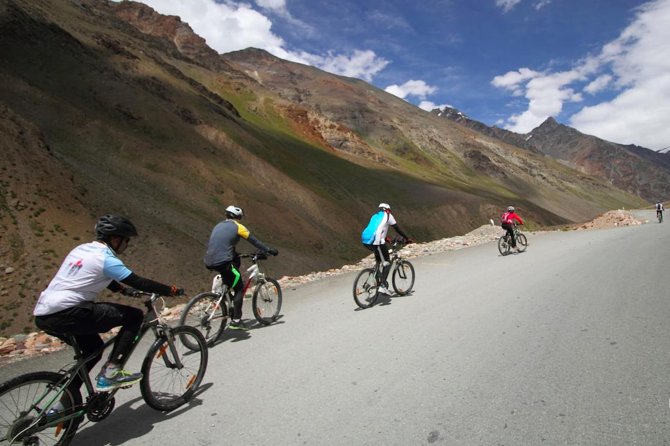
On the first day, the trip starts with arrival in Delhi by 3pm, followed by a long drive to Manali—about 13–14 hours by road. It’s a big travel chunk up front, so treat that day like a transfer, not the first “training ride.”
Once in Manali, check into your accommodation. After breakfast, you inspect and assemble your bikes. Then you do a short ride to get your body and gear lined up, and you get back to rest before the real cycling begins.
This two-day start is a practical design choice. You don’t just show up and pedal into altitude right away. You test the bike, you check fit, and you settle your legs for what comes next.
Days 3–4: Marhi at 3,000m and the Rohtang Pass snow zone
Day 3 cycles through sparse alpine vegetation and gradually climbs, with a strong pay-off: views of the Manali valley below as the road lifts you away from town. You’ll reach Marhi (~3,000m), a small settlement on the route toward Rohtang La.
It’s a good day to find your rhythm. Short climbs, breaks in terrain, and enough time to feel how your effort changes as you go higher.
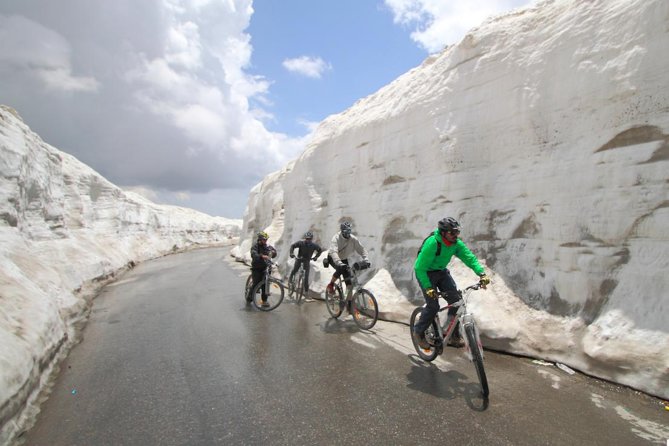
Day 4 is the headline day: you ride through snow as you cross Rohtang Pass at 3,978m. The highlight is the experience of cycling through a colder, snow-lined stretch rather than passing it by vehicle.
A practical note: snow days can mean slower riding and extra caution. You’ll want to keep your focus on steady pedaling and safe handling, especially when the scenery is pulling your attention away from the road surface.
Days 5–8: Jispa, Zingzingbar camping, and the pass-heavy middle stretch
Day 5 takes you to Jispa (about 3,200m), a small village with only a few hundred households. It’s a favorite camping stop for mountaineers and adventure tourists along the route, which hints at the vibe: simple, outdoorsy, and focused on the next move.
Day 6 is shorter in distance—about 32 km—but it’s significant because you’ll be camping above 4,000m, near Zingzingbar. Camping at altitude is a different kind of workout. It affects sleep and recovery, so it helps to treat this as a recovery-and-prep day, not a sightseeing day.
Days 7 and 8 are where the route starts piling up big elevations. Day 7 crosses from Himachal Pradesh into Jammu & Kashmir, with Bara-lacha la (4,870m) as a major pass. Day 8 then turns into a double-pass push with Nakee-la (4,950m) and Lachalung-la (5,060m).
This is the part of the trip that feels like a true expedition. The mileage is substantial, but the higher value is the combination of repeated climbs and the way the route changes each day. You’re building endurance while the scenery keeps shifting from alpine to high, open regions.
Day 9–12: Moore Planes, Taglang La, Ladakh towns, and Khardung La
Day 9 cycles through Moore Planes, with the feeling of wide openness and distance. This is the mental reset day. After pass-heavy riding, the emptier stretches can help you settle into a steady cadence.
Day 10 brings Taglang-la (5,359m)—not just high, but also described as the second highest motorable mountain pass in India. Cycling at this altitude is less about speed and more about control. Your best approach is usually steady effort, consistent breathing, and not overreaching early.
Day 11 is about culture as much as cycling. You roll through smaller towns and experience the Buddhist-influenced Ladakhi way of life. This matters because it breaks the constant climb focus. You’ll start feeling like you’ve arrived in a different rhythm of life, not just a higher elevation.
Day 12 pushes the highest iconic pass of the ride: Khardung La (5,602m). It’s noted as being opened to motor vehicles in 1988. Even if you’re not a stats person, that timeline gives context for how famous this route is—and why it’s often a big moment for cycling groups.
Days 13–15: Leh by drive and a slower finish
After the hard climbing days, Days 13, 14, and 15 shift into a more relaxed phase: you enjoy a leisurely drive across picturesque Leh.
This isn’t “more sightseeing at any cost.” It’s a smart way to end an altitude-heavy cycling route. Your body gets a break, but you still get to enjoy the region’s feel without forcing more daily mileage.
If you like trips where the last days feel like closure rather than a last-minute sprint, this format is a big plus.
Bikes, gear, meals, and the support vehicle: where comfort shows up
The tour includes use of bicycle and helmet, plus meals (breakfast, lunch, dinner) and snacks, juices, and refreshments during the ride. Filtered water for drinking is included, and bottled water is explicitly avoided to reduce plastic.
That matters for real reasons:
- Meals and snacks help you keep cycling instead of constantly negotiating food on the road.
- Filtered water reduces the guesswork when you’re sweating and climbing.
- A support vehicle gives you a safety net for the “this feels beyond my current day” moments.
You also travel with a professional guide and a support driver throughout the journey. That’s not just comfort—it’s how you stay calm when weather, roads, or altitude make plans feel fragile.
Accommodation is in independent tents and hotels/homestays on a twin-sharing basis, depending on the day and location. So you’ll experience both basic outdoor nights and more standard stays. If you’re someone who expects hotel comfort the whole time, that mismatch can be a frustration. If you like part-camping adventure, it’s part of the appeal.
Price and value: is $2,400 fair for this kind of trip?
$2,400 per person is not a small number, but it also isn’t just “a ride.” You’re paying for:
- multi-day logistics across an intense route,
- a guide and support vehicle,
- included bikes and helmets,
- most of your food needs (meals, snacks, drinking water),
- accommodations across tents and stays.
If you tried to build this on your own, the real cost isn’t only the bike. It’s the coordination: transport, permits/route complexity, meal planning, gear, safe pacing, and backup options when conditions change. Here, the structure is already done for you.
What you should budget separately: alcoholic and aerated drinks (available to purchase), laundry, personal expenses, and any extra camera charges. Bottled water is not included because the tour avoids plastic, so you’ll rely on the filtered water plan.
The value also depends on how you handle hard days. If you show up fit and mentally ready for altitude cycling, the price starts to feel like you’re paying for support and time, not just distance.
Who this is for (and who might find it too much)
This tour fits travelers with moderate physical fitness. The daily distances and the mention of extremely challenging days mean you’ll need basic stamina, not just casual cycling comfort.
The minimum age is 15, and children must be accompanied by an adult. There’s a vegetarian option available too, which is important on long days when your body expects steady fuel.
Small group size—up to 12 travelers—is a plus if you prefer not being lost in a huge bus group. You’ll get better guidance and more chance to ask questions when the road and weather demand attention.
If you’re sensitive to altitude or you’re mainly looking for a relaxed ride with minimal exertion, I’d think twice. The tour is designed for effort plus support, not effort-free sightseeing.
Practical tips to make this trip easier on yourself
You’ll get the gear, but you still control the outcome with habits. I’d plan for three things: cold nights, long hours of pedaling, and taking recovery seriously.
- Pace your effort early. Big passes punish ego and reward steady breathing.
- Expect your sleep to be different during tent nights at altitude. Pack for comfort in cold conditions (within what you can carry).
- Keep fueling on schedule. With meals and snacks included, it’s your job to actually eat when offered, not when you feel like it.
Also, remember that the tour notes weather or road blocks such as landslides can cause expenses beyond your control, and evacuation charges are not included. That’s a reminder to travel with sensible insurance and a flexible mindset.
Should you book the Himalayan Cycling Expedition from Manali to Leh?
I’d book it if you want a real cycling adventure over famous high-altitude passes, and you like the idea of a guided small group with a support vehicle doing the heavy logistics. The included meals, filtered water plan, and provided bikes and helmets reduce the usual trip stress. You’ll spend your energy on pedaling and adjusting to altitude rather than figuring out how to survive the route.
I wouldn’t book it if your idea of a great trip is mostly easy riding, or if extremely challenging days would make you anxious. This is a structured expedition with long-distance days and high points that can test your body.
If you’re the type who wants your legs to earn the views—and you’re willing to work for them—this is the kind of trip that stays with you.
FAQ
How long is the Manali to Leh cycling trip?
It runs for about 15 days.
What is the price per person?
The price is $2,400.00 per person.
Where does the trip start?
It starts in Manali (Manali, Kullu District, Himachal Pradesh).
Are bikes and helmets included?
Yes. The tour includes use of a bicycle and a helmet.
What about meals and drinking water?
Meals are included as per the itinerary (breakfast, lunch, dinner). Filtered water for drinking and snacks/refreshed are also included.
Will there be a support vehicle?
Yes. A support vehicle with a driver is on hand throughout the journey.
What kind of distances will I cycle each day?
Daily cycling distances range from about 40 to 80 km (25 to 50 miles), with difficulty varying from easy and manageable to extremely challenging.
What is the minimum age?
The minimum age is 15 years. Children must be accompanied by an adult.
Is there a vegetarian option?
Yes, a vegetarian option is available.
If I cancel, do I get a refund?
No. This experience is non-refundable and cannot be changed for any reason. The amount paid is not refunded if you cancel or request an amendment.