REVIEW · SHIGA PREFECTURE
Japan’s Rural Life & Nature: Private Half Day Cycling Near Kyoto
Book on Viator →Operated by Biwako Backroads - Rural Japan Tours · Bookable on Viator
Pedal beyond Kyoto crowds in rural Shiga. This private half-day ride starts at Maibara Station after a short shinkansen hop, and it quickly swaps city sights for real farming life. I like the beginner-friendly pace: about 13 km (9 miles) on mostly comfortable roads, with an English-speaking guide who keeps the route easy to follow.
Two things I especially liked: first, the way Tako-san (your guide, fluent in English after time in the U.S.) threads history and local culture into what you’re actually seeing. Second, the small comforts built in—coffee/tea plus water and snacks at breaks—so you’re not hunting for food mid-ride. The stops feel thoughtful, not random: Zen temple views, a temple built into a mountainside, and a local spring used for washing.
One consideration: this is weather-dependent, and it’s also a half-day without lunch. If you’re the type who needs a full meal break on your tours, plan to grab something before or after.
In This Review
- Key highlights you’ll feel right away
- Why this Maibara-to-farming-cycle route resets your Japan trip
- Getting there the easy way: shinkansen to Maibara Station
- The ride distance and pacing: what 13 km feels like in real life
- Stop 1: Maibara Station and why this area still matters
- Stop 2: Saienji temple and the village feel around it
- Stop 3: Iwaya Zenkodo Temple, the 120-meter hillside temple
- Stop 4: the natural spring well locals use for washing
- The farm-area story near Lake Biwa: from inland lake to rice land
- Coffee, tea, water, and snacks: the comfort plan that keeps you going
- Optional extras: Lake Biwa or Hikone Castle time
- Price and value: what $255 buys you in the real world
- Who this tour fits best (and who might want something else)
- A quick, realistic packing checklist
- Should you book this rural cycling near Kyoto?
- FAQ
- Where is the tour based?
- What is the tour duration?
- How far do we cycle?
- Is this tour private?
- Is the guide English-speaking?
- What’s included with the tour?
- Is lunch included?
- What stops are included on the route?
- Can we add time at Lake Biwa or Hikone Castle?
- What fitness level is needed?
- What happens if the weather is bad?
- What is the cancellation policy?
Key highlights you’ll feel right away
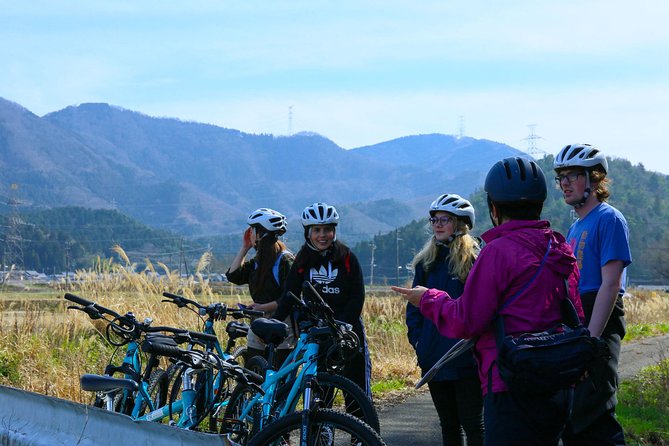
- Private, English-guided countryside cycling near Kyoto with just your group
- 13 km, beginner-friendly route between villages, temples, and rural roads
- Tako-san’s English and culture stories, plus a handy binder for context
- Temple stops with real texture: Saienji village atmosphere and Iwaya Zenkodo’s hillside cave
- Local waterway history at the community spring linked to Mt. Ibuki and Lake Biwa
- Chance to add time at Lake Biwa or Hikone Castle if you want more sightseeing
Why this Maibara-to-farming-cycle route resets your Japan trip
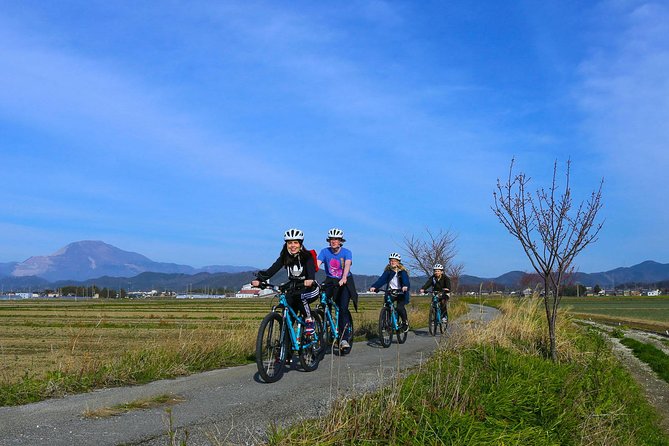
Kyoto can be wonderful. It’s also loud, crowded, and full of people trying to photograph the same spot. This ride works because it flips the focus. You move at bike speed—slow enough to notice details, fast enough to feel like you covered ground.
What makes the day click is that it doesn’t feel like a “bike tour with temples stapled on.” It’s more like: here’s how people in Shiga live and worship, and here’s how the land got shaped for rice and water. You get the countryside, not just a scenic drive.
Getting there the easy way: shinkansen to Maibara Station
The experience is built around a short train ride to the start at Maibara Station. From Kyoto, it’s one of those options that saves you hassle. You’re not cobbling together buses, figuring out transfers, or trying to time station-to-station connections while jet-lagged.
Once you arrive, you’re set up quickly for the ride. The start and end are both at Maibara Station, which is a big deal for comfort. You can plan your morning or afternoon without worrying about getting back through a complicated route.
If you’re wondering how you’ll go from “Kyoto energy” to “rural peace,” this shinkansen hop is the bridge. It buys you time and mental clarity.
The ride distance and pacing: what 13 km feels like in real life
The planned route is about 13 km (9 miles), and it’s designed as a beginner-friendly ride. That matters more than you’d think. “Beginner-friendly” can mean different things. Here, the promise is that you can enjoy the countryside without white-knuckle concentration the whole time.
Plan on a relaxed pace with short breaks. This is not a race. You’ll stop for temple looks, a short hike portion at a mountain temple, and a brief visit at a natural spring. The day stretches to about 3 to 4 hours, which gives you room to enjoy the route instead of just “getting through it.”
Practical tip: if your legs tire quickly, keep an easy rhythm. The route is short enough that you can still enjoy the views if you don’t try to power up every small rise.
Stop 1: Maibara Station and why this area still matters
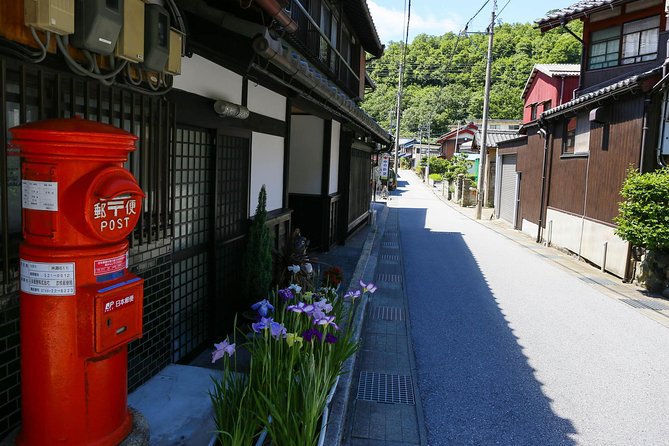
Your tour starts and ends at Maibara Station, and the cycling route runs through farming areas and villages that have merged into the city’s governing area in the last few decades. On paper, that sounds administrative. On the ground, it means you’re riding through places that still feel lived-in and local.
This first stop is also where your guide gets you oriented—where you’re going, what you’ll see, and the main stories you’ll connect later. That’s especially valuable if rural Japan is new to you. It helps you read the scenery instead of just passing it.
Stop 2: Saienji temple and the village feel around it
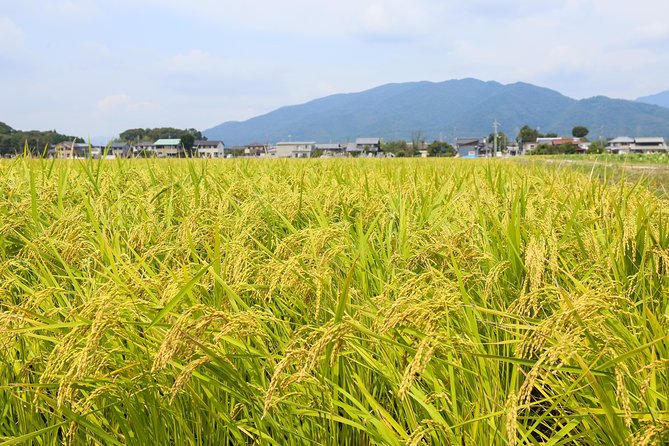
Next up is Saienji, a Chinese-influenced Zen temple. It’s also the name used for the surrounding small community, which is a neat detail because it shows how spiritual sites and everyday neighborhoods overlap here.
You don’t spend forever at Saienji—this is a brief stop—but it works as a “reset moment.” In a short time, you’ll get a feel for what rural temple life looks like when it’s part of the village rhythm, not a destination bus stop.
How to enjoy this stop: take a slow look around rather than rushing for one photo. The value is in how the temple and homes relate.
Stop 3: Iwaya Zenkodo Temple, the 120-meter hillside temple
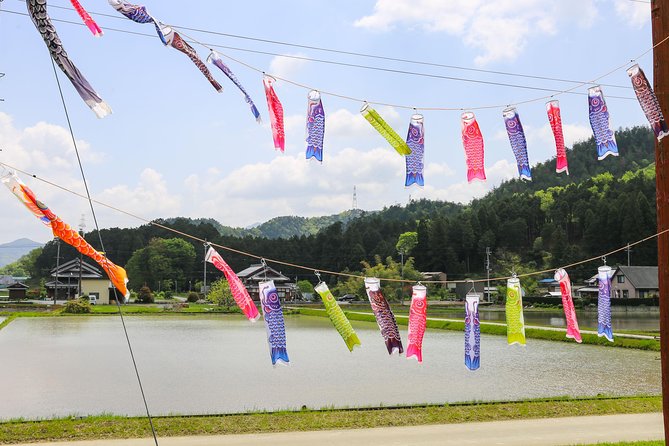
This is one of the most memorable parts of the route. Iwaya Zenkodo Temple sits on a small 120-meter-high mountain, and the stop includes a short hike plus refreshments.
The temple is built into the side of the mountain, which makes it feel physically grounded—like it grew out of the rock rather than being placed on top of it. There’s also an Inari Shrine here, plus an old manmade cave with its own history. That mix gives the stop variety: worship space, mountain setting, and a history layer you can actually picture.
Watch-outs to plan for: you’ll be doing a short hike, so wear shoes that grip well. Also, this is a good moment to pace yourself. If you go too hard uphill, your energy can drop for the later stretches.
This is the kind of stop that changes how you see rural religious sites. Not just “a temple,” but a place shaped by geography and human engineering.
Stop 4: the natural spring well locals use for washing
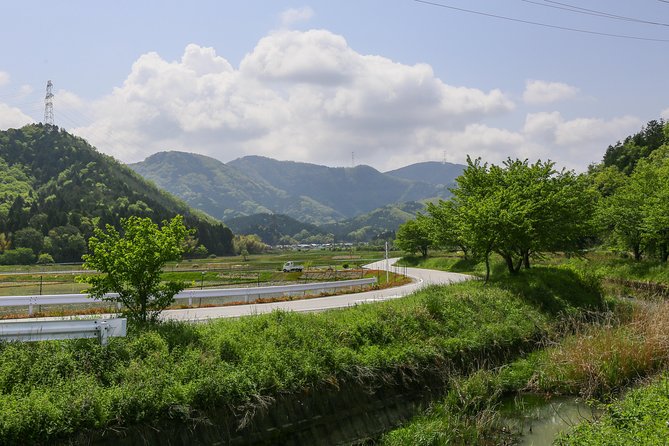
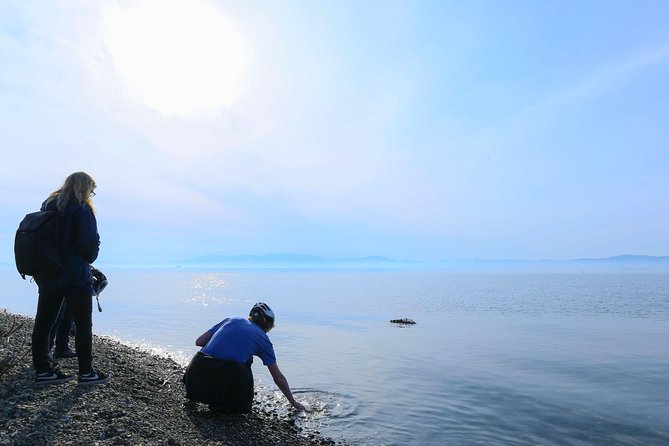
Then you get to a community natural spring well shared by locals long ago. It connects to the waterway under the ground between Mt. Ibuki and Lake Biwa.
Here’s an important detail: the water is untreated and not for drinking. Many locals use it for washing. That’s a classic example of what makes this ride feel authentic. You’re seeing water as part of daily life, not as a tourist snack.
This stop is short—just about 10 minutes—but it gives you a practical, grounded feel for why Lake Biwa and its surrounding terrain matter to people. Water isn’t just scenery. It’s infrastructure for everyday routines.
A small practical note: treat it like a viewing stop, not a souvenir opportunity. Don’t plan to taste it.
The farm-area story near Lake Biwa: from inland lake to rice land
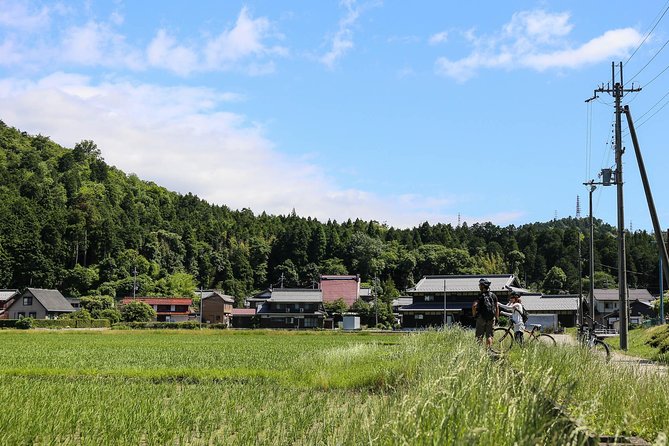
After the temple and spring, the ride continues through agricultural scenery. There’s a strong historical angle here: in pre-war Japan, this farm area was once a smaller inland lake near Lake Biwa. It was drained and turned into farmland to provide much-needed rice after the country’s recovery.
This is one of those stories that makes the land feel “explained.” You can look at fields and roads and understand they weren’t inevitable. They were decisions—made for food, survival, and rebuilding.
If you like history, you’ll enjoy how your guide ties it back to what you’re cycling past. Even if you don’t, the scenery still works because it looks like work-land, not postcard-land.
Coffee, tea, water, and snacks: the comfort plan that keeps you going
One reason this tour feels good is the pacing support. Coffee and/or tea are included, and the day includes water and snacks too. That means you’re not stuck riding on empty until the next stop.
And because you’re on a bike, small fuel moments matter. A snack can turn the last third of the ride from “I’m done” to “okay, let’s enjoy this.”
If you’re the type who usually carries everything, you may still want your own extras (like a power bar), but you’ll likely find you don’t need to. The tour is set up so your energy stays steady.
Optional extras: Lake Biwa or Hikone Castle time
This half day has flexibility. You can stop longer around Lake Biwa or Hikone Castle if you want more sightseeing after (or alongside) the ride.
In practice, that means you can shape the tour to your day. If you’re already sightseeing in Kyoto, this is a great way to add a lake experience or history landmark without cramming everything into one exhausting schedule.
Also, the guide support can go beyond the exact plan. One group noted that Tako-san helped with getting to Hikone Castle at the end of the ride. That’s not something to count on every time, but it’s a good sign that your guide is paying attention to what you want next.
Price and value: what $255 buys you in the real world
At $255, this isn’t a cheap activity. The value is in the combination:
- Private format: only your group rides, so you’re not stuck with a mismatch of speeds or interests.
- English-speaking guide with local history context: not just “point and pedal,” but explanations tied to the route.
- Use of bicycle + included refreshments: you’re not renting gear and you’re not starving between stops.
- Multiple meaningful stops: Saienji, Iwaya Zenkodo, a natural spring, and rural farm-area context—more than just a scenic loop.
If your ideal trip includes getting out of the city with a plan that still feels authentic, this price starts to make sense. If you’re mainly chasing the cheapest way to ride a bike, you’ll find lower-cost options. But most of those won’t include a guide who can turn temple stones and water stories into something you actually understand.
Who this tour fits best (and who might want something else)
This tour fits best if you want a calm break from big-city touring and you like nature with context.
You’ll likely love it if:
- you want rural Japan near Kyoto without turning it into a logistics puzzle
- you like temples and the meaning behind them, not just quick photo stops
- you want an easy ride that’s still active and outdoorsy
- your group benefits from a private guide (families, couples, friends)
You might want a different option if:
- you expect a full meal during the tour (lunch isn’t included)
- you’re traveling with strict mobility limits and can’t handle any short hike portions
- you’re going in unpredictable weather, since the experience depends on good conditions
A quick, realistic packing checklist
The tour runs in the outdoors and includes a short hike at the mountain temple. I’d plan for:
- comfortable shoes with grip
- a light rain layer (because weather can change fast in Japan)
- sunscreen or a hat, depending on season
- small personal snacks if you’re picky about what you eat
Even with snacks included, your comfort matters.
Should you book this rural cycling near Kyoto?
Book it if you want a half-day that feels like a genuine change of pace: quieter roads, temple stops with real place-based context, and local water and farming history that you won’t get from a crowded bus tour.
Skip it if you need lots of time at major landmarks, if lunch is non-negotiable for you, or if you’re traveling during a stretch where weather looks shaky. The tour is designed around good conditions for a reason.
If you do book, go in with the right mindset: this is not about ticking off the biggest attractions. It’s about seeing how Japan works outside the famous routes—and doing it from the saddle.
FAQ
Where is the tour based?
The tour takes place in Shiga Prefecture, Japan.
What is the tour duration?
The ride lasts about 3 to 4 hours.
How far do we cycle?
The course is about 13 km (9 miles).
Is this tour private?
Yes. It’s a private tour/activity, so only your group participates.
Is the guide English-speaking?
Yes, the guide speaks English.
What’s included with the tour?
The tour includes a professional guide, bicycle use, and coffee and/or tea. The overview also says coffee, tea, water, and snacks are included.
Is lunch included?
No. Lunch is not included.
What stops are included on the route?
Stops include Saienji temple, Iwaya Zenkodo Temple, a natural spring well used by locals, and a farm area with agricultural scenery connected to the region’s history. You’ll also start and end at Maibara Station.
Can we add time at Lake Biwa or Hikone Castle?
Yes. The plan mentions you can stop off and spend more time at Lake Biwa or Hikone Castle if you like.
What fitness level is needed?
You should have moderate physical fitness. There’s also a short hike as part of the Iwaya Zenkodo Temple stop.
What happens if the weather is bad?
The experience requires good weather. If it’s canceled due to poor weather, you’ll be offered a different date or a full refund.
What is the cancellation policy?
Free cancellation is available. You can cancel up to 24 hours in advance for a full refund, and changes made less than 24 hours before the experience’s start time aren’t accepted.