REVIEW · OSAKA
Half day Osaka Bay Area Cycling with E-Assist Bicycle Tour
Book on Viator →Operated by Banri · Bookable on Viator
Old bridges, local ferries, real Osaka. That is what makes this half-day Osaka Bay cycling feel so different: you cover a lot of ground without hunting trains, and the e-assist makes the route doable even when bridges get steep. I also love the small-group vibe, where your guide can keep an eye on the whole line and actually explain what you are seeing.
One thing to plan for: some stretches are tight and the roads near the bay can be heavily trafficked by large trucks, plus there are steep climbs where the ferry becomes your friend. If rain probability hits 40% or more, the tour can get canceled for weather, so check that decision the day-of.
In This Review
- Key moments you’ll remember most
- Why Osaka Bay by e-bike beats train-hopping
- Price and what’s included: bike time per dollar
- Meeting point and timing: starting clean, ending the same way
- Getting set up: what you actually need before you roll
- Stop by stop: Sumiyoshi Taisha and the sea-god start
- Bridges are the highlight: Shinkizugawa, Namihaya, and their big views
- One-minute local ferry rides: Funamachi and 甚兵衛渡船場
- Factory district character and a film-related surprise
- IKEA Tsuruhama lunch: vegetarian-friendly without a long detour
- Tempozan and Mt. Tempozan: the bay-side pause near modern architecture
- Photogenic intersections, subway tracks, and an old-style arcade stretch
- Sensai Bridge and Sembonmatsu Bridge: steep moments and the final glassy shape
- The practical side: how hard is this, really?
- Who should book this Osaka Bay cycling tour
- Should you book? My call
- FAQ
- How long is the Osaka Bay e-bike cycling tour?
- What’s included with the tour price?
- Where does the tour start and end?
- Is lunch included?
- What kind of riding fitness do you need?
- What happens if the weather is bad?
Key moments you’ll remember most
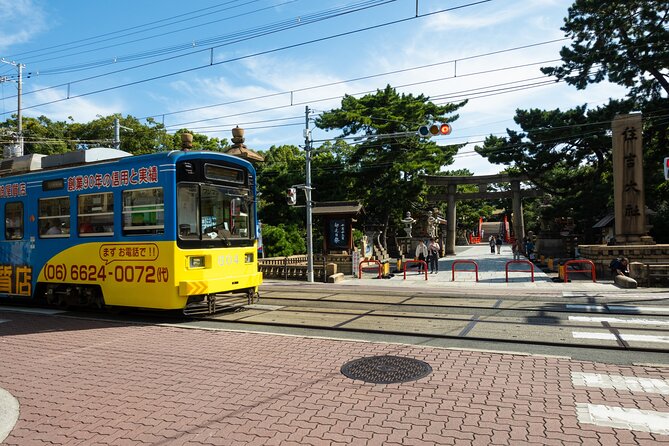
- Sumiyoshi Taisha: a shrine tied to the sea gods, with grounds that date back nearly 2,000 years
- Local-only ferries: you ride bicycle-and-pedestrian boats for about a minute, not a tourist knockoff
- Namihaya Bridge views: a big 360-degree bay-to-city panorama from the middle of the action
- Tempozan break: a pause near Kaiyukan and the area of notable modern architecture
- Steep crossings handled smartly: steep bicycle roads are met with alternate ferry routes
- Sembonmatsu Bridge, Megane-bashi: a bridge shaped like glasses, nicknamed by locals
Why Osaka Bay by e-bike beats train-hopping
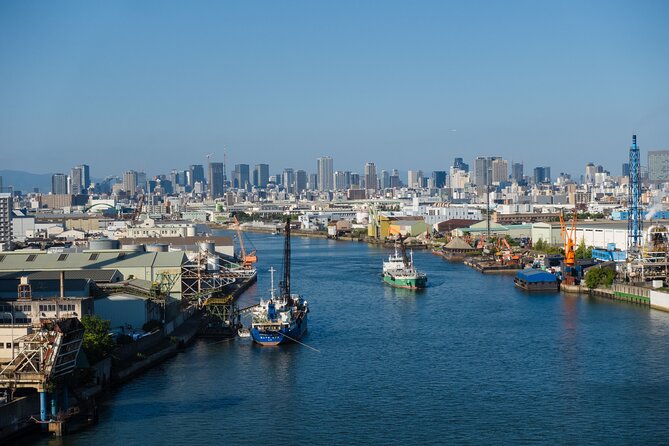
Osaka Bay is one of those areas that looks easy on a map and a bit annoying in real life. Between getting to the next station, transferring lines, and walking between stops, you can burn half your day just moving around. This tour keeps you in motion and lets you experience the shoreline rhythm: bridges, water views, neighborhood streets, and those little civic ferry rides that locals treat as normal.
The e-assist matters here. You still pedal, but it takes the sting out of rolling climbs and bridge gradients. That means you spend your energy on stopping for photos, listening to your guide, and soaking up the bay air instead of fighting your bike the whole time.
Price and what’s included: bike time per dollar
At $78.38 per person for 4 to 6 hours, the price lands in the “worth it if you want a guided route” zone. You are paying for three things that add up fast on your own:
- A pre-built route that strings together bay landmarks, bridges, and local ferries
- A guide who keeps you moving and explains what you are seeing
- Rentals that remove extra hassles: bike + helmet + bottled water
Lunch is not included, but you get two clear lunch options built into the plan. You can eat at a Japanese diner near Tempozan, or for vegetarian needs, you can choose lunch at the Sweden food market of IKEA Tsuruhama. That structure makes the day feel smooth rather than stressful.
Meeting point and timing: starting clean, ending the same way
You start at Lawson Tamadenaka 2-chome 2-chōme-6-12 in Nishinari Ward, with the tour beginning at 10:00 am. It ends back at the meeting point, so you do not have to solve the last-mile puzzle.
The tour runs with a maximum of 3 travelers, so the pace tends to feel more human than typical big-group sightseeing. You’ll also want to plan your day around weather: the tour can be canceled if rain probability is 40% or more. If that happens, you should be ready to swap dates or request a full refund, depending on what the operator offers.
Getting set up: what you actually need before you roll
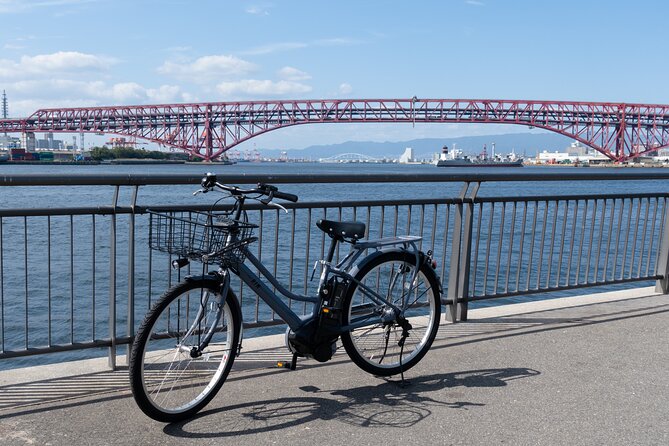
This is built for people who can ride a bicycle. Your minimum height is 140 cm, and the maximum weight is 90 kg. The bike may feel too small for riders over 180 cm, so if you are tall, keep that in mind before you book.
You’ll get a helmet and bottled water, but you still need the basics:
- Wear comfortable clothes that let you pedal and control the bike
- Bring your own eye comfort if you are sensitive: the route includes roads where truck traffic is common, and it is smart to have a mask and eye drops ready
- You’ll ride on streets with cars and trucks, so treat this like real cycling, not a park loop
Stop by stop: Sumiyoshi Taisha and the sea-god start
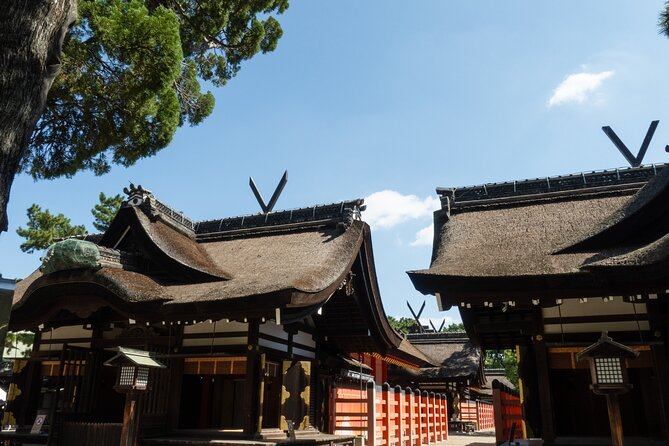
Your first major cultural stop is Sumiyoshi Taisha Shrine, one of Japan’s oldest shrines, with history reaching nearly 2,000 years. The shrine enshrines the three gods of the sea, which matters on this route, because the bay theme is not just visual. You are literally starting with the spiritual relationship Osaka has with water, boats, and safe passage.
This stop is time-boxed (about 30 minutes), and that works well for a cycling tour. You get enough time to look at the shrine setting without losing the ride for the day. It is also free admission, so you’re not juggling ticket logistics.
If you like to understand places quickly, this is a great start: it gives you a frame for why the bay area feels distinct from central Osaka.
Bridges are the highlight: Shinkizugawa, Namihaya, and their big views
Next you roll toward Shinkizugawa Bridge, where the key draw is the sightline. From the bridge, you can see toward Tennoji and the Ikoma Mountains in the background. There is also a nice ride element: a descent connected to a three-stage loop bridge. In plain terms, you get momentum and viewpoint changes without it turning into a grind.
From there, you reach Namihaya Bridge, located near the middle of the bay area. This is your 360-degree view moment: city, water, and skyline in one sweep. The bridge also has a tall shipping channel beneath it (about 47 meters above the water), which is a reminder that the bay is active and working, not just scenic.
Namihaya is around 20 minutes. That is enough time to grab pictures and take in the scale, but not so long that it stalls your cycling day.
One-minute local ferry rides: Funamachi and 甚兵衛渡船場
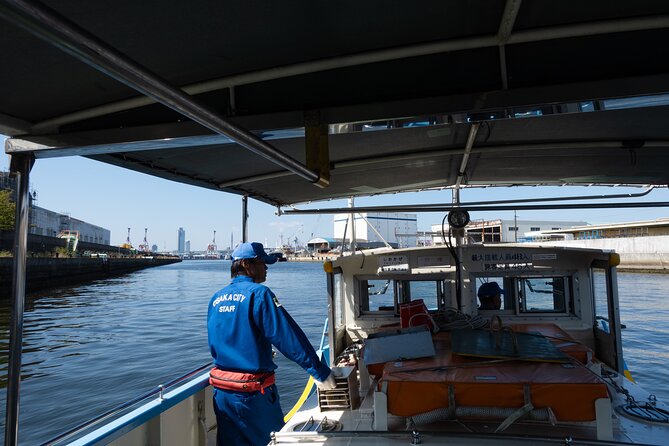
One of the best ways this tour becomes more than a list of bridges is the inclusion of local ferry facilities. You ride a short boat trip—about a minute—for bicycles and pedestrians only. It is operated by Osaka City and used by locals, so it feels like part of daily life rather than a curated gimmick.
You’ll pass through this in two ways:
- Funamachi Ferry Facilities (about 10 minutes total time on this stop, with the crossing itself very short)
- 甚兵衛渡船場 (大正区泉尾側), another similar local ferry crossing
The value here is not the time saved. It is the perspective shift. On a bike route, you are used to going over things. Here you go on the water for a micro-break and then pick right back up. It keeps the day lively and gives you a snapshot of local infrastructure.
Factory district character and a film-related surprise
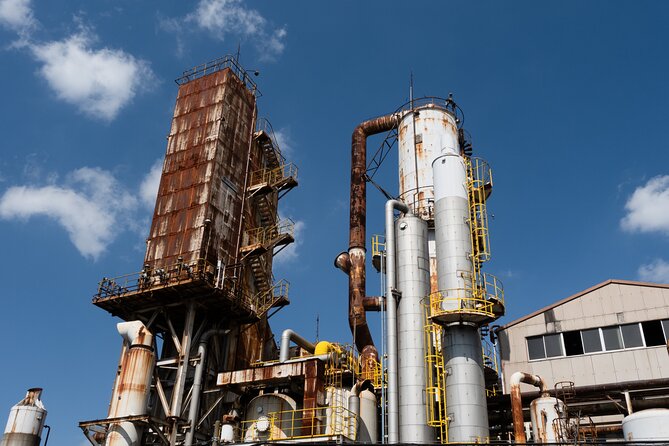
As you move through the area, you also pass a factory district used in Ridley Scott’s film Black Rain (filmed in Osaka and New York City). Even if you are not a movie buff, it helps you notice Osaka beyond shopping streets and major landmarks.
In a cycling day like this, those in-between zones matter. They are where you see the working-city side of the bay—less polished, more real, and often more interesting to bike past than to stand in front of.
IKEA Tsuruhama lunch: vegetarian-friendly without a long detour
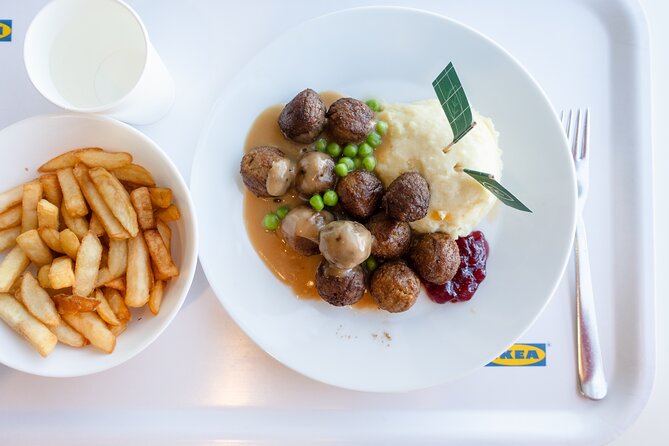
You get a scheduled break at IKEA Tsuruhama, around 15 minutes. The tour gives you a practical lunch path: for vegetarians, you can eat at the Sweden food market at IKEA.
If you prefer eating somewhere simpler or you just want a quick recharge, this slot is useful. It is also built into the route so you do not have to decide on the fly while hungry and still moving.
Tempozan and Mt. Tempozan: the bay-side pause near modern architecture
After the bridge and ferry rhythm, the ride reaches Mt. Tempozan for a longer break (about 40 minutes). This area is known for cherry blossoms in spring, but you’ll be there year-round on your cycling day.
The tour also uses this stop as an anchoring point for wider bay sights. You pass or get close to the aquarium (Kaiyukan) and the Ferris wheel, plus the vicinity of Tadao Ando architecture. Even without stopping inside anything, the surrounding landmarks add context to what you are cycling through.
There’s also a lunch option here: you can eat at a Japanese diner near Tempozan (lunch is not included, but the plan includes where to go).
This is a good spot to catch your breath. By this time, the route has enough climbs and turns that a real pause helps you keep the day enjoyable through the final crossings.
Photogenic intersections, subway tracks, and an old-style arcade stretch
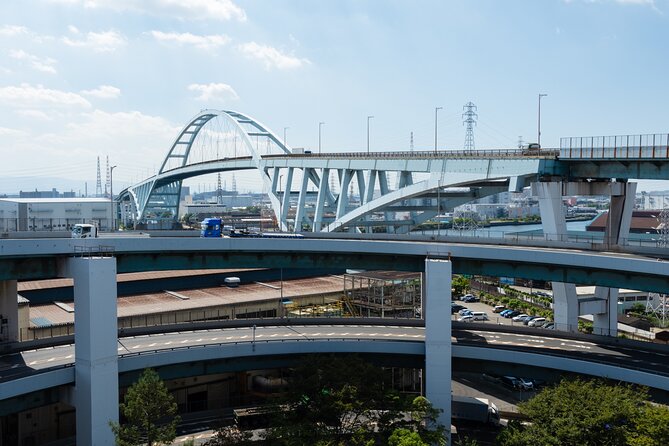
After Tempozan, the route leans into Osaka’s visual rhythm: tight infrastructure, angles, and places where transportation layers stack together. You pass a spot where three expressways intersect and subway tracks intersect, described as especially photogenic with intricate pier architecture.
Then you move through an old-style Japanese arcade shopping center. This is not about buying souvenirs. It’s about feeling the city’s everyday texture while you are still on the move. Cycling keeps you closer to the ground, so you notice details a bus tour misses.
And yes, you might be tempted to stop just to watch people and shop signs. The time limits matter, though, so use the stops to look, then roll.
Sensai Bridge and Sembonmatsu Bridge: steep moments and the final glassy shape
As you head toward the later part of the ride, the route turns more challenging in a very specific way: bicycle roads can be steep. At Sensai Bridge, you are told that the bicycle road is steep, and you can take a ferry across the river instead. That is smart planning for riders who want the view without the punishment.
Finally, you reach Sembonmatsu Bridge, where you cross the Kizu River. The bridge connects toward Dotonbori, so this is a bridge between bay-side scenery and the central Osaka feel people associate with the city.
Sembonmatsu is described as the most unique bridge in Osaka, nicknamed Megane-bashi (glasses bridge). The nickname comes from the shape resembling glasses. This is exactly the sort of local detail that makes the final segment feel satisfying: you are not only doing sightseeing, you are learning why locals refer to the place the way they do.
The practical side: how hard is this, really?
The tour is listed for moderate physical fitness and requires you to be able to ride a bicycle. With the e-assist, it is not “workout tough,” but it is still real road cycling.
Here’s the honest way to judge it:
- You will likely feel effort on bridge climbs and steep sections
- Some segments are described as tricky due to steepness, with ferries used as alternatives
- Truck traffic is a factor, so you need focus and calm riding habits
If you usually avoid bike tours because you hate sweating, this might still work because assistance is built in. If you dislike any road cycling at all—especially streets with large vehicles—then this is the part you should think twice about.
Who should book this Osaka Bay cycling tour
This tour is a great fit if you want:
- A guided route that saves you from map-reading and transit puzzle-solving
- A fast-paced half-day that still includes cultural stops like Sumiyoshi Taisha
- Real neighborhood flavor, including factory zones and local ferry crossings
- Views from bridges that you likely would not get without specialized planning
It may not be ideal if:
- You are uncomfortable riding on streets with trucks
- You are very sensitive to rain and hate last-minute cancellations based on weather odds
- You are tall enough that the bike size could be an issue (over 180 cm)
Should you book? My call
If you want one good half-day that feels like Osaka Bay is actually alive—and not like a checklist—you should book this. The strongest value is the combination of e-assist comfort, a small group, and the inclusion of local ferries that break up the ride in a way you can’t replicate on your own quickly.
The main tradeoff is road exposure. If you are confident riding a bicycle and staying alert around traffic, you’ll likely find the day fun, scenic, and genuinely different from standard sightseeing.
If you want, tell me your dates and fitness level (and whether you’re comfortable riding near traffic), and I can help you decide if the timing and route style make sense for your trip.
FAQ
How long is the Osaka Bay e-bike cycling tour?
It runs for about 4 to 6 hours.
What’s included with the tour price?
You get use of the bicycle, a helmet, and bottled water.
Where does the tour start and end?
It starts at Lawson Tamadenaka 2-chome 2-chōme-6-12 Tamadenaka, Nishinari Ward, Osaka, and it ends back at the meeting point.
Is lunch included?
Lunch is not included. You’ll have the option to eat at a Japanese diner around Tempozan, or for vegetarians at the Sweden food market of IKEA Tsuruhama.
What kind of riding fitness do you need?
The tour is for travelers with moderate physical fitness, and you must be able to ride a bicycle.
What happens if the weather is bad?
The tour can be canceled if the rain probability is 40% or more. If that happens, you’ll be offered a different date or a full refund.